
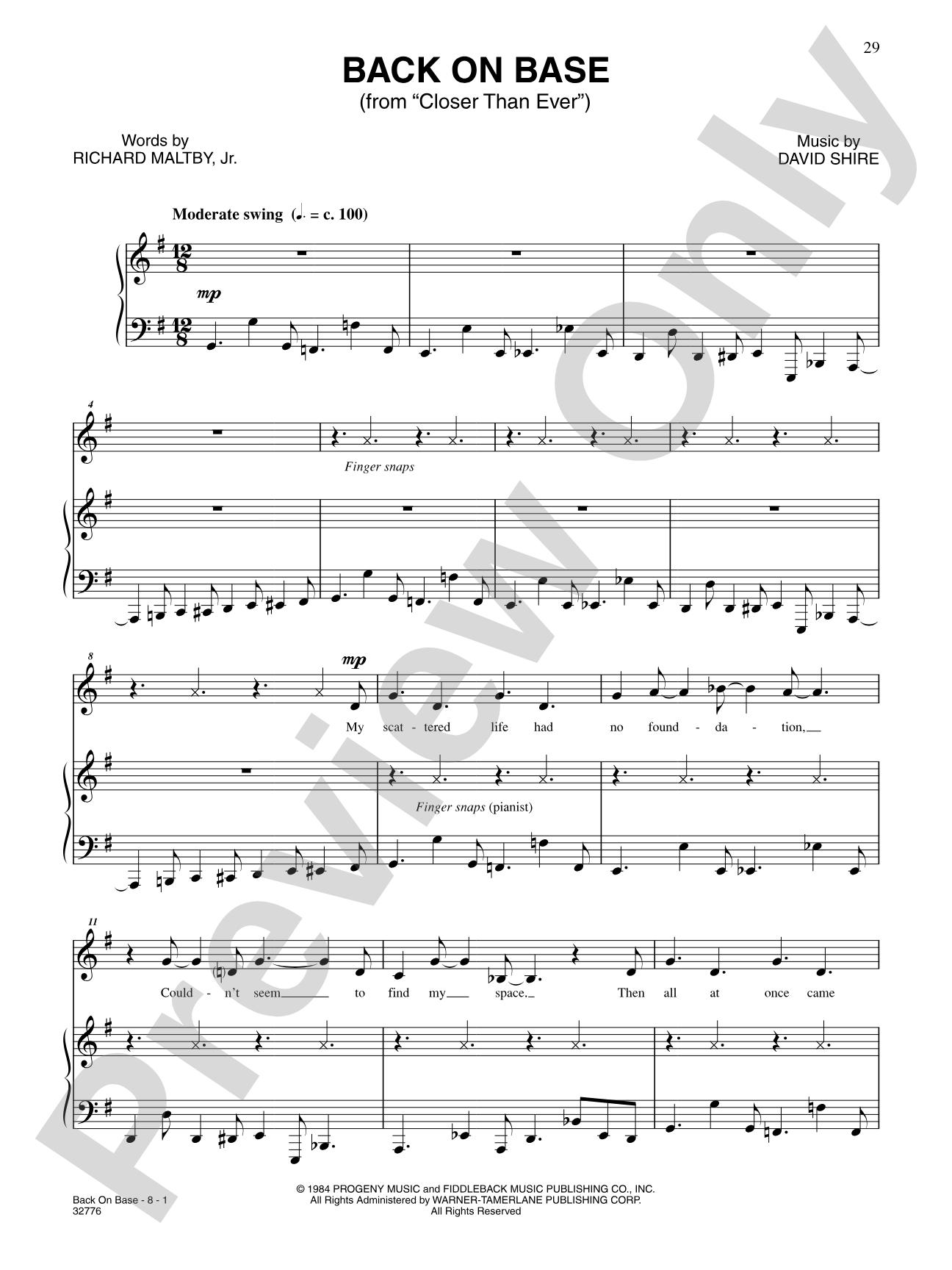
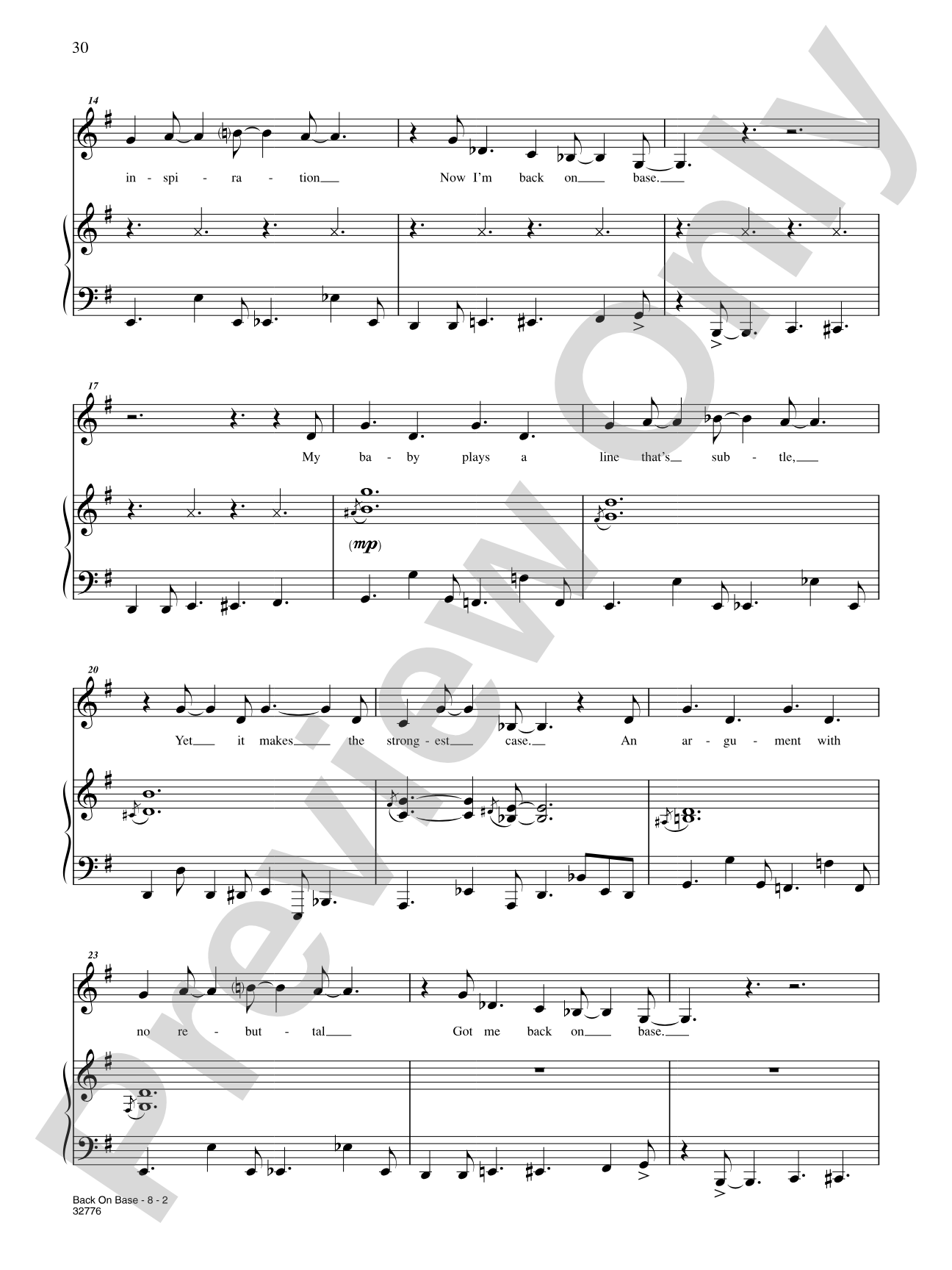

Back on Base (From "Closer than Ever"): Piano/Vocal/Chords
Ed. Lisa DeSpain
Item: 00-PS-0010463
$5.99
One moment…
Related Items
Love in a Home (From "Li'l Abner"): Piano/Vocal/Chords |
$4.99
|
View | |
The Sailor of My Dreams: Piano/Vocal/Chords |
$4.99
|
View | |
Timid Frieda: Piano/Vocal/Chords |
$4.99
|
View | |
Goodbye, Little Dream, Goodbye (From "Red, Hot and Blue"): Piano/Vocal/Chords |
$4.99
|
View | |
A Little Bit of Good (From "Chicago"): Piano/Vocal/Chords |
$4.99
|
View | |
My Love Is on the Way (From "the Golden Apple"): Piano/Vocal/Chords |
$4.99
|
View | |
Just Imagine (From "Good News"): Piano/Vocal/Chords |
$4.99
|
View | |
A Little Bit in Love (From "Wonderful Town"): Piano/Vocal/Chords |
$5.99
|
View | |
Windflowers (From "the Golden Apple"): Piano/Vocal/Chords |
$4.99
|
View | |
Long Ago (From "Half a Sixpence"): Piano/Vocal/Chords |
$4.99
|
View | |
My Man's Gone Now (From "Porgy and Bess"): Piano/Vocal/Chords |
$5.99
|
View | |
This Is All Very New to Me: Piano/Vocal/Chords |
$5.99
|
View | |
Bring on Tomorrow (From "Fame-the Musical"): Piano/Vocal/Chords |
$5.99
|
View | |
All for You: Piano/Vocal/Chords |
$4.99
|
View | |
Only Love (From "the Scarlet Pimpernel"): Piano/Vocal/Chords |
$4.99
|
View | |
Mira (From "Carnival"): Piano/Vocal/Chords |
$4.99
|
View | |
I'm a Stranger Here Myself: Piano/Vocal/Chords |
$5.99
|
View | |
Tell Me (From "Marie Christine"): Piano/Vocal/Chords |
$4.99
|
View | |
Romance (From "the Desert Song"): Piano/Vocal/Chords |
$5.99
|
View | |
Why Shouldn't I? (From "Jubilee"): Piano/Vocal/Chords |
$4.99
|
View | |
The Sun, Whose Rays Are All Ablaze (From "The Mikado"): Piano/Vocal/Chords |
$4.99
|
View | |
Some Other Time (From "On the Town"): Piano/Vocal/Chords |
$5.99
|
View | |
Love Is Sweeping the Country (From "of Thee I Sing"): Piano/Vocal/Chords |
$5.99
|
View | |
Ballad of Dependency: Piano/Vocal/Chords |
$4.99
|
View | |
Patterns (From "Baby"): Piano/Vocal/Chords |
$5.99
|
View | |
The Boy Friend (From "the Boy Friend"): Piano/Vocal/Chords |
$4.99
|
View | |
I Speak Six Languages (From "the 25th Annual Putnam County Spelling Bee"): Piano/Vocal/Chords |
$5.99
|
View | |
Safety in Numbers: Piano/Vocal/Chords |
$4.99
|
View | |
Jilted: Piano/Vocal/Chords |
$4.99
|
View | |
Yes, My Heart: Piano/Vocal/Chords |
$9.99
|
View | |
Millwork (From "Working"): Piano/Vocal/Chords |
$5.99
|
View | |
Wonderful, Wonderful Day (From "Seven Brides for Seven Brothers"): Piano/Vocal/Chords |
$4.99
|
View | |
Over the Rainbow (From "the Wizard of Oz"): Piano/Vocal/Chords |
$4.99
|
View | |
My Own Best Friend (From "Chicago"): Piano/Vocal/Chords |
$4.99
|
View | |
How Can I Wait? (From "Paint Your Wagon"): Piano/Vocal/Chords |
$5.99
|
View | |
If You Hadn't but You Did (From "Two on the Aisle"): Piano/Vocal/Chords |
$5.99
|
View | |
Lazy Afternoon (From "The Golden Apple"): Piano/Vocal/Chords |
$4.99
|
View | |
What Is a Woman? (From "I Do, I Do"): Piano/Vocal/Chords |
$4.99
|
View | |
Zip (From "Pal Joey"): Piano/Vocal/Chords |
$4.99
|
View | |
Ladies (From "Destry Rides Again"): Piano/Vocal/Chords |
$4.99
|
View | |
Think of Meryl Streep (From "Fame-the Musical"): Piano/Vocal/Chords |
$5.99
|
View | |
West End Avenue (From "The Magic Show"): Piano/Vocal/Chords |
$5.99
|
View | |
Notice Me, Horton (From "Seussical the Musical"): Piano/Vocal/Chords |
$5.99
|
View | |
My Cousin in Milwaukee (From "Pardon My English"): Piano/Vocal/Chords |
$5.99
|
View | |
Somewhere That's Green (From "Little Shop of Horrors"): Piano/Vocal/Chords |
$5.99
|
View | |
Old Friend (From "I'm Getting My Act Together and Taking It on the Road"): Piano/Vocal/Chords |
$5.99
|
View | |
Holding to the Ground (From "Falsettos"): Piano/Vocal/Chords |
$5.99
|
View | |
The Music Still Plays On (From "A New Brain"): Piano/Vocal/Chords |
$5.99
|
View | |
What a Nice Idea? (From "Two Gentlemen of Verona"): Piano/Vocal/Chords |
$4.99
|
View | |
Mad About the Boy (From "Words and Music"): Piano/Vocal/Chords |
$5.99
|
View |
Description
For aspiring and professional singers who love Broadway, Alfred's Singer's Library of Musical Theatre presents an elegant collection of the best-loved musical theatre songs in their original keys, authentically transcribed from their original vocal scores. Perfect for study, and equally suitable for the most important auditions and performances, each volume is dedicated to a specific vocal range, and contains dozens of songs from a variety of shows that span decades of theatre history. Multiple volumes are available for each of four vocal ranges: Soprano, Mezzo-Soprano/Alto, Tenor, and Baritone/Bass. Authoritative historical and contextual commentary, audition tips, and 16-bar cut suggestions for each song make it the most useful and relevant song library of its kind.
Titles: My Own Best Friend (Chicago) * Back on Base (Closer Than Ever) * That Mister Man of Mine (Dames At Sea) * A Little Brains, A Little Talent (Damn Yankees) * Something of My Own (Dessa Rose) * Ladies (Destry Rides Again) * I Know the Truth (Elton John and Tim Rice's "Aida") * Holding to the Ground (Falsettos) * Think of Meryl Streep (Fame: The Musical) * A Little Girl From Little Rock (Gentlemen Prefer Blondes) * Lazy Afternoon (The Golden Apple) * What Is a Woman? I Do, I Do) * Old Friend (I'm Getting My Act Together and Taking It on the Road) * Last Midnight (Into The Woods) * Moments in the Woods (Into The Woods) * Somewhere That's Green (Little hop of Horrors) * West End Avenue (The Magic Show) * Tell Me Why (A Man of No Importance) * Take It on the Chin (Me and My Girl) * Like It Was (Merrily We Roll Along) * The Music Still Plays On A New Brain) * Mad About the Boy (Oh! Coward) * It's a Fine Life (Oliver!) * How Can I Wait? (Paint Your Wagon) * Zip (Pal Joey) * My Cousin in Milwaukee (Pardon My English) * Notice Me Horton (Seussical the Musical) * Wonderful, Wonderful Day (Seven Brides For Seven Brothers) * What Nice Idea (Two Gentlemen of Verona) * If You Hadn't but You Did (Two on the Aisle ) * Over the Rainbow (The Wizard of Oz) * Millwork (Working).


Titles: My Own Best Friend (Chicago) * Back on Base (Closer Than Ever) * That Mister Man of Mine (Dames At Sea) * A Little Brains, A Little Talent (Damn Yankees) * Something of My Own (Dessa Rose) * Ladies (Destry Rides Again) * I Know the Truth (Elton John and Tim Rice's "Aida") * Holding to the Ground (Falsettos) * Think of Meryl Streep (Fame: The Musical) * A Little Girl From Little Rock (Gentlemen Prefer Blondes) * Lazy Afternoon (The Golden Apple) * What Is a Woman? I Do, I Do) * Old Friend (I'm Getting My Act Together and Taking It on the Road) * Last Midnight (Into The Woods) * Moments in the Woods (Into The Woods) * Somewhere That's Green (Little hop of Horrors) * West End Avenue (The Magic Show) * Tell Me Why (A Man of No Importance) * Take It on the Chin (Me and My Girl) * Like It Was (Merrily We Roll Along) * The Music Still Plays On A New Brain) * Mad About the Boy (Oh! Coward) * It's a Fine Life (Oliver!) * How Can I Wait? (Paint Your Wagon) * Zip (Pal Joey) * My Cousin in Milwaukee (Pardon My English) * Notice Me Horton (Seussical the Musical) * Wonderful, Wonderful Day (Seven Brides For Seven Brothers) * What Nice Idea (Two Gentlemen of Verona) * If You Hadn't but You Did (Two on the Aisle ) * Over the Rainbow (The Wizard of Oz) * Millwork (Working).
Back on Base (From "Closer than Ever"): Piano/Vocal/Chords isn't in MakeMusic Cloud just yet...but it could be. Let us know you'd like to see it, and you'll help shape what comes next. In the meantime, start a free trial and dive into thousands of interactive titles your students can play along with today.
Request This Title
Tell us you want it.
Start Your Free Trial
Explore everything that's ready to play right now.
Sample Audio
1
Over The Rainbow from The Wizard Of Oz
--:--
Over The Rainbow from The Wizard Of Oz
0:00
0:00
Sample Video
No sample videos found.
Additional Details
Series:
Singer's Library of Musical Theatre
Publisher:
Alfred Music
Page Count:
224
SKU:
00-PS-0010463
More about this title
About the Composer: David Shire
David Shire is a composer and lyricist who has shaped the American musical theatre landscape since the 1970s. His work spans intimate chamber musicals and large-scale Broadway productions, characterized by melodic sophistication and emotionally direct storytelling. Shire's collaborations with lyricist Richard Maltby Jr. produced some of musical theatre's most enduring scores, including "Closer than Ever," which premiered off-Broadway and has become a staple of audition and recital repertoires.
As an educator and mentor to generations of musical theatre musicians, Shire's compositions demand both technical skill and emotional authenticity from performers. His songs reward singers who engage with character specificity and lyrical nuance, making his work valuable for study beyond the stage.
Why we love this
This collection anchors singers to the original vocal scores and keys, eliminating the frustration of piecing together arrangements or second-guessing historical accuracy during high-stakes auditions. The contextual notes and 16-bar cut suggestions transform preparation from guesswork into informed artistry. Working from authoritative scores built by the composers themselves sets singers up for genuine artistic success.
What to expect
These songs carry the sophistication and emotional precision of intimate Broadway storytelling. They range from introspective character moments to witty, rhythmically playful numbers, each one crafted to showcase vocal artistry and dramatic intelligence. Singing from the original scores reconnects you to the composers' intentions and the theatrical contexts that made these moments powerful.
Who it's for
This collection serves singers preparing for auditions, recitals, and performance work who need authentic, professionally transcribed arrangements. Whether you're studying Broadway repertoire in a voice lesson or building an audition book, these are the scores composers and music directors expect to hear.
How to get the most out of it
- Study the historical context provided for each song before vocalizing. Understanding the character's dramatic situation and the show's era shapes phrasing and emotional intention.
- Use the chord symbols to collaborate effectively with an accompanist or to internalize harmonic structure. Knowing what chords support your vocal line deepens your ability to breathe and shape phrases musically.
- Prepare both the full version and the suggested 16-bar cut. Audition panels may request either, and familiarity with both demonstrates professionalism and thorough preparation.
- Mark your vocal score with dynamic and tempo adjustments that suit your voice type. Original keys are essential, but your interpretation within that key is personal.
How to use it
Program individual songs from this collection in recital settings to build a varied, musically literate program that spans Broadway history. These selections work equally well in cabaret-style evenings, classical voice recitals that incorporate musical theatre, or dedicated audition preparation. The diverse range of shows and vocal styles makes it simple to curate programming that matches your voice type and artistic interests.
Skills your students will build
- reading vocal scores with chord symbols and original key signatures
- interpreting character-specific phrasing and dramatic intention
- preparing audition cuts and understanding standard auditioning practices
- collaborating with accompanists using accurate harmonic information
- surveying Broadway repertoire across decades and musical styles
- analyzing lyrical prosody and connecting text to melody