
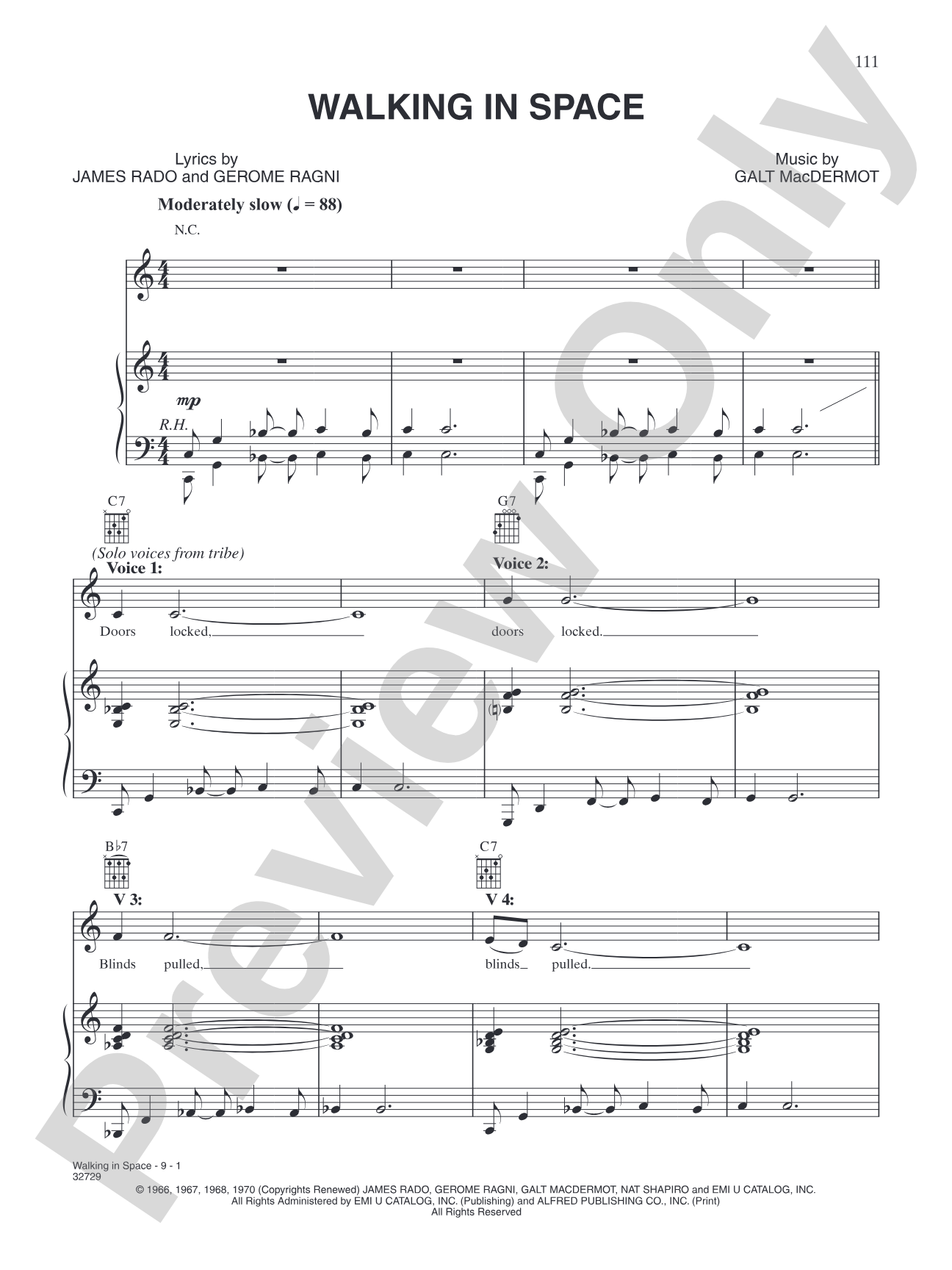
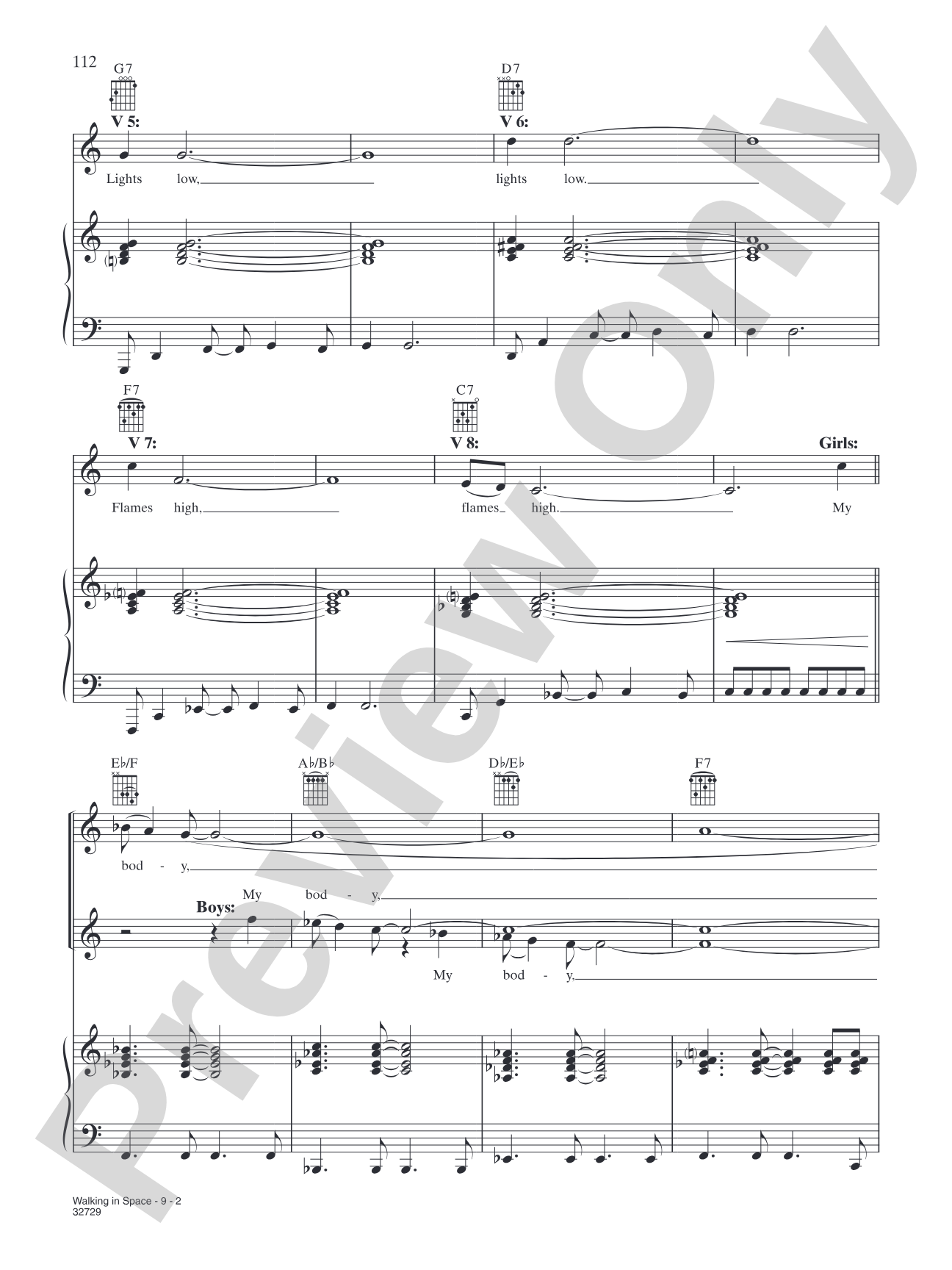

Walking In Space: Piano/Vocal/Chords
Music by Galt MacDermot, words by James Rado and Gerome Ragni
Item: 00-PS-0000522
$5.99
One moment…
Related Items
Hair: Piano/Vocal/Chords |
$5.99
|
View | |
Manchester England: Piano/Vocal/Chords |
$4.99
|
View | |
White Boys: Piano/Vocal/Chords |
$5.99
|
View | |
Donna: Piano/Vocal/Chords |
$5.99
|
View | |
Easy to Be Hard (from "Hair"): Piano/Vocal/Chords |
$4.99
|
View | |
Four Score / Abie Baby (from "Hair"): Piano/Vocal/Chords |
$4.99
|
View | |
Hashish (from "Hair"): Piano/Vocal/Chords |
$4.99
|
View | |
Air (from "Hair"): Piano/Vocal/Chords |
$4.99
|
View | |
What a Piece of Work Is Man / How Dare They Try (from "Hair"): Piano/Vocal/Chords |
$4.99
|
View | |
I Got Life (from "Hair"): Piano/Vocal/Chords |
$5.99
|
View | |
Electric Blues (from "Hair"): Piano/Vocal/Chords |
$5.99
|
View | |
I'm Black / Ain't Got No (from "Hair"): Piano/Vocal/Chords |
$4.99
|
View | |
Black Boys (from "Hair"): Piano/Vocal/Chords |
$4.99
|
View | |
Where Do I Go? (from "Hair"): Piano/Vocal/Chords |
$4.99
|
View | |
Three-Five-Zero-Zero (from "Hair"): Piano/Vocal/Chords |
$4.99
|
View | |
Good Morning Starshine (from "Hair"): Piano/Vocal/Chords |
$4.99
|
View | |
Frank Mills (from "Hair"): Piano/Vocal/Chords |
$4.99
|
View | |
Hare Krishna / Be In (from "Hair"): Piano/Vocal/Chords |
$5.99
|
View | |
Sodomy (from "Hair"): Piano/Vocal/Chords |
$4.99
|
View | |
Colored Spade (from "Hair"): Piano/Vocal/Chords |
$4.99
|
View | |
Sheila Franklin / I Believe in Love (from "Hair"): Piano/Vocal/Chords |
$4.99
|
View | |
Initials (from "Hair"): Piano/Vocal/Chords |
$4.99
|
View | |
Going Down (from "Hair"): Piano/Vocal/Chords |
$5.99
|
View | |
My Conviction (from "Hair"): Piano/Vocal/Chords |
$4.99
|
View | |
Oh Great God of Power / Manchester England (Reprise) (from "Hair"): Piano/Vocal/Chords |
$4.99
|
View | |
Yes, I's Finished on Y'all's Farmlands (from "Hair"): Piano/Vocal/Chords |
$4.99
|
View | |
Flesh Failures / Eyes Look Your Last / Let the Sun Shine In (from "Hair"): Piano/Vocal/Chords |
$5.99
|
View | |
Give Up All Desires (from "Hair"): Piano/Vocal/Chords |
$4.99
|
View | |
Hair: Vocal Selections (Broadway Edition): Piano/Vocal/Chords Book |
$19.95
|
View |
Description
The musical Hair was a cultural phenomenon in the epoch-changing era of the 1960s. Broadway has never been the same. This songbook includes highlights from the smash hit revival of the show, which has attracted raves from audiences and critics alike. Relive the new dawning of the Age of Aquarius and let the sun shine in! Titles: Air * Aquarius * Black Boys * Colored Spade * Donna * Easy to Be Hard * Flesh Failures, The / Let the Sun Shine In * Frank Mills * Give Up All Desires * Going Down * Good Morning Starshine * Hair * Hare Krishna (Be In) * Hashish * I Believe in Love * I Got Life * I'm Black / Ain't Got No * Initials * Manchester England * My Conviction * Old Fashioned Melody / Electric Blues * Sodomy * Three-Five-Zero-Zero * Walking in Space * What a Piece of Work Is Man * Where Do I Go? * White Boys * Yes, I's Finished on Y'alls Farmlands / Abie Baby.


Discover MakeMusic Cloud: thousands of interactive titles your students can play along with today.
Sample Audio
No sample audio found.
Sample Video
No sample videos found.
Additional Details
Publisher:
Alfred Music
Page Count:
150
SKU:
00-PS-0000522
More about this title
About the Composer: Galt MacDermot
Galt MacDermot composed the score for Hair, the 1968 rock musical that upended Broadway conventions and became a defining soundtrack of the counterculture movement. His work merged contemporary rock and pop idioms with theatrical storytelling, creating music that felt urgent and alive to audiences experiencing massive social change. MacDermot's influence on musical theater composition extended far beyond Hair; he demonstrated that Broadway could authentically speak the language of its moment rather than relying on established theatrical formulas.
Why we love this
This collection captures the raw energy and melodic sophistication that made Hair revolutionary. The songs work equally well as solo recital material, ensemble showpieces, or teaching repertoire for singers who need to understand how to bridge rock idioms and theatrical legit singing. Pianists gain valuable experience accompanying contemporary vocal styles while students encounter harmony and song structures that shaped modern musical theater.
What to expect
Optimistic yet restless, spiritual yet irreverent. The melodies soar with genuine theatrical beauty while the rhythm section pulses with the energy of a generation questioning everything. These songs feel like they're happening in real time, not in some distant theatrical past.
Who it's for
Vocalists developing contemporary musical theater technique and singers preparing audition material from legitimate rock-influenced shows. Pianists accompanying singer-pianists or vocal recitals who want to deepen their understanding of 1960s theatrical idiom. Advanced high school and college students exploring how musical theater reflects cultural moments.
How to get the most out of it
- Commit fully to the rhythmic syncopation and groove; these songs resist a purely legit operatic approach and demand rhythmic precision alongside vocal musicality.
- Balance the rock-influenced piano accompaniment with the lyrics' emotional content. The casual rhythmic feel should never overshadow the song's substance or meaning.
- Listen to the original cast recording and consider how ensemble sections work, especially in numbers like 'Aquarius' and 'Let the Sun Shine In.' Understanding the intended vocal colors will inform phrasing choices.
How to use it
Select individual numbers for mixed vocal recitals or American musical theater showcases. Several songs work beautifully as audition material for programs seeking contemporary Broadway repertoire. Use shorter selections like 'Good Morning Starshine' or 'Frank Mills' in concert settings where you want to feature a singer's contemporary technique alongside traditional art song.
Skills your students will build
- Rhythmic precision in syncopated, rock-influenced accompaniment patterns
- Accompanying contemporary vocal styles that blend legit technique with pop/rock inflection
- Reading and executing piano voicings characteristic of 1960s rock and soul music
- Understanding how harmony and melody serve lyrical content in issue-driven songwriting
- Interpreting chord symbols and jazz-influenced harmonic extensions