
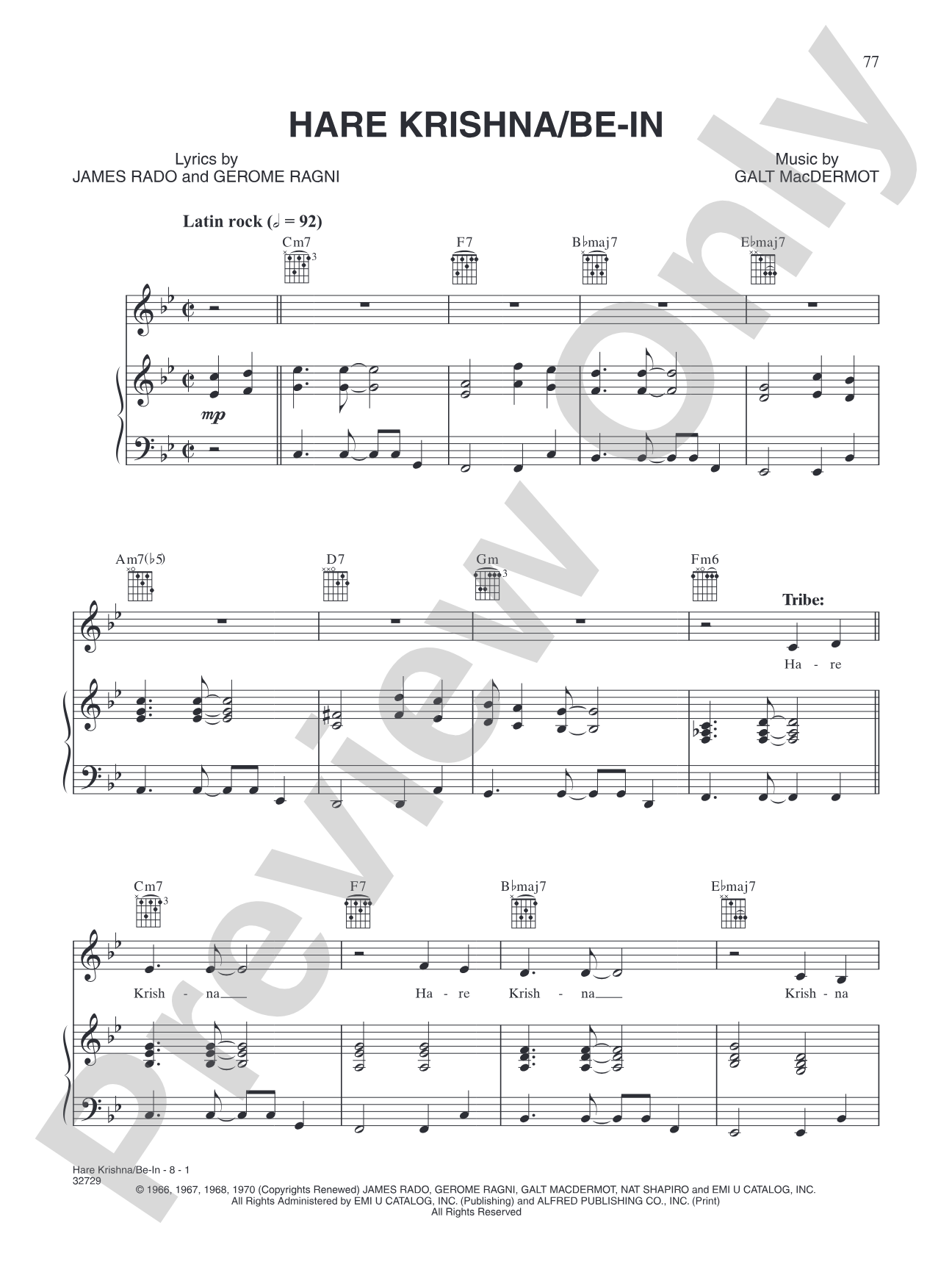
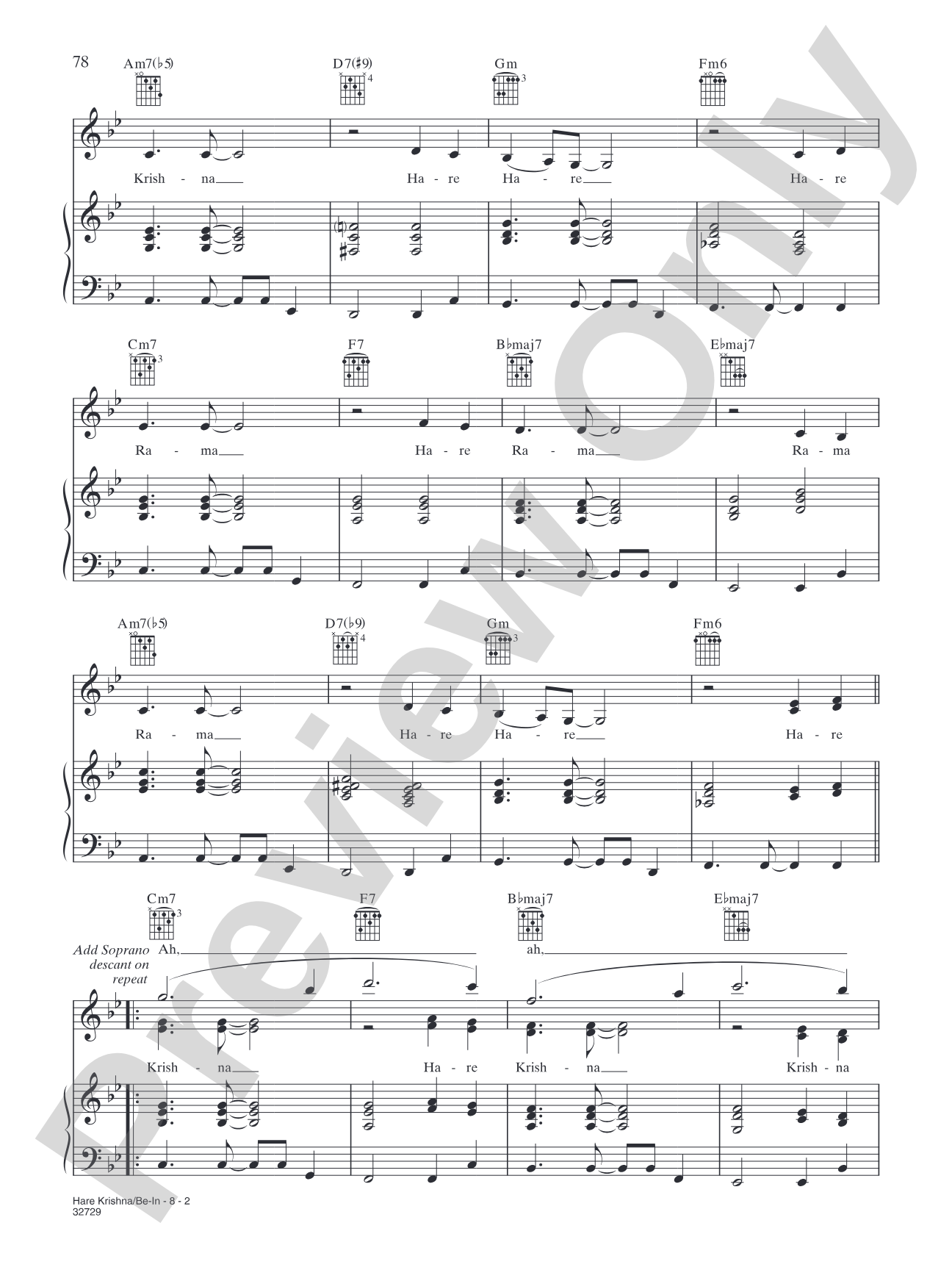

Hare Krishna / Be In (from "Hair"): Piano/Vocal/Chords
Music by Galt MacDermot, words by James Rado and Gerome Ragni
Item: 00-PS-0011125
$5.99
One moment…
Related Items
Hair: Piano/Vocal/Chords |
$5.99
|
View | |
Walking In Space: Piano/Vocal/Chords |
$5.99
|
View | |
Manchester England: Piano/Vocal/Chords |
$4.99
|
View | |
White Boys: Piano/Vocal/Chords |
$5.99
|
View | |
Donna: Piano/Vocal/Chords |
$5.99
|
View | |
Easy to Be Hard (from "Hair"): Piano/Vocal/Chords |
$4.99
|
View | |
Four Score / Abie Baby (from "Hair"): Piano/Vocal/Chords |
$4.99
|
View | |
Hashish (from "Hair"): Piano/Vocal/Chords |
$4.99
|
View | |
Air (from "Hair"): Piano/Vocal/Chords |
$4.99
|
View | |
What a Piece of Work Is Man / How Dare They Try (from "Hair"): Piano/Vocal/Chords |
$4.99
|
View | |
I Got Life (from "Hair"): Piano/Vocal/Chords |
$5.99
|
View | |
Electric Blues (from "Hair"): Piano/Vocal/Chords |
$5.99
|
View | |
I'm Black / Ain't Got No (from "Hair"): Piano/Vocal/Chords |
$4.99
|
View | |
Black Boys (from "Hair"): Piano/Vocal/Chords |
$4.99
|
View | |
Where Do I Go? (from "Hair"): Piano/Vocal/Chords |
$4.99
|
View | |
Three-Five-Zero-Zero (from "Hair"): Piano/Vocal/Chords |
$4.99
|
View | |
Good Morning Starshine (from "Hair"): Piano/Vocal/Chords |
$4.99
|
View | |
Frank Mills (from "Hair"): Piano/Vocal/Chords |
$4.99
|
View | |
Sodomy (from "Hair"): Piano/Vocal/Chords |
$4.99
|
View | |
Colored Spade (from "Hair"): Piano/Vocal/Chords |
$4.99
|
View | |
Sheila Franklin / I Believe in Love (from "Hair"): Piano/Vocal/Chords |
$4.99
|
View | |
Initials (from "Hair"): Piano/Vocal/Chords |
$4.99
|
View | |
Going Down (from "Hair"): Piano/Vocal/Chords |
$5.99
|
View | |
My Conviction (from "Hair"): Piano/Vocal/Chords |
$4.99
|
View | |
Oh Great God of Power / Manchester England (Reprise) (from "Hair"): Piano/Vocal/Chords |
$4.99
|
View | |
Yes, I's Finished on Y'all's Farmlands (from "Hair"): Piano/Vocal/Chords |
$4.99
|
View | |
Flesh Failures / Eyes Look Your Last / Let the Sun Shine In (from "Hair"): Piano/Vocal/Chords |
$5.99
|
View | |
Give Up All Desires (from "Hair"): Piano/Vocal/Chords |
$4.99
|
View | |
Hair: Vocal Selections (Broadway Edition): Piano/Vocal/Chords Book |
$19.95
|
View |
Description
The musical Hair was a cultural phenomenon in the epoch-changing era of the 1960s. Broadway has never been the same. This songbook includes highlights from the smash hit revival of the show, which has attracted raves from audiences and critics alike. Relive the new dawning of the Age of Aquarius and let the sun shine in! Titles: Air * Aquarius * Black Boys * Colored Spade * Donna * Easy to Be Hard * Flesh Failures, The / Let the Sun Shine In * Frank Mills * Give Up All Desires * Going Down * Good Morning Starshine * Hair * Hare Krishna (Be In) * Hashish * I Believe in Love * I Got Life * I'm Black / Ain't Got No * Initials * Manchester England * My Conviction * Old Fashioned Melody / Electric Blues * Sodomy * Three-Five-Zero-Zero * Walking in Space * What a Piece of Work Is Man * Where Do I Go? * White Boys * Yes, I's Finished on Y'alls Farmlands / Abie Baby.


Hare Krishna / Be In (from "Hair"): Piano/Vocal/Chords isn't in MakeMusic Cloud just yet...but it could be. Let us know you'd like to see it, and you'll help shape what comes next. In the meantime, start a free trial and dive into thousands of interactive titles your students can play along with today.
Request This Title
Tell us you want it.
Start Your Free Trial
Explore everything that's ready to play right now.
Sample Audio
No sample audio found.
Sample Video
No sample videos found.
Additional Details
Publisher:
Alfred Music
Page Count:
150
SKU:
00-PS-0011125
More about this title
About the Composer: Galt MacDermot
Galt MacDermot composed the score for Hair, the 1968 Broadway musical that became a watershed moment in American theater. His work broke from the conventions of traditional musical theater, blending rock, soul, and pop idioms with theatrical storytelling in ways that felt urgent and authentically of-the-moment. MacDermot's compositional approach opened doors for generations of musical theater composers who followed, proving that Broadway could speak in the vernacular of contemporary music without sacrificing sophistication.
Beyond Hair, MacDermot has composed extensively for film, television, and concert stages. His willingness to move fluidly between popular and classical forms has made him a singular voice in 20th-century American composition. For music educators, his work stands as a case study in how popular idioms can be elevated to serious artistic expression.
Why we love this
This collection captures the irreverent energy and melodic invention that made Hair a turning point in musical theater. The mix of introspection, activism, and unapologetic fun gives pianists and singers genuine material to sink into, rather than diluted show tunes. Programming selections from this songbook signals to audiences that you're offering something with real cultural weight and contemporary relevance.
What to expect
These songs pulse with the optimism, urgency, and questioning that defined an era. Whether you're singing about spiritual seeking, racial identity, or the simple plea to let the sun shine in, the music has an infectious warmth beneath its edge. There's intimacy in many of these pieces, even when they're being performed with full conviction and volume.
Who it's for
This collection serves pianists and singers preparing audition material, recital programs, or thematic concert selections drawn from one of the most consequential Broadway scores ever written. Voice students exploring contemporary musical theater repertoire and accompanists supporting that work will find the piano/vocal/chord format essential.
How to get the most out of it
- Pay attention to the rhythmic freedom implied by the pop and rock idioms throughout. These songs ask for a looser relationship to the beat than traditional musical theater; use the piano accompaniment to establish groove rather than metronomic precision.
- Balance the counterculture attitude with clear diction. The lyrics in many of these numbers are both provocative and poetic, and they deserve to land with specificity.
- The chord changes often move quickly and unconventionally. Work through the changes slowly first, then let them inform your touch and phrasing rather than fighting against them.
How to use it
Select one or two standout songs to anchor a cabaret-style evening or a thematic program exploring how Broadway has engaged social issues. The breadth of this collection allows you to program contrasting moods within a single set; pair an introspective number with something celebratory. Consider using this material as a bridge between traditional musical theater study and conversations about how popular music and art music intersect.
Skills your students will build
- navigating rhythm changes between pop/rock and theatrical time signatures
- singing with idiomatic style and authenticity in contemporary musical theater
- reading chord symbols and comping patterns beyond classical harmonic analysis
- balancing lyrical clarity with groove-based accompaniment