
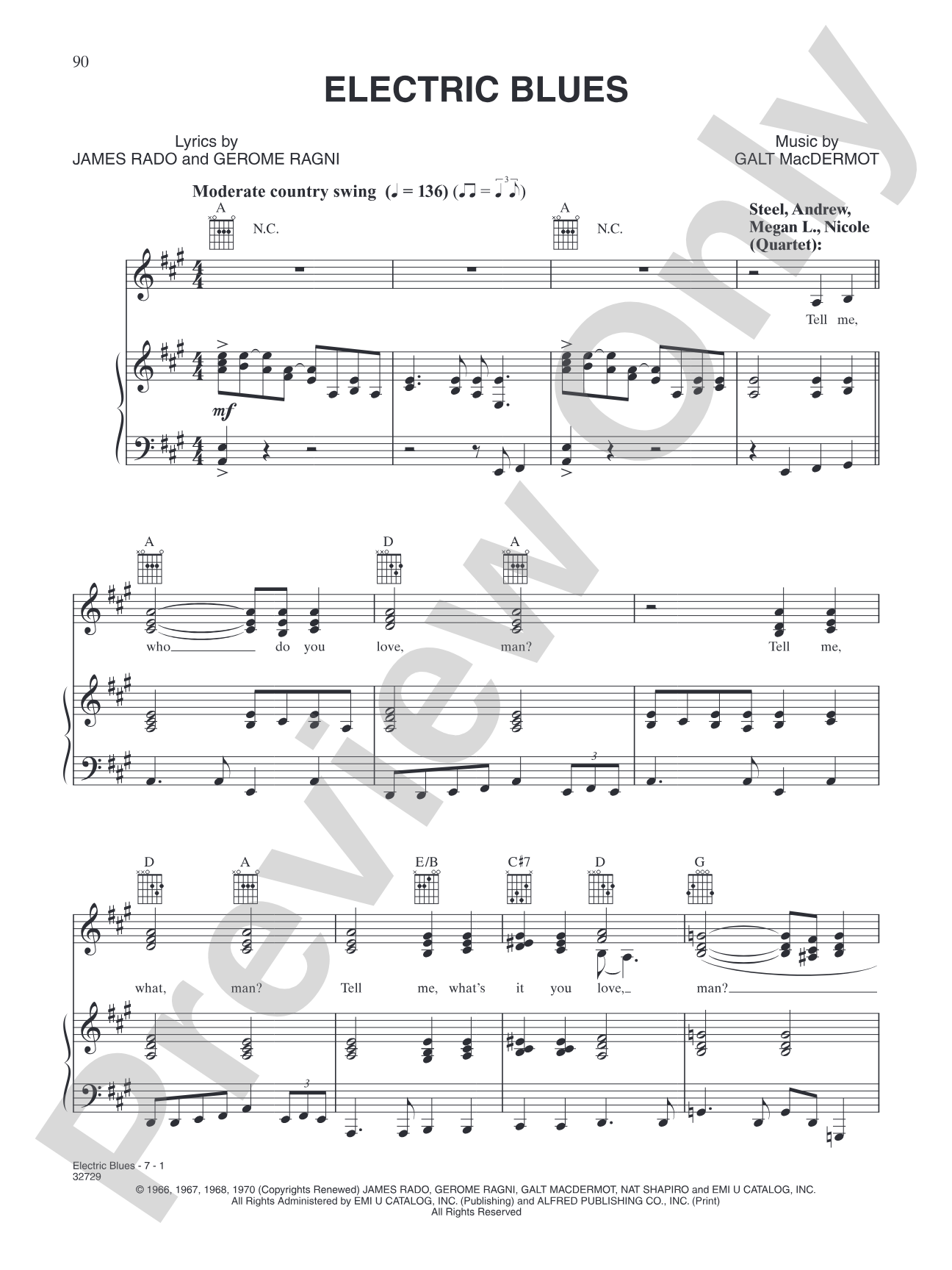
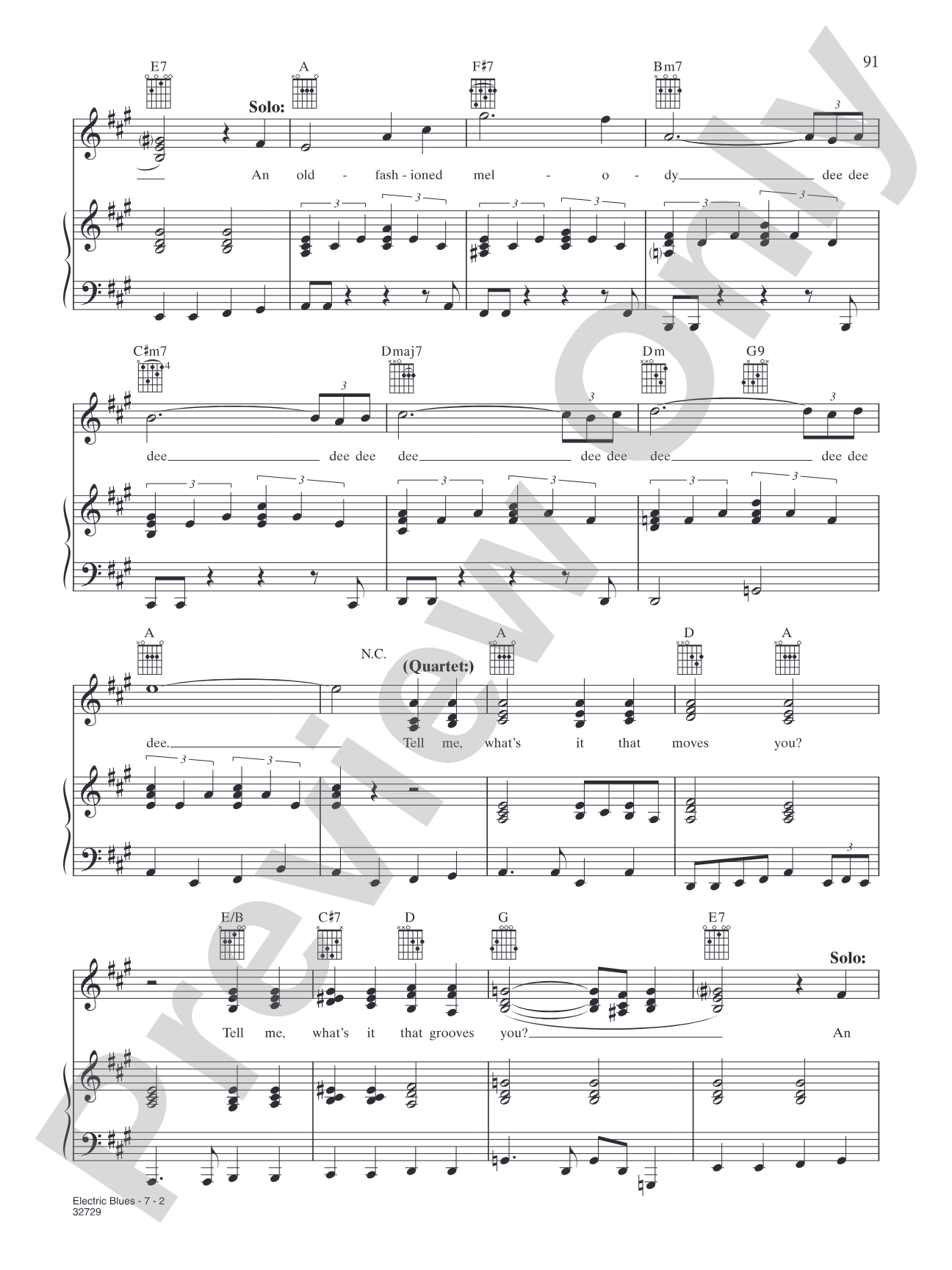

Electric Blues (from "Hair"): Piano/Vocal/Chords
Music by Galt MacDermot, words by James Rado and Gerome Ragni
Item: 00-PS-0011113
$5.99
One moment…
Related Items
Hair: Piano/Vocal/Chords |
$5.99
|
View | |
Walking In Space: Piano/Vocal/Chords |
$5.99
|
View | |
Manchester England: Piano/Vocal/Chords |
$4.99
|
View | |
White Boys: Piano/Vocal/Chords |
$5.99
|
View | |
Donna: Piano/Vocal/Chords |
$5.99
|
View | |
Easy to Be Hard (from "Hair"): Piano/Vocal/Chords |
$4.99
|
View | |
Four Score / Abie Baby (from "Hair"): Piano/Vocal/Chords |
$4.99
|
View | |
Hashish (from "Hair"): Piano/Vocal/Chords |
$4.99
|
View | |
Air (from "Hair"): Piano/Vocal/Chords |
$4.99
|
View | |
What a Piece of Work Is Man / How Dare They Try (from "Hair"): Piano/Vocal/Chords |
$4.99
|
View | |
I Got Life (from "Hair"): Piano/Vocal/Chords |
$5.99
|
View | |
I'm Black / Ain't Got No (from "Hair"): Piano/Vocal/Chords |
$4.99
|
View | |
Black Boys (from "Hair"): Piano/Vocal/Chords |
$4.99
|
View | |
Where Do I Go? (from "Hair"): Piano/Vocal/Chords |
$4.99
|
View | |
Three-Five-Zero-Zero (from "Hair"): Piano/Vocal/Chords |
$4.99
|
View | |
Good Morning Starshine (from "Hair"): Piano/Vocal/Chords |
$4.99
|
View | |
Frank Mills (from "Hair"): Piano/Vocal/Chords |
$4.99
|
View | |
Hare Krishna / Be In (from "Hair"): Piano/Vocal/Chords |
$5.99
|
View | |
Sodomy (from "Hair"): Piano/Vocal/Chords |
$4.99
|
View | |
Colored Spade (from "Hair"): Piano/Vocal/Chords |
$4.99
|
View | |
Sheila Franklin / I Believe in Love (from "Hair"): Piano/Vocal/Chords |
$4.99
|
View | |
Initials (from "Hair"): Piano/Vocal/Chords |
$4.99
|
View | |
Going Down (from "Hair"): Piano/Vocal/Chords |
$5.99
|
View | |
My Conviction (from "Hair"): Piano/Vocal/Chords |
$4.99
|
View | |
Oh Great God of Power / Manchester England (Reprise) (from "Hair"): Piano/Vocal/Chords |
$4.99
|
View | |
Yes, I's Finished on Y'all's Farmlands (from "Hair"): Piano/Vocal/Chords |
$4.99
|
View | |
Flesh Failures / Eyes Look Your Last / Let the Sun Shine In (from "Hair"): Piano/Vocal/Chords |
$5.99
|
View | |
Give Up All Desires (from "Hair"): Piano/Vocal/Chords |
$4.99
|
View | |
Hair: Vocal Selections (Broadway Edition): Piano/Vocal/Chords Book |
$19.95
|
View |
Description
The musical Hair was a cultural phenomenon in the epoch-changing era of the 1960s. Broadway has never been the same. This songbook includes highlights from the smash hit revival of the show, which has attracted raves from audiences and critics alike. Relive the new dawning of the Age of Aquarius and let the sun shine in! Titles: Air * Aquarius * Black Boys * Colored Spade * Donna * Easy to Be Hard * Flesh Failures, The / Let the Sun Shine In * Frank Mills * Give Up All Desires * Going Down * Good Morning Starshine * Hair * Hare Krishna (Be In) * Hashish * I Believe in Love * I Got Life * I'm Black / Ain't Got No * Initials * Manchester England * My Conviction * Old Fashioned Melody / Electric Blues * Sodomy * Three-Five-Zero-Zero * Walking in Space * What a Piece of Work Is Man * Where Do I Go? * White Boys * Yes, I's Finished on Y'alls Farmlands / Abie Baby.


Discover MakeMusic Cloud: thousands of interactive titles your students can play along with today.
Sample Audio
No sample audio found.
Sample Video
No sample videos found.
Additional Details
Publisher:
Alfred Music
Page Count:
150
SKU:
00-PS-0011113
More about this title
About the Composer: Galt MacDermot
Galt MacDermot (1928-2018) was a Canadian-American composer who fundamentally changed the sound of musical theatre. His work on Hair introduced rock and soul sensibilities to Broadway in 1968, creating a score that spoke directly to the counterculture moment and refused to sound like anything that came before it. MacDermot's compositional voice blended gospel, funk, and rock with sophisticated harmonic choices, proving that popular music and theatrical craft were not opposites.
Beyond Hair, MacDermot composed for numerous Broadway productions and created film scores, but his legacy rests on his ability to make contemporary music feel urgent and alive on stage. For music educators, his work demonstrates how accessibility and artistic ambition coexist, and how a composer's willingness to embrace the musical language of their own time can create work that endures.
Why we love this
This collection captures the moment when Broadway finally embraced rock music as a legitimate theatrical voice. MacDermot's harmonic sophistication and rhythmic vitality make these arrangements engaging for skilled pianists and singers, while the cultural significance of Hair itself ensures your students connect immediately to the material. Programming from this book gives you access to genuinely singable, musically interesting songs that belong in any contemporary musical theatre curriculum.
What to expect
These songs vibrate with the energy of a cultural awakening. You'll encounter intimate folk-inflected moments alongside driving rock grooves, emotional vulnerability sitting alongside social commentary. The musical language feels of its era yet somehow timeless, with lyrics that still provoke thought and melodies that lodge immediately in memory.
Who it's for
Solo singers and pianist-vocalist pairs preparing audition material, recitals, or concert programming that embraces 1960s rock-inflected musical theatre. Music theatre programs, classical voice studios, and jazz-informed pianists will all find substantial material here. This book works equally well for undergraduate performance classes and advanced high school singers building a contemporary repertoire.
How to get the most out of it
- Anchor the rhythm section feel from the very first measure. These songs demand a pocket-conscious approach to the piano part; lock into the groove rather than playing strictly metronomic time.
- Explore the dynamic range in the vocal line. Many of these songs move between intimate, conversational moments and soaring, full-voiced sections. Don't let your interpretation flatten out.
- Pay attention to the jazz voicings and extended chords in the piano part. They're not decorative; they create the contemporary sound that makes Hair distinctive. Honor the harmonic color.
- Use the chord symbols as a launching point for improvisation and reharmonization. The spirit of the show invites musical risk-taking and individual expression.
How to use it
Feature selections from Hair in a modern musical theatre concert or as part of a thematic program exploring how Broadway absorbed rock music in the late 1960s. Individual songs work beautifully in recital settings and audition portfolios. Consider pairing material from this collection with other contemporary Broadway scores to trace how musical theatre evolved.
Skills your students will build
- Reading chord symbols and realizing jazz voicings on piano
- Connecting lyrical content to vocal interpretation and emotional arc
- Navigating rhythmic flexibility and groove-based accompaniment patterns
- Understanding how rock and soul idioms function in theatrical contexts
- Accompanying singers while maintaining stylistic authenticity