
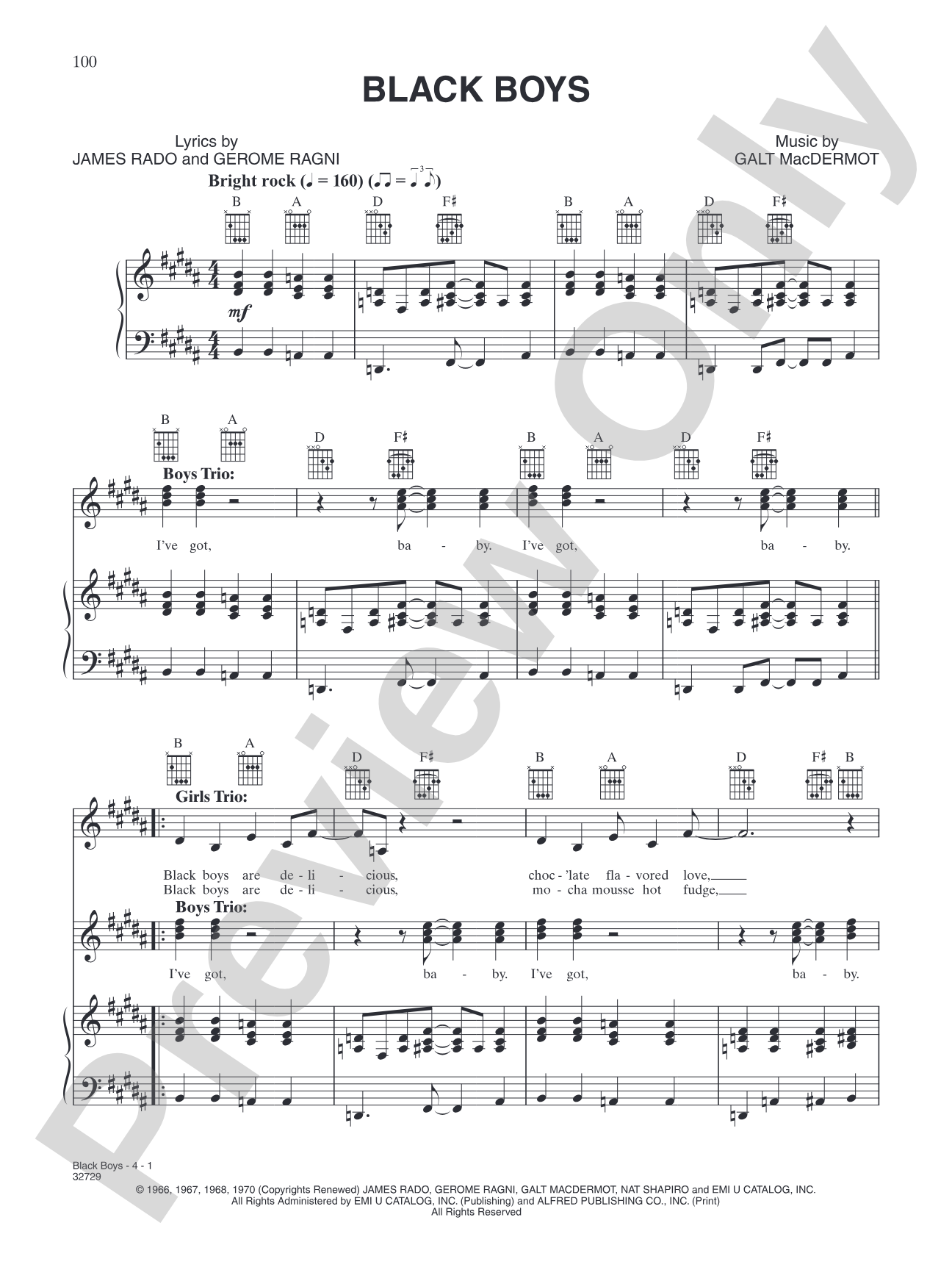

Black Boys (from "Hair"): Piano/Vocal/Chords
Music by Galt MacDermot, words by James Rado and Gerome Ragni
Item: 00-PS-0011115
$4.99
One moment…
Related Items
Hair: Piano/Vocal/Chords |
$5.99
|
View | |
Walking In Space: Piano/Vocal/Chords |
$5.99
|
View | |
Manchester England: Piano/Vocal/Chords |
$4.99
|
View | |
White Boys: Piano/Vocal/Chords |
$5.99
|
View | |
Donna: Piano/Vocal/Chords |
$5.99
|
View | |
Easy to Be Hard (from "Hair"): Piano/Vocal/Chords |
$4.99
|
View | |
Four Score / Abie Baby (from "Hair"): Piano/Vocal/Chords |
$4.99
|
View | |
Hashish (from "Hair"): Piano/Vocal/Chords |
$4.99
|
View | |
Air (from "Hair"): Piano/Vocal/Chords |
$4.99
|
View | |
What a Piece of Work Is Man / How Dare They Try (from "Hair"): Piano/Vocal/Chords |
$4.99
|
View | |
I Got Life (from "Hair"): Piano/Vocal/Chords |
$5.99
|
View | |
Electric Blues (from "Hair"): Piano/Vocal/Chords |
$5.99
|
View | |
I'm Black / Ain't Got No (from "Hair"): Piano/Vocal/Chords |
$4.99
|
View | |
Where Do I Go? (from "Hair"): Piano/Vocal/Chords |
$4.99
|
View | |
Three-Five-Zero-Zero (from "Hair"): Piano/Vocal/Chords |
$4.99
|
View | |
Good Morning Starshine (from "Hair"): Piano/Vocal/Chords |
$4.99
|
View | |
Frank Mills (from "Hair"): Piano/Vocal/Chords |
$4.99
|
View | |
Hare Krishna / Be In (from "Hair"): Piano/Vocal/Chords |
$5.99
|
View | |
Sodomy (from "Hair"): Piano/Vocal/Chords |
$4.99
|
View | |
Colored Spade (from "Hair"): Piano/Vocal/Chords |
$4.99
|
View | |
Sheila Franklin / I Believe in Love (from "Hair"): Piano/Vocal/Chords |
$4.99
|
View | |
Initials (from "Hair"): Piano/Vocal/Chords |
$4.99
|
View | |
Going Down (from "Hair"): Piano/Vocal/Chords |
$5.99
|
View | |
My Conviction (from "Hair"): Piano/Vocal/Chords |
$4.99
|
View | |
Oh Great God of Power / Manchester England (Reprise) (from "Hair"): Piano/Vocal/Chords |
$4.99
|
View | |
Yes, I's Finished on Y'all's Farmlands (from "Hair"): Piano/Vocal/Chords |
$4.99
|
View | |
Flesh Failures / Eyes Look Your Last / Let the Sun Shine In (from "Hair"): Piano/Vocal/Chords |
$5.99
|
View | |
Give Up All Desires (from "Hair"): Piano/Vocal/Chords |
$4.99
|
View | |
Hair: Vocal Selections (Broadway Edition): Piano/Vocal/Chords Book |
$19.95
|
View |
Description
The musical Hair was a cultural phenomenon in the epoch-changing era of the 1960s. Broadway has never been the same. This songbook includes highlights from the smash hit revival of the show, which has attracted raves from audiences and critics alike. Relive the new dawning of the Age of Aquarius and let the sun shine in! Titles: Air * Aquarius * Black Boys * Colored Spade * Donna * Easy to Be Hard * Flesh Failures, The / Let the Sun Shine In * Frank Mills * Give Up All Desires * Going Down * Good Morning Starshine * Hair * Hare Krishna (Be In) * Hashish * I Believe in Love * I Got Life * I'm Black / Ain't Got No * Initials * Manchester England * My Conviction * Old Fashioned Melody / Electric Blues * Sodomy * Three-Five-Zero-Zero * Walking in Space * What a Piece of Work Is Man * Where Do I Go? * White Boys * Yes, I's Finished on Y'alls Farmlands / Abie Baby.


Discover MakeMusic Cloud: thousands of interactive titles your students can play along with today.
Sample Audio
No sample audio found.
Sample Video
No sample videos found.
Additional Details
Publisher:
Alfred Music
Page Count:
150
SKU:
00-PS-0011115
More about this title
About the Composer: Galt MacDermot
Galt MacDermot (1928-2018) was a Canadian composer and pianist whose score for Hair became one of the most influential works in modern musical theater. Working with lyricists James Rado and Gerome Ragni, MacDermot created a score that wove together rock, pop, soul, and folk idioms in ways that Broadway audiences had never experienced before. His ability to blend contemporary musical styles with theatrical storytelling fundamentally changed how composers approached the musical stage.
MacDermot's career extended well beyond Hair. He composed for numerous Broadway productions, television, and film, and remained active in composition and performance throughout his life. His work demonstrated that popular music genres and theatrical music could coexist authentically, influencing generations of musical theater composers who followed.
Why we love this
This collection captures the raw energy and social commentary that made Hair revolutionary. Directors and music teachers return to these songs because they offer genuine dramatic material grounded in rock and pop idioms that students connect with immediately. The songbook format gives pianists and singers the complete harmonic picture, making it possible to perform these pieces authentically in recitals, showcases, and concert settings.
What to expect
These songs pulse with the optimism, rebellion, and raw honesty of the 1960s counterculture. Whether you're singing about love, identity, or social change, MacDermot's melodies are instantly memorable and emotionally direct. The music feels alive and immediate, never mannered or dated.
Who it's for
This book serves singers preparing audition material, pianists accompanying vocalists, music theater programs needing authentic Broadway repertoire, and anyone exploring the intersection of rock music and musical theater. The vocal line and chord symbols make it accessible to intermediate to advanced pianists and singers alike.
How to get the most out of it
- Pay close attention to the rhythmic precision in the rock-influenced numbers. MacDermot's arrangements depend on tight, syncopated comping from the pianist to create the groove that defines these songs.
- Treat the vocal line with conversational authenticity rather than operatic phrasing. These songs work best when the text feels spoken and immediate.
- Explore the harmonic color in the chords provided. Many of these voicings are specific to MacDermot's orchestration and will shape the song's character significantly.
- Balance the accompaniment so the song's message remains audible. The piano part can fill the texture without overwhelming the lyrical content that often addresses serious social themes.
How to use it
Feature these songs in cabaret-style concerts, music theater recitals, or spring shows that celebrate contemporary repertoire. Pair individual selections with classical art songs to illustrate how musical theater has evolved as a serious compositional form. The variety of moods and topics across the collection makes it easy to program multiple selections or single showcase pieces throughout the year.
Skills your students will build
- Reading and interpreting rock and pop chord symbols in a theatrical context
- Balancing vocal expression with accompaniment in songs with social and political content
- Understanding syncopation and rhythmic groove in contemporary musical theater
- Performing authenticity in styles outside classical tradition