
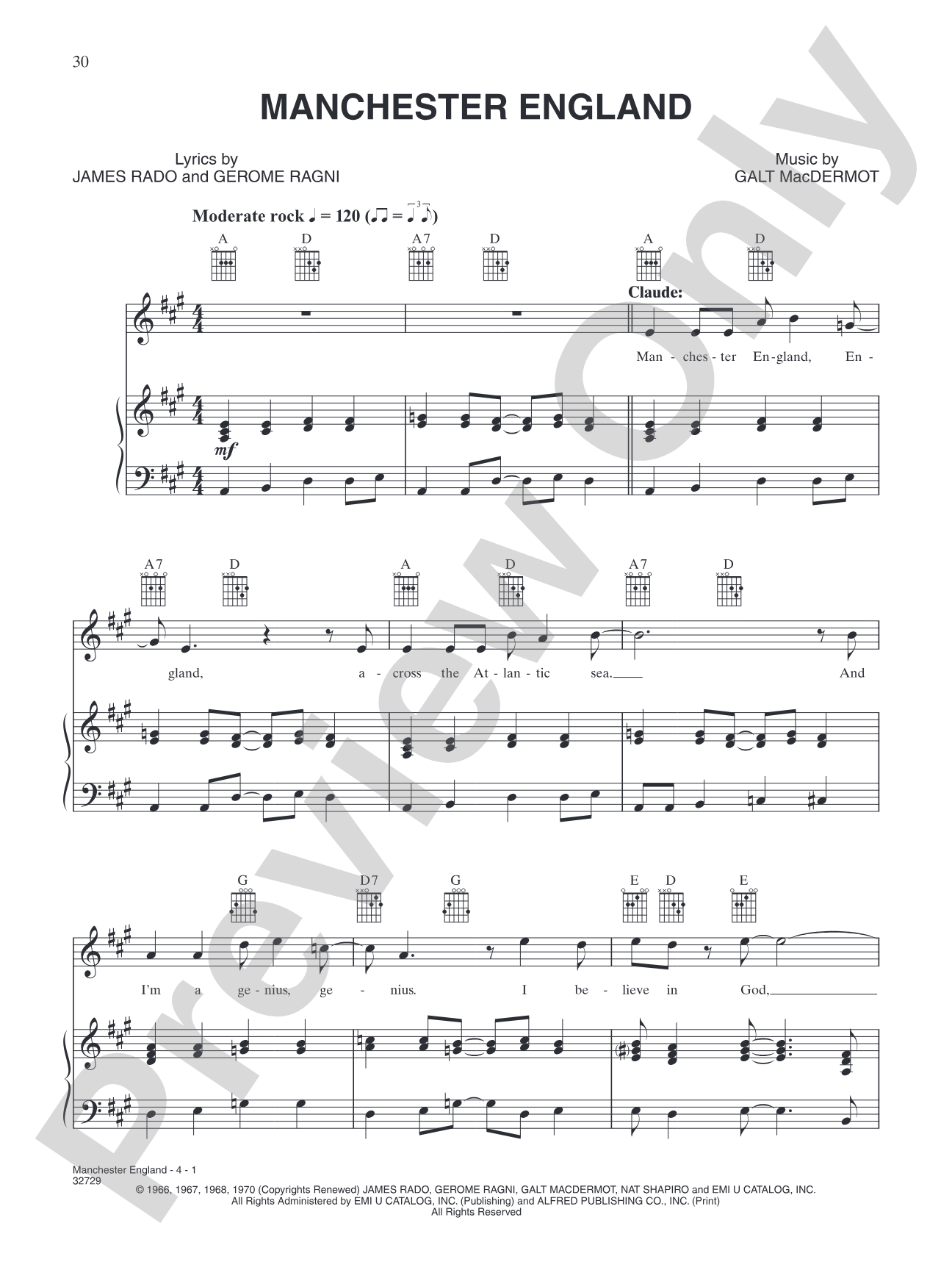

Manchester England: Piano/Vocal/Chords
Music by Galt MacDermot, words by James Rado and Gerome Ragni
Item: 00-PS-0000543
$4.99
One moment…
Related Items
Hair: Piano/Vocal/Chords |
$5.99
|
View | |
Walking In Space: Piano/Vocal/Chords |
$5.99
|
View | |
White Boys: Piano/Vocal/Chords |
$5.99
|
View | |
Donna: Piano/Vocal/Chords |
$5.99
|
View | |
Easy to Be Hard (from "Hair"): Piano/Vocal/Chords |
$4.99
|
View | |
Four Score / Abie Baby (from "Hair"): Piano/Vocal/Chords |
$4.99
|
View | |
Hashish (from "Hair"): Piano/Vocal/Chords |
$4.99
|
View | |
Air (from "Hair"): Piano/Vocal/Chords |
$4.99
|
View | |
What a Piece of Work Is Man / How Dare They Try (from "Hair"): Piano/Vocal/Chords |
$4.99
|
View | |
I Got Life (from "Hair"): Piano/Vocal/Chords |
$5.99
|
View | |
Electric Blues (from "Hair"): Piano/Vocal/Chords |
$5.99
|
View | |
I'm Black / Ain't Got No (from "Hair"): Piano/Vocal/Chords |
$4.99
|
View | |
Black Boys (from "Hair"): Piano/Vocal/Chords |
$4.99
|
View | |
Where Do I Go? (from "Hair"): Piano/Vocal/Chords |
$4.99
|
View | |
Three-Five-Zero-Zero (from "Hair"): Piano/Vocal/Chords |
$4.99
|
View | |
Good Morning Starshine (from "Hair"): Piano/Vocal/Chords |
$4.99
|
View | |
Frank Mills (from "Hair"): Piano/Vocal/Chords |
$4.99
|
View | |
Hare Krishna / Be In (from "Hair"): Piano/Vocal/Chords |
$5.99
|
View | |
Sodomy (from "Hair"): Piano/Vocal/Chords |
$4.99
|
View | |
Colored Spade (from "Hair"): Piano/Vocal/Chords |
$4.99
|
View | |
Sheila Franklin / I Believe in Love (from "Hair"): Piano/Vocal/Chords |
$4.99
|
View | |
Initials (from "Hair"): Piano/Vocal/Chords |
$4.99
|
View | |
Going Down (from "Hair"): Piano/Vocal/Chords |
$5.99
|
View | |
My Conviction (from "Hair"): Piano/Vocal/Chords |
$4.99
|
View | |
Oh Great God of Power / Manchester England (Reprise) (from "Hair"): Piano/Vocal/Chords |
$4.99
|
View | |
Yes, I's Finished on Y'all's Farmlands (from "Hair"): Piano/Vocal/Chords |
$4.99
|
View | |
Flesh Failures / Eyes Look Your Last / Let the Sun Shine In (from "Hair"): Piano/Vocal/Chords |
$5.99
|
View | |
Give Up All Desires (from "Hair"): Piano/Vocal/Chords |
$4.99
|
View | |
Hair: Vocal Selections (Broadway Edition): Piano/Vocal/Chords Book |
$19.95
|
View |
Description
The musical Hair was a cultural phenomenon in the epoch-changing era of the 1960s. Broadway has never been the same. This songbook includes highlights from the smash hit revival of the show, which has attracted raves from audiences and critics alike. Relive the new dawning of the Age of Aquarius and let the sun shine in! Titles: Air * Aquarius * Black Boys * Colored Spade * Donna * Easy to Be Hard * Flesh Failures, The / Let the Sun Shine In * Frank Mills * Give Up All Desires * Going Down * Good Morning Starshine * Hair * Hare Krishna (Be In) * Hashish * I Believe in Love * I Got Life * I'm Black / Ain't Got No * Initials * Manchester England * My Conviction * Old Fashioned Melody / Electric Blues * Sodomy * Three-Five-Zero-Zero * Walking in Space * What a Piece of Work Is Man * Where Do I Go? * White Boys * Yes, I's Finished on Y'alls Farmlands / Abie Baby.


Manchester England: Piano/Vocal/Chords isn't in MakeMusic Cloud just yet...but it could be. Let us know you'd like to see it, and you'll help shape what comes next. In the meantime, start a free trial and dive into thousands of interactive titles your students can play along with today.
Request This Title
Tell us you want it.
Start Your Free Trial
Explore everything that's ready to play right now.
Sample Audio
No sample audio found.
Sample Video
No sample videos found.
Additional Details
Publisher:
Alfred Music
Page Count:
150
SKU:
00-PS-0000543
More about this title
About the Composer: Galt MacDermot
Galt MacDermot composed the groundbreaking score for Hair in 1967, bringing rock and pop sensibilities to Broadway at a moment when the musical theater establishment was firmly classical. His work helped legitimize contemporary music on the stage and demonstrated that serious dramatic storytelling could sit alongside funk, soul, and psychedelic rock. MacDermot's willingness to blend genres opened doors for countless composers who followed.
Why we love this
This collection captures the full sweep of Hair's most memorable moments, from the iconic 'Aquarius' to the defiant energy of 'I Got Life.' What makes it invaluable for pianists and vocalists is the sheer variety of musical styles packed into one songbook: rock-influenced numbers sit alongside ballads, ensemble pieces work alongside intimate solos, and the vocal writing ranges from accessible to genuinely demanding. Directors programming concert material or recitalists building themed sets will find this repertoire speaks to multiple skill levels and allows for creative programming choices.
What to expect
Hair's score pulses with optimism, rebellion, and genuine joy. These songs carry the defiant energy of a generation asking uncomfortable questions and celebrating freedom, yet underneath that swagger sits real vulnerability and tenderness. The music feels alive and urgent in a way that demands presence from the performer, whether you're delivering a full-throated rock anthem or whispering an introspective moment.
Who it's for
Pianists and singers preparing for auditions, recitals, or concert performances will find substantial material here. Directors assembling a Broadway revue or thematic concert program centered on 1960s rock musicals can draw multiple songs without searching across multiple publications. Students exploring the intersection of rock music and musical theater will discover accessible entry points into both repertoire and style.
How to get the most out of it
- Study the original cast recording alongside the sheet music to absorb the rhythmic grooves and vocal inflections that define these songs; Hair's rock foundation means that swing, straight notation, and feel matter as much as note accuracy.
- Pay attention to the character and context of each song when selecting which numbers to perform; 'Good Morning Starshine' needs a completely different energy and approach than 'Easy to Be Hard,' even though both are ensemble pieces in the show.
- Balance the piano part between accompanying the voice and driving the groove, especially in uptempo rock numbers; the keyboard often carries the rhythmic pulse that vocalists depend on.
How to use it
Feature one or two standout numbers as concert anchors; 'Aquarius' or 'I Got Life' work as opening statements, while 'Let the Sun Shine In' provides a natural climax. A pianist could program 3-4 songs across a recital to explore contrasting material within a single songwriter's vision, or an ensemble could frame a set of contemporary musical theater numbers with Hair as the centerpiece. This collection also serves well for educational programming that traces how rock music entered Broadway and changed the form forever.
Skills your students will build
- Singing in a contemporary/rock style with appropriate phrasing and rhythmic flexibility
- Reading and performing syncopated rhythms and rock-influenced accompaniment patterns on keyboard
- Interpreting vocal text that ranges from conversational to lyrical within the same song
- Balancing ensemble and solo singing within a theatrical context
- Accompanying vocalists in styles outside traditional art song or classical theater music