
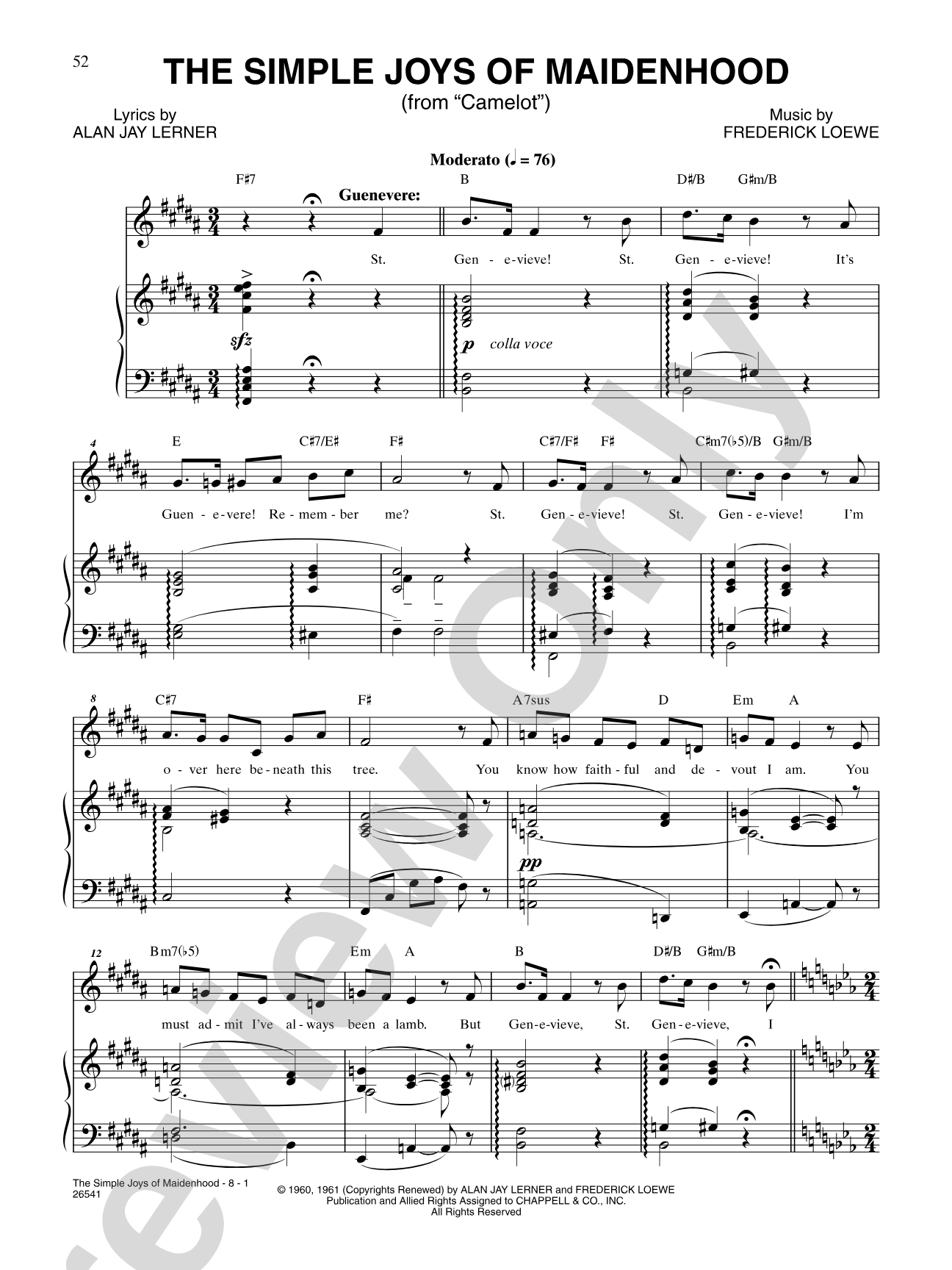
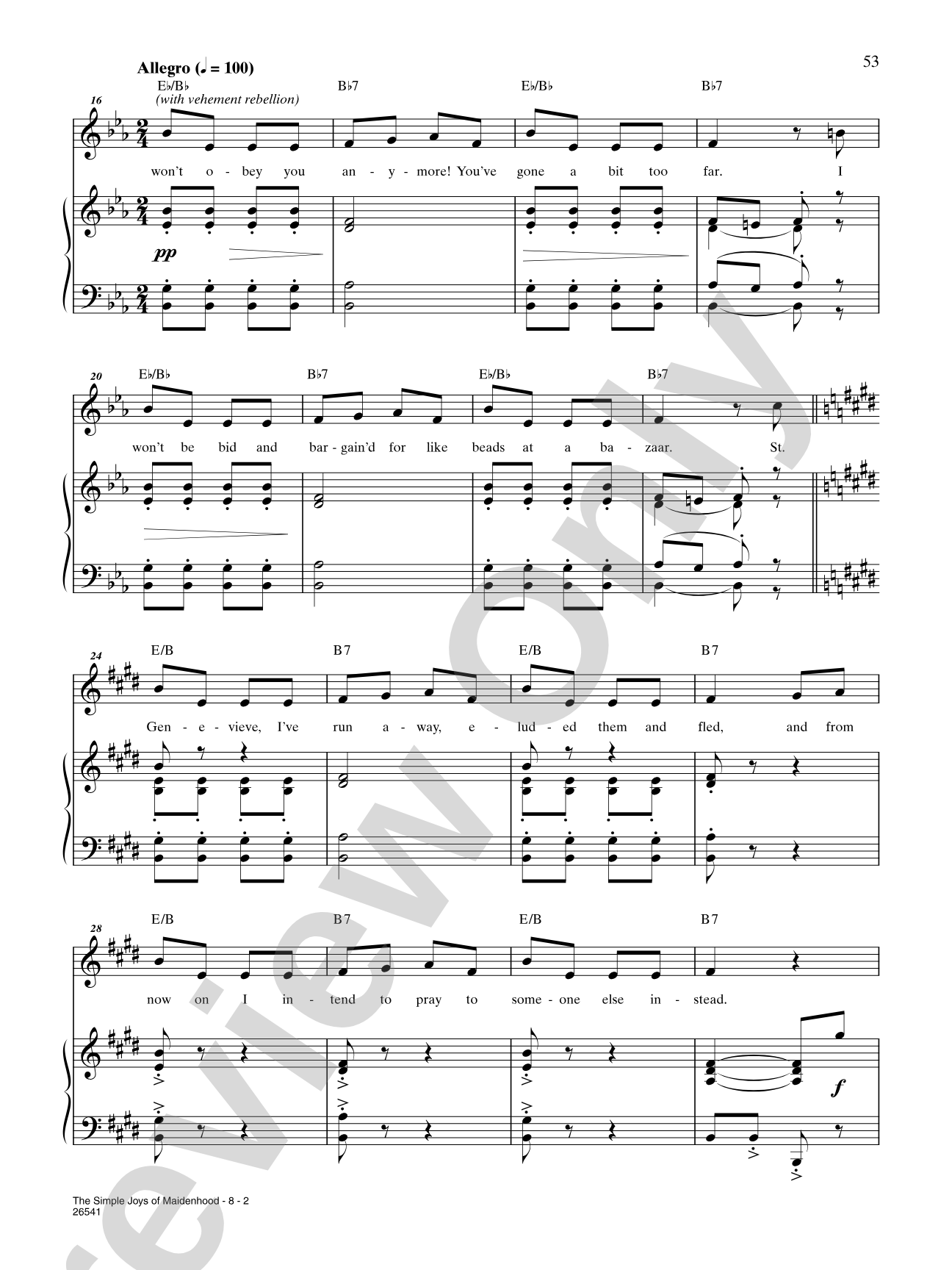

The Simple Joys of Maidenhood (From "Camelot"): Piano/Vocal/Chords
Item: 00-PSP-000595
$5.99
One moment…
Related Items
Namely You (From "Li'l Abner"): Piano/Vocal/Chords |
$4.99
|
View | |
Look to the Rainbow (From "Finian's Rainbow"): Piano/Vocal/Chords |
$4.99
|
View | |
I Loved (J'aimais) (From "Jacques Brel Is Alive and Well and Living in Paris"): Piano/Vocal/Chords |
$4.99
|
View | |
Simple Little Things (From "110 in the Shade"): Piano/Vocal/Chords |
$4.99
|
View | |
I Loved You Once in Silence (From "Camelot"): Piano/Vocal/Chords |
$5.99
|
View | |
Is It Really Me? (From "110 in the Shade"): Piano/Vocal/Chords |
$4.99
|
View | |
Little Lamb (From "Gypsy"): Piano/Vocal/Chords |
$4.99
|
View | |
Love, Don't Turn Away (From "110 in the Shade"): Piano/Vocal/Chords |
$4.99
|
View | |
Much More (From "The Fantasticks"): Piano/Vocal/Chords |
$4.99
|
View | |
What Is a Man? (From "Pal Joey"): Piano/Vocal/Chords |
$5.99
|
View | |
The Winner Takes It All (From "Mamma Mia!"): Piano/Vocal/Chords |
$5.99
|
View | |
Mamma Mia (From "Mamma Mia!"): Piano/Vocal/Chords |
$5.99
|
View | |
Love Who You Love (From "A Man of No Importance"): Piano/Vocal/Chords |
$4.99
|
View | |
I Can't Do the Sum (From "Babes in Toyland"): Piano/Vocal/Chords |
$4.99
|
View | |
Hangin' Around with You (From "Strike Up the Band"): Piano/Vocal/Chords |
$4.99
|
View | |
The Name of the Game (From "Mamma Mia!"): Piano/Vocal/Chords |
$5.99
|
View | |
Waiting for Life (From "Once On This Island"): Piano/Vocal/Chords |
$5.99
|
View | |
The Human Heart (From "Once On This Island"): Piano/Vocal/Chords |
$5.99
|
View | |
Come to My Garden (From "The Secret Garden"): Piano/Vocal/Chords |
$4.99
|
View | |
How Could I Ever Know? (From "The Secret Garden"): Piano/Vocal/Chords |
$4.99
|
View | |
Leavin' for De' Promise Lan' (From "Porgy and Bess"): Piano/Vocal/Chords |
$5.99
|
View | |
Princess (From "A Man of No Importance"): Piano/Vocal/Chords |
$5.99
|
View | |
Hernando's Hideaway (From "The Pajama Game"): Piano/Vocal/Chords |
$4.99
|
View | |
I'm Not at All in Love (From "The Pajama Game"): Piano/Vocal/Chords |
$5.99
|
View | |
Whatever Lola Wants (Lola Gets) (From "Damn Yankees"): Piano/Vocal/Chords |
$4.99
|
View | |
And All That Jazz (From "Chicago"): Piano/Vocal/Chords |
$5.99
|
View | |
When You're Good to Mama (From "Chicago"): Piano/Vocal/Chords |
$4.99
|
View | |
Don't Rain on My Parade (From "Funny Girl"): Piano/Vocal/Chords |
$5.99
|
View | |
Everything's Coming Up Roses (From "Gypsy"): Piano/Vocal/Chords |
$5.99
|
View | |
Johnny One Note (From "Babes in Arms"): Piano/Vocal/Chords |
$5.99
|
View | |
People (From "Funny Girl"): Piano/Vocal/Chords |
$4.99
|
View | |
Rose's Turn
|
$9.99
|
View | |
Change (From "A New Brain"): Piano/Vocal/Chords |
$9.99
|
View | |
No Time at All (From "Pippin"): Piano/Vocal/Chords |
$5.99
|
View | |
The Story Goes On (From "Baby"): Piano/Vocal/Chords |
$5.99
|
View | |
With You (From "Baby"): Piano/Vocal/Chords |
$4.99
|
View | |
Another Op'nin', Another Show (From "Kiss Me, Kate"): Piano/Vocal/Chords |
$5.99
|
View | |
C'est Magnifique (From "Can-Can"): Piano/Vocal/Chords |
$4.99
|
View | |
I Just Want to Be a Star (From "Nunsense"): Piano/Vocal/Chords |
$5.99
|
View | |
Miss Byrd (From "Closer Than Ever"): Piano/Vocal/Chords |
$9.99
|
View | |
Life Story (From "Closer Than Ever"): Piano/Vocal/Chords |
$9.99
|
View | |
When I Look at You (From "The Scarlet Pimpernel"): Piano/Vocal/Chords |
$4.99
|
View | |
Goodbye, My Love (From "Ragtime"): Piano/Vocal/Chords |
$5.99
|
View | |
Back to Before (From "Ragtime"): Piano/Vocal/Chords |
$5.99
|
View | |
Hey There! (From "The Pajama Game"): Piano/Vocal/Chords |
$4.99
|
View | |
Magic to Do (From "Pippin"): Piano/Vocal/Chords |
$4.99
|
View | |
Corner of the Sky (From "Pippin"): Piano/Vocal/Chords |
$4.99
|
View | |
When I'm Not Near the Girl I Love (From "Finian's Rainbow"): Piano/Vocal/Chords |
$4.99
|
View | |
Fifty Million Years Ago (From "Celebration"): Piano/Vocal/Chords |
$5.99
|
View | |
Asking for You (From "Do Re Mi"): Piano/Vocal/Chords |
$4.99
|
View |
Description
For aspiring and professional singers who love Broadway, Alfred's Singer's Library of Musical Theatre presents an elegant collection of the best-loved musical theatre songs in their original keys, authentically transcribed from their original vocal scores. Perfect for study, and equally suitable for the most important auditions and performances, each volume is dedicated to a specific vocal range, and contains dozens of songs from a variety of shows that span decades of theatre history. Multiple volumes are available for each of four vocal ranges: Soprano, Mezzo-Soprano/Alto, Tenor, and Baritone/Bass. Authoritative historical and contextual commentary, audition tips, and 16-bar cut suggestions for each song make it the most useful and relevant song library of its kind.
Titles: Anything Goes (Anything Goes) * Don't Rain on My Parade (Funny Girl) * People (Funny Girl) * Send in the Clowns (A Little Night Music) * Whatever Lola Wants (Lola Gets) (Damn Yankees) * When You're Good to Mama (Chicago) and more.


Titles: Anything Goes (Anything Goes) * Don't Rain on My Parade (Funny Girl) * People (Funny Girl) * Send in the Clowns (A Little Night Music) * Whatever Lola Wants (Lola Gets) (Damn Yankees) * When You're Good to Mama (Chicago) and more.
Discover MakeMusic Cloud: thousands of interactive titles your students can play along with today.
Sample Audio
1
Forty Days
--:--
2
Summertime
--:--
3
The Lady Is A Tramp
--:--
4
Without You
--:--
Forty Days
0:00
0:00
Sample Video
No sample videos found.
Additional Details
Series:
Singer's Library of Musical Theatre
Publisher:
Alfred Music
Page Count:
204
SKU:
00-PSP-000595
More about this title
About the Composer: Frederick Loewe
Frederick Loewe (1901-1988) composed some of Broadway's most enduring scores, working in close partnership with lyricist Alan Jay Lerner. His melodic gift and sophisticated harmonic language elevated musical theatre into genuine art form, influencing generations of composers who followed. Loewe's training in European classical music shaped his approach to writing for the voice, resulting in songs that demand both technical skill and emotional authenticity from singers.
Why we love this
Loewe's vocal writing sits perfectly in the voice when properly sung; he understood breath, phrasing, and the architecture of a memorable melody better than almost anyone in the theatre canon. "The Simple Joys of Maidenhood" captures Guinevere's innocence with genuine tenderness, and it's the kind of song that reveals whether a singer can sustain a long line and color a lyric with intention rather than oversinging.
What to expect
A moment of genuine vulnerability and wonder. Guinevere's daydreams about love unfold with orchestral delicacy and harmonic richness, creating a song that feels both theatrical and deeply personal. The music breathes with the optimism of youth and the yearning of someone on the threshold of transformation.
Who it's for
Aspiring and professional singers preparing auditions or concert recitals, particularly those drawn to classic Broadway repertoire in legitimate vocal styles. This edition serves singers studying musical theatre who want scores transcribed directly from the original vocal scores, ensuring both accuracy and performance-ready arrangement.
How to get the most out of it
- Honor the gentle legit quality of this melody; resist the urge to belt or oversell. Loewe's orchestration in the original is delicate, and your interpretation should match that texture.
- Shape the longer phrases with breath and intention rather than pushing for volume. This song rewards singers who trust the melody and lyric to carry the emotional weight.
- Pay attention to the accompaniment voicings in the chord charts. They suggest harmonic color and rubato points that can deepen the song's introspective quality.
- Find the distinction between the verses and any repeated sections; small vocal choices in dynamics or legit versus mix can prevent the song from feeling static over its full length.
How to use it
Include this song in recitals that trace the evolution of musical theatre song (pairing it with Sondheim, Kander, or contemporary writers shows the lineage clearly). It works beautifully in audition prep for classical soprano roles across opera and musical theatre, or as a standalone piece in a Broadway-focused concert where you want to highlight Loewe's melodic sophistication.
Skills your students will build
- Sustaining long legit vocal lines without vibrato oversinging or unwanted tension
- Interpreting harmonic color and rubato suggested by accompaniment voicings
- Balancing emotional authenticity with theatrical presentation in character-driven songs
- Reading and performing from authentic piano/vocal scores in original keys