
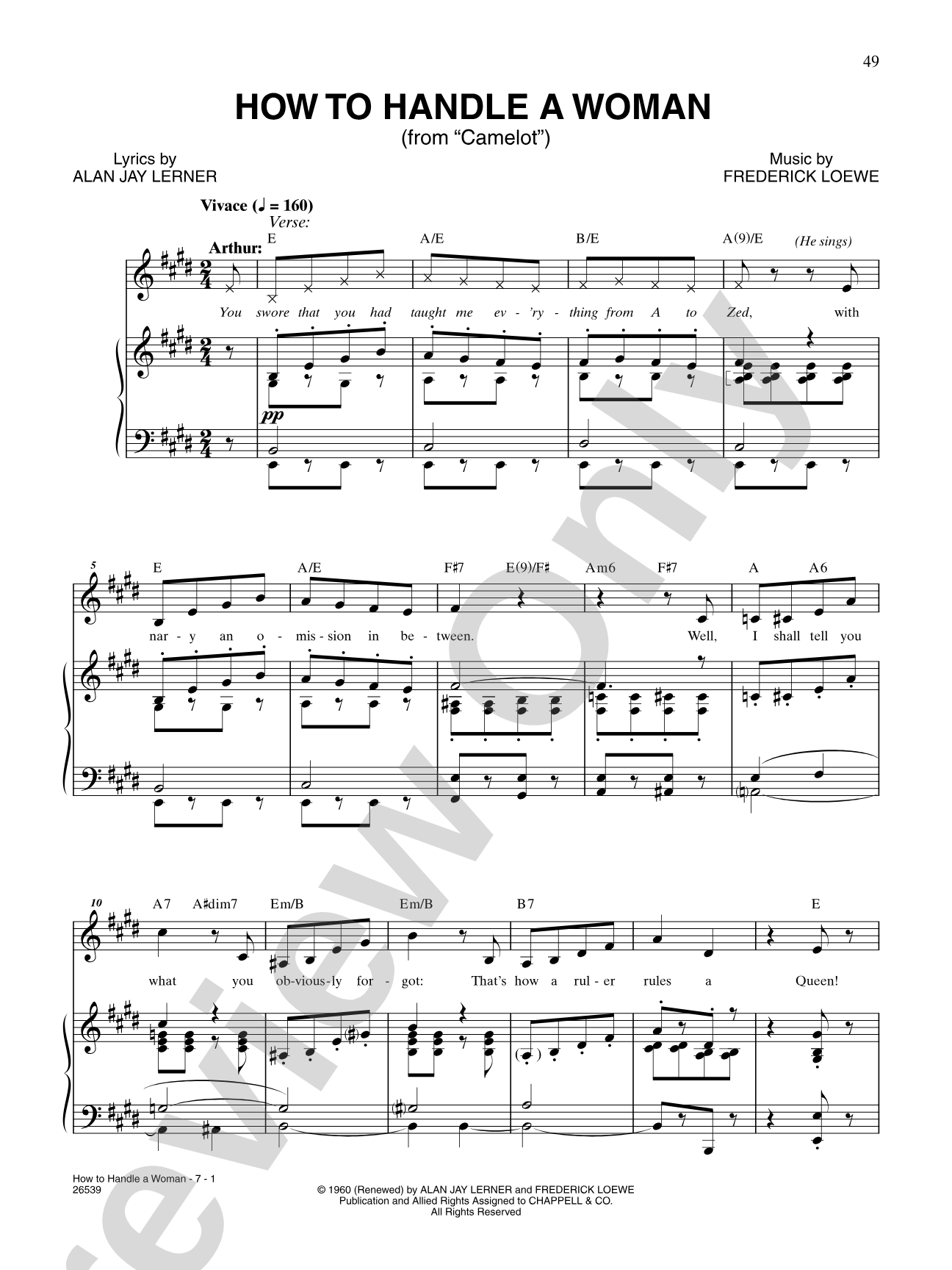
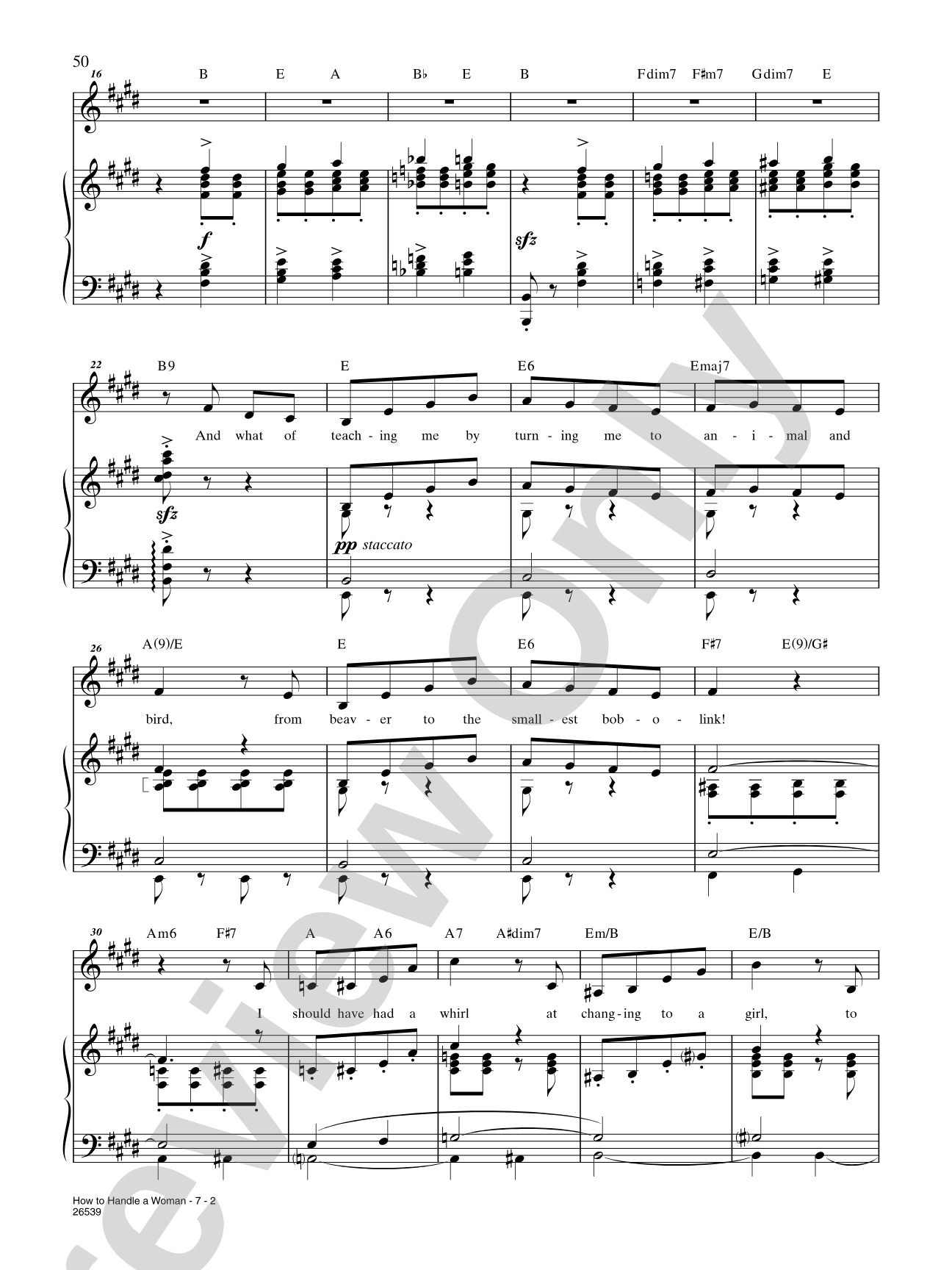

How to Handle a Woman (From "Camelot"): Piano/Vocal/Chords
Item: 00-PSP-000580
$5.99
One moment…
Related Items
Namely You (From "Li'l Abner"): Piano/Vocal/Chords |
$4.99
|
View | |
Look to the Rainbow (From "Finian's Rainbow"): Piano/Vocal/Chords |
$4.99
|
View | |
I Loved (J'aimais) (From "Jacques Brel Is Alive and Well and Living in Paris"): Piano/Vocal/Chords |
$4.99
|
View | |
Simple Little Things (From "110 in the Shade"): Piano/Vocal/Chords |
$4.99
|
View | |
I Loved You Once in Silence (From "Camelot"): Piano/Vocal/Chords |
$5.99
|
View | |
Is It Really Me? (From "110 in the Shade"): Piano/Vocal/Chords |
$4.99
|
View | |
Little Lamb (From "Gypsy"): Piano/Vocal/Chords |
$4.99
|
View | |
Love, Don't Turn Away (From "110 in the Shade"): Piano/Vocal/Chords |
$4.99
|
View | |
Much More (From "The Fantasticks"): Piano/Vocal/Chords |
$4.99
|
View | |
The Simple Joys of Maidenhood (From "Camelot"): Piano/Vocal/Chords |
$5.99
|
View | |
What Is a Man? (From "Pal Joey"): Piano/Vocal/Chords |
$5.99
|
View | |
The Winner Takes It All (From "Mamma Mia!"): Piano/Vocal/Chords |
$5.99
|
View | |
Mamma Mia (From "Mamma Mia!"): Piano/Vocal/Chords |
$5.99
|
View | |
Love Who You Love (From "A Man of No Importance"): Piano/Vocal/Chords |
$4.99
|
View | |
I Can't Do the Sum (From "Babes in Toyland"): Piano/Vocal/Chords |
$4.99
|
View | |
Hangin' Around with You (From "Strike Up the Band"): Piano/Vocal/Chords |
$4.99
|
View | |
The Name of the Game (From "Mamma Mia!"): Piano/Vocal/Chords |
$5.99
|
View | |
Waiting for Life (From "Once On This Island"): Piano/Vocal/Chords |
$5.99
|
View | |
The Human Heart (From "Once On This Island"): Piano/Vocal/Chords |
$5.99
|
View | |
Come to My Garden (From "The Secret Garden"): Piano/Vocal/Chords |
$4.99
|
View | |
How Could I Ever Know? (From "The Secret Garden"): Piano/Vocal/Chords |
$4.99
|
View | |
Leavin' for De' Promise Lan' (From "Porgy and Bess"): Piano/Vocal/Chords |
$5.99
|
View | |
Princess (From "A Man of No Importance"): Piano/Vocal/Chords |
$5.99
|
View | |
Hernando's Hideaway (From "The Pajama Game"): Piano/Vocal/Chords |
$4.99
|
View | |
I'm Not at All in Love (From "The Pajama Game"): Piano/Vocal/Chords |
$5.99
|
View | |
Whatever Lola Wants (Lola Gets) (From "Damn Yankees"): Piano/Vocal/Chords |
$4.99
|
View | |
And All That Jazz (From "Chicago"): Piano/Vocal/Chords |
$5.99
|
View | |
When You're Good to Mama (From "Chicago"): Piano/Vocal/Chords |
$4.99
|
View | |
Don't Rain on My Parade (From "Funny Girl"): Piano/Vocal/Chords |
$5.99
|
View | |
Everything's Coming Up Roses (From "Gypsy"): Piano/Vocal/Chords |
$5.99
|
View | |
Johnny One Note (From "Babes in Arms"): Piano/Vocal/Chords |
$5.99
|
View | |
People (From "Funny Girl"): Piano/Vocal/Chords |
$4.99
|
View | |
Rose's Turn
|
$9.99
|
View | |
Change (From "A New Brain"): Piano/Vocal/Chords |
$9.99
|
View | |
No Time at All (From "Pippin"): Piano/Vocal/Chords |
$5.99
|
View | |
The Story Goes On (From "Baby"): Piano/Vocal/Chords |
$5.99
|
View | |
With You (From "Baby"): Piano/Vocal/Chords |
$4.99
|
View | |
Another Op'nin', Another Show (From "Kiss Me, Kate"): Piano/Vocal/Chords |
$5.99
|
View | |
C'est Magnifique (From "Can-Can"): Piano/Vocal/Chords |
$4.99
|
View | |
I Just Want to Be a Star (From "Nunsense"): Piano/Vocal/Chords |
$5.99
|
View | |
Miss Byrd (From "Closer Than Ever"): Piano/Vocal/Chords |
$9.99
|
View | |
Life Story (From "Closer Than Ever"): Piano/Vocal/Chords |
$9.99
|
View | |
When I Look at You (From "The Scarlet Pimpernel"): Piano/Vocal/Chords |
$4.99
|
View | |
Goodbye, My Love (From "Ragtime"): Piano/Vocal/Chords |
$5.99
|
View | |
Back to Before (From "Ragtime"): Piano/Vocal/Chords |
$5.99
|
View | |
Hey There! (From "The Pajama Game"): Piano/Vocal/Chords |
$4.99
|
View | |
Magic to Do (From "Pippin"): Piano/Vocal/Chords |
$4.99
|
View | |
Corner of the Sky (From "Pippin"): Piano/Vocal/Chords |
$4.99
|
View | |
When I'm Not Near the Girl I Love (From "Finian's Rainbow"): Piano/Vocal/Chords |
$4.99
|
View | |
Fifty Million Years Ago (From "Celebration"): Piano/Vocal/Chords |
$5.99
|
View |
Description
For aspiring and professional singers who love Broadway, Alfred's Singer's Library of Musical Theatre presents an elegant collection of the best-loved musical theatre songs in their original keys, authentically transcribed from their original vocal scores. Perfect for study, and equally suitable for the most important auditions and performances, each volume is dedicated to a specific vocal range, and contains dozens of songs from a variety of shows that span decades of theatre history. Multiple volumes are available for each of four vocal ranges: Soprano, Mezzo-Soprano/Alto, Tenor, and Baritone/Bass. Authoritative historical and contextual commentary, audition tips, and 16-bar cut suggestions for each song make it the most useful and relevant song library of its kind.
Titles: Comedy Tonight (A Funny Thing Happened on the Way to the Forum) * Get Me to the Church on Time (My Fair Lady) * If Ever I Would Leave You (Camelot) * Make Them Hear You (Ragtime, The Musical) * They Call the Wind Maria (Paint Your Wagon) * Try to Remember (The Fantasticks) and more.


Titles: Comedy Tonight (A Funny Thing Happened on the Way to the Forum) * Get Me to the Church on Time (My Fair Lady) * If Ever I Would Leave You (Camelot) * Make Them Hear You (Ragtime, The Musical) * They Call the Wind Maria (Paint Your Wagon) * Try to Remember (The Fantasticks) and more.
How to Handle a Woman (From "Camelot"): Piano/Vocal/Chords isn't in MakeMusic Cloud just yet...but it could be. Let us know you'd like to see it, and you'll help shape what comes next. In the meantime, start a free trial and dive into thousands of interactive titles your students can play along with today.
Request This Title
Tell us you want it.
Start Your Free Trial
Explore everything that's ready to play right now.
Sample Audio
1
Camelot from Camelot
--:--
2
Ive Grown Accustomed To Her Face from My Fair Lady
--:--
3
Too Darn Hot from Kiss Me Kate
--:--
Camelot from Camelot
0:00
0:00
Sample Video
No sample videos found.
Additional Details
Series:
Singer's Library of Musical Theatre
Publisher:
Alfred Music
Page Count:
224
SKU:
00-PSP-000580
More about this title
About the Composer: Frederick Loewe
Frederick Loewe (1901-1988) composed some of the most enduring scores in American musical theatre, collaborating with lyricist Alan Jay Lerner to create works that defined the golden age of Broadway. His melodies are marked by elegance, singability, and an almost classical sophistication that elevated musical theatre composition. Loewe's gift for writing songs that feel both theatrical and intimately human made his work a model for generations of composers.
Why we love this
This collection grounds singers in music written by one of theatre's master craftsmen, and "How to Handle a Woman" exemplifies Loewe's ability to write character-driven comedy that's also musically substantial. The song sits comfortably for most voices in its original key while offering enough musical interest to sustain both study and performance. Programming a Loewe song signals artistic integrity to an audition panel and gives singers access to material that's been tested by decades of professional performers.
What to expect
The song has a warmth beneath its surface cynicism, with music that feels both conversational and genuinely melodic. There's a quality of wry wisdom in Loewe's setting of the lyric, delivered through harmonic sophistication that rewards careful listening.
Who it's for
Singers preparing Broadway auditions will find this song in its authoritative original key with full piano accompaniment and chord symbols for collaboration. Baritones and bass-baritones building audition books need material that showcases both musicality and comedic timing, and this Loewe standard delivers both.
How to get the most out of it
- The humor lands through conversational phrasing rather than oversinging; treat the lyrics as dialogue first, music second
- Track the song's emotional arc from cynical advice to genuine affection, letting the music reflect that shift in King Arthur's perspective
- Use the piano part as your guide for where the comedy sits; often the most pointed moments come just before or after Loewe's musical punctuation
How to use it
This works as a recital opener or closer for a solo programme, especially when paired with other character songs from golden-age musical theatre. In an audition context, it demonstrates your ability to handle comedy without sacrificing vocal quality or musicianship.
Skills your students will build
- Comedy and characterization through musical phrasing
- Navigating conversational vocal lines over supporting harmony
- Using chord symbols for collaboration with accompanists
- Interpreting stage direction embedded in Loewe's orchestration