

Sound Innovations for Concert Band: Ensemble Development for Intermediate Concert Band: B-flat Trumpet 1 Book
$9.99 USD
Sale price
$9.99 USD
Regular price
Skip to product information


Sound Innovations for Concert Band: Ensemble Development for Intermediate Concert Band: B-flat Trumpet 1 Book
Chorales and Warm-up Exercises for Tone, Technique and Rhythm
By Peter Boonshaft and Chris Bernotas
Item: 00-34582
$9.99
One moment…
Description
Sound Innovations: Ensemble Development for Intermediate Concert Band is a valuable resource for helping your students grow in their understanding and abilities as ensemble musicians. It contains 412 exercises, including more than 70 chorales by some of today's most renowned concert band composers. An assortment of exercises is grouped by key and presented in a variety of intermediate difficulty levels. Where possible, several exercises in the same category are provided to allow variety, while still accomplishing the goals of that specific type of exercise. You will notice that many exercises and chorales are clearly marked with dynamics, articulations, style, and tempo for students to practice those aspects of performance. Other exercises are intentionally left flexible for the teacher to determine how best to use them in facilitating and addressing the needs and goals of their ensemble. Whether your students are progressing through exercises to better their technical facility, or challenging their musicianship with beautiful chorales, this book can be used after any band method or as a supplement to performance music. Contains chorales composed by Roland Barrett, Andrew Boysen, Ralph Ford, Rossano Galante, Robert Sheldon, Todd Stalter, Randall Standridge, and Michael Story. The Ensemble Development Series is also available for Young Band and Advanced Band. Learn more at www.alfred.com/SIED.
This title is available in MakeMusic Cloud.


This title is available in MakeMusic Cloud.
Sound Innovations for Concert Band: Ensemble Development for Intermediate Concert Band: B-flat Trumpet 1 Book isn't in MakeMusic Cloud just yet...but it could be. Let us know you'd like to see it, and you'll help shape what comes next. In the meantime, start a free trial and dive into thousands of interactive titles your students can play along with today.
Request This Title
Tell us you want it.
Start Your Free Trial
Explore everything that's ready to play right now.
Sample Audio
1
Exercise 003 - Passing the Tonic
--:--
2
Exercise 014 - Scale Pattern
--:--
3
Exercise 018 - Flexibility
--:--
4
Exercise 022 - Intervals
--:--
5
Exercise 029 - Balance and Intonation - Shifting Chord Qualities
--:--
6
Exercise 032 - Expanding Intervals - Downward in Triads
--:--
7
Exercise 040 - Rhythmic Subdivision
--:--
8
Exercise 049 - Etude
--:--
9
Exercise 050 - Balance and Intonation - Diatonic Harmony
--:--
10
Exercise 050 - Chorale - Jesu, Meine Zuversicht, arr
--:--
11
Exercise 052 - Concert B-flat Major Scale and Chorale by Chris Bernotas
--:--
12
Exercise 057 - Chorale by Robert Sheldon
--:--
13
Exercise 059 - Chorale by Chris Bernotas
--:--
14
Exercise 060 - Chorale by Rossano Galante
--:--
15
Exercise 087 - Chorale by Michael Story
--:--
16
Exercise 088 - Concert G Minor Scale and Chorale by Chris Bernotas
--:--
17
Exercise 267 - Concert A-flat - Scale and Chorale by Chris Bernotas
--:--
Exercise 003 - Passing the Tonic
0:00
0:00
Sample Video
No sample videos found.
Additional Details
More about this title
About the Authors
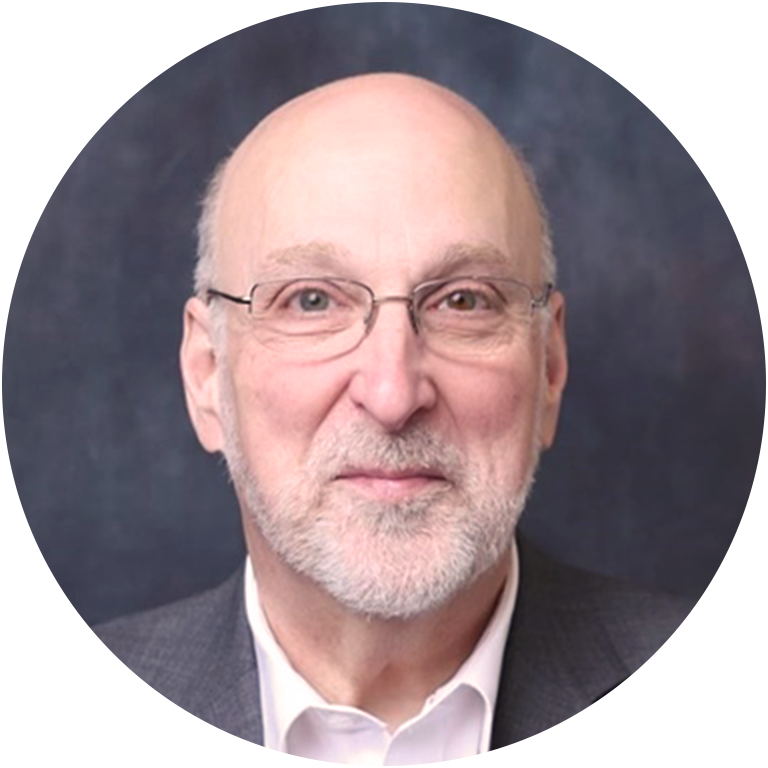
Peter Loel Boonshaft stands as one of today's most dynamic voices in music education. Recognized as the first recipient of the "George M. Parks Award for Leadership in Music Education" from the National Association for Music Education and Music For All, he serves as Director of Education for Jupiter Band Instruments. His weekly "Boonshaft's Blog" reaches music educators nationwide with inspiration and practical guidance.
His accomplishments include remarkable recognition at the highest levels. Dr. Boonshaft has received official proclamations from five state governors and a Certificate of Appreciation from former President Ronald Reagan. He has performed for former Presidents George H. W. Bush and Bill Clinton, as well as former British Prime Minister Margaret Thatcher. His academic honors encompass membership in Pi Kappa Lambda and Alpha Chi, the University of Hartford's Regent's Award (twice) and Outstanding Music Educator Award, three National Endowment for the Arts "Artist in Residence" selections, and three honorary life memberships in the Tri-M Music Honor Society.
As Professor Emeritus of Music at Hofstra University, Dr. Boonshaft previously taught at Moravian College and the University of Hartford. He founded and directed both the Pennsylvania Youth Honors Concert Band and the Connecticut Valley Youth Wind Ensemble. His educational credentials include a Bachelor of Music (Summa Cum Laude), Master of Music Education in Conducting, and a Doctor of Musical Arts degree, along with a Certificate from the Kodály Musical Training Institute. Throughout his career, he has been invited to speak and conduct across all fifty states and internationally.
His accomplishments include remarkable recognition at the highest levels. Dr. Boonshaft has received official proclamations from five state governors and a Certificate of Appreciation from former President Ronald Reagan. He has performed for former Presidents George H. W. Bush and Bill Clinton, as well as former British Prime Minister Margaret Thatcher. His academic honors encompass membership in Pi Kappa Lambda and Alpha Chi, the University of Hartford's Regent's Award (twice) and Outstanding Music Educator Award, three National Endowment for the Arts "Artist in Residence" selections, and three honorary life memberships in the Tri-M Music Honor Society.
As Professor Emeritus of Music at Hofstra University, Dr. Boonshaft previously taught at Moravian College and the University of Hartford. He founded and directed both the Pennsylvania Youth Honors Concert Band and the Connecticut Valley Youth Wind Ensemble. His educational credentials include a Bachelor of Music (Summa Cum Laude), Master of Music Education in Conducting, and a Doctor of Musical Arts degree, along with a Certificate from the Kodály Musical Training Institute. Throughout his career, he has been invited to speak and conduct across all fifty states and internationally.