
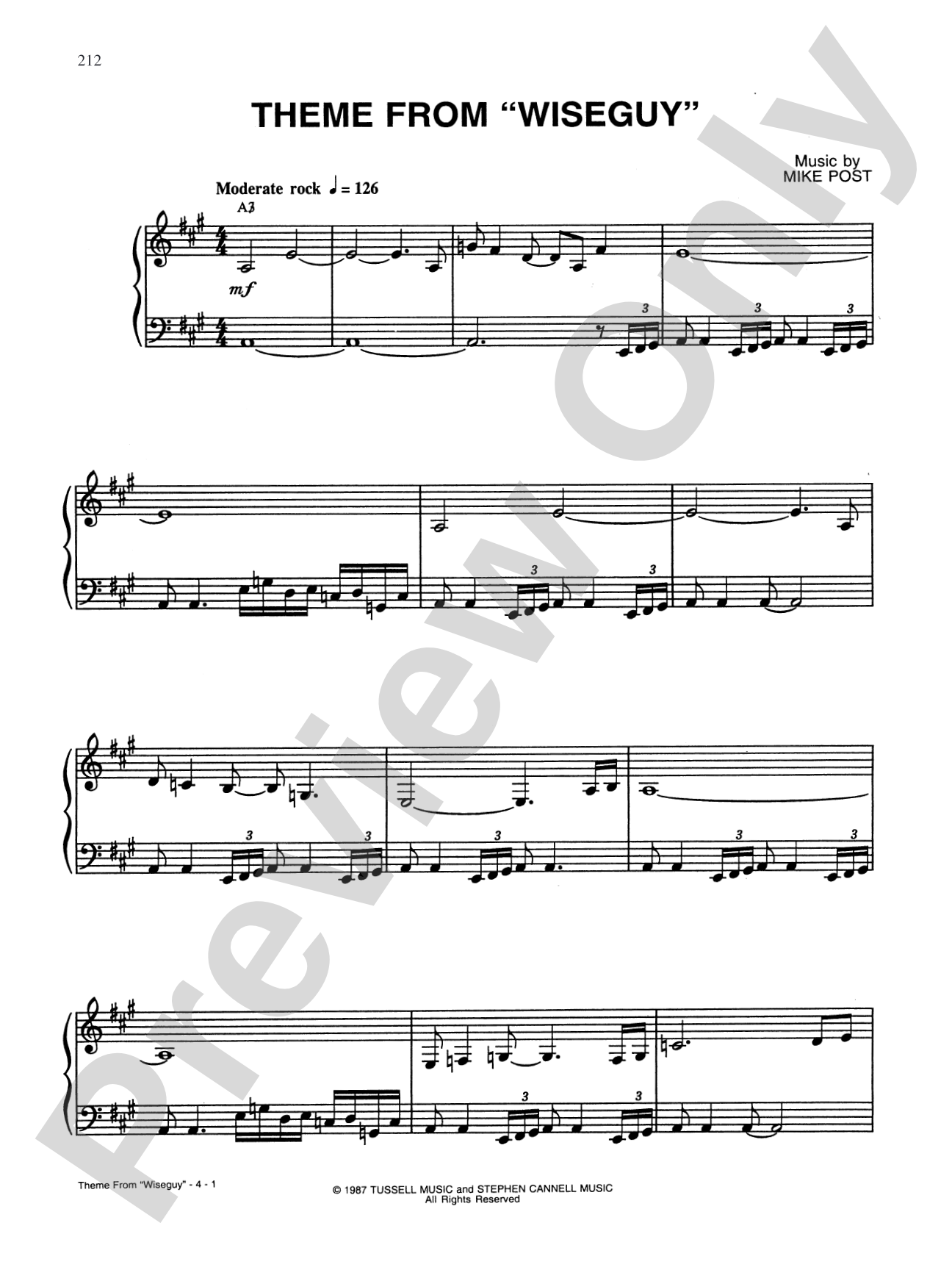

Wiseguy Theme: Piano/Vocal/Chords
Item: 00-PSP-000521
$4.99
One moment…
Related Items
(Meet) The Flintstones: Piano/Vocal/Chords |
$4.99
|
View | |
Anywhere the Heart Goes (From "The Thorn Birds"): Piano/Vocal/Chords |
$4.99
|
View | |
As Long As We Got Each Other (From "Growing Pains"): Piano/Vocal/Chords |
$4.99
|
View | |
Best Friend (From "The Courtship of Eddie's Father"): Piano/Vocal/Chords |
$4.99
|
View | |
California: Piano/Vocal/Chords |
$4.99
|
View | |
Charlie's Angels (Main Theme): Piano/Vocal/Chords |
$4.99
|
View | |
Dallas (Main Title): Piano/Vocal/Chords |
$4.99
|
View | |
Daniel Boone (Main Theme): Piano/Vocal/Chords |
$4.99
|
View | |
E.R. (Main Theme): Piano/Vocal/Chords |
$4.99
|
View | |
Free Willy (Main Title): Piano/Vocal/Chords |
$4.99
|
View | |
Go Go Power Rangers: Piano/Vocal/Chords |
$5.99
|
View | |
Hardcastle & McCormick (Cues): Piano/Vocal/Chords |
$4.99
|
View | |
Huckleberry Hound: Piano/Vocal/Chords |
$4.99
|
View | |
In the Heat of the Night: Piano/Vocal/Chords |
$4.99
|
View | |
It's A Jungle Out There (From "Monk"): Piano/Vocal/Chords |
$4.99
|
View | |
Josie (from "Josie and the Pussycats"): Piano/Vocal/Chords |
$4.99
|
View | |
L.A. Law (Main Title): Piano/Vocal/Chords |
$4.99
|
View | |
Late Show Theme: Piano/Vocal/Chords |
$4.99
|
View | |
Moon Over Parma (From "The Drew Carey Show"): Piano/Vocal/Chords |
$4.99
|
View | |
Road Runner Theme: Piano/Vocal/Chords |
$4.99
|
View | |
Scooby Doo, Where Are You?: Piano/Vocal/Chords |
$4.99
|
View | |
Thank God for a Friend Like You (From "Hope & Gloria"): Piano/Vocal/Chords |
$4.99
|
View | |
The A-Team (Main Theme): Piano/Vocal/Chords |
$4.99
|
View | |
The Ballad of Gilligan's Isle: Piano/Vocal/Chords |
$4.99
|
View | |
The Greatest American Hero (Theme): Piano/Vocal/Chords |
$4.99
|
View | |
The Green Hornet Theme: Piano/Vocal/Chords |
$4.99
|
View | |
The Jetsons (Main Theme): Piano/Vocal/Chords |
$4.99
|
View | |
The Rosie O'Donnell Show (Opening Theme): Piano/Vocal/Chords |
$4.99
|
View | |
The Syncopated Clock (Vocal): Piano/Vocal/Chords |
$4.99
|
View | |
Fantasy Island Theme: Piano/Vocal/Chords |
$4.99
|
View | |
F-Troop Theme: Piano/Vocal/Chords |
$4.99
|
View | |
Hunter Theme: Piano/Vocal/Chords |
$4.99
|
View | |
Peyton Place Theme: Piano/Vocal/Chords |
$4.99
|
View | |
Time for You (From "Jesse"): Piano/Vocal/Chords |
$4.99
|
View | |
Yogi Bear Song: Piano/Vocal/Chords |
$4.99
|
View |
Description
Each songbook in the Big Book series provides musicians of all ability levels with a big list---usually 40 or more titles per book---of the very best songs from a favorite musical genre.
Songs include As Long as We Got Each Other (Growing Pains) * Bad Boys (Cops) * Batman Theme (Batman) * California (The O.C.) * (Meet) The Flintstones (The Flintstones) * Good Ol' Boys (The Dukes of Hazzard) * I'll Be There for You (Friends) * Movin' On Up (The Jeffersons) * The Pink Panther (The Pink Panther) * Scooby-Doo (Main Title) (Scooby-Doo) * Song from M*A*S*H (M*A*S*H) * This Is It! (The Bugs Bunny Show) * Yogi Bear Song (Yogi Bear) * and many more.


Songs include As Long as We Got Each Other (Growing Pains) * Bad Boys (Cops) * Batman Theme (Batman) * California (The O.C.) * (Meet) The Flintstones (The Flintstones) * Good Ol' Boys (The Dukes of Hazzard) * I'll Be There for You (Friends) * Movin' On Up (The Jeffersons) * The Pink Panther (The Pink Panther) * Scooby-Doo (Main Title) (Scooby-Doo) * Song from M*A*S*H (M*A*S*H) * This Is It! (The Bugs Bunny Show) * Yogi Bear Song (Yogi Bear) * and many more.
Discover MakeMusic Cloud: thousands of interactive titles your students can play along with today.
Sample Audio
No sample audio found.
Sample Video
No sample videos found.
Additional Details
Series:
The Big Book Series
Publisher:
Alfred Music
Page Count:
256
SKU:
00-PSP-000521
More about this title
About the Composer: Mike Post
Mike Post is a prolific television composer whose themes and scores shaped the sound of American television from the 1970s onward. His work spans law enforcement dramas, sitcoms, and adventure series, making him one of the most recognizable voices in TV music history. Post's compositions balance memorable melodic hooks with functional orchestration designed for brief, impactful openings and underscore.
Why we love this
This collection captures the genius of television theme writing at its finest. These melodies are instantly recognizable, perfectly constructed for singable accessibility, and grounded in practical harmony that students can navigate whether they're playing from lead sheets or reading chords on the fly. Directors will appreciate having legitimate, well-arranged versions of these iconic themes available in a single resource.
What to expect
These themes carry the unmistakable energy of their television eras. Some spark the playfulness of classic sitcoms with bright, buoyant melodies. Others carry the sophisticated cool of crime dramas with minor-key sophistication and sharp rhythmic definition. Every selection lands with the confidence of a theme designed to announce something important in exactly 20 to 60 seconds.
Who it's for
Piano students and vocalists who want to perform iconic television themes with legitimate published arrangements. Pianists preparing for recitals benefit from having a curated collection of recognizable, well-written pieces; vocalists gain accessible material that audiences immediately connect with.
How to get the most out of it
- Treat the melody as the priority. These themes were designed to hook listeners in seconds, so commit to clear articulation and a confident tempo that matches the show's opening sequence.
- Use the chord symbols to guide harmonic support if you're working with a pianist or guitarist accompanying a vocalist. The voicings are straightforward and intentionally accessible.
- Lock the rhythmic feel to the style of the original. A sitcom theme needs buoyant, clipped phrasing; a dramatic theme demands more legit, sustained lines.
- Study the original recordings if possible. Television composers wrote for specific orchestrations and arrangements, and hearing the context will clarify phrasing, dynamics, and articulation choices that might not be obvious from the page alone.
How to use it
Feature these as standalone recital pieces or as a thematic concert program celebrating television music history. They also work as warmup material for students learning to balance melody, rhythm, and harmonic awareness on a single page. Community performances and informal settings benefit from the immediate audience recognition these titles provide.
Skills your students will build
- Reading lead sheets and chord symbols in real time
- Vocal phrasing across conversational and dramatic melodic contours
- Accompanying vocalists with chord voicings at the keyboard
- Balancing melody and harmony awareness simultaneously
- Interpreting style indications to match the original television context