
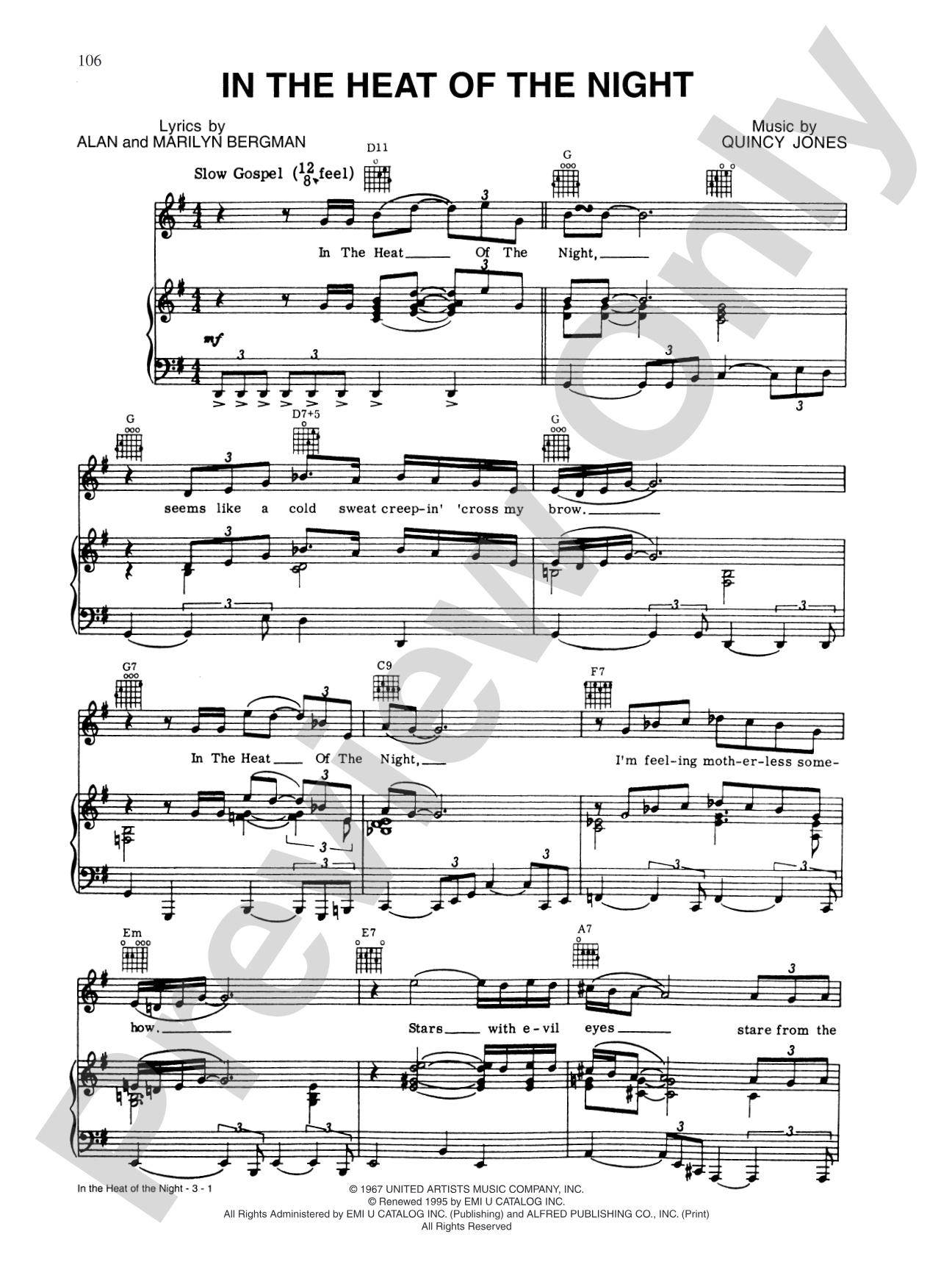

In the Heat of the Night: Piano/Vocal/Chords
Item: 00-PSP-000450
$4.99
One moment…
Related Items
(Meet) The Flintstones: Piano/Vocal/Chords |
$4.99
|
View | |
Anywhere the Heart Goes (From "The Thorn Birds"): Piano/Vocal/Chords |
$4.99
|
View | |
As Long As We Got Each Other (From "Growing Pains"): Piano/Vocal/Chords |
$4.99
|
View | |
Best Friend (From "The Courtship of Eddie's Father"): Piano/Vocal/Chords |
$4.99
|
View | |
California: Piano/Vocal/Chords |
$4.99
|
View | |
Charlie's Angels (Main Theme): Piano/Vocal/Chords |
$4.99
|
View | |
Dallas (Main Title): Piano/Vocal/Chords |
$4.99
|
View | |
Daniel Boone (Main Theme): Piano/Vocal/Chords |
$4.99
|
View | |
E.R. (Main Theme): Piano/Vocal/Chords |
$4.99
|
View | |
Free Willy (Main Title): Piano/Vocal/Chords |
$4.99
|
View | |
Go Go Power Rangers: Piano/Vocal/Chords |
$5.99
|
View | |
Hardcastle & McCormick (Cues): Piano/Vocal/Chords |
$4.99
|
View | |
Huckleberry Hound: Piano/Vocal/Chords |
$4.99
|
View | |
It's A Jungle Out There (From "Monk"): Piano/Vocal/Chords |
$4.99
|
View | |
Josie (from "Josie and the Pussycats"): Piano/Vocal/Chords |
$4.99
|
View | |
L.A. Law (Main Title): Piano/Vocal/Chords |
$4.99
|
View | |
Late Show Theme: Piano/Vocal/Chords |
$4.99
|
View | |
Moon Over Parma (From "The Drew Carey Show"): Piano/Vocal/Chords |
$4.99
|
View | |
Road Runner Theme: Piano/Vocal/Chords |
$4.99
|
View | |
Scooby Doo, Where Are You?: Piano/Vocal/Chords |
$4.99
|
View | |
Thank God for a Friend Like You (From "Hope & Gloria"): Piano/Vocal/Chords |
$4.99
|
View | |
The A-Team (Main Theme): Piano/Vocal/Chords |
$4.99
|
View | |
The Ballad of Gilligan's Isle: Piano/Vocal/Chords |
$4.99
|
View | |
The Greatest American Hero (Theme): Piano/Vocal/Chords |
$4.99
|
View | |
The Green Hornet Theme: Piano/Vocal/Chords |
$4.99
|
View | |
The Jetsons (Main Theme): Piano/Vocal/Chords |
$4.99
|
View | |
The Rosie O'Donnell Show (Opening Theme): Piano/Vocal/Chords |
$4.99
|
View | |
The Syncopated Clock (Vocal): Piano/Vocal/Chords |
$4.99
|
View | |
Fantasy Island Theme: Piano/Vocal/Chords |
$4.99
|
View | |
F-Troop Theme: Piano/Vocal/Chords |
$4.99
|
View | |
Hunter Theme: Piano/Vocal/Chords |
$4.99
|
View | |
Peyton Place Theme: Piano/Vocal/Chords |
$4.99
|
View | |
Time for You (From "Jesse"): Piano/Vocal/Chords |
$4.99
|
View | |
Yogi Bear Song: Piano/Vocal/Chords |
$4.99
|
View |
Description
Each songbook in the Big Book series provides musicians of all ability levels with a big list---usually 40 or more titles per book---of the very best songs from a favorite musical genre.
Songs include As Long as We Got Each Other (Growing Pains) * Bad Boys (Cops) * Batman Theme (Batman) * California (The O.C.) * (Meet) The Flintstones (The Flintstones) * Good Ol' Boys (The Dukes of Hazzard) * I'll Be There for You (Friends) * Movin' On Up (The Jeffersons) * The Pink Panther (The Pink Panther) * Scooby-Doo (Main Title) (Scooby-Doo) * Song from M*A*S*H (M*A*S*H) * This Is It! (The Bugs Bunny Show) * Yogi Bear Song (Yogi Bear) * and many more.


Songs include As Long as We Got Each Other (Growing Pains) * Bad Boys (Cops) * Batman Theme (Batman) * California (The O.C.) * (Meet) The Flintstones (The Flintstones) * Good Ol' Boys (The Dukes of Hazzard) * I'll Be There for You (Friends) * Movin' On Up (The Jeffersons) * The Pink Panther (The Pink Panther) * Scooby-Doo (Main Title) (Scooby-Doo) * Song from M*A*S*H (M*A*S*H) * This Is It! (The Bugs Bunny Show) * Yogi Bear Song (Yogi Bear) * and many more.
In the Heat of the Night: Piano/Vocal/Chords isn't in MakeMusic Cloud just yet...but it could be. Let us know you'd like to see it, and you'll help shape what comes next. In the meantime, start a free trial and dive into thousands of interactive titles your students can play along with today.
Request This Title
Tell us you want it.
Start Your Free Trial
Explore everything that's ready to play right now.
Sample Audio
No sample audio found.
Sample Video
No sample videos found.
Additional Details
Series:
The Big Book Series
Publisher:
Alfred Music
Page Count:
256
SKU:
00-PSP-000450
More about this title
About the Composer: Quincy Jones
Quincy Jones stands as one of the most influential music producers and composers of the twentieth century, with a career spanning jazz performance, film scoring, and popular music production. His work across television, film, and records shaped the sound of American popular culture from the 1950s onward, establishing him as a foundational figure in music education discussions about cross-genre composition and arrangement.
Beyond his celebrated studio work, Jones has mentored countless musicians and producers, demonstrating how deep musical literacy and genre flexibility serve as career cornerstones. His contributions to television theme music remain textbook examples of how compact, memorable melodies and smart orchestration create cultural touchstones.
Why we love this
This collection gathers the most recognizable TV themes from five decades of American television, giving pianists and singers immediate access to songs that audiences actually know and love. The range spans comedy, drama, and animation, meaning your singers and pianists can draw from genuine nostalgia while building repertoire that works in variety shows, recitals, and casual performance settings.
What to expect
Opening this book feels like flipping through decades of shared cultural memory. From the spy-thriller swagger of the Batman theme to the warm, sitcom friendliness of Friends, each page offers a musical snapshot of a specific moment and mood. The arrangements capture the essential character of each theme while staying playable for musicians of varied skill levels.
Who it's for
Pianists and singers who want to expand their repertoire with accessible, recognizable material suitable for informal performances, recitals, or variety programs. This collection works equally well for music students seeking fun, engaging songs to learn and for accompanists building a practical library of cross-generational favorites.
How to get the most out of it
- Study the original recordings to absorb the vocal inflection and rhythmic feel of each theme. Many of these melodies are deceptively simple but depend on phrasing and timing to land their iconic quality.
- Balance the melody and accompaniment so the vocal line remains clear. Piano/vocal arrangements at this level often pack a lot of harmonic information into the left hand; resist the urge to play everything equally.
- Treat these themes as miniatures rather than full-length songs. Most TV themes run under two minutes, so commit to a brisk, energetic pace and avoid dragging.
- Adjust vocal ranges and keys to fit your singer's voice. These arrangements provide a starting point, but transposing by a step or two often makes the difference between a comfortable performance and an effortful one.
How to use it
String these together for a nostalgic variety show or TV-themed recital that delights audiences across age groups. Solo pianists can use individual themes as encore pieces or novelty items between more serious repertoire, while singers benefit from a ready-made setlist for casual gigs, open mics, or studio rehearsal.
Skills your students will build
- Reading lead-line melodies with chord symbols and interpreting stylistic inflection from recordings
- Accompanying singers while managing complex harmonic information in the left hand
- Transposing arrangements to fit vocal ranges and instrument capabilities
- Understanding how melody, tempo, and phrasing create iconic cultural recognition
- Building sight-reading fluency across a wide range of popular music styles and eras