
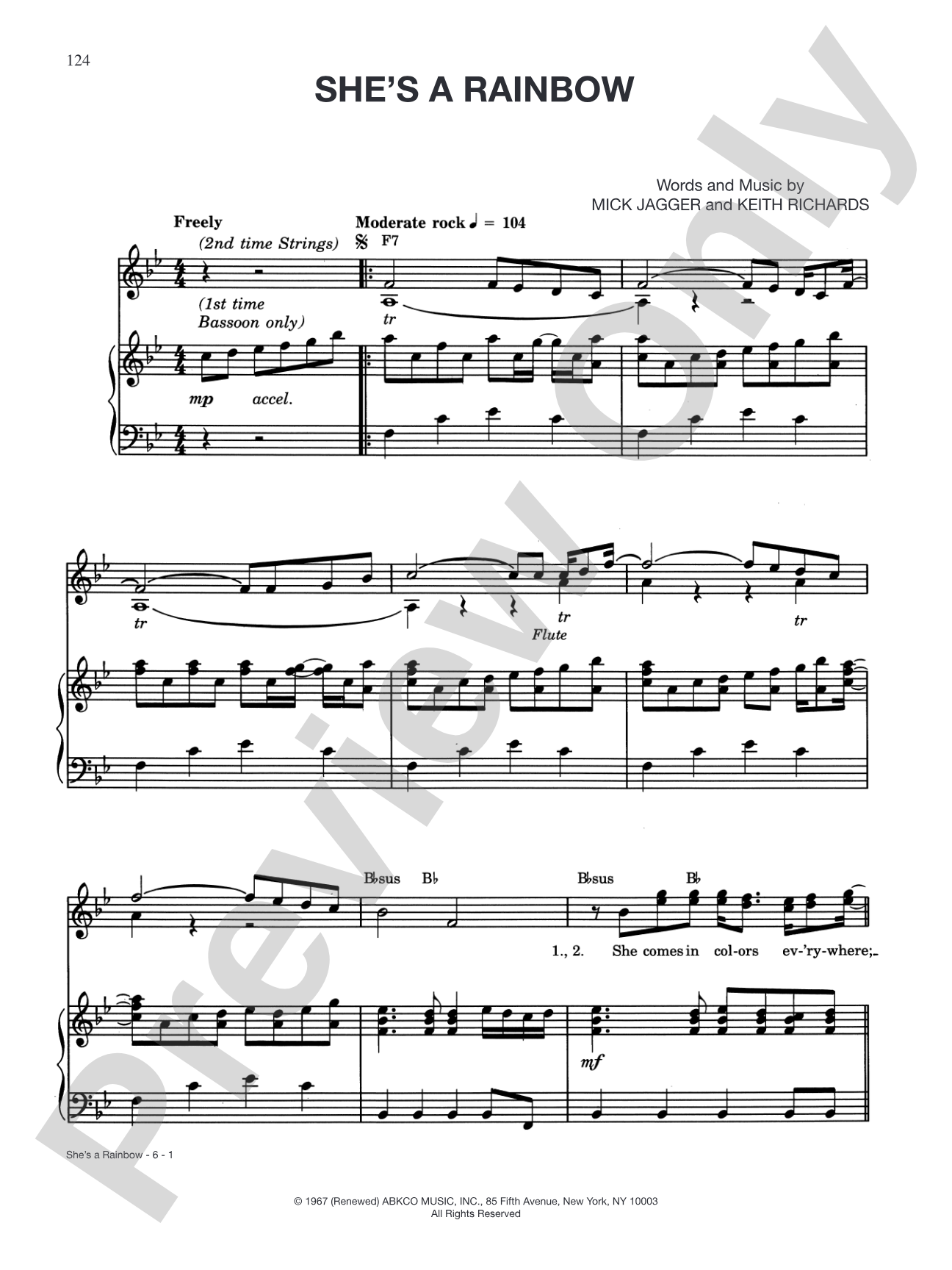
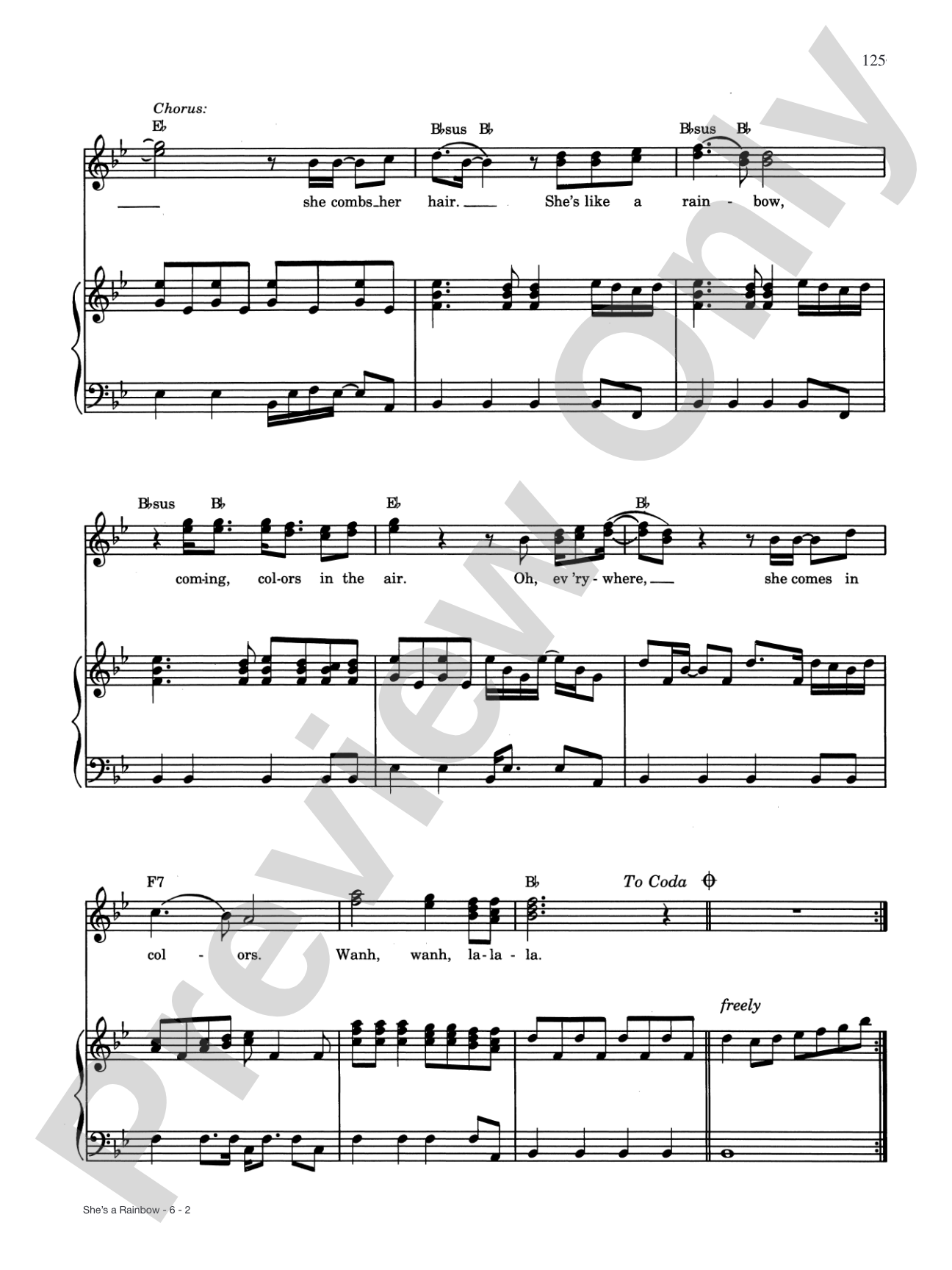

She's a Rainbow: Piano/Vocal/Chords
The Rolling Stones
Item: 00-PS-0012145
$5.99
Pickup currently not available
Related Items
Paint It, Black: Piano/Vocal/Chords |
$5.99
|
View | |
Dandelion: Piano/Vocal/Chords |
$4.99
|
View | |
(I Can't Get No) Satisfaction: Piano/Vocal/Chords |
$4.99
|
View | |
Lady Jane: Piano/Vocal/Chords |
$4.99
|
View | |
The Last Time: Piano/Vocal/Chords |
$5.99
|
View | |
Heart of Stone: Piano/Vocal/Chords |
$4.99
|
View | |
19th Nervous Breakdown: Piano/Vocal/Chords |
$5.99
|
View | |
Play With Fire: Piano/Vocal/Chords |
$4.99
|
View | |
I'm Free: Piano/Vocal/Chords |
$4.99
|
View | |
Mother's Little Helper: Piano/Vocal/Chords |
$4.99
|
View | |
Honky Tonk Women: Piano/Vocal/Chords |
$5.99
|
View | |
You Can't Always Get What You Want: Piano/Vocal/Chords |
$9.99
|
View | |
As Tears Go By: Piano/Vocal/Chords |
$4.99
|
View | |
It's All Over Now: Piano/Vocal/Chords |
$5.99
|
View | |
Out of Time: Piano/Vocal/Chords |
$4.99
|
View | |
Ruby Tuesday: Piano/Vocal/Chords |
$4.99
|
View | |
2000 Light Years From Home: Piano/Vocal/Chords |
$5.99
|
View | |
Let's Spend the Night Together: Piano/Vocal/Chords |
$5.99
|
View | |
Under My Thumb: Piano/Vocal/Chords |
$4.99
|
View | |
Gimme Shelter: Piano/Vocal/Chords |
$5.99
|
View | |
Let It Bleed: Piano/Vocal/Chords |
$5.99
|
View | |
Monkey Man: Piano/Vocal/Chords |
$5.99
|
View | |
No Expectations: Piano/Vocal/Chords |
$4.99
|
View | |
She Smiled Sweetly: Piano/Vocal/Chords |
$4.99
|
View | |
Wild Horses: Piano/Vocal/Chords |
$4.99
|
View | |
The Rolling Stones: Sheet Music Anthology: Piano/Vocal/Chords Book |
$19.99
|
View |
Description
The Rolling Stones Sheet Music Anthology contains 27 piano/vocal/chord arrangements of the legendary British group's greatest hits. Many of the band's most memorable melodies are included, such as "She's a Rainbow," "Lady Jane," and "Ruby Tuesday." Titles: As Tears Go By * Dandelion * Gimme Shelter * Heart of Stone * I'm Free * Honky Tonk Women * It's All Over Now * The Last Time * Let's Spend the Night Together * Let It Bleed * Monkey Man * Mother's Little Helper * 19th Nervous Breakdown * Out of Time * No Expectations * Play with Fire * Paint It, Black * (I Can't Get No) Satisfaction * Sympathy for the Devil * She Smiled Sweetly * 2000 Light Years from Home * Under My Thumb * Wild Horses * You Can't Always Get What You Want.


She's a Rainbow: Piano/Vocal/Chords isn't in MakeMusic Cloud just yet...but it could be. Let us know you'd like to see it, and you'll help shape what comes next. In the meantime, start a free trial and dive into thousands of interactive titles your students can play along with today.
Request This Title
Tell us you want it.
Start Your Free Trial
Explore everything that's ready to play right now.
Sample Audio
No sample audio found.
Sample Video
No sample videos found.
Additional Details
Series:
Sheet Music Anthology
Publisher:
Alfred Music
Page Count:
156
SKU:
00-PS-0012145
More about this title
About the Composer: Mick Jagger
Mick Jagger co-wrote the majority of The Rolling Stones' catalog alongside Keith Richards, establishing one of rock music's most prolific and influential songwriting partnerships. His compositions span five decades and have shaped popular music globally, combining blues-rooted melodies with sharp lyrical wit and emotional depth. Jagger's work remains central to music education because it demonstrates how accessible songwriting can carry both commercial appeal and artistic substance.
Why we love this
This anthology lets vocalists and pianists explore some of rock's most enduring melodies in a single, practical volume. The chord charts make these songs accessible to musicians working across skill levels, whether a student is accompanying themselves or collaborating with a band. You get genuine classics here, not deep cuts, so students recognize the material immediately and stay engaged.
What to expect
These arrangements capture the swagger and sophistication of The Rolling Stones' sound translated to the piano and voice. There's a Blues-influenced warmth running through them, punctuated by moments of raw emotional honesty and clever lyrical turns that remind you why these songs have endured for decades.
Who it's for
Vocalists preparing for auditions, recitals, or casual performance who want rock repertoire that's both recognizable and musically substantial. Pianists and keyboardists also benefit from the chord charts when accompanying singers or developing their own interpretations of these foundational rock songs.
How to get the most out of it
- Pay close attention to the chord changes, which often move quickly in the verse sections; mark your chart to show where you need to shift voicings or anticipate chord transitions.
- Treat the piano part as a foundation rather than a definitive arrangement; these pieces thrive when you adjust dynamics and texture to match your voice's natural placement in the register.
- Listen closely to the original recordings to understand phrasing and breath placement, especially in longer songs where Jagger's phrasing defies strict lyrical expectations.
- Balance vocal delivery with harmonic support; some of these songs work better with a spare, conversational piano sound rather than a fully orchestrated approach.
How to use it
Include selections from this collection in a rock repertoire recital or a mixed-genre concert that celebrates songwriting across decades. A solo vocalist or pianist might perform one or two pieces as an encore or as part of a thematic program exploring British rock influences on contemporary music.
Skills your students will build
- Reading and executing chord charts in a rock/popular music context
- Balancing vocal phrasing with harmonic accompaniment on piano
- Interpreting blues-influenced harmonic progressions and chord extensions
- Understanding how melodic phrasing in rock differs from classical repertoire
- Developing fluency with standard song forms (verse-chorus-bridge) across multiple keys