
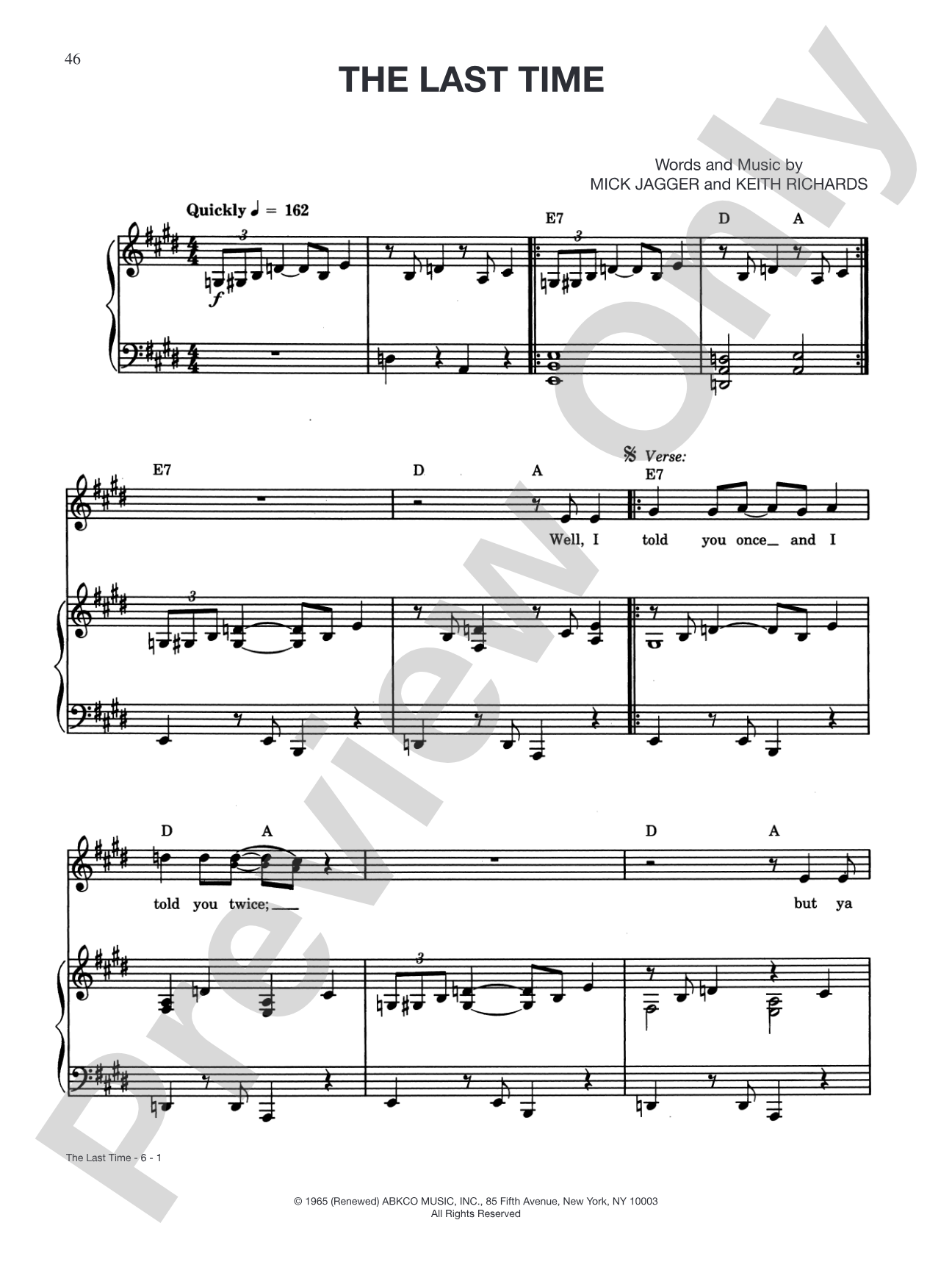
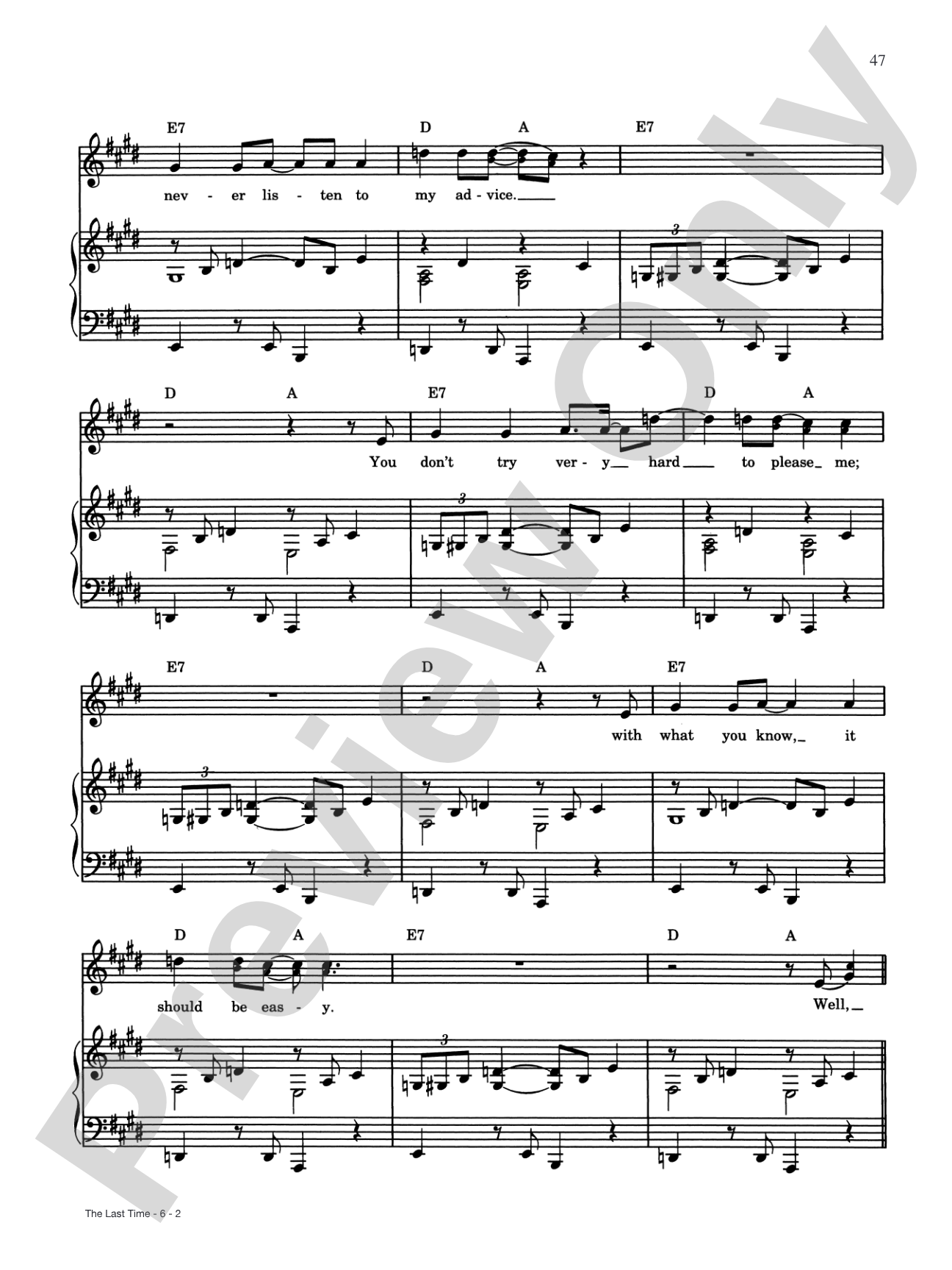

The Last Time: Piano/Vocal/Chords
The Rolling Stones
Item: 00-PS-0012104
$5.99
Pickup currently not available
Related Items
Paint It, Black: Piano/Vocal/Chords |
$5.99
|
View | |
Dandelion: Piano/Vocal/Chords |
$4.99
|
View | |
(I Can't Get No) Satisfaction: Piano/Vocal/Chords |
$4.99
|
View | |
Lady Jane: Piano/Vocal/Chords |
$4.99
|
View | |
Heart of Stone: Piano/Vocal/Chords |
$4.99
|
View | |
19th Nervous Breakdown: Piano/Vocal/Chords |
$5.99
|
View | |
Play With Fire: Piano/Vocal/Chords |
$4.99
|
View | |
I'm Free: Piano/Vocal/Chords |
$4.99
|
View | |
Mother's Little Helper: Piano/Vocal/Chords |
$4.99
|
View | |
Honky Tonk Women: Piano/Vocal/Chords |
$5.99
|
View | |
You Can't Always Get What You Want: Piano/Vocal/Chords |
$9.99
|
View | |
As Tears Go By: Piano/Vocal/Chords |
$4.99
|
View | |
It's All Over Now: Piano/Vocal/Chords |
$5.99
|
View | |
Out of Time: Piano/Vocal/Chords |
$4.99
|
View | |
Ruby Tuesday: Piano/Vocal/Chords |
$4.99
|
View | |
2000 Light Years From Home: Piano/Vocal/Chords |
$5.99
|
View | |
She's a Rainbow: Piano/Vocal/Chords |
$5.99
|
View | |
Let's Spend the Night Together: Piano/Vocal/Chords |
$5.99
|
View | |
Under My Thumb: Piano/Vocal/Chords |
$4.99
|
View | |
Gimme Shelter: Piano/Vocal/Chords |
$5.99
|
View | |
Let It Bleed: Piano/Vocal/Chords |
$5.99
|
View | |
Monkey Man: Piano/Vocal/Chords |
$5.99
|
View | |
No Expectations: Piano/Vocal/Chords |
$4.99
|
View | |
She Smiled Sweetly: Piano/Vocal/Chords |
$4.99
|
View | |
Wild Horses: Piano/Vocal/Chords |
$4.99
|
View | |
The Rolling Stones: Sheet Music Anthology: Piano/Vocal/Chords Book |
$19.99
|
View |
Description
The Rolling Stones Sheet Music Anthology contains 27 piano/vocal/chord arrangements of the legendary British group's greatest hits. Many of the band's most memorable melodies are included, such as "She's a Rainbow," "Lady Jane," and "Ruby Tuesday." Titles: As Tears Go By * Dandelion * Gimme Shelter * Heart of Stone * I'm Free * Honky Tonk Women * It's All Over Now * The Last Time * Let's Spend the Night Together * Let It Bleed * Monkey Man * Mother's Little Helper * 19th Nervous Breakdown * Out of Time * No Expectations * Play with Fire * Paint It, Black * (I Can't Get No) Satisfaction * Sympathy for the Devil * She Smiled Sweetly * 2000 Light Years from Home * Under My Thumb * Wild Horses * You Can't Always Get What You Want.


Discover MakeMusic Cloud: thousands of interactive titles your students can play along with today.
Sample Audio
No sample audio found.
Sample Video
No sample videos found.
Additional Details
Series:
Sheet Music Anthology
Publisher:
Alfred Music
Page Count:
156
SKU:
00-PS-0012104
More about this title
About the Composer: Mick Jagger
Mick Jagger and Keith Richards formed one of rock music's most prolific and influential songwriting partnerships, creating material that defined multiple generations of popular music. Their compositions span five decades, ranging from blues-influenced rock to sophisticated studio experiments, earning them recognition as architects of modern rock songwriting.
Why we love this
This collection captures the melodic sophistication and harmonic invention that made the Stones' songs endure far beyond their initial radio life. For pianists who want to explore rock repertoire beyond the typical pop-song arrangements, these chart-ready voicings reveal the underlying songcraft that made these tracks legendary.
What to expect
These songs carry the swagger and melodic directness that made the Stones unforgettable; the arrangements honor that character while revealing the harmonic craft beneath. Whether you're playing a tender moment like "Lady Jane" or channeling the raw energy of "(I Can't Get No) Satisfaction," these voicings ground you in songwriting that balances simplicity with sophistication.
Who it's for
Pianists and keyboardists preparing for recitals, open mics, or studio sessions who want performance-ready arrangements of classic rock material. Singers developing a rock repertoire will find these leadsheets practical for accompanying themselves or working with a pianist.
How to get the most out of it
- Study the original recordings to understand how the arrangements' harmonic colors and rhythmic feels serve the melody. The printed voicings should support your interpretation, not constrain it.
- Pay attention to chord progressions that recur across multiple songs in this collection. Recognizing Jagger and Richards' harmonic signatures will improve your command of the material.
- Balance vocal melody with accompaniment texture. These arrangements often feature rich piano voicings that shouldn't overshadow a singer's phrasing or interpretation.
- Work through the rhythm section feel separately from the melody, especially in swing-influenced or syncopated tracks like "Honky Tonk Women" and "Sympathy for the Devil."
How to use it
Build a solo recital or cabaret set around these standards, programming them alongside other rock classics or in dialogue with contemporary singer-songwriter material. These arrangements also work beautifully as audition pieces for jazz or contemporary music programs, demonstrating fluency with popular music idioms and chord-melody concepts.
Skills your students will build
- Reading and interpreting chord symbols in rock and popular music contexts
- Balancing written voicings with interpretive flexibility and phrasing
- Understanding song form and harmonic progression in classic rock structures
- Accompanying singers while maintaining rhythmic and harmonic integrity