
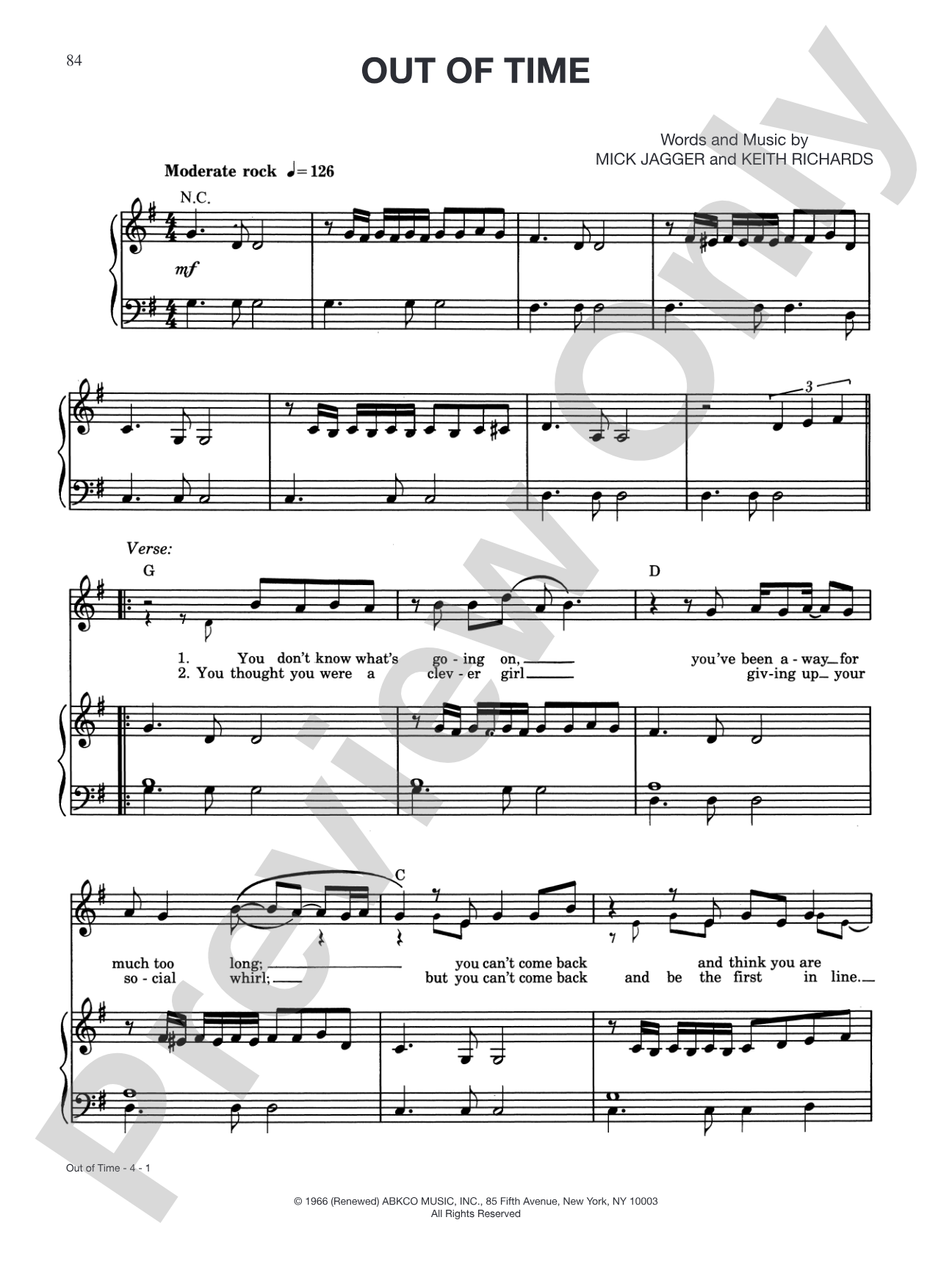

Out of Time: Piano/Vocal/Chords
The Rolling Stones
Item: 00-PS-0012137
$4.99
Pickup currently not available
Related Items
Paint It, Black: Piano/Vocal/Chords |
$5.99
|
View | |
Dandelion: Piano/Vocal/Chords |
$4.99
|
View | |
(I Can't Get No) Satisfaction: Piano/Vocal/Chords |
$4.99
|
View | |
Lady Jane: Piano/Vocal/Chords |
$4.99
|
View | |
The Last Time: Piano/Vocal/Chords |
$5.99
|
View | |
Heart of Stone: Piano/Vocal/Chords |
$4.99
|
View | |
19th Nervous Breakdown: Piano/Vocal/Chords |
$5.99
|
View | |
Play With Fire: Piano/Vocal/Chords |
$4.99
|
View | |
I'm Free: Piano/Vocal/Chords |
$4.99
|
View | |
Mother's Little Helper: Piano/Vocal/Chords |
$4.99
|
View | |
Honky Tonk Women: Piano/Vocal/Chords |
$5.99
|
View | |
You Can't Always Get What You Want: Piano/Vocal/Chords |
$9.99
|
View | |
As Tears Go By: Piano/Vocal/Chords |
$4.99
|
View | |
It's All Over Now: Piano/Vocal/Chords |
$5.99
|
View | |
Ruby Tuesday: Piano/Vocal/Chords |
$4.99
|
View | |
2000 Light Years From Home: Piano/Vocal/Chords |
$5.99
|
View | |
She's a Rainbow: Piano/Vocal/Chords |
$5.99
|
View | |
Let's Spend the Night Together: Piano/Vocal/Chords |
$5.99
|
View | |
Under My Thumb: Piano/Vocal/Chords |
$4.99
|
View | |
Gimme Shelter: Piano/Vocal/Chords |
$5.99
|
View | |
Let It Bleed: Piano/Vocal/Chords |
$5.99
|
View | |
Monkey Man: Piano/Vocal/Chords |
$5.99
|
View | |
No Expectations: Piano/Vocal/Chords |
$4.99
|
View | |
She Smiled Sweetly: Piano/Vocal/Chords |
$4.99
|
View | |
Wild Horses: Piano/Vocal/Chords |
$4.99
|
View | |
The Rolling Stones: Sheet Music Anthology: Piano/Vocal/Chords Book |
$19.99
|
View |
Description
The Rolling Stones Sheet Music Anthology contains 27 piano/vocal/chord arrangements of the legendary British group's greatest hits. Many of the band's most memorable melodies are included, such as "She's a Rainbow," "Lady Jane," and "Ruby Tuesday." Titles: As Tears Go By * Dandelion * Gimme Shelter * Heart of Stone * I'm Free * Honky Tonk Women * It's All Over Now * The Last Time * Let's Spend the Night Together * Let It Bleed * Monkey Man * Mother's Little Helper * 19th Nervous Breakdown * Out of Time * No Expectations * Play with Fire * Paint It, Black * (I Can't Get No) Satisfaction * Sympathy for the Devil * She Smiled Sweetly * 2000 Light Years from Home * Under My Thumb * Wild Horses * You Can't Always Get What You Want.


Discover MakeMusic Cloud: thousands of interactive titles your students can play along with today.
Sample Audio
No sample audio found.
Sample Video
No sample videos found.
Additional Details
Series:
Sheet Music Anthology
Publisher:
Alfred Music
Page Count:
156
SKU:
00-PS-0012137
More about this title
About the Composer: Mick Jagger
Mick Jagger stands as one of rock music's most distinctive songwriters and performers, collaborating with Keith Richards to create some of the most enduring compositions of the past six decades. His gift for melody, lyrical wit, and unflinching social observation shaped the sound of popular music from the 1960s onward, influencing generations of musicians across multiple genres.
For pianists and vocalists, Jagger's melodies reveal their craft when stripped to voice and keys. The songs in this collection span from his early blues-influenced work through his most experimental periods, offering insight into how great melodies function across different harmonic landscapes and lyrical contexts.
Why we love this
This anthology captures the architectural genius of Jagger and Richards' songwriting in a format that makes their melodic invention transparent. Singers and pianists will discover that these arrangements expose the strength of the songs themselves, stripped of production excess but retaining all their attitude and memorability.
What to expect
These arrangements capture the swagger, melancholy, and sneering charm that defined a generation of rock music. From the bluesy intimacy of "No Expectations" to the propulsive drive of "Honky Tonk Women," the collection spans moods that range from tender to defiant, each song carrying the unmistakable stamp of Jagger's storytelling voice.
Who it's for
Pianists and singer-pianists who want to perform rock repertoire with melodic substance and harmonic interest. This collection serves vocalists building a contemporary standards set and pianists exploring the intersection of rock songwriting and classical training.
How to get the most out of it
- Lean into the lyrical phrasing rather than metronomic precision; these songs breathe and bend with the natural speech rhythms Jagger favors.
- Chord voicings in these arrangements reflect the original recordings' textures. Experiment with slight variations in comping to find what suits your voice and the room.
- Build dynamic contrast between verses and choruses; many of these tracks gained power through restraint followed by release.
- Study the original recordings alongside these charts to internalize the rhythmic pocket that defines each song's character.
How to use it
Integrate individual titles into recitals featuring contemporary songwriting and popular music; "Paint It, Black" and "She's a Rainbow" work especially well as standalone performance pieces. For studios with multiple students at intermediate-advanced levels, these arrangements provide excellent repertoire for student showcases or informal concert series.
Skills your students will build
- Reading and interpreting chord notation with jazz/rock voicings
- Balancing vocal melody with accompaniment texture
- Understanding blues-based harmonic progressions
- Executing rhythmic feel and pocket in rock contexts
- Adapting arrangements for different ensemble sizes or instrumental colors