
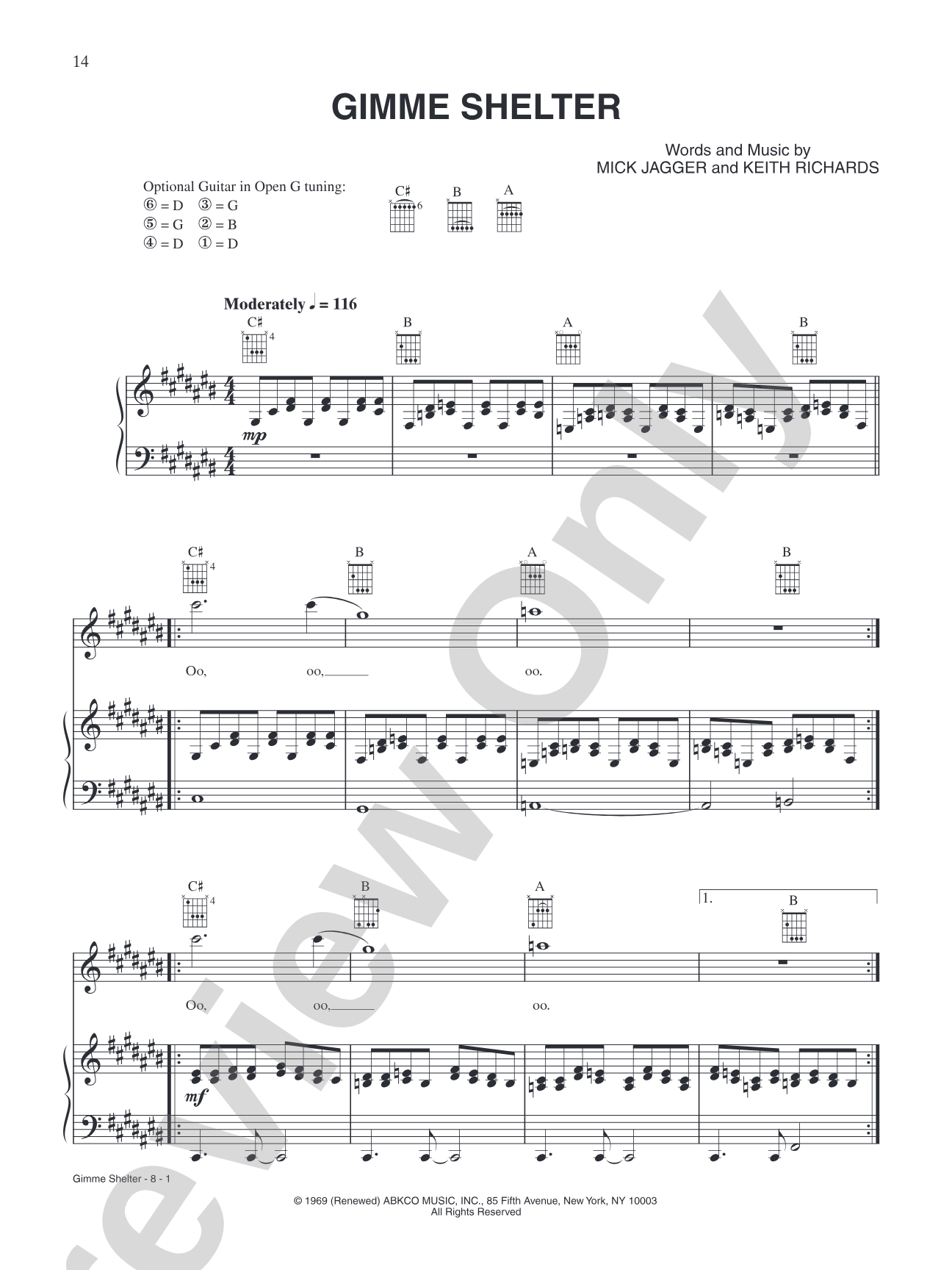
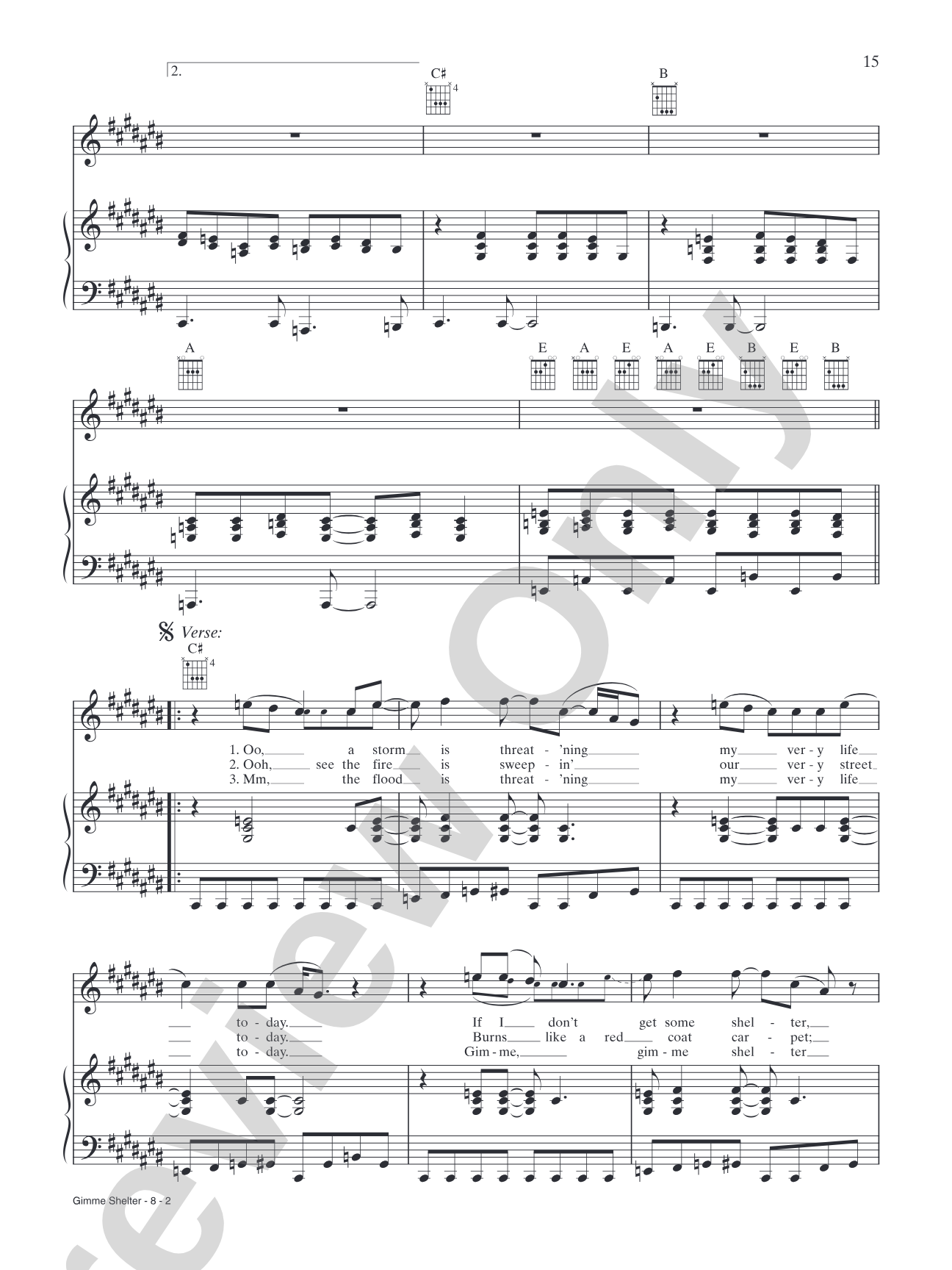

Gimme Shelter: Piano/Vocal/Chords
The Rolling Stones
Item: 00-PS-0012160
$5.99
Pickup currently not available
Related Items
Paint It, Black: Piano/Vocal/Chords |
$5.99
|
View | |
Dandelion: Piano/Vocal/Chords |
$4.99
|
View | |
(I Can't Get No) Satisfaction: Piano/Vocal/Chords |
$4.99
|
View | |
Lady Jane: Piano/Vocal/Chords |
$4.99
|
View | |
The Last Time: Piano/Vocal/Chords |
$5.99
|
View | |
Heart of Stone: Piano/Vocal/Chords |
$4.99
|
View | |
19th Nervous Breakdown: Piano/Vocal/Chords |
$5.99
|
View | |
Play With Fire: Piano/Vocal/Chords |
$4.99
|
View | |
I'm Free: Piano/Vocal/Chords |
$4.99
|
View | |
Mother's Little Helper: Piano/Vocal/Chords |
$4.99
|
View | |
Honky Tonk Women: Piano/Vocal/Chords |
$5.99
|
View | |
You Can't Always Get What You Want: Piano/Vocal/Chords |
$9.99
|
View | |
As Tears Go By: Piano/Vocal/Chords |
$4.99
|
View | |
It's All Over Now: Piano/Vocal/Chords |
$5.99
|
View | |
Out of Time: Piano/Vocal/Chords |
$4.99
|
View | |
Ruby Tuesday: Piano/Vocal/Chords |
$4.99
|
View | |
2000 Light Years From Home: Piano/Vocal/Chords |
$5.99
|
View | |
She's a Rainbow: Piano/Vocal/Chords |
$5.99
|
View | |
Let's Spend the Night Together: Piano/Vocal/Chords |
$5.99
|
View | |
Under My Thumb: Piano/Vocal/Chords |
$4.99
|
View | |
Let It Bleed: Piano/Vocal/Chords |
$5.99
|
View | |
Monkey Man: Piano/Vocal/Chords |
$5.99
|
View | |
No Expectations: Piano/Vocal/Chords |
$4.99
|
View | |
She Smiled Sweetly: Piano/Vocal/Chords |
$4.99
|
View | |
Wild Horses: Piano/Vocal/Chords |
$4.99
|
View | |
The Rolling Stones: Sheet Music Anthology: Piano/Vocal/Chords Book |
$19.99
|
View |
Description
The Rolling Stones Sheet Music Anthology contains 27 piano/vocal/chord arrangements of the legendary British group's greatest hits. Many of the band's most memorable melodies are included, such as "She's a Rainbow," "Lady Jane," and "Ruby Tuesday." Titles: As Tears Go By * Dandelion * Gimme Shelter * Heart of Stone * I'm Free * Honky Tonk Women * It's All Over Now * The Last Time * Let's Spend the Night Together * Let It Bleed * Monkey Man * Mother's Little Helper * 19th Nervous Breakdown * Out of Time * No Expectations * Play with Fire * Paint It, Black * (I Can't Get No) Satisfaction * Sympathy for the Devil * She Smiled Sweetly * 2000 Light Years from Home * Under My Thumb * Wild Horses * You Can't Always Get What You Want.


Discover MakeMusic Cloud: thousands of interactive titles your students can play along with today.
Sample Audio
No sample audio found.
Sample Video
No sample videos found.
Additional Details
Series:
Sheet Music Anthology
Publisher:
Alfred Music
Page Count:
156
SKU:
00-PS-0012160
More about this title
About the Composer: Mick Jagger
Mick Jagger emerged as one of rock and roll's most distinctive frontmen and songwriters, crafting narratives that ranged from social commentary to intimate storytelling. Working alongside Keith Richards, Jagger developed a compositional voice that balanced raw energy with melodic sophistication, creating songs that have sustained across generations of musicians and listeners.
Why we love this
This anthology captures the Stones' melodic ingenuity in accessible piano/vocal/chord arrangements. The selection spans five decades of songwriting and reveals how consistently strong these melodies are when stripped to their essentials, making it invaluable for pianists and vocalists exploring rock repertoire with harmonic depth.
What to expect
These arrangements open up the raw energy and emotional complexity the Stones brought to rock and roll. From the propulsive drive of "Satisfaction" to the minor-key melancholy of "Paint It, Black" to the romantic sweep of "Wild Horses," each song carries its own distinct character while maintaining the band's signature blend of blues-rooted confidence and sophistication.
Who it's for
Pianists and vocalists who want to explore rock's melodic catalog with harmonic scaffolding, whether for recital programming, studio accompaniment, or deepening their understanding of how iconic rock songs are constructed. It suits intermediate to advanced players seeking repertoire that connects commercial appeal with genuine musicianship.
How to get the most out of it
- Pay attention to the rhythmic pocket of each song rather than playing metronomically. The Stones' arrangements often sit slightly behind the beat, and capturing that swagger requires listening to how the vocal line breathes.
- Treat the chord symbols as a foundation, not a ceiling. Many of these songs benefit from voicings that complement rather than double the melody line.
- Recognize when a song's character depends on specific textural details from the original recording. "Paint It, Black" needs that particular minor key darkness; "Honky Tonk Women" needs its barroom energy. Let the arrangement guide your choices about dynamics and tone.
- Slow songs like "Wild Horses" and "She Smiled Sweetly" require patient phrasing and space between phrases. Resist rushing the emotional arcs.
How to use it
Consider programming a single Stones song alongside classical or contemporary solo repertoire to show how rock composition operates at a sophisticated level. A recital combining three songs from this collection (perhaps pairing uptempo and ballad styles) demonstrates range while building audience connection through recognizable material.
Skills your students will build
- Reading chord symbols and understanding harmonic function in rock contexts
- Interpreting rhythmic notation while maintaining stylistic pocket
- Balancing accompaniment and melody in piano/vocal arrangements
- Adapting vocal phrasing across different song structures and tempos
- Understanding how blues-based harmonic progressions function in rock songwriting