
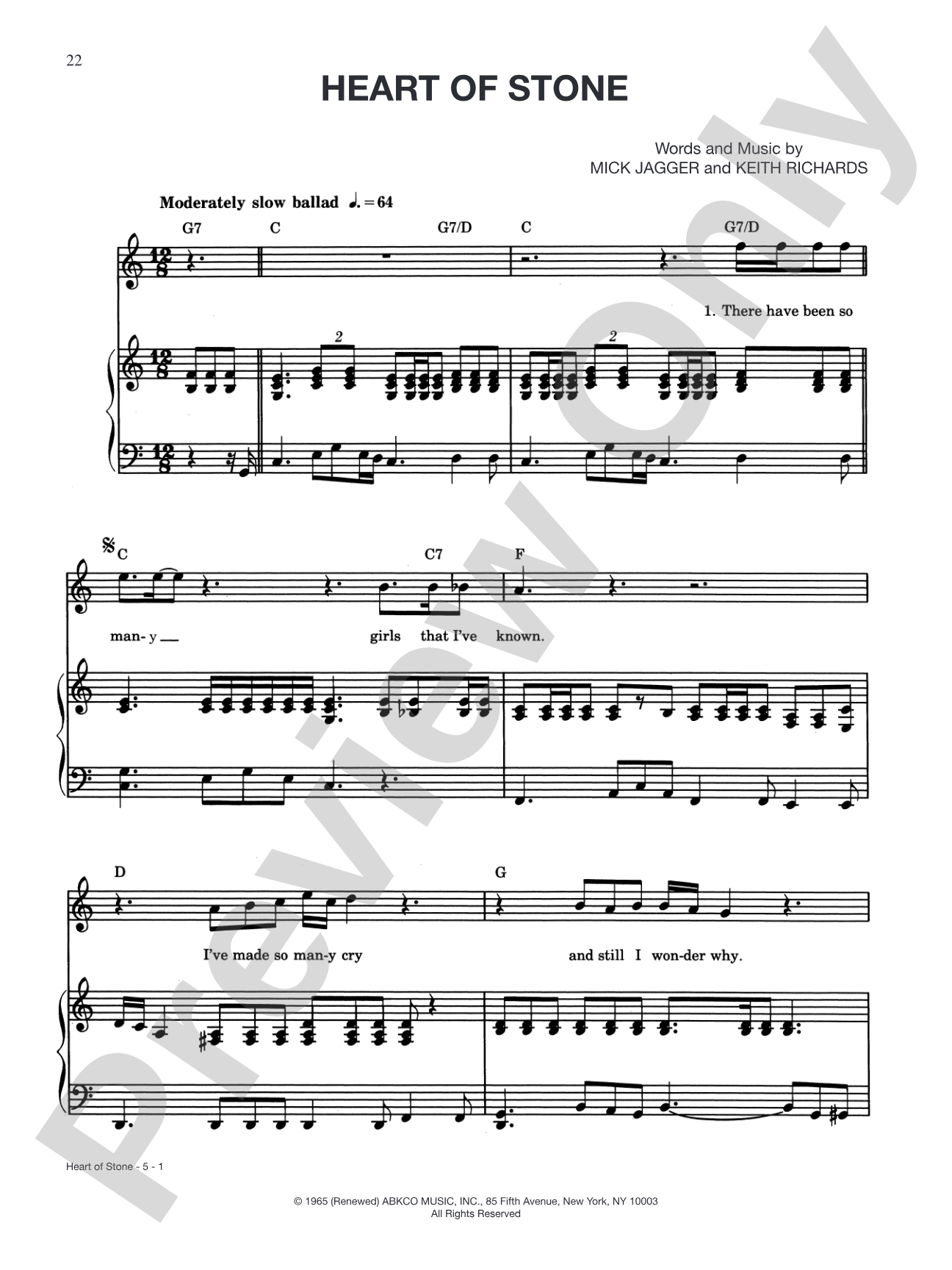

Heart of Stone: Piano/Vocal/Chords
The Rolling Stones
Item: 00-PS-0012114
$4.99
Pickup currently not available
Related Items
Paint It, Black: Piano/Vocal/Chords |
$5.99
|
View | |
Dandelion: Piano/Vocal/Chords |
$4.99
|
View | |
(I Can't Get No) Satisfaction: Piano/Vocal/Chords |
$4.99
|
View | |
Lady Jane: Piano/Vocal/Chords |
$4.99
|
View | |
The Last Time: Piano/Vocal/Chords |
$5.99
|
View | |
19th Nervous Breakdown: Piano/Vocal/Chords |
$5.99
|
View | |
Play With Fire: Piano/Vocal/Chords |
$4.99
|
View | |
I'm Free: Piano/Vocal/Chords |
$4.99
|
View | |
Mother's Little Helper: Piano/Vocal/Chords |
$4.99
|
View | |
Honky Tonk Women: Piano/Vocal/Chords |
$5.99
|
View | |
You Can't Always Get What You Want: Piano/Vocal/Chords |
$9.99
|
View | |
As Tears Go By: Piano/Vocal/Chords |
$4.99
|
View | |
It's All Over Now: Piano/Vocal/Chords |
$5.99
|
View | |
Out of Time: Piano/Vocal/Chords |
$4.99
|
View | |
Ruby Tuesday: Piano/Vocal/Chords |
$4.99
|
View | |
2000 Light Years From Home: Piano/Vocal/Chords |
$5.99
|
View | |
She's a Rainbow: Piano/Vocal/Chords |
$5.99
|
View | |
Let's Spend the Night Together: Piano/Vocal/Chords |
$5.99
|
View | |
Under My Thumb: Piano/Vocal/Chords |
$4.99
|
View | |
Gimme Shelter: Piano/Vocal/Chords |
$5.99
|
View | |
Let It Bleed: Piano/Vocal/Chords |
$5.99
|
View | |
Monkey Man: Piano/Vocal/Chords |
$5.99
|
View | |
No Expectations: Piano/Vocal/Chords |
$4.99
|
View | |
She Smiled Sweetly: Piano/Vocal/Chords |
$4.99
|
View | |
Wild Horses: Piano/Vocal/Chords |
$4.99
|
View | |
The Rolling Stones: Sheet Music Anthology: Piano/Vocal/Chords Book |
$19.99
|
View |
Description
The Rolling Stones Sheet Music Anthology contains 27 piano/vocal/chord arrangements of the legendary British group's greatest hits. Many of the band's most memorable melodies are included, such as "She's a Rainbow," "Lady Jane," and "Ruby Tuesday." Titles: As Tears Go By * Dandelion * Gimme Shelter * Heart of Stone * I'm Free * Honky Tonk Women * It's All Over Now * The Last Time * Let's Spend the Night Together * Let It Bleed * Monkey Man * Mother's Little Helper * 19th Nervous Breakdown * Out of Time * No Expectations * Play with Fire * Paint It, Black * (I Can't Get No) Satisfaction * Sympathy for the Devil * She Smiled Sweetly * 2000 Light Years from Home * Under My Thumb * Wild Horses * You Can't Always Get What You Want.


Discover MakeMusic Cloud: thousands of interactive titles your students can play along with today.
Sample Audio
No sample audio found.
Sample Video
No sample videos found.
Additional Details
Series:
Sheet Music Anthology
Publisher:
Alfred Music
Page Count:
156
SKU:
00-PS-0012114
More about this title
About the Composer: Mick Jagger
Mick Jagger and Keith Richards shaped popular music for six decades as the primary songwriting partnership of The Rolling Stones. Their compositions span blues-inflected rock anthems, baroque-tinged ballads, and experimental studio productions that influenced countless musicians across genres. Their work demonstrates how accessible melodies, strong harmonic sensibility, and lyrical directness can sustain artistic relevance across generations.
For music educators, these songwriters represent a masterclass in melodic writing and arrangement. The pieces in this anthology show how a song can be stripped to its essential vocal line and harmonic structure, making them ideal teaching tools for understanding song form, chord progression, and the relationship between lyric and melody.
Why we love this
This anthology gives singers and pianist-accompanists access to material that genuinely excites students while requiring real musicianship to execute well. The melodies are memorable enough to sustain listener interest, but the harmonic language and rhythmic vocabulary demand focused practice. You get 27 songs with proven singability across a range of keys and styles, eliminating the hunt for reliable charts.
What to expect
These songs capture the swagger, introspection, and harmonic sophistication of one of rock's most enduring catalogs. You'll find yourself drawn to the memorability of melodies like "Angie" and "Wild Horses" while discovering the unexpected sophistication in the chord changes underneath. The collection moves between bluesy grooves and surprisingly delicate ballads, offering emotional range and interpretive freedom.
Who it's for
Vocalist-pianist teams preparing recital material, singers seeking classic rock repertoire for lessons or auditions, and pianists who want to deepen their understanding of rock harmonic language through performance. Music teachers can use these songs to engage students who might not otherwise connect with traditional classical or jazz standards.
How to get the most out of it
- Balance the vocal line against the piano accompaniment so lyrics remain intelligible; these songs depend on lyrical clarity more than instrumental texture.
- Attend to the harmonic rhythm suggested by the chord symbols rather than playing steady quarter-note accompaniment patterns; let the chords breathe with the vocal phrasing.
- Experiment with rhythmic interpretations that reflect each song's original groove; some tracks benefit from a loose, swung feel while others work best with straight eighths.
- Use the chord symbols as a springboard for improvisation rather than reading them literally; this repertoire invites personal interpretation and arrangement choices.
How to use it
Feature a Stones medley in a casual concert or coffeehouse setting where contemporary songwriting sits alongside jazz standards. Individual songs work particularly well as recital openers or closers, given their immediate recognizability and audience appeal. For educational contexts, select pieces that match specific harmonic or formal concepts you're teaching; several songs showcase effective use of blues tonality or unexpected harmonic turns.
Skills your students will build
- Reading and interpreting chord symbols in rock and pop contexts
- Balancing vocal melody against piano accompaniment
- Recognizing song forms (blues-based structures, verse-chorus patterns, bridge construction)
- Developing interpretive flexibility and arrangement awareness
- Understanding harmonic movement in non-classical idioms