
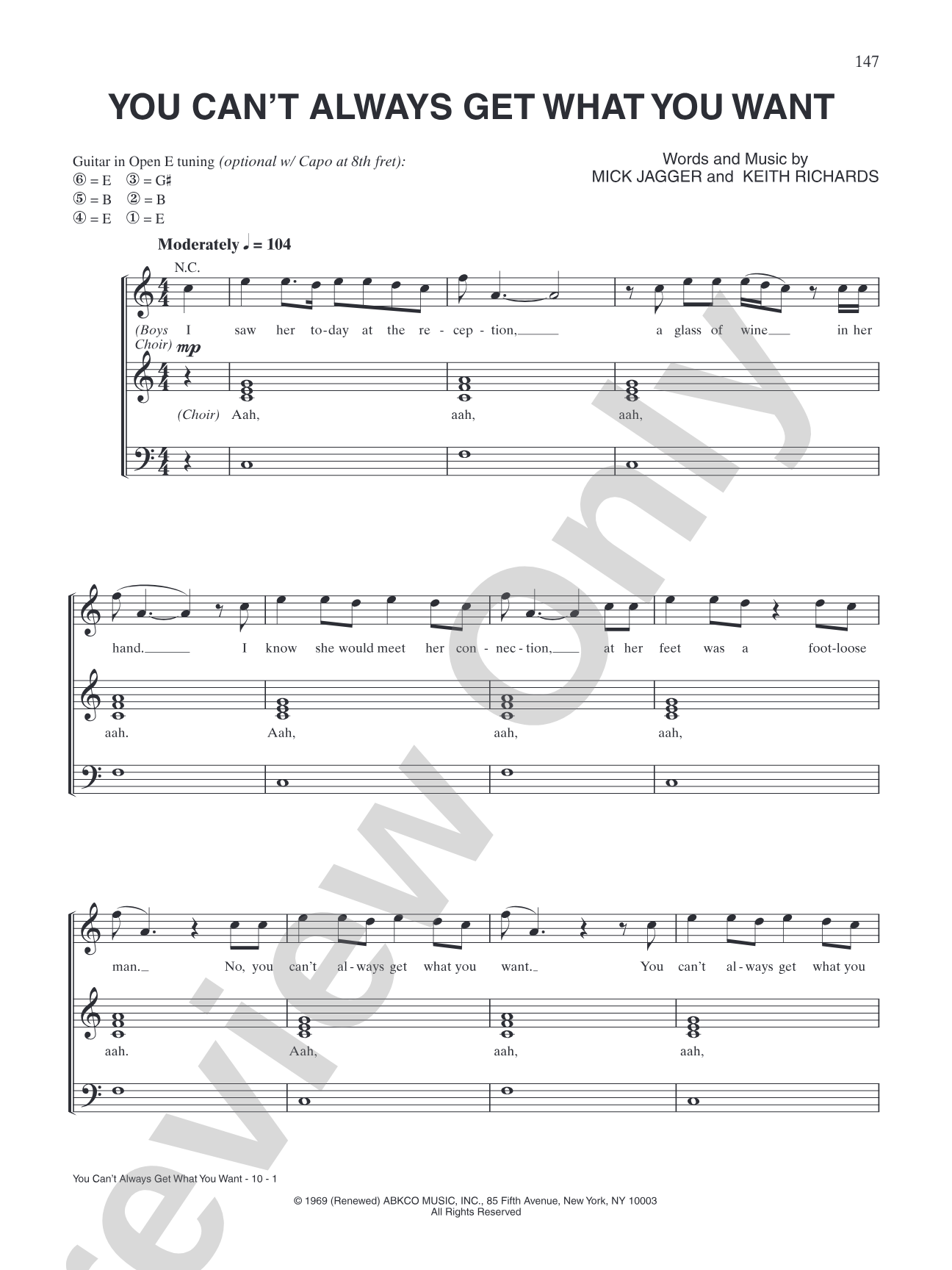
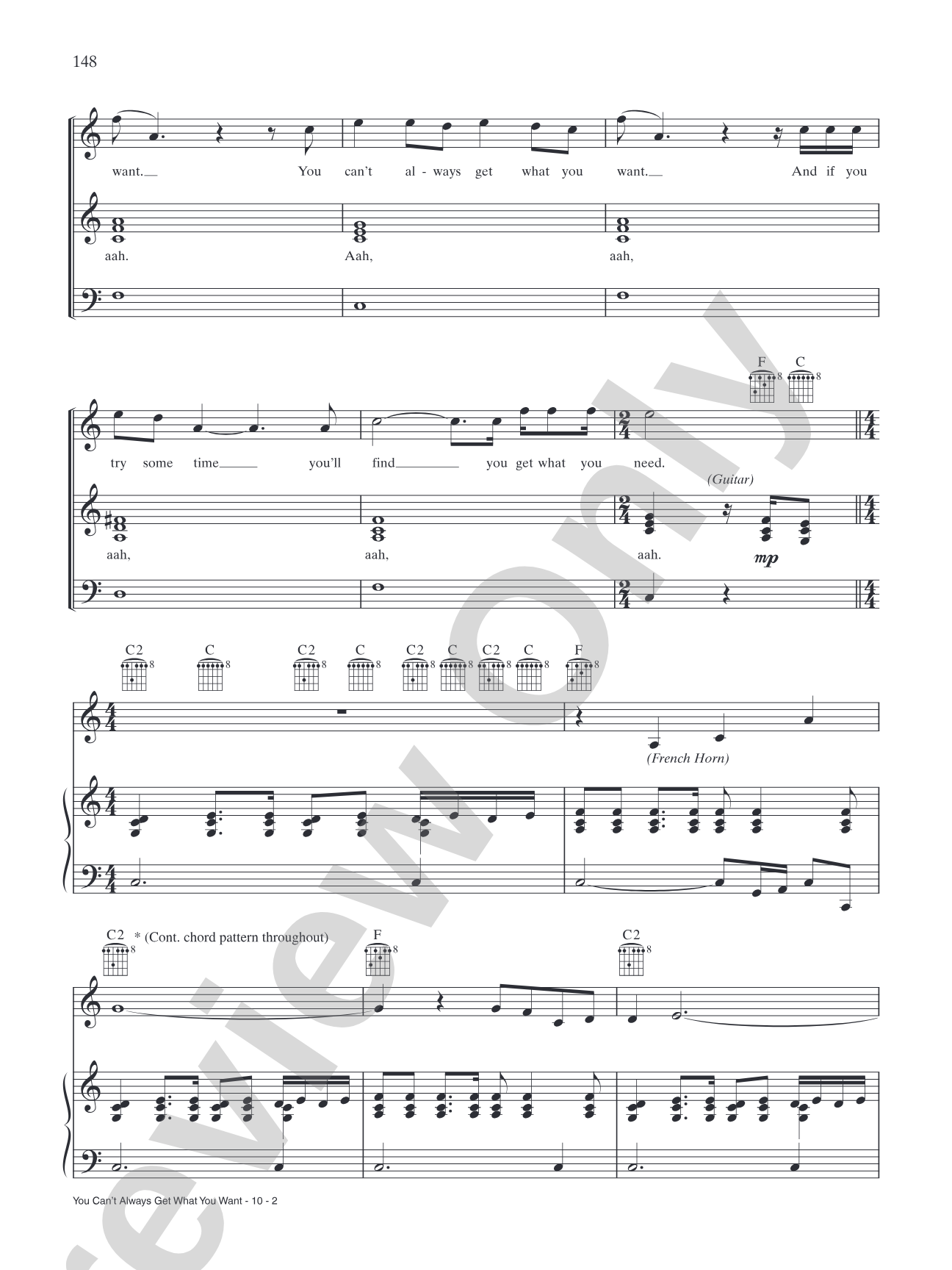

You Can't Always Get What You Want: Piano/Vocal/Chords
The Rolling Stones
Item: 00-PS-0012132
$9.99
Pickup currently not available
Related Items
Paint It, Black: Piano/Vocal/Chords |
$5.99
|
View | |
Dandelion: Piano/Vocal/Chords |
$4.99
|
View | |
(I Can't Get No) Satisfaction: Piano/Vocal/Chords |
$4.99
|
View | |
Lady Jane: Piano/Vocal/Chords |
$4.99
|
View | |
The Last Time: Piano/Vocal/Chords |
$5.99
|
View | |
Heart of Stone: Piano/Vocal/Chords |
$4.99
|
View | |
19th Nervous Breakdown: Piano/Vocal/Chords |
$5.99
|
View | |
Play With Fire: Piano/Vocal/Chords |
$4.99
|
View | |
I'm Free: Piano/Vocal/Chords |
$4.99
|
View | |
Mother's Little Helper: Piano/Vocal/Chords |
$4.99
|
View | |
Honky Tonk Women: Piano/Vocal/Chords |
$5.99
|
View | |
As Tears Go By: Piano/Vocal/Chords |
$4.99
|
View | |
It's All Over Now: Piano/Vocal/Chords |
$5.99
|
View | |
Out of Time: Piano/Vocal/Chords |
$4.99
|
View | |
Ruby Tuesday: Piano/Vocal/Chords |
$4.99
|
View | |
2000 Light Years From Home: Piano/Vocal/Chords |
$5.99
|
View | |
She's a Rainbow: Piano/Vocal/Chords |
$5.99
|
View | |
Let's Spend the Night Together: Piano/Vocal/Chords |
$5.99
|
View | |
Under My Thumb: Piano/Vocal/Chords |
$4.99
|
View | |
Gimme Shelter: Piano/Vocal/Chords |
$5.99
|
View | |
Let It Bleed: Piano/Vocal/Chords |
$5.99
|
View | |
Monkey Man: Piano/Vocal/Chords |
$5.99
|
View | |
No Expectations: Piano/Vocal/Chords |
$4.99
|
View | |
She Smiled Sweetly: Piano/Vocal/Chords |
$4.99
|
View | |
Wild Horses: Piano/Vocal/Chords |
$4.99
|
View | |
The Rolling Stones: Sheet Music Anthology: Piano/Vocal/Chords Book |
$19.99
|
View |
Description
The Rolling Stones Sheet Music Anthology contains 27 piano/vocal/chord arrangements of the legendary British group's greatest hits. Many of the band's most memorable melodies are included, such as "She's a Rainbow," "Lady Jane," and "Ruby Tuesday." Titles: As Tears Go By * Dandelion * Gimme Shelter * Heart of Stone * I'm Free * Honky Tonk Women * It's All Over Now * The Last Time * Let's Spend the Night Together * Let It Bleed * Monkey Man * Mother's Little Helper * 19th Nervous Breakdown * Out of Time * No Expectations * Play with Fire * Paint It, Black * (I Can't Get No) Satisfaction * Sympathy for the Devil * She Smiled Sweetly * 2000 Light Years from Home * Under My Thumb * Wild Horses * You Can't Always Get What You Want.


Discover MakeMusic Cloud: thousands of interactive titles your students can play along with today.
Sample Audio
No sample audio found.
Sample Video
No sample videos found.
Additional Details
Series:
Sheet Music Anthology
Publisher:
Alfred Music
Page Count:
156
SKU:
00-PS-0012132
More about this title
About the Composer: Mick Jagger
Mick Jagger stands as one of rock music's most distinctive voices and prolific songwriters. Alongside Keith Richards, he shaped the sound of the Rolling Stones across five decades, crafting songs that moved seamlessly between blues-inflected rock, baroque folk arrangements, and expansive psychedelic experiments. His melodies and lyrical sensibility remain central to understanding how rock music evolved from its roots into a sophisticated, enduring art form.
For music educators, Jagger's catalog offers a rare opportunity: students encounter genuinely great songwriting within a contemporary idiom. The melodic clarity, harmonic sophistication, and structural variety across these 27 pieces make them valuable tools for teaching song form, vocal production, and the craft of arrangement.
Why we love this
These arrangements capture the Stones' distinctive sound without requiring a full band setup, making their catalog accessible for singers and pianists who want to explore songs that genuinely matter. The collection spans nearly four decades of writing, so it functions as a musical history lesson as much as a performance resource. You'll find baroque harpsichord texture alongside raw blues grooves, all notated clearly enough to perform convincingly.
What to expect
These pieces move through rock's emotional range: the wistful resignation of 'As Tears Go By,' the swaggering groove of 'Honky Tonk Women,' the menacing sophistication of 'Sympathy for the Devil.' The arrangements preserve the songs' original character while adapting them thoughtfully for keyboard and voice, maintaining the melodic memorability and harmonic wit that made these recordings culturally significant.
Who it's for
Singers and pianists performing at recitals, open mics, or studio sessions will find polished arrangements that stand up to scrutiny. Voice teachers can use these songs to teach interpretation, phrasing, and how to shape rock melodies with the same attention they'd give to art songs. Young musicians exploring repertoire beyond classical tradition will recognize immediately why these songs endured.
How to get the most out of it
- Listen closely to how the original recordings balance vocal phrasing with rhythmic precision. The Stones' singers rarely sit directly on the beat; learn where the vocal line pushes or lags intentionally.
- Study the chord changes rather than treating them as background. Many of these songs use chromatic movement and modal inflections that create their distinctive character when played cleanly.
- Balance melodic ornamentation with clarity. Songs like 'She's a Rainbow' demand a lyrical approach, while 'Satisfaction' needs directness. Let the arrangement guide your interpretation.
- Work the piano part as its own voice, not merely accompaniment. These arrangements often draw from the recorded versions' instrumental textures, so the keyboard carries significant musical weight.
How to use it
Program individual songs in recitals or cabaret-style concerts where contemporary repertoire fits naturally. Use them in voice lessons to teach interpretation across a wide stylistic range, or select a thematic set (love songs, rock and roll numbers, songs about time and change) for a solo recital. These arrangements also work well for accompanying singers in recording projects or teaching arrangement concepts by reverse-engineering how a familiar recorded sound translates to the page.
Skills your students will build
- Interpreting rhythmic notation in rock and pop idioms
- Balancing melodic phrasing with harmonic rhythm
- Reading and realizing chord symbols in contemporary contexts
- Understanding how recorded arrangements translate to notated form
- Vocal production and phrasing in non-classical genres
- Piano comping and accompaniment in rock/pop styles