
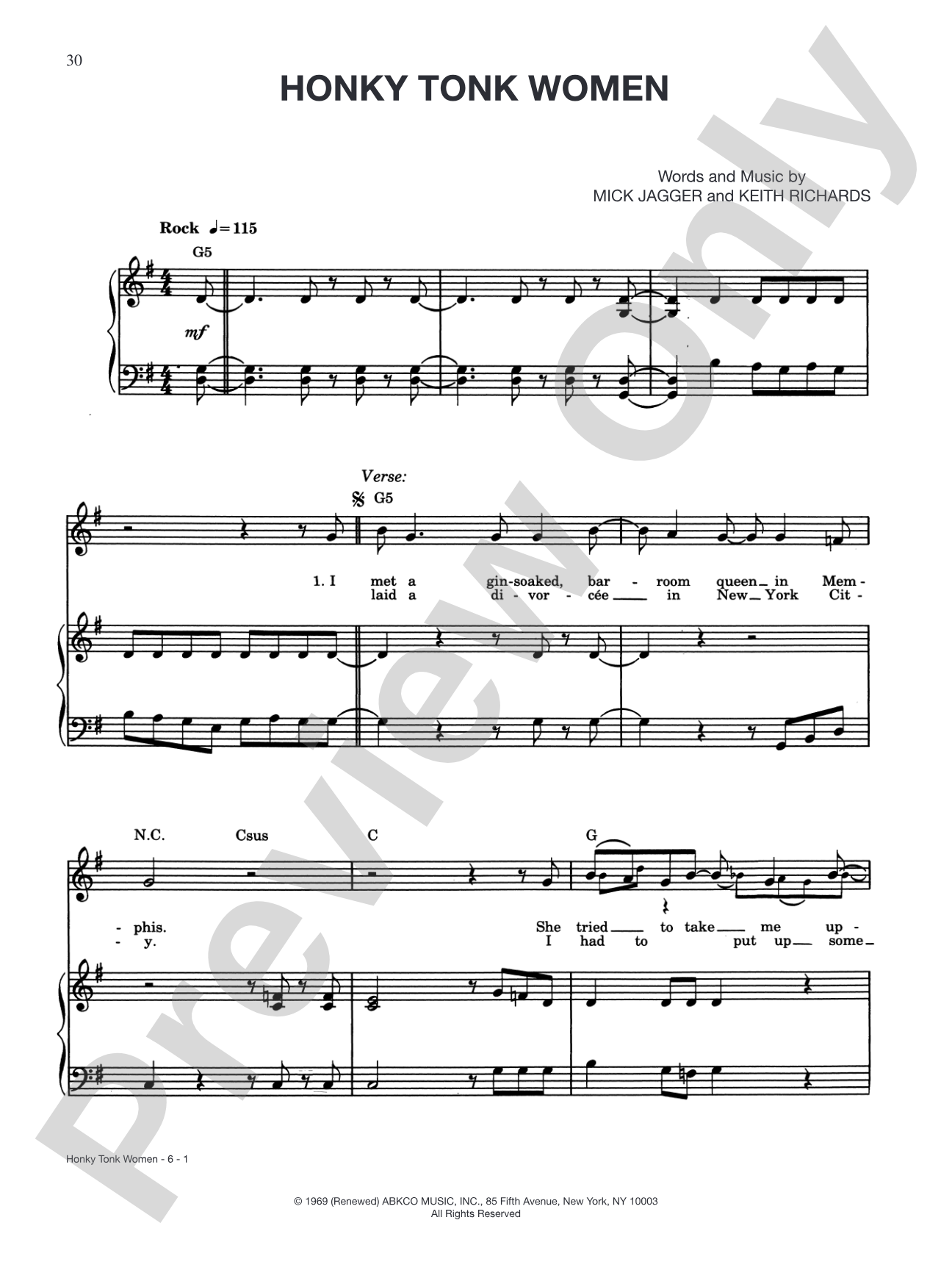
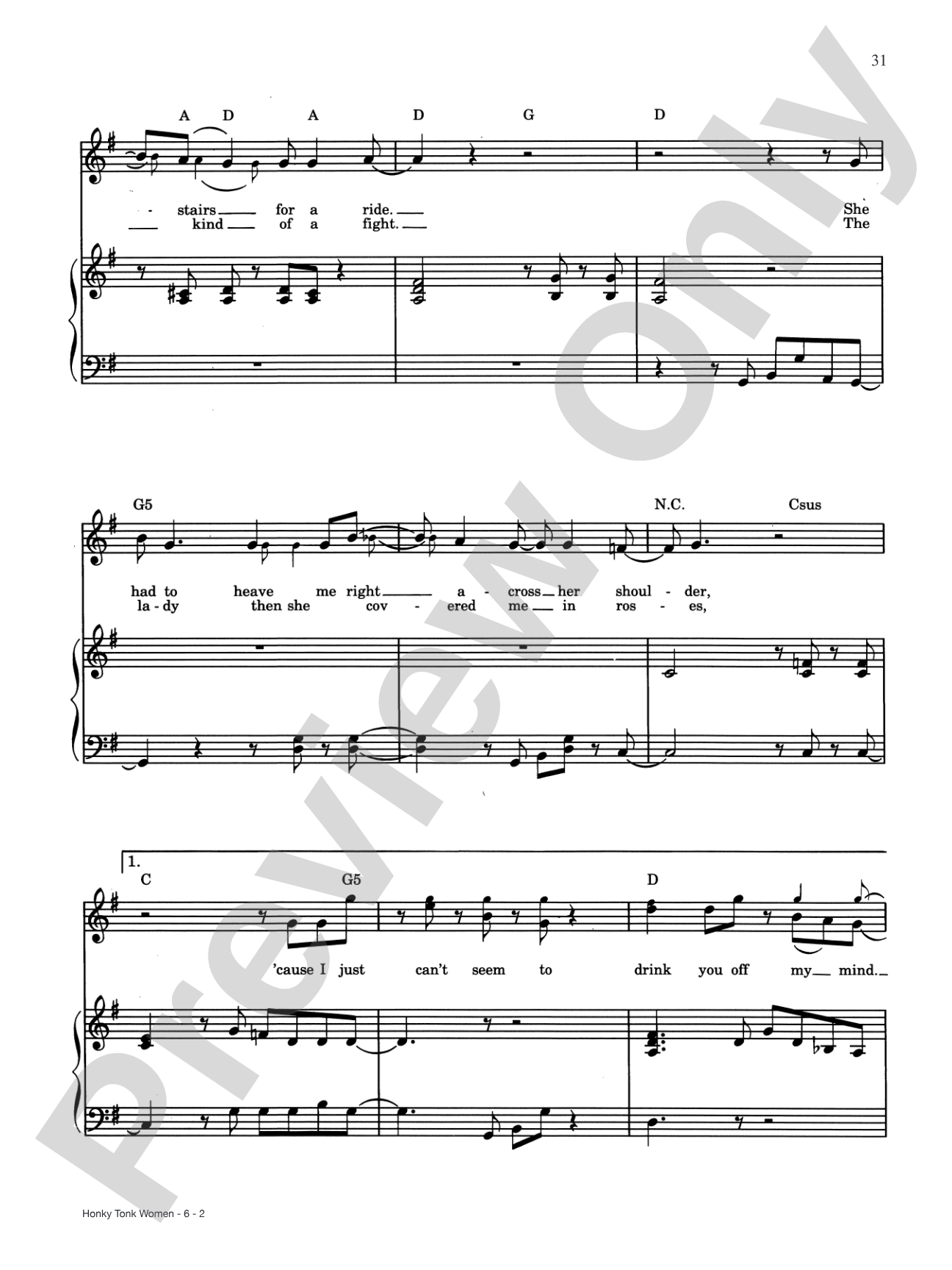

Honky Tonk Women: Piano/Vocal/Chords
The Rolling Stones
Item: 00-PS-0012129
$5.99
Pickup currently not available
Related Items
Paint It, Black: Piano/Vocal/Chords |
$5.99
|
View | |
Dandelion: Piano/Vocal/Chords |
$4.99
|
View | |
(I Can't Get No) Satisfaction: Piano/Vocal/Chords |
$4.99
|
View | |
Lady Jane: Piano/Vocal/Chords |
$4.99
|
View | |
The Last Time: Piano/Vocal/Chords |
$5.99
|
View | |
Heart of Stone: Piano/Vocal/Chords |
$4.99
|
View | |
19th Nervous Breakdown: Piano/Vocal/Chords |
$5.99
|
View | |
Play With Fire: Piano/Vocal/Chords |
$4.99
|
View | |
I'm Free: Piano/Vocal/Chords |
$4.99
|
View | |
Mother's Little Helper: Piano/Vocal/Chords |
$4.99
|
View | |
You Can't Always Get What You Want: Piano/Vocal/Chords |
$9.99
|
View | |
As Tears Go By: Piano/Vocal/Chords |
$4.99
|
View | |
It's All Over Now: Piano/Vocal/Chords |
$5.99
|
View | |
Out of Time: Piano/Vocal/Chords |
$4.99
|
View | |
Ruby Tuesday: Piano/Vocal/Chords |
$4.99
|
View | |
2000 Light Years From Home: Piano/Vocal/Chords |
$5.99
|
View | |
She's a Rainbow: Piano/Vocal/Chords |
$5.99
|
View | |
Let's Spend the Night Together: Piano/Vocal/Chords |
$5.99
|
View | |
Under My Thumb: Piano/Vocal/Chords |
$4.99
|
View | |
Gimme Shelter: Piano/Vocal/Chords |
$5.99
|
View | |
Let It Bleed: Piano/Vocal/Chords |
$5.99
|
View | |
Monkey Man: Piano/Vocal/Chords |
$5.99
|
View | |
No Expectations: Piano/Vocal/Chords |
$4.99
|
View | |
She Smiled Sweetly: Piano/Vocal/Chords |
$4.99
|
View | |
Wild Horses: Piano/Vocal/Chords |
$4.99
|
View | |
The Rolling Stones: Sheet Music Anthology: Piano/Vocal/Chords Book |
$19.99
|
View |
Description
The Rolling Stones Sheet Music Anthology contains 27 piano/vocal/chord arrangements of the legendary British group's greatest hits. Many of the band's most memorable melodies are included, such as "She's a Rainbow," "Lady Jane," and "Ruby Tuesday." Titles: As Tears Go By * Dandelion * Gimme Shelter * Heart of Stone * I'm Free * Honky Tonk Women * It's All Over Now * The Last Time * Let's Spend the Night Together * Let It Bleed * Monkey Man * Mother's Little Helper * 19th Nervous Breakdown * Out of Time * No Expectations * Play with Fire * Paint It, Black * (I Can't Get No) Satisfaction * Sympathy for the Devil * She Smiled Sweetly * 2000 Light Years from Home * Under My Thumb * Wild Horses * You Can't Always Get What You Want.


Discover MakeMusic Cloud: thousands of interactive titles your students can play along with today.
Sample Audio
No sample audio found.
Sample Video
No sample videos found.
Additional Details
Series:
Sheet Music Anthology
Publisher:
Alfred Music
Page Count:
156
SKU:
00-PS-0012129
More about this title
About the Composer: Mick Jagger
Mick Jagger's songwriting partnership with Keith Richards transformed popular music across five decades. Together they wrote some of the most recognizable rock melodies of the 20th century, crafting songs that balanced raw energy with sophisticated melodic construction and often surprising harmonic turns.
Jagger's lyrical voice on stage is inseparable from his compositions, but what makes these songs valuable for music study is how they work on paper. The melodies hold up in any arrangement, the chord progressions reveal smart voice leading, and the songs respect both listeners' intelligence and their hunger for a memorable hook.
Why we love this
This anthology opens up a catalog most students already know but rarely see written down. Teaching from these arrangements lets you build skills on material with genuine cultural weight, not to mention sustained melodic interest and harmonic variety that beats most "educational" pop arrangements by miles.
What to expect
These songs live in the space between swagger and vulnerability. You'll find bluesy minor-key grooves next to wistful ballads, urgent drive alongside reflective space. The piano parts range from minimalist to lush, but everywhere there's clarity; these are songs built on strong bones.
Who it's for
Singers and pianists preparing for auditions, recitals, or informal performance who want to work with substantial, recognizable material. This collection suits advanced students ready to learn how successful melodies sit over functional harmony, and performers looking to expand beyond classical or theater repertoire without sacrificing musicality.
How to get the most out of it
- Balance the vocal line so lyrics stay clear without overwhelming the piano part; these songs reward conversational phrasing over purely legit singing
- Pay attention to rhythmic push and pull around the beat rather than metronomic precision; the looseness is what gives these songs their groove
- Treat the chord symbols as a starting point for comping rather than a rigid roadmap; the arrangements support improvisation and reharmonization
- Lock into the groove early by establishing the rhythmic pocket in the left hand before the vocal enters
How to use it
Slot individual songs into recitals as contemporary classics that audiences recognize immediately, creating natural engagement without sacrificing artistic integrity. Use the collection as a resource for jazz and contemporary vocal ensembles studying how rock writing deploys melody and harmony, or as material for advanced piano students learning to accompany singers at a professional level.
Skills your students will build
- Reading and interpreting chord symbols in a rock/pop context
- Balancing vocal melody with instrumental accompaniment across changing dynamic levels
- Understanding melodic phrasing within repetitive forms (verse, chorus, bridge)
- Comping and rhythmic freedom within a consistent groove
- Connecting lyrics to musical gesture and emotional direction