
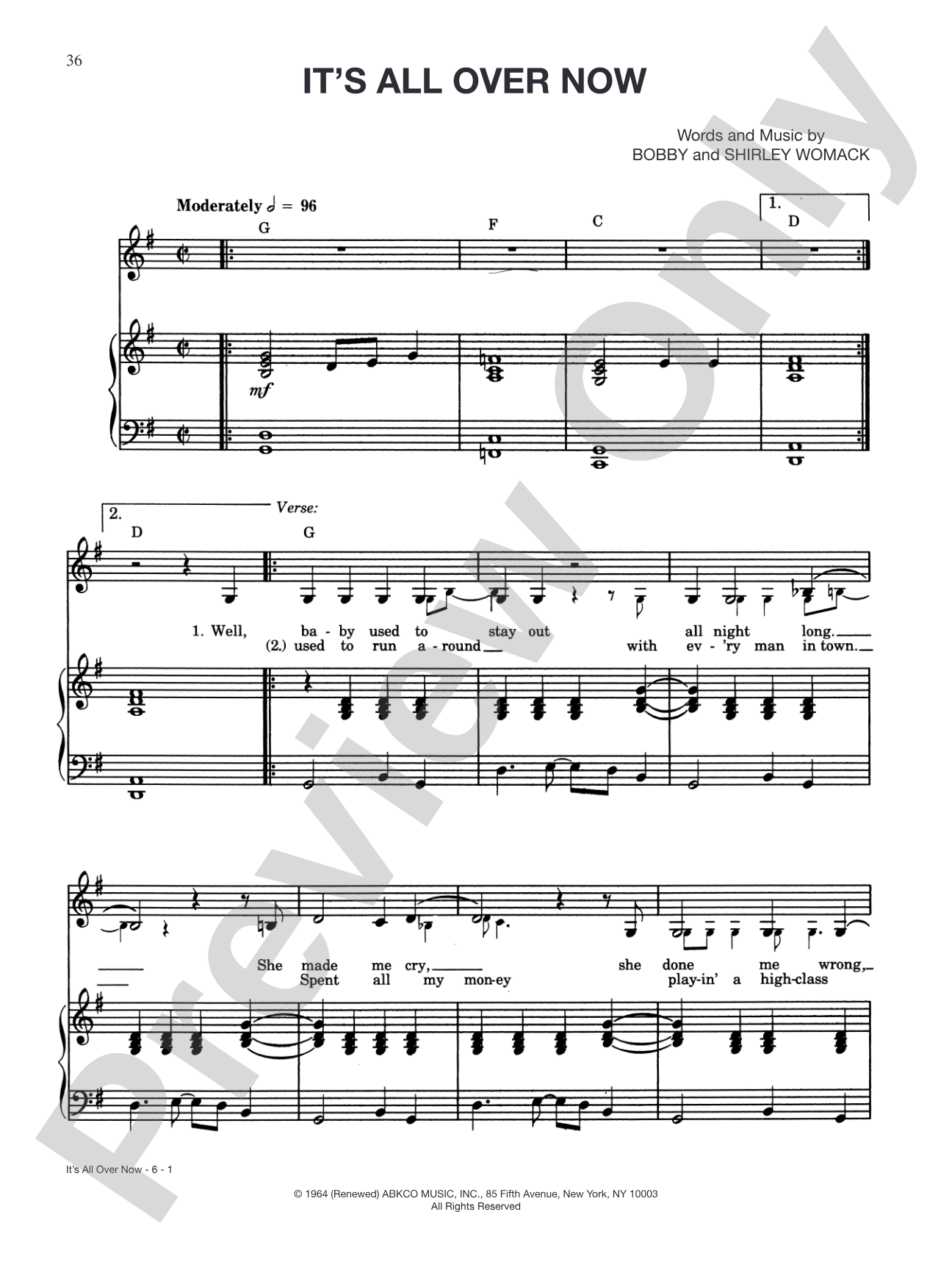
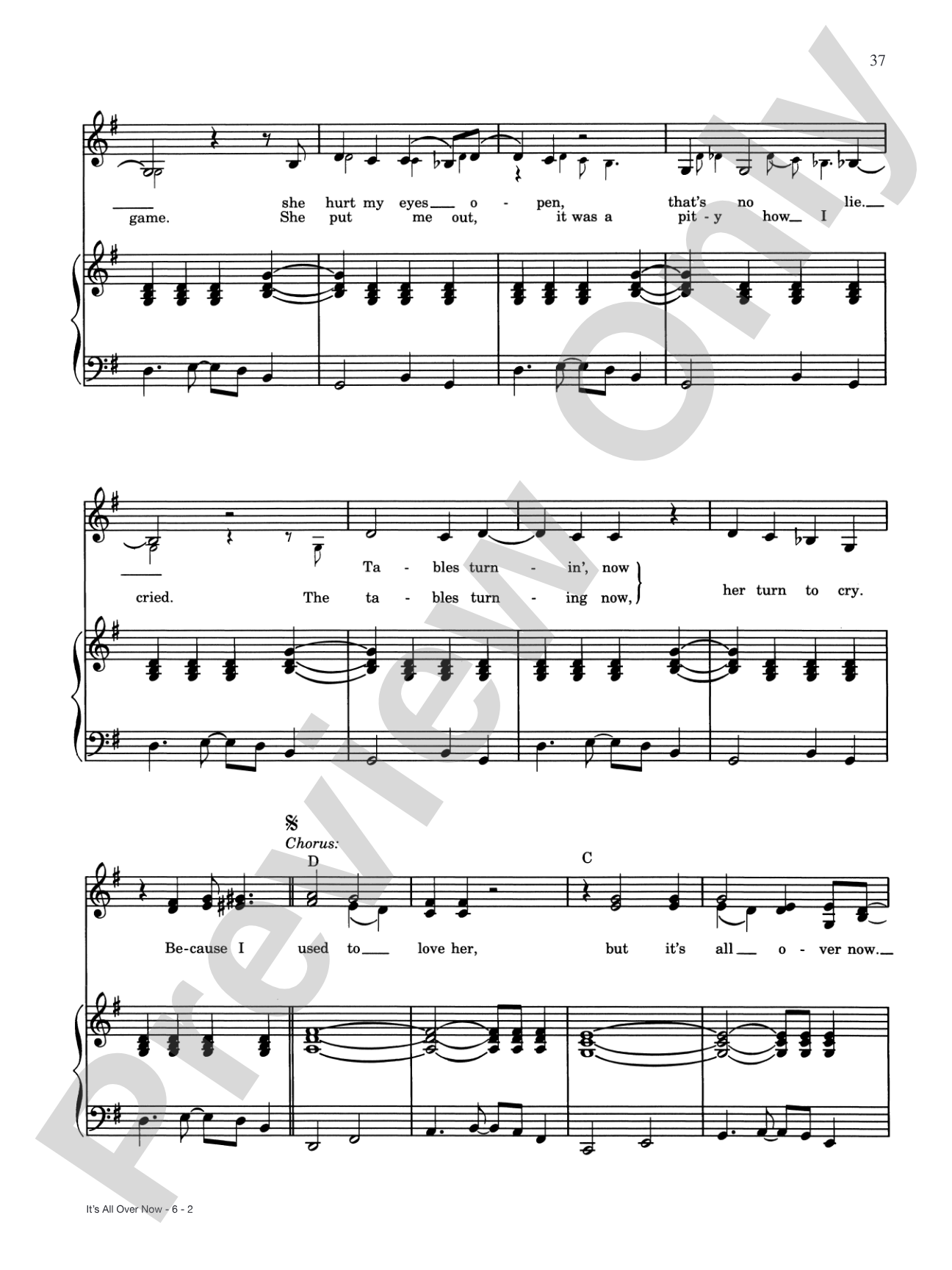

It's All Over Now: Piano/Vocal/Chords
The Rolling Stones
Item: 00-PS-0012136
$5.99
Pickup currently not available
Related Items
Paint It, Black: Piano/Vocal/Chords |
$5.99
|
View | |
Dandelion: Piano/Vocal/Chords |
$4.99
|
View | |
(I Can't Get No) Satisfaction: Piano/Vocal/Chords |
$4.99
|
View | |
Lady Jane: Piano/Vocal/Chords |
$4.99
|
View | |
The Last Time: Piano/Vocal/Chords |
$5.99
|
View | |
Heart of Stone: Piano/Vocal/Chords |
$4.99
|
View | |
19th Nervous Breakdown: Piano/Vocal/Chords |
$5.99
|
View | |
Play With Fire: Piano/Vocal/Chords |
$4.99
|
View | |
I'm Free: Piano/Vocal/Chords |
$4.99
|
View | |
Mother's Little Helper: Piano/Vocal/Chords |
$4.99
|
View | |
Honky Tonk Women: Piano/Vocal/Chords |
$5.99
|
View | |
You Can't Always Get What You Want: Piano/Vocal/Chords |
$9.99
|
View | |
As Tears Go By: Piano/Vocal/Chords |
$4.99
|
View | |
Out of Time: Piano/Vocal/Chords |
$4.99
|
View | |
Ruby Tuesday: Piano/Vocal/Chords |
$4.99
|
View | |
2000 Light Years From Home: Piano/Vocal/Chords |
$5.99
|
View | |
She's a Rainbow: Piano/Vocal/Chords |
$5.99
|
View | |
Let's Spend the Night Together: Piano/Vocal/Chords |
$5.99
|
View | |
Under My Thumb: Piano/Vocal/Chords |
$4.99
|
View | |
Gimme Shelter: Piano/Vocal/Chords |
$5.99
|
View | |
Let It Bleed: Piano/Vocal/Chords |
$5.99
|
View | |
Monkey Man: Piano/Vocal/Chords |
$5.99
|
View | |
No Expectations: Piano/Vocal/Chords |
$4.99
|
View | |
She Smiled Sweetly: Piano/Vocal/Chords |
$4.99
|
View | |
Wild Horses: Piano/Vocal/Chords |
$4.99
|
View | |
The Rolling Stones: Sheet Music Anthology: Piano/Vocal/Chords Book |
$19.99
|
View |
Description
The Rolling Stones Sheet Music Anthology contains 27 piano/vocal/chord arrangements of the legendary British group's greatest hits. Many of the band's most memorable melodies are included, such as "She's a Rainbow," "Lady Jane," and "Ruby Tuesday." Titles: As Tears Go By * Dandelion * Gimme Shelter * Heart of Stone * I'm Free * Honky Tonk Women * It's All Over Now * The Last Time * Let's Spend the Night Together * Let It Bleed * Monkey Man * Mother's Little Helper * 19th Nervous Breakdown * Out of Time * No Expectations * Play with Fire * Paint It, Black * (I Can't Get No) Satisfaction * Sympathy for the Devil * She Smiled Sweetly * 2000 Light Years from Home * Under My Thumb * Wild Horses * You Can't Always Get What You Want.


Discover MakeMusic Cloud: thousands of interactive titles your students can play along with today.
Sample Audio
No sample audio found.
Sample Video
No sample videos found.
Additional Details
Series:
Sheet Music Anthology
Publisher:
Alfred Music
Page Count:
156
SKU:
00-PS-0012136
More about this title
About the Composer: Bobby Womack
Bobby Womack (1944-2014) was a singer, songwriter, and guitarist whose influence stretched across soul, R&B, rock, and country music. He wrote "It's All Over Now" during his early career with the Valentinos, a song that became a cornerstone of The Rolling Stones' repertoire when they recorded it in 1965. Womack's ability to craft emotionally direct melodies and lyrics made him a sought-after songwriter across genres; his work appeared on records by artists ranging from Aretha Franklin to Darius Rucker.
For musicians learning rock standards through piano and vocal arrangements, Womack's compositions demonstrate how memorable hooks and accessible chord progressions can anchor songs that endure across decades. His songwriting style prioritizes clarity and emotional directness, qualities that translate well to educational settings where students benefit from strong melodic lines and straightforward harmonic structures.
Why we love this
This anthology gives vocalists and pianists access to era-defining rock arrangements that bridge classical training and contemporary performance. The songs span The Rolling Stones' most celebrated period, offering a curated set of pieces where melody, harmonic movement, and lyrical content all reward serious musical engagement rather than casual performance.
What to expect
These arrangements capture the sophisticated songwriting at the heart of The Rolling Stones' catalog. Beneath the surface swagger sit minor-key melodies, unexpected chord changes, and lyrical narratives that reward close listening. The music feels both immediate and layered.
Who it's for
Singers and pianists preparing for recitals, auditions, or performances who want to explore rock standards in a notated format. Advanced high school and college-level musicians will find the melodies accessible but the harmonic and interpretive demands substantive enough to warrant serious preparation.
How to get the most out of it
- Approach the vocal line with attention to phrasing that mirrors speech rhythm; these melodies often sit closer to conversational cadence than to purely musical phrasing, and respecting that quality keeps the song grounded.
- Let the piano part suggest the original arrangement's groove rather than competing with it. The chords provide harmonic richness, but restraint in left-hand comping will keep space for the voice.
- Work out the harmonic transitions before focusing on tempo. Many of these songs shift between verse and chorus in ways that demand secure chord changes from the accompanist.
- Study the original recordings alongside the sheet music. Knowing how the band voiced these arrangements will inform choices about voicing, register, and rhythmic feel in your own interpretation.
How to use it
Include a single selection from this collection in a recital centered on 20th-century popular song or rock classics; "Wild Horses" or "You Can't Always Get What You Want" work especially well in mixed-genre programs. Alternatively, a vocalist preparing for musical theater or contemporary music study can use these arrangements as bridges between classical technique and modern repertoire demands.
Skills your students will build
- Reading and interpreting chord symbols in a rock/popular music context
- Coordinating melody, harmony, and accompaniment across two instruments (voice and piano)
- Managing vocal line placement over syncopated or swing-influenced piano figures
- Understanding verse-chorus song structure and harmonic variation
- Navigating chord progressions with unexpected modulations or chromatic voice leading