
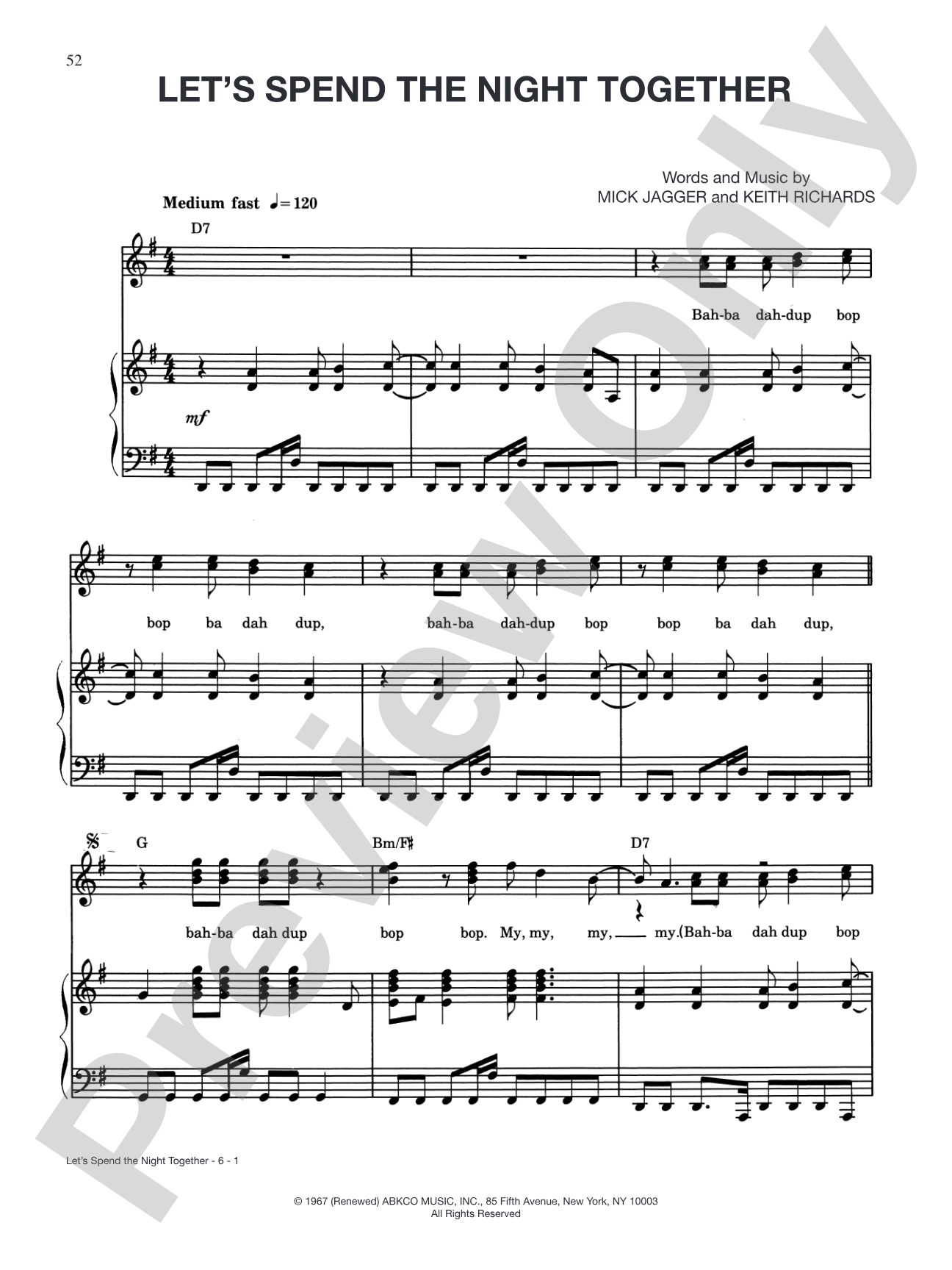
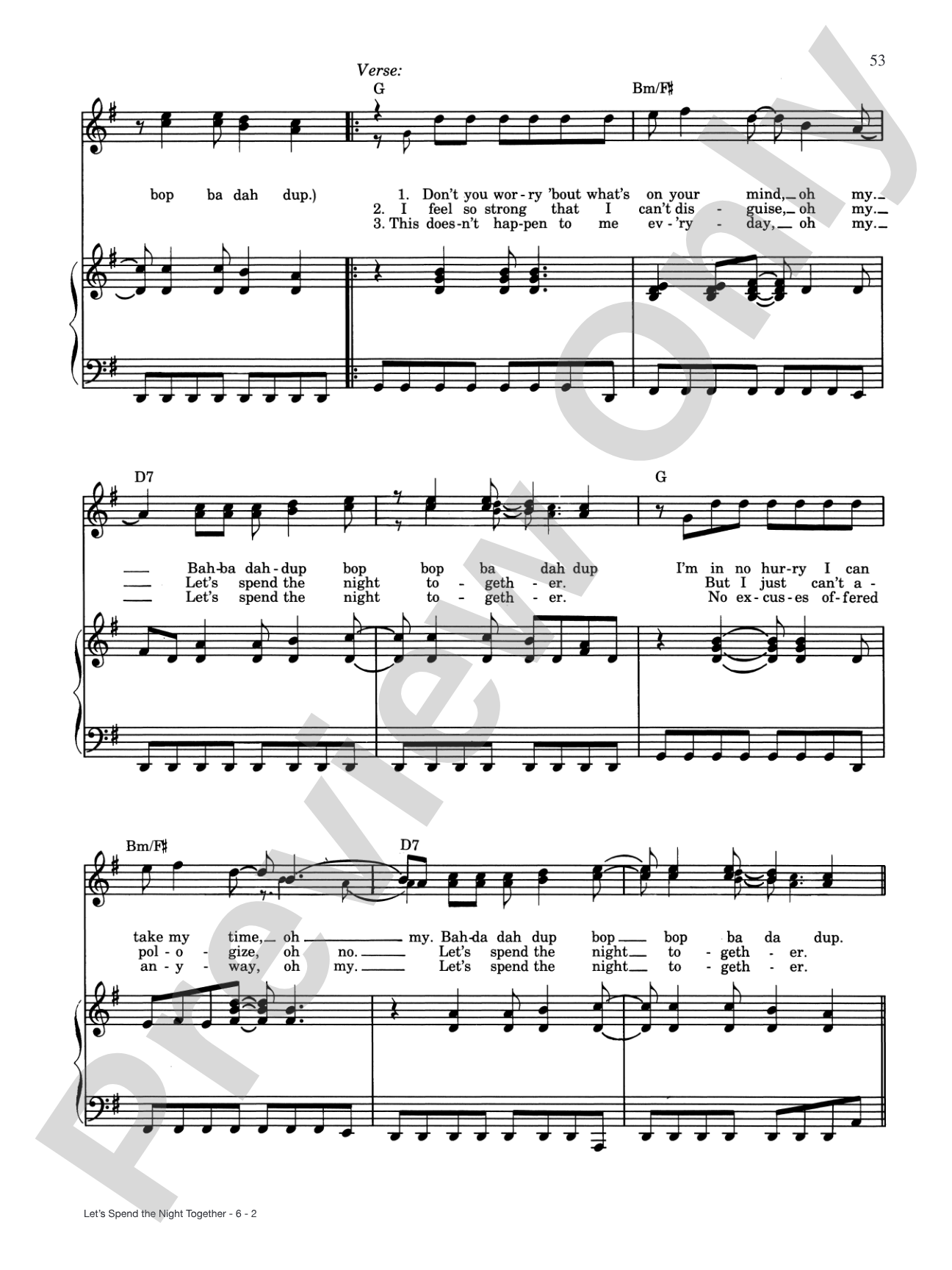

Let's Spend the Night Together: Piano/Vocal/Chords
The Rolling Stones
Item: 00-PS-0012152
$5.99
Pickup currently not available
Related Items
Paint It, Black: Piano/Vocal/Chords |
$5.99
|
View | |
Dandelion: Piano/Vocal/Chords |
$4.99
|
View | |
(I Can't Get No) Satisfaction: Piano/Vocal/Chords |
$4.99
|
View | |
Lady Jane: Piano/Vocal/Chords |
$4.99
|
View | |
The Last Time: Piano/Vocal/Chords |
$5.99
|
View | |
Heart of Stone: Piano/Vocal/Chords |
$4.99
|
View | |
19th Nervous Breakdown: Piano/Vocal/Chords |
$5.99
|
View | |
Play With Fire: Piano/Vocal/Chords |
$4.99
|
View | |
I'm Free: Piano/Vocal/Chords |
$4.99
|
View | |
Mother's Little Helper: Piano/Vocal/Chords |
$4.99
|
View | |
Honky Tonk Women: Piano/Vocal/Chords |
$5.99
|
View | |
You Can't Always Get What You Want: Piano/Vocal/Chords |
$9.99
|
View | |
As Tears Go By: Piano/Vocal/Chords |
$4.99
|
View | |
It's All Over Now: Piano/Vocal/Chords |
$5.99
|
View | |
Out of Time: Piano/Vocal/Chords |
$4.99
|
View | |
Ruby Tuesday: Piano/Vocal/Chords |
$4.99
|
View | |
2000 Light Years From Home: Piano/Vocal/Chords |
$5.99
|
View | |
She's a Rainbow: Piano/Vocal/Chords |
$5.99
|
View | |
Under My Thumb: Piano/Vocal/Chords |
$4.99
|
View | |
Gimme Shelter: Piano/Vocal/Chords |
$5.99
|
View | |
Let It Bleed: Piano/Vocal/Chords |
$5.99
|
View | |
Monkey Man: Piano/Vocal/Chords |
$5.99
|
View | |
No Expectations: Piano/Vocal/Chords |
$4.99
|
View | |
She Smiled Sweetly: Piano/Vocal/Chords |
$4.99
|
View | |
Wild Horses: Piano/Vocal/Chords |
$4.99
|
View | |
The Rolling Stones: Sheet Music Anthology: Piano/Vocal/Chords Book |
$19.99
|
View |
Description
The Rolling Stones Sheet Music Anthology contains 27 piano/vocal/chord arrangements of the legendary British group's greatest hits. Many of the band's most memorable melodies are included, such as "She's a Rainbow," "Lady Jane," and "Ruby Tuesday." Titles: As Tears Go By * Dandelion * Gimme Shelter * Heart of Stone * I'm Free * Honky Tonk Women * It's All Over Now * The Last Time * Let's Spend the Night Together * Let It Bleed * Monkey Man * Mother's Little Helper * 19th Nervous Breakdown * Out of Time * No Expectations * Play with Fire * Paint It, Black * (I Can't Get No) Satisfaction * Sympathy for the Devil * She Smiled Sweetly * 2000 Light Years from Home * Under My Thumb * Wild Horses * You Can't Always Get What You Want.


Discover MakeMusic Cloud: thousands of interactive titles your students can play along with today.
Sample Audio
No sample audio found.
Sample Video
No sample videos found.
Additional Details
Series:
Sheet Music Anthology
Publisher:
Alfred Music
Page Count:
156
SKU:
00-PS-0012152
More about this title
About the Composer: Mick Jagger
Mick Jagger co-wrote the vast majority of The Rolling Stones' catalog alongside Keith Richards, establishing one of rock music's most prolific and enduring songwriting partnerships. Beginning in the early 1960s, Jagger and Richards created a body of work that spans blues-influenced rock, psychedelic experimentation, and introspective ballads, fundamentally shaping the sound and attitude of rock and roll across five decades.
For musicians and singers working with these arrangements, Jagger's compositional voice is distinguished by his ability to craft memorable melodic hooks within rock structures, combine lyrical directness with sophisticated harmonic ideas, and adapt songs across vastly different sonic contexts. His songs reward both straightforward interpretations and stylistic exploration.
Why we love this
This collection gives piano students and singers immediate access to 27 legitimate classics without requiring endless searching through incomplete sources online. The arrangements preserve the songs' essential character while presenting them in a playable format for vocalists and keyboardists working across rock, contemporary, and crossover contexts.
What to expect
Opening these arrangements feels like unlocking a cultural moment. You encounter blues-rooted intensity in "Sympathy for the Devil," wry social observation in "Mother's Little Helper," psychedelic atmosphere in "2000 Light Years from Home," and surprising tenderness in "She Smiled Sweetly." The collection spans the Stones' evolution while maintaining the restless energy and storytelling intelligence that made the band essential.
Who it's for
Singers and pianists preparing repertoire for recitals, auditions, or contemporary music programs will find a trusted, playable source for some of rock's most recognizable material. This collection also serves students building confidence with chord symbols and learning how popular song structures support strong melodies.
How to get the most out of it
- Study the original recordings alongside the sheet music to internalize the groove and phrasing; these songs demand rhythmic confidence and attitude that notation alone cannot convey.
- Pay attention to the chord symbols and use them as permission to explore comping and voicing choices appropriate to your arrangement rather than playing strictly as written.
- Approach the vocal line as a conversation with the piano part. Many of these melodies sit deliberately low in the range or demand a conversational rhythm; shape the phrasing to serve the lyric first.
- Experiment with tempo and feel variations once you know the tune solidly. Several songs (particularly the acoustic-leaning arrangements) benefit from freedom in the rhythm section.
How to use it
These songs work exceptionally well in contemporary music recitals, music theater audition preparation, or crossover programs pairing classical and popular traditions. Consider programming a single song alongside jazz standards and art songs, or building an entire set around a particular era of the Stones' catalog.
Skills your students will build
- Reading and interpreting chord symbols in a rock context
- Balancing written melody with conversational phrasing and rhythmic freedom
- Understanding blues and rock harmonic structures
- Adapting popular song arrangements for different vocal ranges and piano textures
- Developing stylistic awareness across multiple songwriting eras and moods