
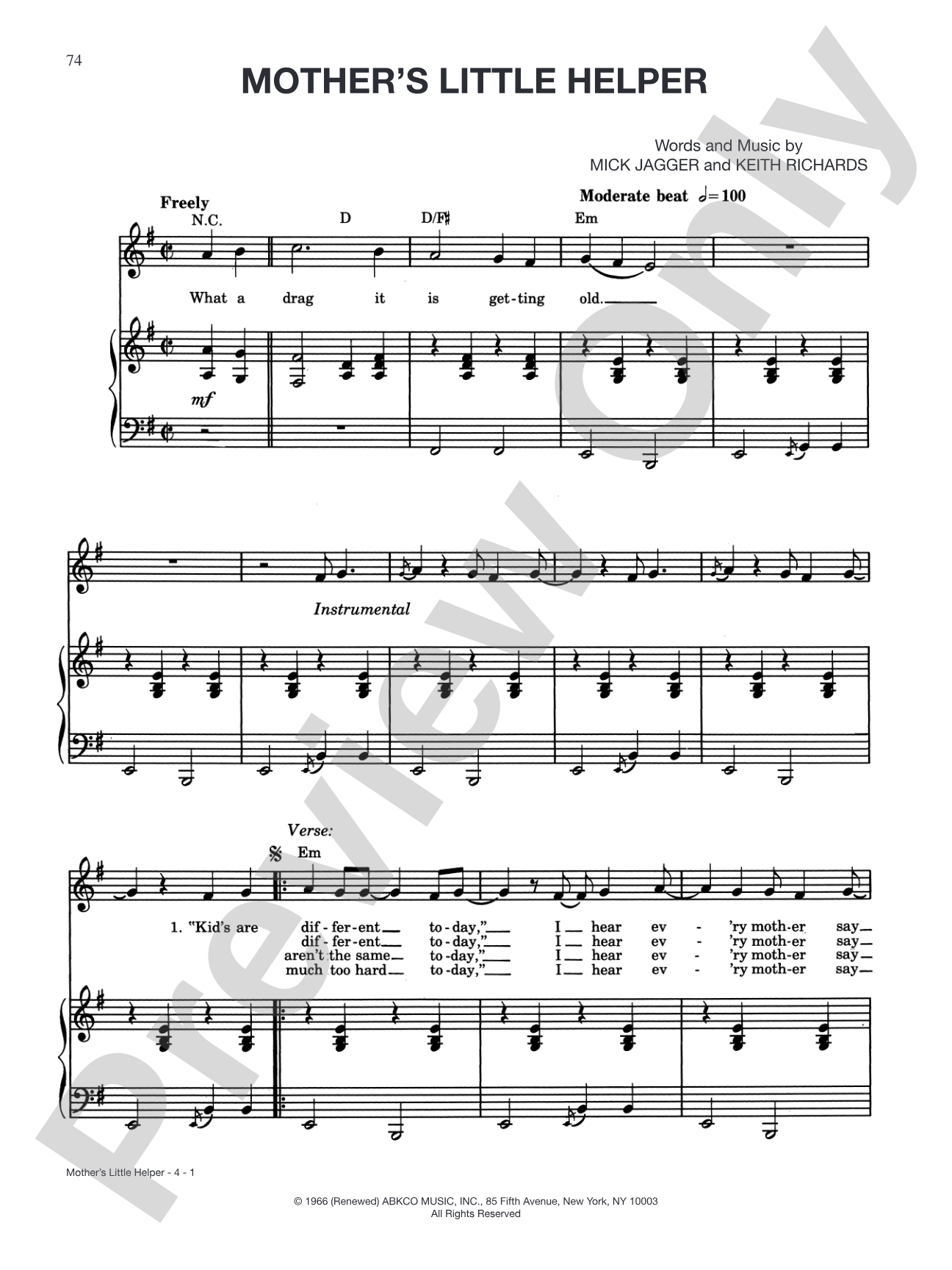

Mother's Little Helper: Piano/Vocal/Chords
The Rolling Stones
Item: 00-PS-0012126
$4.99
Pickup currently not available
Related Items
Paint It, Black: Piano/Vocal/Chords |
$5.99
|
View | |
Dandelion: Piano/Vocal/Chords |
$4.99
|
View | |
(I Can't Get No) Satisfaction: Piano/Vocal/Chords |
$4.99
|
View | |
Lady Jane: Piano/Vocal/Chords |
$4.99
|
View | |
The Last Time: Piano/Vocal/Chords |
$5.99
|
View | |
Heart of Stone: Piano/Vocal/Chords |
$4.99
|
View | |
19th Nervous Breakdown: Piano/Vocal/Chords |
$5.99
|
View | |
Play With Fire: Piano/Vocal/Chords |
$4.99
|
View | |
I'm Free: Piano/Vocal/Chords |
$4.99
|
View | |
Honky Tonk Women: Piano/Vocal/Chords |
$5.99
|
View | |
You Can't Always Get What You Want: Piano/Vocal/Chords |
$9.99
|
View | |
As Tears Go By: Piano/Vocal/Chords |
$4.99
|
View | |
It's All Over Now: Piano/Vocal/Chords |
$5.99
|
View | |
Out of Time: Piano/Vocal/Chords |
$4.99
|
View | |
Ruby Tuesday: Piano/Vocal/Chords |
$4.99
|
View | |
2000 Light Years From Home: Piano/Vocal/Chords |
$5.99
|
View | |
She's a Rainbow: Piano/Vocal/Chords |
$5.99
|
View | |
Let's Spend the Night Together: Piano/Vocal/Chords |
$5.99
|
View | |
Under My Thumb: Piano/Vocal/Chords |
$4.99
|
View | |
Gimme Shelter: Piano/Vocal/Chords |
$5.99
|
View | |
Let It Bleed: Piano/Vocal/Chords |
$5.99
|
View | |
Monkey Man: Piano/Vocal/Chords |
$5.99
|
View | |
No Expectations: Piano/Vocal/Chords |
$4.99
|
View | |
She Smiled Sweetly: Piano/Vocal/Chords |
$4.99
|
View | |
Wild Horses: Piano/Vocal/Chords |
$4.99
|
View | |
The Rolling Stones: Sheet Music Anthology: Piano/Vocal/Chords Book |
$19.99
|
View |
Description
The Rolling Stones Sheet Music Anthology contains 27 piano/vocal/chord arrangements of the legendary British group's greatest hits. Many of the band's most memorable melodies are included, such as "She's a Rainbow," "Lady Jane," and "Ruby Tuesday." Titles: As Tears Go By * Dandelion * Gimme Shelter * Heart of Stone * I'm Free * Honky Tonk Women * It's All Over Now * The Last Time * Let's Spend the Night Together * Let It Bleed * Monkey Man * Mother's Little Helper * 19th Nervous Breakdown * Out of Time * No Expectations * Play with Fire * Paint It, Black * (I Can't Get No) Satisfaction * Sympathy for the Devil * She Smiled Sweetly * 2000 Light Years from Home * Under My Thumb * Wild Horses * You Can't Always Get What You Want.


Discover MakeMusic Cloud: thousands of interactive titles your students can play along with today.
Sample Audio
No sample audio found.
Sample Video
No sample videos found.
Additional Details
Series:
Sheet Music Anthology
Publisher:
Alfred Music
Page Count:
156
SKU:
00-PS-0012126
More about this title
About the Composer: Mick Jagger
Mick Jagger co-wrote many of The Rolling Stones' most enduring songs alongside Keith Richards, establishing a songwriting partnership that shaped rock music for over six decades. His ability to craft memorable melodies, provocative lyrics, and instantly recognizable hooks made him one of the most influential songwriters in popular music history.
For music educators and performers, Jagger's compositions offer a masterclass in song structure, melodic phrasing, and the craft of writing for voice. These arrangements provide accessible entry points into understanding how great rock songs are constructed, bridging contemporary music repertoire and serious musical study.
Why we love this
This anthology puts 27 iconic songs within reach of pianists and vocalists who want to explore rock classics with harmonic and melodic substance. The piano/vocal/chord format preserves the essential songwriting while allowing singers and players to discover how these hits actually work beneath their legendary recordings. Programming material from this collection signals to students that their musical interests are valid, serious, and worth developing.
What to expect
Swaggering, clever, and alive with attitude. These songs pulse with the confidence of a band that knew exactly what they were doing: blending blues and folk influences into something irresistible, pairing sharp social commentary with unforgettable hooks. Even slowed down on piano or sung without a band, they retain their edge.
Who it's for
Pianists and singers who want repertoire that connects their classical or jazz training to the popular music they love. This collection is ideal for upper-level high school students, college vocalists, piano accompanists seeking rock repertoire, and performers building programs for recitals or informal performance settings.
How to get the most out of it
- Study the original recordings alongside these arrangements to internalize the vocal phrasing and rhythmic inflection that made these songs distinctive. The sheet music provides the skeleton, but the recordings show you where to place emphasis and attitude.
- Pay attention to the chord voicings written on the piano part. The Stones' songs often rely on unexpected harmonic movement; capturing those colors will ground your performance even if you're playing in a different setting than the original arrangement.
- Communicate the storytelling in these lyrics. Whether the song is three minutes or five, find the narrative arc and sing or play with purposefulness. Rock songs at their best are character studies and emotional snapshots.
- Adjust tempos and dynamics to suit your voice or your venue rather than slavishly matching the recording. Many of these songs adapt beautifully to slower, more introspective interpretations or to more energetic readings depending on what you want to express.
How to use it
Include one or two of these songs in a recital to shift the energy and show range. A program built around "Paint It, Black," "Wild Horses," or "You Can't Always Get What You Want" invites audiences to hear familiar material freshly. These arrangements also work well as supplementary repertoire for voice students studying contemporary song styles or for pianists exploring repertoire beyond the classical tradition.
Skills your students will build
- Reading and performing chord symbols in a piano/vocal context
- Adapting arrangements for available accompaniment (solo piano, trio, etc.)
- Understanding song form and melodic phrasing in popular music
- Vocal interpretation and rhythmic flexibility in non-classical styles
- Sight-reading in a rock and pop idiom