
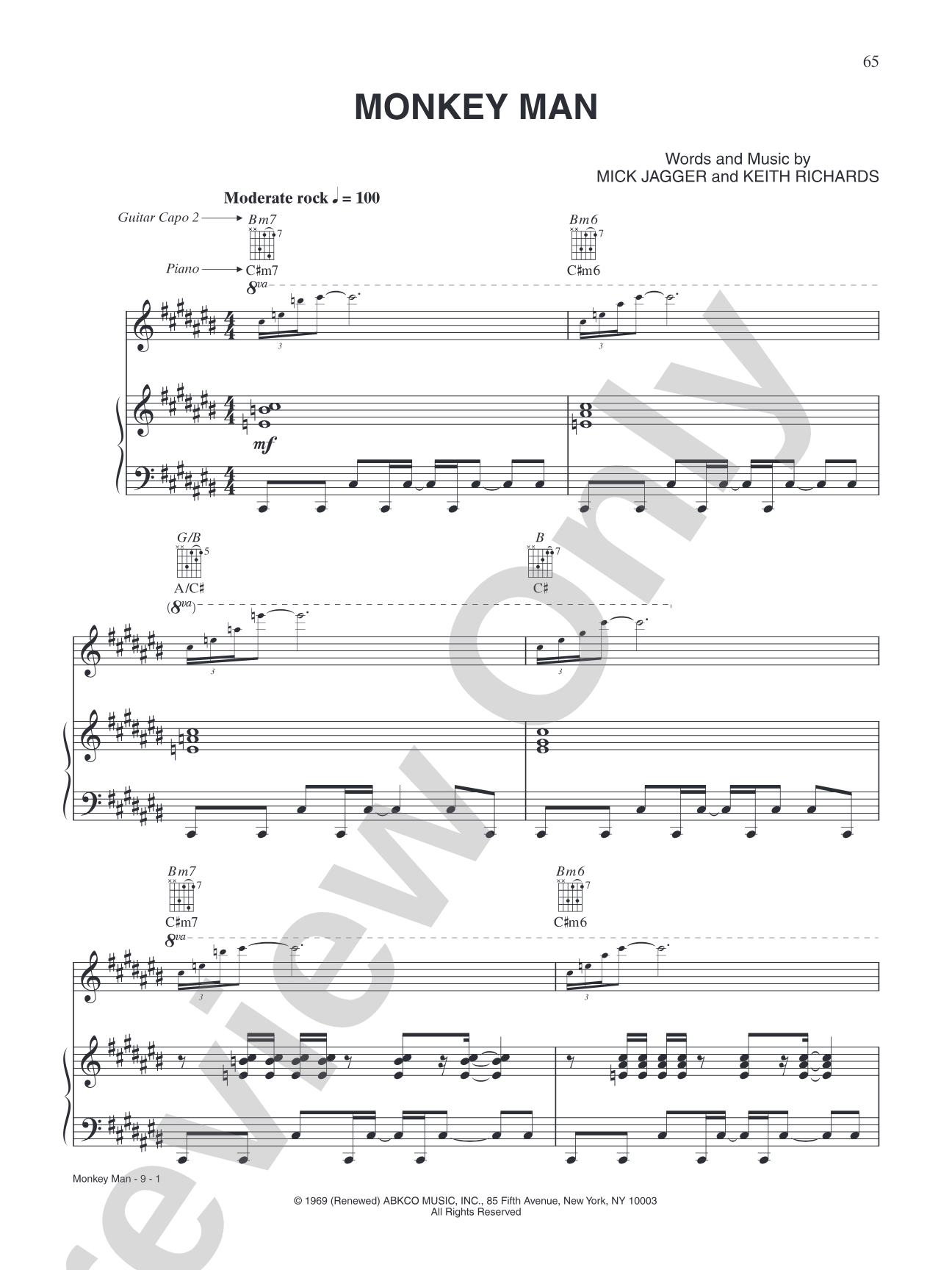
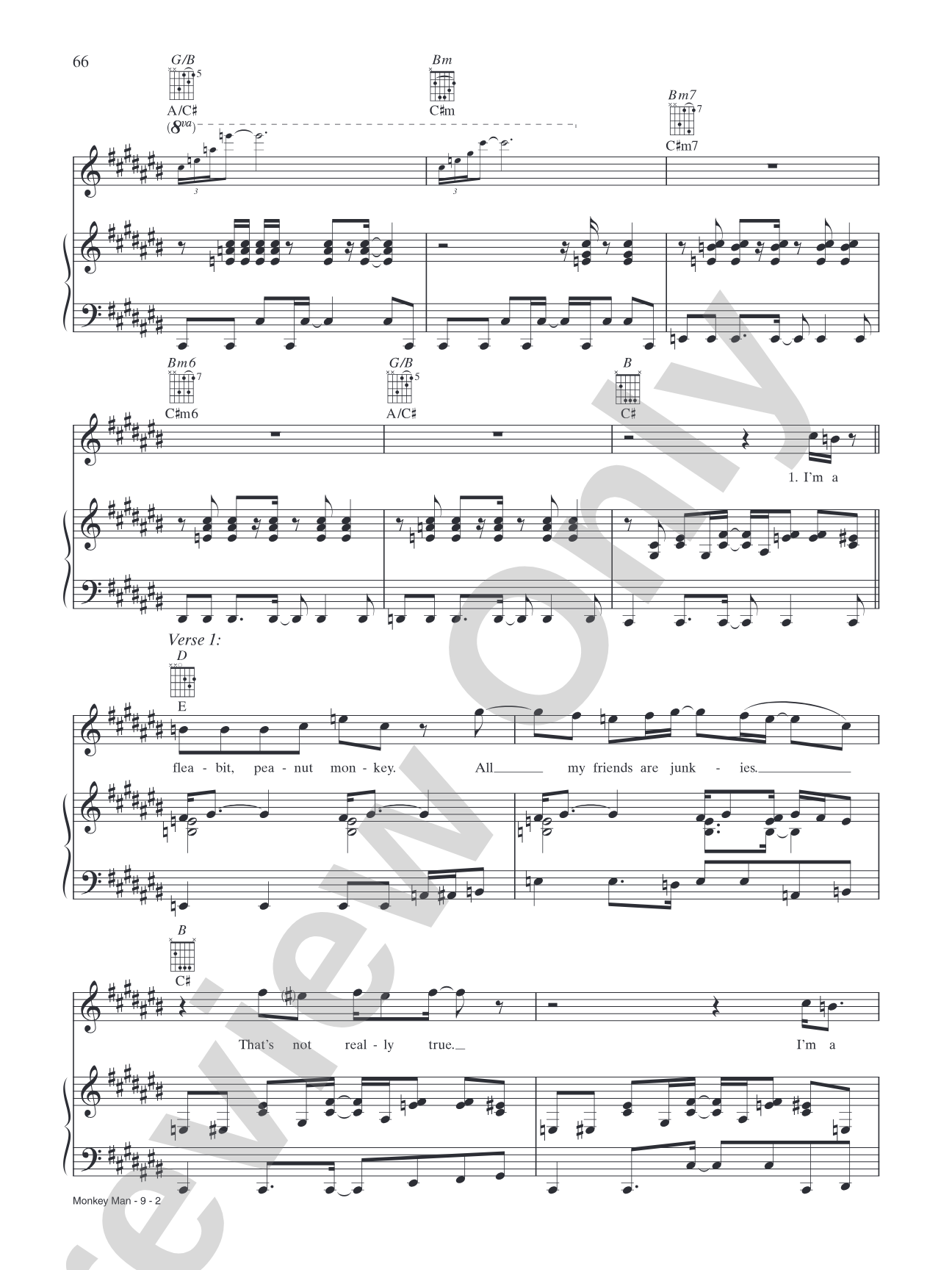

Monkey Man: Piano/Vocal/Chords
The Rolling Stones
Item: 00-PS-0012168
$5.99
Pickup currently not available
Related Items
Paint It, Black: Piano/Vocal/Chords |
$5.99
|
View | |
Dandelion: Piano/Vocal/Chords |
$4.99
|
View | |
(I Can't Get No) Satisfaction: Piano/Vocal/Chords |
$4.99
|
View | |
Lady Jane: Piano/Vocal/Chords |
$4.99
|
View | |
The Last Time: Piano/Vocal/Chords |
$5.99
|
View | |
Heart of Stone: Piano/Vocal/Chords |
$4.99
|
View | |
19th Nervous Breakdown: Piano/Vocal/Chords |
$5.99
|
View | |
Play With Fire: Piano/Vocal/Chords |
$4.99
|
View | |
I'm Free: Piano/Vocal/Chords |
$4.99
|
View | |
Mother's Little Helper: Piano/Vocal/Chords |
$4.99
|
View | |
Honky Tonk Women: Piano/Vocal/Chords |
$5.99
|
View | |
You Can't Always Get What You Want: Piano/Vocal/Chords |
$9.99
|
View | |
As Tears Go By: Piano/Vocal/Chords |
$4.99
|
View | |
It's All Over Now: Piano/Vocal/Chords |
$5.99
|
View | |
Out of Time: Piano/Vocal/Chords |
$4.99
|
View | |
Ruby Tuesday: Piano/Vocal/Chords |
$4.99
|
View | |
2000 Light Years From Home: Piano/Vocal/Chords |
$5.99
|
View | |
She's a Rainbow: Piano/Vocal/Chords |
$5.99
|
View | |
Let's Spend the Night Together: Piano/Vocal/Chords |
$5.99
|
View | |
Under My Thumb: Piano/Vocal/Chords |
$4.99
|
View | |
Gimme Shelter: Piano/Vocal/Chords |
$5.99
|
View | |
Let It Bleed: Piano/Vocal/Chords |
$5.99
|
View | |
No Expectations: Piano/Vocal/Chords |
$4.99
|
View | |
She Smiled Sweetly: Piano/Vocal/Chords |
$4.99
|
View | |
Wild Horses: Piano/Vocal/Chords |
$4.99
|
View | |
The Rolling Stones: Sheet Music Anthology: Piano/Vocal/Chords Book |
$19.99
|
View |
Description
The Rolling Stones Sheet Music Anthology contains 27 piano/vocal/chord arrangements of the legendary British group's greatest hits. Many of the band's most memorable melodies are included, such as "She's a Rainbow," "Lady Jane," and "Ruby Tuesday." Titles: As Tears Go By * Dandelion * Gimme Shelter * Heart of Stone * I'm Free * Honky Tonk Women * It's All Over Now * The Last Time * Let's Spend the Night Together * Let It Bleed * Monkey Man * Mother's Little Helper * 19th Nervous Breakdown * Out of Time * No Expectations * Play with Fire * Paint It, Black * (I Can't Get No) Satisfaction * Sympathy for the Devil * She Smiled Sweetly * 2000 Light Years from Home * Under My Thumb * Wild Horses * You Can't Always Get What You Want.


Monkey Man: Piano/Vocal/Chords isn't in MakeMusic Cloud just yet...but it could be. Let us know you'd like to see it, and you'll help shape what comes next. In the meantime, start a free trial and dive into thousands of interactive titles your students can play along with today.
Request This Title
Tell us you want it.
Start Your Free Trial
Explore everything that's ready to play right now.
Sample Audio
No sample audio found.
Sample Video
No sample videos found.
Additional Details
Series:
Sheet Music Anthology
Publisher:
Alfred Music
Page Count:
156
SKU:
00-PS-0012168
More about this title
About the Composer: Mick Jagger
Mick Jagger co-wrote The Rolling Stones' catalog alongside Keith Richards, crafting some of rock and roll's most enduring melodies and unforgettable vocal lines. His songwriting spans five decades of innovation, from blues-influenced early work to sophisticated studio compositions that shaped popular music across generations. As both composer and performer, Jagger's creative partnership with Richards produced songs that remain central to music education when teaching rock history, popular songwriting, and vocal interpretation.
For musicians learning to play and sing The Rolling Stones, understanding Jagger's compositional approach reveals how melody, rhythm, and lyrical storytelling intersect. His melodies balance accessibility with sophistication, making them rewarding for pianists and singers at multiple skill levels while offering deeper harmonic and structural lessons for those ready to analyze.
Why we love this
This anthology gives pianists and singers direct access to 27 iconic Rolling Stones arrangements in one resource, eliminating the need to hunt down individual charts. The mix of up-tempo rockers, blues-based grooves, and introspective ballads ensures there's something engaging for every player, and the piano/vocal/chord format supports flexible performance (solo piano, singer with accompaniment, or ensemble arrangement). Teaching these songs teaches rock songwriting craft alongside musical literacy.
What to expect
These songs carry the swagger and soul of classic rock with undeniable groove. Whether you're playing a bluesy shuffle, a hypnotic minor-key riff, or a delicate ballad, the Stones' sensibility comes through as confident, earthy, and deeply musical. The interplay between voice and piano captures the band's ability to shift from raw energy to genuine vulnerability within a single song.
Who it's for
Pianists and singers who want to perform classic rock repertoire with harmonic accuracy and period-appropriate arrangement. This resource suits intermediate to advanced musicians in recital, ensemble, or educational settings who already read chord charts and can manage rock's rhythmic complexities.
How to get the most out of it
- Anchor the rhythm in the piano part by locking into the song's foundational groove before layering vocals. Many Stones songs swing slightly despite their written time signature, so listen closely to how the original recording interprets the beat.
- Study the chord voicings provided and experiment with inversions and reharmonization to match the sonic character of each song. "Paint It, Black" and "Sympathy for the Devil" benefit from rich, dissonant voicings that enhance their hypnotic quality.
- Balance lyrical phrasing with rhythmic precision when singing. Jagger's vocal approach often plays against the strict beat, so practice singing the melody freely while maintaining contact with the accompaniment's pulse.
- For uptempo tracks like "Honky Tonk Women" and "(I Can't Get No) Satisfaction," keep the energy driving forward without rushing. The swagger comes from relaxed pocket playing, not from pushing the tempo.
How to use it
Program individual songs in a rock history concert or popular music showcase, pairing them thematically (pair ballads like "Wild Horses" and "She Smiled Sweetly" together, or group harder-edged tracks for maximum impact). Use these arrangements to teach song analysis in a theory or music history course, comparing how the same compositional techniques appear across the 27 titles. Several pieces work well as audition or recital selections for students exploring rock and pop idioms.
Skills your students will build
- Reading and performing chord changes in rock contexts
- Interpreting swing feel and groove in written notation
- Balancing lyrical phrasing with rhythmic precision
- Understanding blues and rock harmonic progressions
- Arranging vocal melody with piano accompaniment
- Analyzing melodic and rhythmic patterns across multiple songs by the same composers