
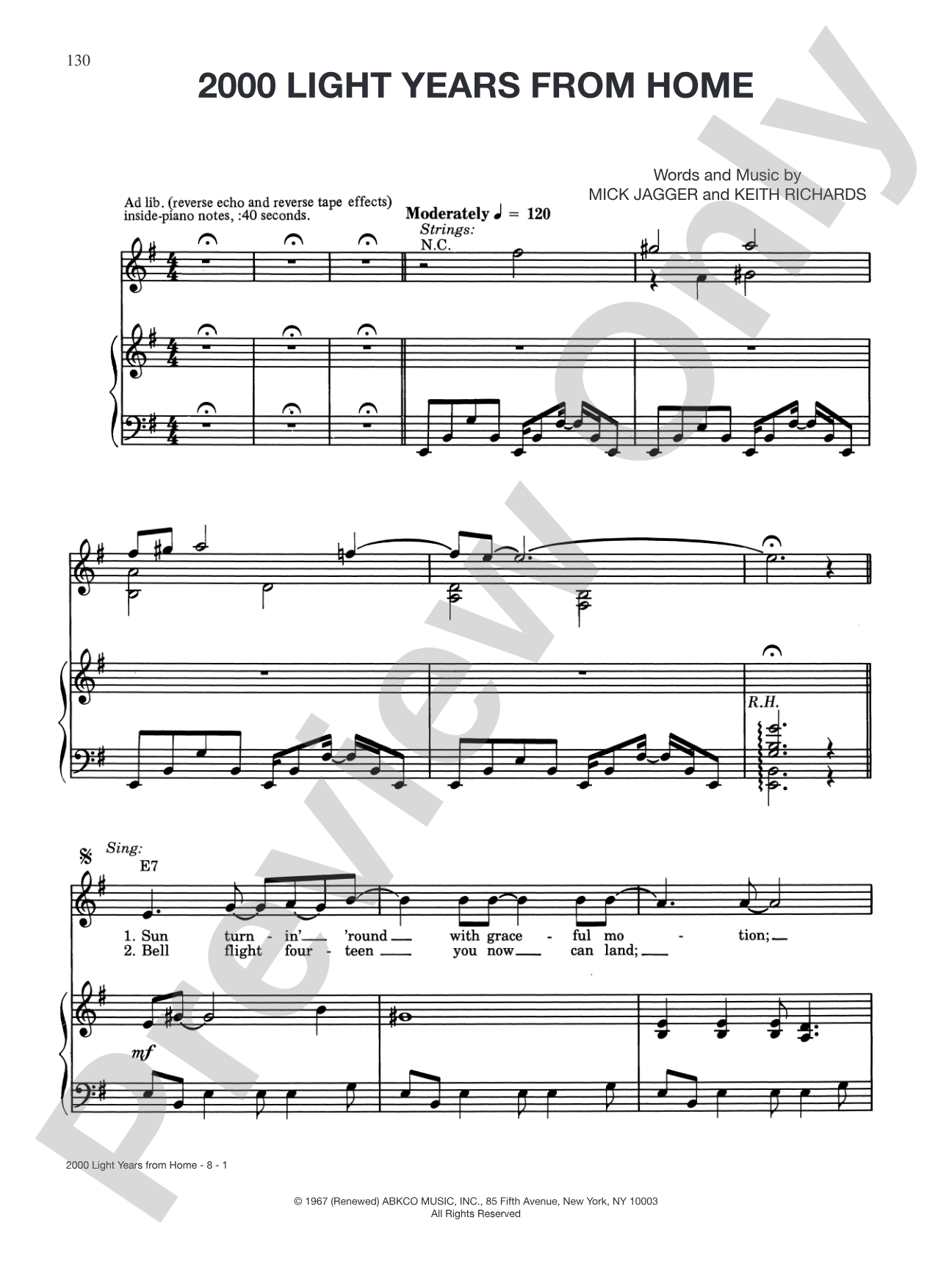
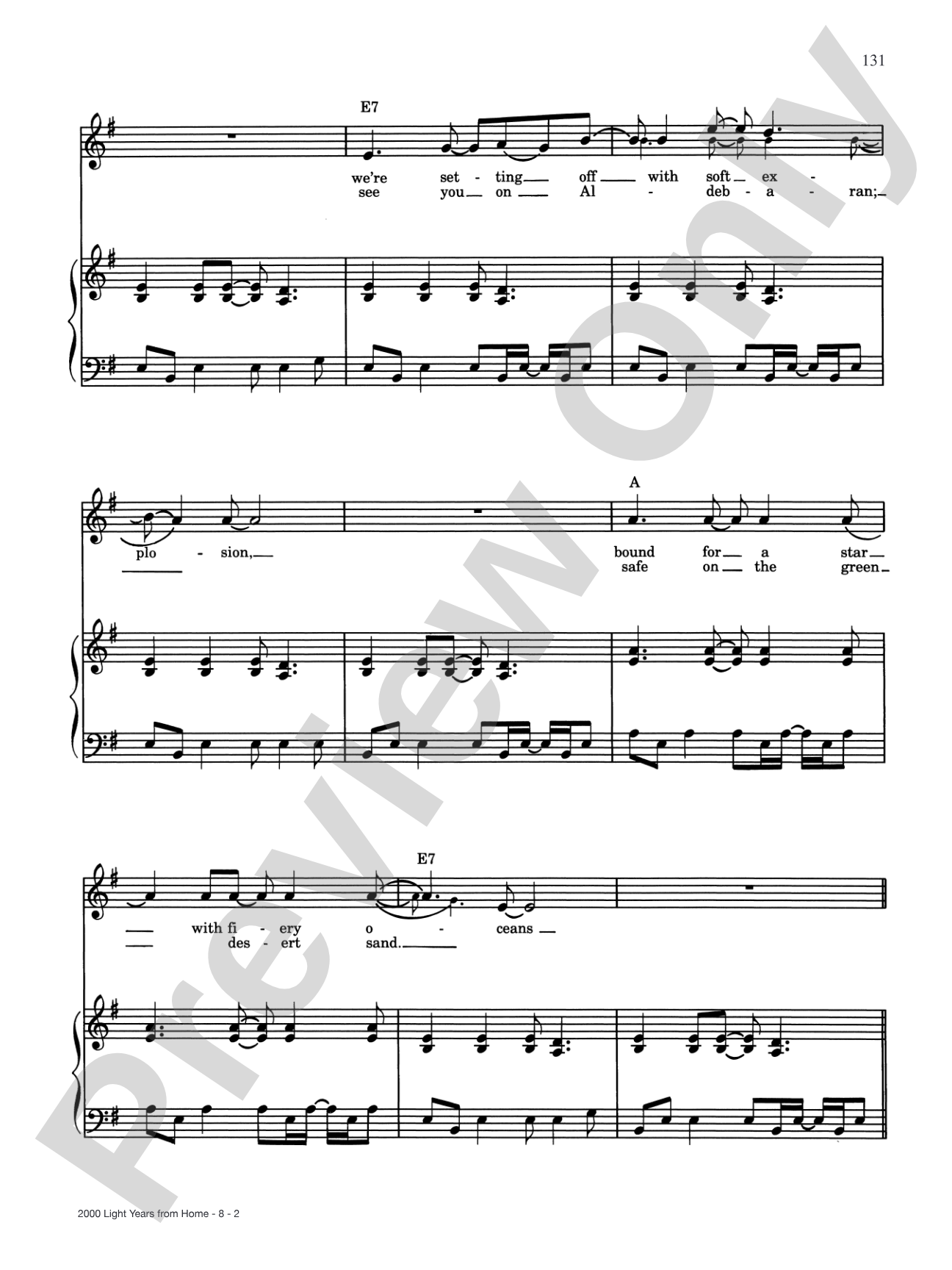

2000 Light Years From Home: Piano/Vocal/Chords
The Rolling Stones
Item: 00-PS-0012143
$5.99
Pickup currently not available
Related Items
Paint It, Black: Piano/Vocal/Chords |
$5.99
|
View | |
Dandelion: Piano/Vocal/Chords |
$4.99
|
View | |
(I Can't Get No) Satisfaction: Piano/Vocal/Chords |
$4.99
|
View | |
Lady Jane: Piano/Vocal/Chords |
$4.99
|
View | |
The Last Time: Piano/Vocal/Chords |
$5.99
|
View | |
Heart of Stone: Piano/Vocal/Chords |
$4.99
|
View | |
19th Nervous Breakdown: Piano/Vocal/Chords |
$5.99
|
View | |
Play With Fire: Piano/Vocal/Chords |
$4.99
|
View | |
I'm Free: Piano/Vocal/Chords |
$4.99
|
View | |
Mother's Little Helper: Piano/Vocal/Chords |
$4.99
|
View | |
Honky Tonk Women: Piano/Vocal/Chords |
$5.99
|
View | |
You Can't Always Get What You Want: Piano/Vocal/Chords |
$9.99
|
View | |
As Tears Go By: Piano/Vocal/Chords |
$4.99
|
View | |
It's All Over Now: Piano/Vocal/Chords |
$5.99
|
View | |
Out of Time: Piano/Vocal/Chords |
$4.99
|
View | |
Ruby Tuesday: Piano/Vocal/Chords |
$4.99
|
View | |
She's a Rainbow: Piano/Vocal/Chords |
$5.99
|
View | |
Let's Spend the Night Together: Piano/Vocal/Chords |
$5.99
|
View | |
Under My Thumb: Piano/Vocal/Chords |
$4.99
|
View | |
Gimme Shelter: Piano/Vocal/Chords |
$5.99
|
View | |
Let It Bleed: Piano/Vocal/Chords |
$5.99
|
View | |
Monkey Man: Piano/Vocal/Chords |
$5.99
|
View | |
No Expectations: Piano/Vocal/Chords |
$4.99
|
View | |
She Smiled Sweetly: Piano/Vocal/Chords |
$4.99
|
View | |
Wild Horses: Piano/Vocal/Chords |
$4.99
|
View | |
The Rolling Stones: Sheet Music Anthology: Piano/Vocal/Chords Book |
$19.99
|
View |
Description
The Rolling Stones Sheet Music Anthology contains 27 piano/vocal/chord arrangements of the legendary British group's greatest hits. Many of the band's most memorable melodies are included, such as "She's a Rainbow," "Lady Jane," and "Ruby Tuesday." Titles: As Tears Go By * Dandelion * Gimme Shelter * Heart of Stone * I'm Free * Honky Tonk Women * It's All Over Now * The Last Time * Let's Spend the Night Together * Let It Bleed * Monkey Man * Mother's Little Helper * 19th Nervous Breakdown * Out of Time * No Expectations * Play with Fire * Paint It, Black * (I Can't Get No) Satisfaction * Sympathy for the Devil * She Smiled Sweetly * 2000 Light Years from Home * Under My Thumb * Wild Horses * You Can't Always Get What You Want.


2000 Light Years From Home: Piano/Vocal/Chords isn't in MakeMusic Cloud just yet...but it could be. Let us know you'd like to see it, and you'll help shape what comes next. In the meantime, start a free trial and dive into thousands of interactive titles your students can play along with today.
Request This Title
Tell us you want it.
Start Your Free Trial
Explore everything that's ready to play right now.
Sample Audio
No sample audio found.
Sample Video
No sample videos found.
Additional Details
Series:
Sheet Music Anthology
Publisher:
Alfred Music
Page Count:
156
SKU:
00-PS-0012143
More about this title
About the Composer: Mick Jagger
Mick Jagger stands as one of rock music's most distinctive vocalists and songwriters, co-writing The Rolling Stones' catalog across five decades. His rhythmic phrasing, lyrical storytelling, and ability to craft songs that balance accessibility with artistic ambition have influenced generations of musicians across genres.
Why we love this
This anthology captures the Stones' most recognizable melodies in a format that works equally well for solo pianists, vocalist-pianist pairs, and arrangers seeking source material. The range across these 27 songs spans blues-rooted rock, folk-influenced ballads, and orchestral arrangements, offering genuine variety within a cohesive catalog.
What to expect
These arrangements distill decades of rock innovation into its essential melodic and harmonic bones. You move from the blues-inflected swagger of "(I Can't Get No) Satisfaction" to the baroque-influenced lyricism of "She's a Rainbow," experiencing the breadth of what made this band enduring.
Who it's for
Pianists and singers preparing material for recitals, auditions, or casual performance settings will find strong arrangements of songs they already know. This collection also serves music students exploring how classic rock songs adapt to acoustic arrangements centered around piano and voice.
How to get the most out of it
- Balance the vocal line against the chord chart rather than treating it as the only melodic element; these arrangements reward intelligent comping that shadows the voice while maintaining rhythmic independence.
- Pay close attention to the song's original groove when setting tempo. Songs like "Honky Tonk Women" and "Sympathy for the Devil" rely on specific rhythmic pocket, not just speed.
- Use the chord symbols to inform harmonic interpretation, especially in songs with rich jazz-influenced voicings. Don't default to simple triads when fuller jazz sonorities are implied.
- Reference the original recordings for phrasing cues, particularly on songs like "Paint It, Black" and "You Can't Always Get What You Want" where the melody's timing sits differently than standard notation might suggest.
How to use it
Use individual songs from this anthology for a rock-focused recital segment, or select one song as a stylistic interlude in a diverse concert program. Teachers can assign these arrangements to intermediate piano students working on popular music styles outside classical tradition.
Skills your students will build
- Reading lead sheet notation and chord symbols fluently
- Interpreting jazz-influenced harmonic voicings in a rock context
- Coordinating vocal line and piano accompaniment independently
- Applying rhythmic flexibility to match original song phrasing
- Adapting arrangements for different vocal ranges and instrumental capabilities