
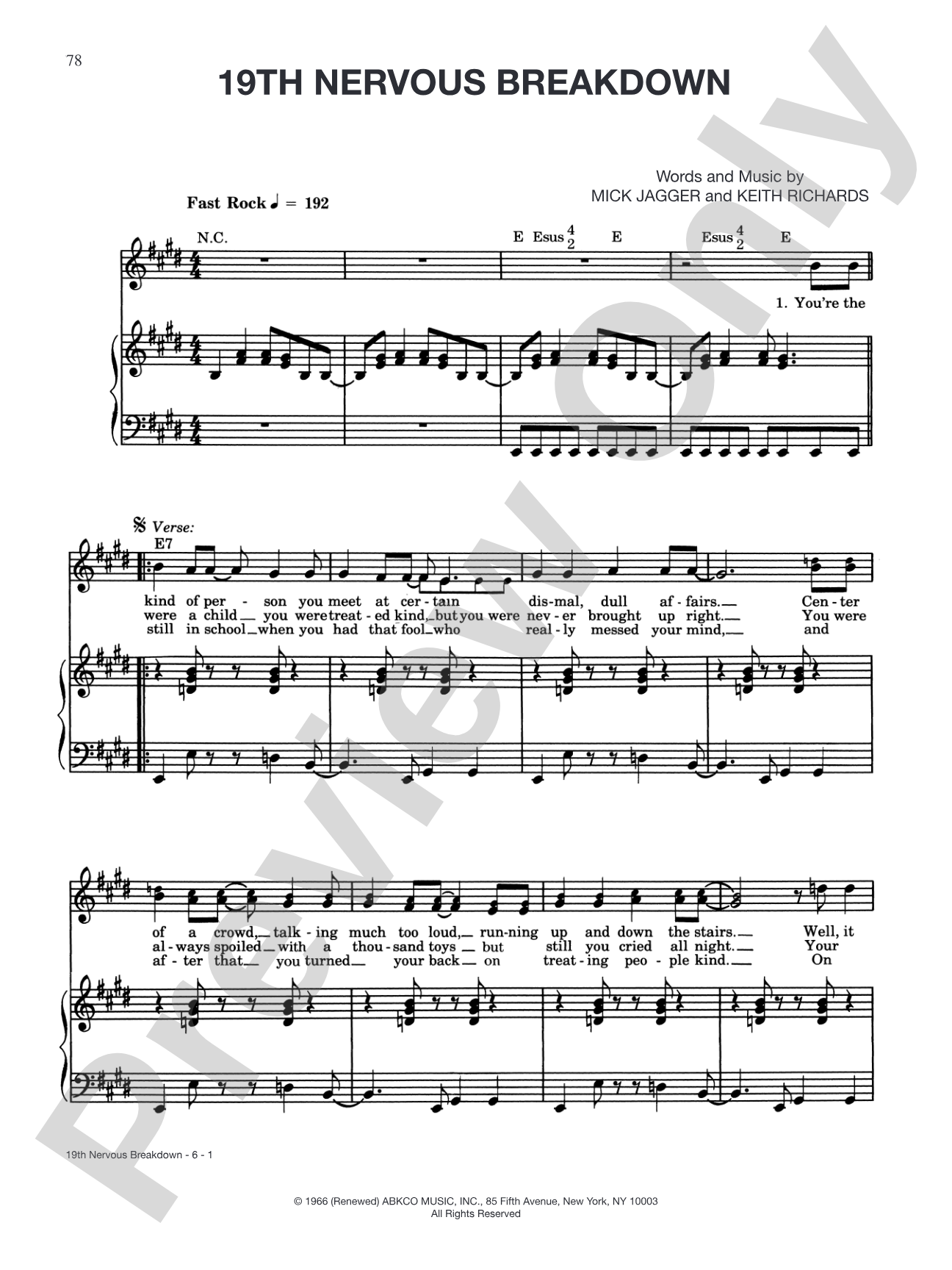
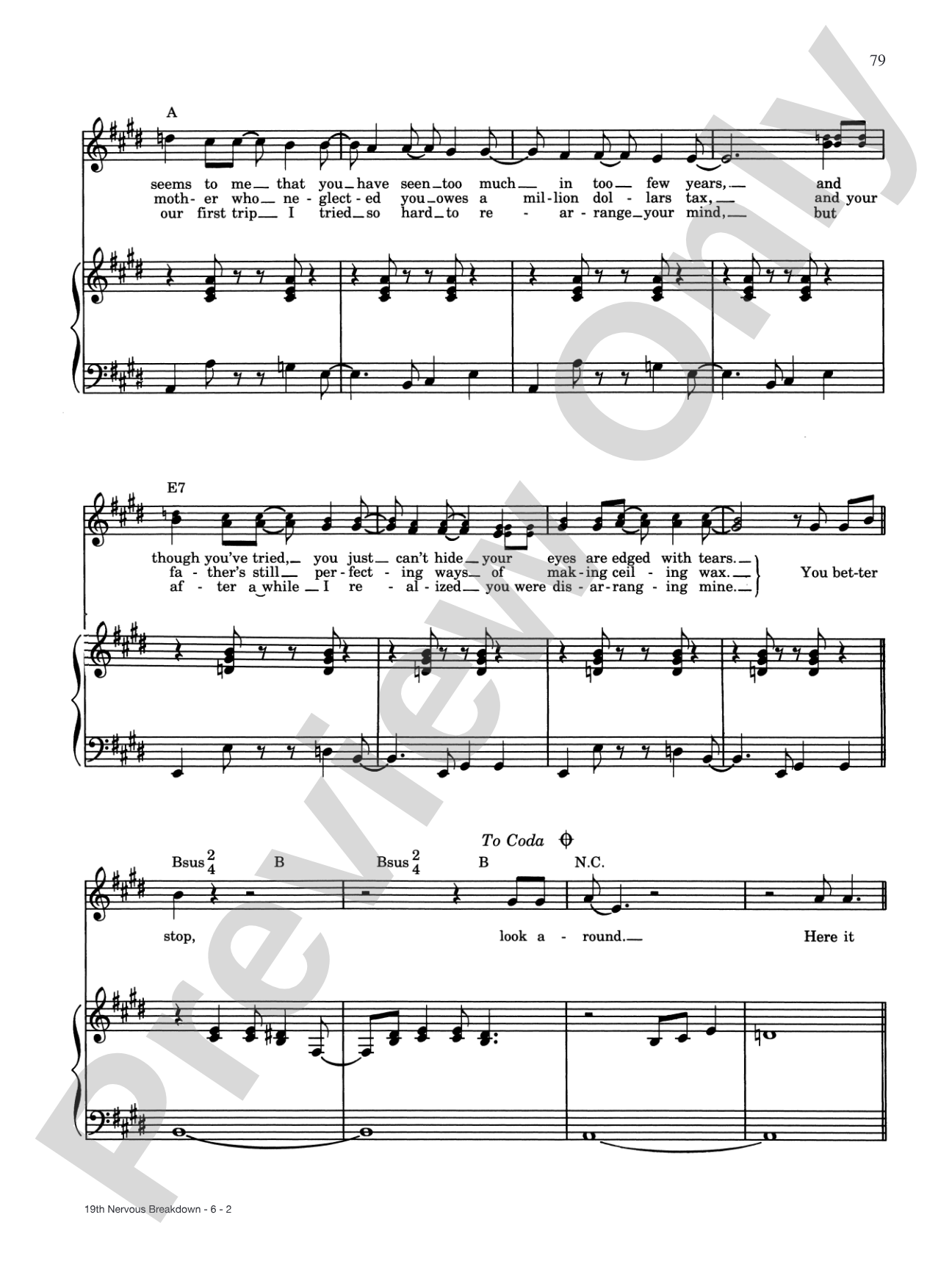

19th Nervous Breakdown: Piano/Vocal/Chords
The Rolling Stones
Item: 00-PS-0012117
$5.99
Pickup currently not available
Related Items
Paint It, Black: Piano/Vocal/Chords |
$5.99
|
View | |
Dandelion: Piano/Vocal/Chords |
$4.99
|
View | |
(I Can't Get No) Satisfaction: Piano/Vocal/Chords |
$4.99
|
View | |
Lady Jane: Piano/Vocal/Chords |
$4.99
|
View | |
The Last Time: Piano/Vocal/Chords |
$5.99
|
View | |
Heart of Stone: Piano/Vocal/Chords |
$4.99
|
View | |
Play With Fire: Piano/Vocal/Chords |
$4.99
|
View | |
I'm Free: Piano/Vocal/Chords |
$4.99
|
View | |
Mother's Little Helper: Piano/Vocal/Chords |
$4.99
|
View | |
Honky Tonk Women: Piano/Vocal/Chords |
$5.99
|
View | |
You Can't Always Get What You Want: Piano/Vocal/Chords |
$9.99
|
View | |
As Tears Go By: Piano/Vocal/Chords |
$4.99
|
View | |
It's All Over Now: Piano/Vocal/Chords |
$5.99
|
View | |
Out of Time: Piano/Vocal/Chords |
$4.99
|
View | |
Ruby Tuesday: Piano/Vocal/Chords |
$4.99
|
View | |
2000 Light Years From Home: Piano/Vocal/Chords |
$5.99
|
View | |
She's a Rainbow: Piano/Vocal/Chords |
$5.99
|
View | |
Let's Spend the Night Together: Piano/Vocal/Chords |
$5.99
|
View | |
Under My Thumb: Piano/Vocal/Chords |
$4.99
|
View | |
Gimme Shelter: Piano/Vocal/Chords |
$5.99
|
View | |
Let It Bleed: Piano/Vocal/Chords |
$5.99
|
View | |
Monkey Man: Piano/Vocal/Chords |
$5.99
|
View | |
No Expectations: Piano/Vocal/Chords |
$4.99
|
View | |
She Smiled Sweetly: Piano/Vocal/Chords |
$4.99
|
View | |
Wild Horses: Piano/Vocal/Chords |
$4.99
|
View | |
The Rolling Stones: Sheet Music Anthology: Piano/Vocal/Chords Book |
$19.99
|
View |
Description
The Rolling Stones Sheet Music Anthology contains 27 piano/vocal/chord arrangements of the legendary British group's greatest hits. Many of the band's most memorable melodies are included, such as "She's a Rainbow," "Lady Jane," and "Ruby Tuesday." Titles: As Tears Go By * Dandelion * Gimme Shelter * Heart of Stone * I'm Free * Honky Tonk Women * It's All Over Now * The Last Time * Let's Spend the Night Together * Let It Bleed * Monkey Man * Mother's Little Helper * 19th Nervous Breakdown * Out of Time * No Expectations * Play with Fire * Paint It, Black * (I Can't Get No) Satisfaction * Sympathy for the Devil * She Smiled Sweetly * 2000 Light Years from Home * Under My Thumb * Wild Horses * You Can't Always Get What You Want.


19th Nervous Breakdown: Piano/Vocal/Chords isn't in MakeMusic Cloud just yet...but it could be. Let us know you'd like to see it, and you'll help shape what comes next. In the meantime, start a free trial and dive into thousands of interactive titles your students can play along with today.
Request This Title
Tell us you want it.
Start Your Free Trial
Explore everything that's ready to play right now.
Sample Audio
No sample audio found.
Sample Video
No sample videos found.
Additional Details
Series:
Sheet Music Anthology
Publisher:
Alfred Music
Page Count:
156
SKU:
00-PS-0012117
More about this title
About the Composer: Mick Jagger
Mick Jagger co-founded The Rolling Stones in 1962 and established himself as one of rock music's most distinctive frontmen and songwriters. Working in partnership with Keith Richards, Jagger crafted some of the most enduring songs in popular music history, blending blues influences with innovative arrangements and memorable melodies that defined multiple decades of rock.
Why we love this
This anthology captures the Stones' catalog at moments when their songwriting reached peak sophistication, balancing accessibility with genuine compositional depth. These arrangements work equally well as serious performance pieces for accomplished musicians or as gateway material for students discovering how great rock songwriting functions across melody, harmony, and chord structure.
What to expect
Swagger and sophistication coexist throughout these arrangements. The pieces carry the restless energy and blues-soaked sensibility that defined the Stones, yet they also reveal the craft underneath: surprising harmonic moves, singable melodies that lodge in memory, and an instinctive understanding of how to build a song.
Who it's for
Pianists and singers working in jazz, popular music, and rock contexts will find this anthology essential. Music teachers using rock repertoire to build harmonic literacy and contemporary music literacy will appreciate the span of styles and the quality of the writing.
How to get the most out of it
- Treat the vocal line as a legit melodic journey, not background material. These melodies repay careful phrasing and intentional breath placement.
- The chord symbols are your foundation, but reference the original recordings to understand how tension and space shape these arrangements. Some of the most interesting moments live in what's implied rather than explicitly written.
- Balance the piano voicings with the vocal line's range and tessitura. Many of these songs work best when the accompaniment serves the lyrics rather than competing for attention.
- Pay attention to rhythmic feel across the collection. The shuffle grooves differ from the straight-eighth material, and getting that distinction right changes everything.
How to use it
Program individual selections as encores, recital openers, or pop music showcases that draw general audiences. These arrangements also work beautifully in jazz repertoire classes, as teaching material exploring the relationship between blues-based songwriting and harmonic development.
Skills your students will build
- Reading and interpreting chord symbols in various harmonic contexts
- Understanding blues-based harmony and its variations
- Balancing vocal and accompaniment voices in piano/vocal arrangements
- Recognizing and performing different rock and blues rhythmic feels
- Interpreting dynamics and phrasing in contemporary songwriting