
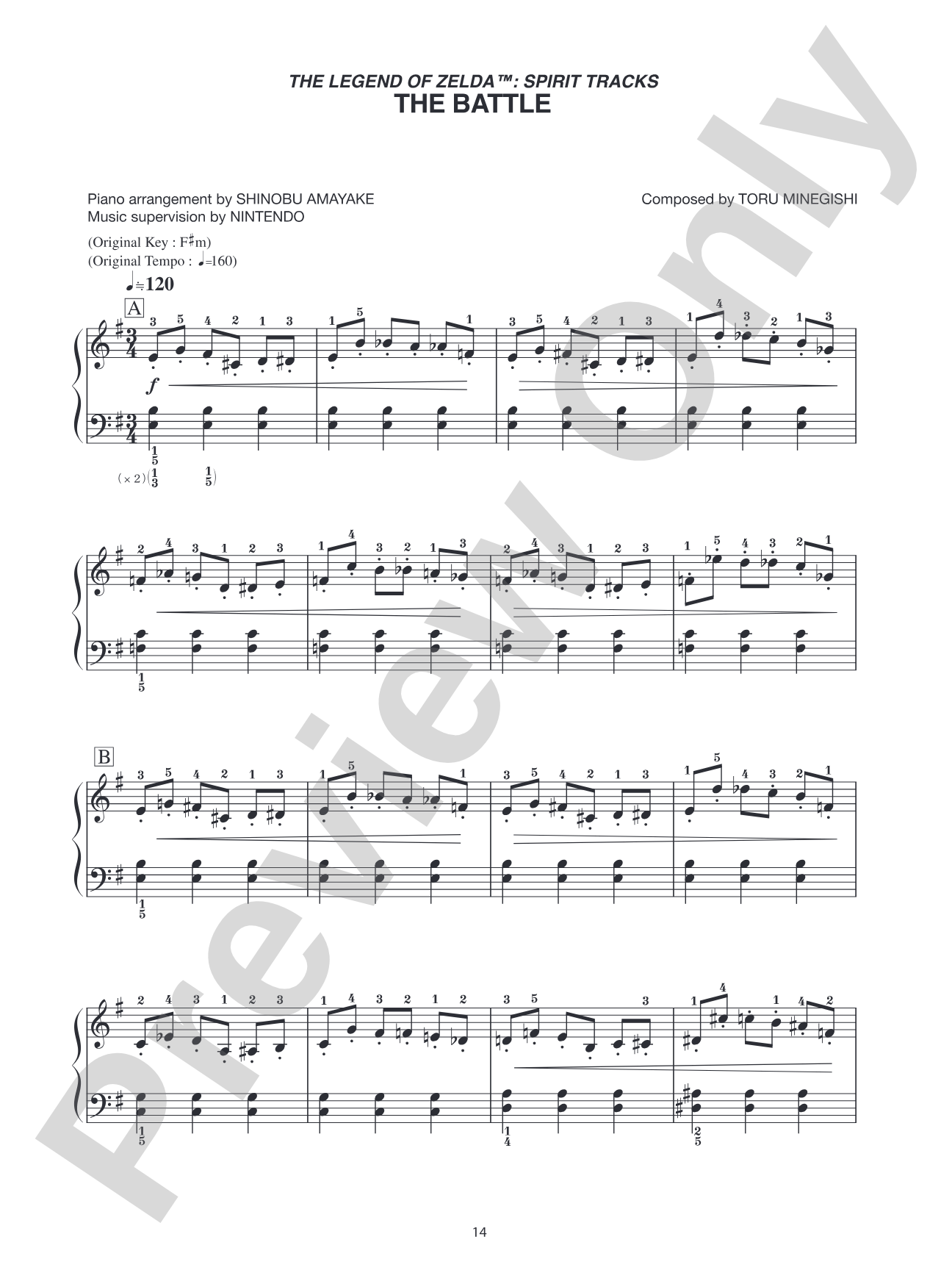

The Legend of Zelda™: Spirit Tracks The Battle: Easy Piano
Composed by Koji Kondo, Tominaga Mao, Toru Minegishi, and Asuka Ota
Level: Easy Piano
Item: 00-PS-0015424
$4.99
One moment…
Related Items
The Legend of Zelda™: Spirit Tracks Title Theme: Easy Piano |
$4.99
|
View | |
The Legend of Zelda™: Spirit Tracks Aboda Village: Easy Piano |
$4.99
|
View | |
The Legend of Zelda™: Spirit Tracks Chancellor Coles Theme: Easy Piano |
$4.99
|
View | |
The Legend of Zelda™: Spirit Tracks Hyrule Castle: Easy Piano |
$4.99
|
View | |
The Legend of Zelda™: Spirit Tracks Princess Zeldas Theme: Easy Piano |
$4.99
|
View | |
The Legend of Zelda™: Spirit Tracks Anjeans Theme: Easy Piano |
$4.99
|
View | |
The Legend of Zelda™: Spirit Tracks Adventuring: Easy Piano |
$4.99
|
View | |
The Legend of Zelda™: Spirit Tracks The Tower of Spirits: Easy Piano |
$4.99
|
View | |
The Legend of Zelda™: Spirit Tracks Riding the Rails 2: Easy Piano |
$4.99
|
View | |
The Legend of Zelda™: Spirit Tracks Linebecks Theme: Easy Piano |
$4.99
|
View | |
The Legend of Zelda™: Spirit Tracks Byrnes Theme: Easy Piano |
$4.99
|
View | |
The Legend of Zelda™: Spirit Tracks Seabed: Easy Piano |
$4.99
|
View | |
The Legend of Zelda™: Spirit Tracks Hero of the Tracks: Easy Piano |
$4.99
|
View | |
The Legend of Zelda™: Spirit Tracks Fighting: Easy Piano |
$4.99
|
View | |
The Legend of Zelda™: Spirit Tracks Song of Awakening: Easy Piano |
$4.99
|
View | |
The Legend of Zelda™: Spirit Tracks Song of Healing: Easy Piano |
$4.99
|
View | |
The Legend of Zelda™: Spirit Tracks Song of Discovery: Easy Piano |
$4.99
|
View | |
The Legend of Zelda™: Spirit Tracks Song of Birds: Easy Piano |
$4.99
|
View | |
The Legend of Zelda™: Spirit Tracks Song of Light: Easy Piano |
$4.99
|
View | |
The Legend of Zelda™: Spirit Tracks Fanfare of the Spirit Tracks: Easy Piano |
$4.99
|
View | |
The Legend of Zelda™: Spirit Tracks Game Over: Easy Piano |
$4.99
|
View | |
The Legend of Zelda™: Spirit Tracks for Easy Piano: Piano Book |
$15.99
|
View |
Description
The soundtrack to Nintendo's The Legend of Zelda™: Spirit Tracks is packed with melodic themes that sound great on the piano! With this officially licensed sheet music collection, pianists can dazzle friends and family by playing 22 familiar themes from the popular video game. The arrangements in this Easy Piano edition are moderately streamlined compared to those in the separately published Intermediate-Advanced edition, yet they retain a full and impressive sound. Titles: Title Theme * Aboda Village * Chancellor Cole's Theme * Hyrule Castle * Princess Zelda's Theme * The Battle * Anjean's Theme * Adventuring * The Tower of Spirits * Riding the Rails 2 (Main Theme) * Linebeck's Theme * Byrne's Theme * Seabed * Hero of the Tracks * Fighting * Song of Awakening * Song of Healing * Song of Discovery * Song of Birds * Song of Light * Fanfare of the Spirit Tracks * Game Over.


The Legend of Zelda™: Spirit Tracks The Battle: Easy Piano isn't in MakeMusic Cloud just yet...but it could be. Let us know you'd like to see it, and you'll help shape what comes next. In the meantime, start a free trial and dive into thousands of interactive titles your students can play along with today.
Request This Title
Tell us you want it.
Start Your Free Trial
Explore everything that's ready to play right now.
Sample Audio
No sample audio found.
Sample Video
No sample videos found.
Additional Details
Publisher:
Alfred Music
Page Count:
40
SKU:
00-PS-0015424
More about this title
About the Composer: Toru Minegishi
Toru Minegishi is a composer at Nintendo who has crafted music for numerous titles across the company's most beloved franchises. His work on The Legend of Zelda series demonstrates a gift for melodic writing that balances accessibility with emotional resonance, creating themes that remain memorable long after players finish playing.
Minegishi's compositional approach favors clear melodic lines and harmonic structures that translate beautifully to solo instruments. His themes for Spirit Tracks range from triumphant fanfares to intimate character moments, giving arrangers rich material to work with across different skill levels.
Why we love this
This collection offers something rare at the easy piano level: video game music that sounds genuinely impressive without requiring advanced technique. Students get immediate gratification playing recognizable melodies that sound full and complete, which builds confidence and sustains practice motivation in ways traditional beginner repertoire often doesn't. The 22 varied pieces mean you can program everything from a single recital theme to an entire showcase of game music across a year.
What to expect
These arrangements capture the adventure and charm of Spirit Tracks without the complexity that would frustrate an intermediate beginner. Whether you're playing a triumphant fanfare, a whimsical village theme, or the contemplative Song of Healing, the writing stays in your hands while the sound rings out full and satisfying.
Who it's for
Easy piano students who respond better to contemporary, recognizable music than traditional classical repertoire will find immediate connection here. This collection also works well for student recitals, casual performances at family gatherings, and pianists who want to build sight-reading fluency through music they actually want to play.
How to get the most out of it
- Balance the melody line so it sings above the accompaniment even when both hands stay in the treble clef. Many of these arrangements use close voicing, so articulation and dynamic control matter more than volume.
- Pay attention to tempo markings for each piece; the battle and action themes need forward momentum while character themes benefit from breathing space. Don't assume every Zelda piece moves at the same energy level.
- Explore the specific harmonic colors in pieces like Song of Healing and Seabed. These quieter moments reveal Minegishi's skill at creating atmosphere, and students often overlook them in favor of more dramatic pieces.
- Use the digital score's zoom features to mark fingering and pedal points before performance. With 22 pieces in the book, systematic preparation prevents getting overwhelmed by the sheer volume of material.
How to use it
Feature individual pieces in spring recitals or end-of-year showcases where students can perform music they genuinely love. Consider programming a medley of three or four contrasting themes as a fun group finale, or use specific pieces as supplementary repertoire during the year when students need motivation beyond assigned method materials.
Skills your students will build
- Reading consistent rhythmic patterns across multiple time signatures
- Balancing melody and accompaniment in close-voiced textures
- Managing tempo consistency in thematically driven pieces
- Interpreting dynamic shaping to enhance musical storytelling
- Maintaining hand independence when both hands occupy the same register