
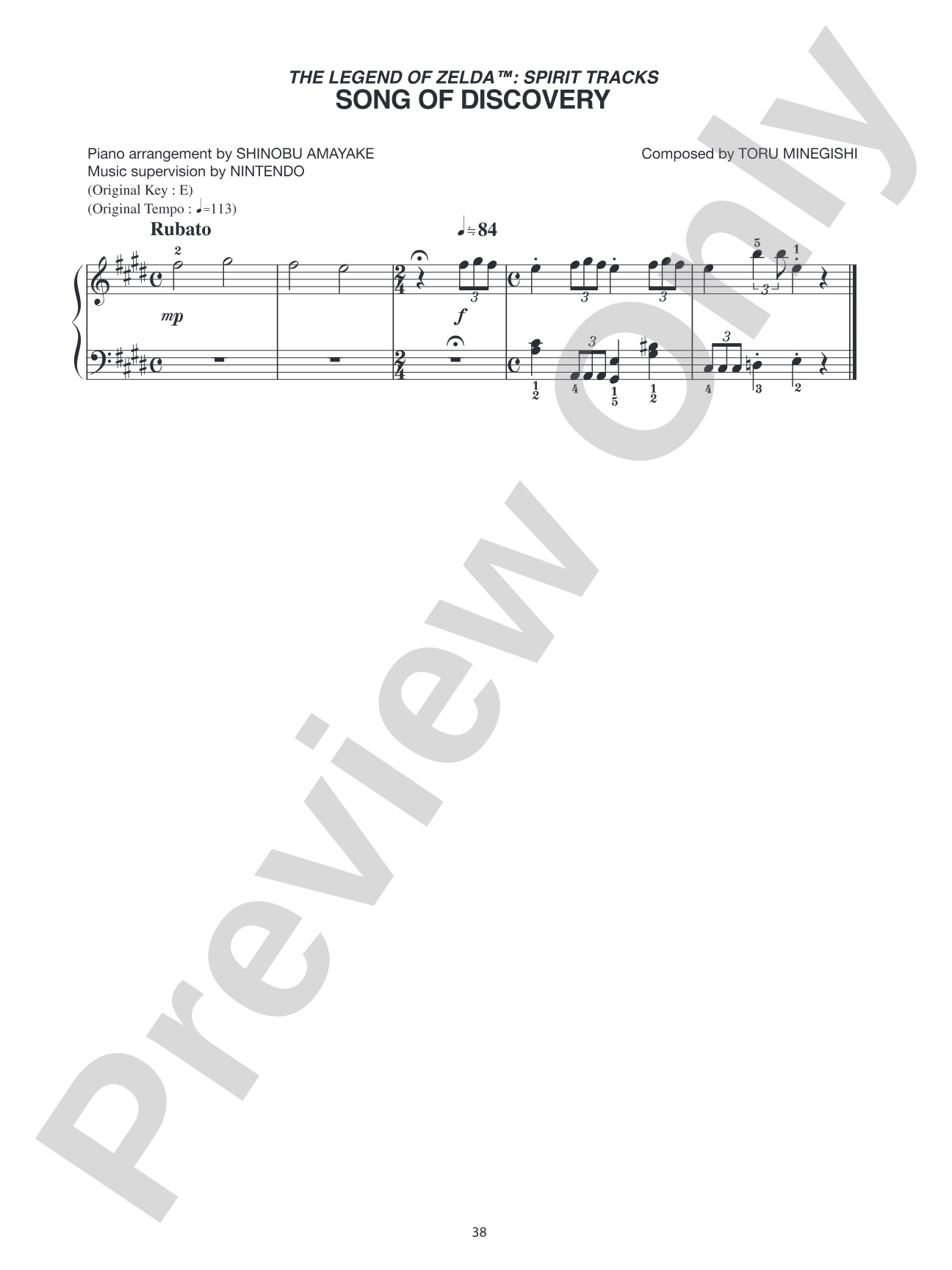

The Legend of Zelda™: Spirit Tracks Song of Discovery: Easy Piano
Composed by Koji Kondo, Tominaga Mao, Toru Minegishi, and Asuka Ota
Level: Easy Piano
Item: 00-PS-0015436
$4.99
One moment…
Related Items
The Legend of Zelda™: Spirit Tracks Title Theme: Easy Piano |
$4.99
|
View | |
The Legend of Zelda™: Spirit Tracks Aboda Village: Easy Piano |
$4.99
|
View | |
The Legend of Zelda™: Spirit Tracks Chancellor Coles Theme: Easy Piano |
$4.99
|
View | |
The Legend of Zelda™: Spirit Tracks Hyrule Castle: Easy Piano |
$4.99
|
View | |
The Legend of Zelda™: Spirit Tracks Princess Zeldas Theme: Easy Piano |
$4.99
|
View | |
The Legend of Zelda™: Spirit Tracks The Battle: Easy Piano |
$4.99
|
View | |
The Legend of Zelda™: Spirit Tracks Anjeans Theme: Easy Piano |
$4.99
|
View | |
The Legend of Zelda™: Spirit Tracks Adventuring: Easy Piano |
$4.99
|
View | |
The Legend of Zelda™: Spirit Tracks The Tower of Spirits: Easy Piano |
$4.99
|
View | |
The Legend of Zelda™: Spirit Tracks Riding the Rails 2: Easy Piano |
$4.99
|
View | |
The Legend of Zelda™: Spirit Tracks Linebecks Theme: Easy Piano |
$4.99
|
View | |
The Legend of Zelda™: Spirit Tracks Byrnes Theme: Easy Piano |
$4.99
|
View | |
The Legend of Zelda™: Spirit Tracks Seabed: Easy Piano |
$4.99
|
View | |
The Legend of Zelda™: Spirit Tracks Hero of the Tracks: Easy Piano |
$4.99
|
View | |
The Legend of Zelda™: Spirit Tracks Fighting: Easy Piano |
$4.99
|
View | |
The Legend of Zelda™: Spirit Tracks Song of Awakening: Easy Piano |
$4.99
|
View | |
The Legend of Zelda™: Spirit Tracks Song of Healing: Easy Piano |
$4.99
|
View | |
The Legend of Zelda™: Spirit Tracks Song of Birds: Easy Piano |
$4.99
|
View | |
The Legend of Zelda™: Spirit Tracks Song of Light: Easy Piano |
$4.99
|
View | |
The Legend of Zelda™: Spirit Tracks Fanfare of the Spirit Tracks: Easy Piano |
$4.99
|
View | |
The Legend of Zelda™: Spirit Tracks Game Over: Easy Piano |
$4.99
|
View | |
The Legend of Zelda™: Spirit Tracks for Easy Piano: Piano Book |
$15.99
|
View |
Description
The soundtrack to Nintendo's The Legend of Zelda™: Spirit Tracks is packed with melodic themes that sound great on the piano! With this officially licensed sheet music collection, pianists can dazzle friends and family by playing 22 familiar themes from the popular video game. The arrangements in this Easy Piano edition are moderately streamlined compared to those in the separately published Intermediate-Advanced edition, yet they retain a full and impressive sound. Titles: Title Theme * Aboda Village * Chancellor Cole's Theme * Hyrule Castle * Princess Zelda's Theme * The Battle * Anjean's Theme * Adventuring * The Tower of Spirits * Riding the Rails 2 (Main Theme) * Linebeck's Theme * Byrne's Theme * Seabed * Hero of the Tracks * Fighting * Song of Awakening * Song of Healing * Song of Discovery * Song of Birds * Song of Light * Fanfare of the Spirit Tracks * Game Over.


The Legend of Zelda™: Spirit Tracks Song of Discovery: Easy Piano isn't in MakeMusic Cloud just yet...but it could be. Let us know you'd like to see it, and you'll help shape what comes next. In the meantime, start a free trial and dive into thousands of interactive titles your students can play along with today.
Request This Title
Tell us you want it.
Start Your Free Trial
Explore everything that's ready to play right now.
Sample Audio
No sample audio found.
Sample Video
No sample videos found.
Additional Details
Publisher:
Alfred Music
Page Count:
40
SKU:
00-PS-0015436
More about this title
About the Composer: Toru Minegishi
Toru Minegishi is a video game composer at Nintendo who has shaped the sonic identity of several major franchises. His work on The Legend of Zelda: Spirit Tracks demonstrates his gift for writing melodies that feel both heroic and intimate, balancing orchestral sweep with the intimate scale of handheld gaming.
Minegishi's compositional approach prioritizes memorable thematic material and emotional clarity. His willingness to write singable, pianistic melodies has made his video game scores particularly appealing for music educators seeking engaging repertoire that resonates with students.
Why we love this
This collection lands exactly where students live: recognizable music from a beloved game, arranged with enough integrity to feel rewarding without overwhelming pianists still building technical security. The melodies are strong enough to carry even simplified accompaniments, which means students hear themselves playing real music, not exercises dressed up as songs.
What to expect
These arrangements capture the heroic wonder and gentle moments of the Spirit Tracks world. You'll find yourself navigating between adventurous themes that propel forward with rhythmic vitality and quieter moments of reflection, each melody shaped with Nintendo's gift for writing themes that stick with you long after playing.
Who it's for
Piano students at the elementary to early-intermediate level who recognize these melodies and want to experience the satisfaction of playing complete, recognizable pieces right away. Teachers looking for engaging sight-reading material and performance pieces that motivate students through familiar music will find 22 ready-to-program selections here.
How to get the most out of it
- Lean into the lyrical quality of pieces like Princess Zelda's Theme and Song of Healing. These arrangements benefit from a singing tone rather than mechanical precision; shape phrases as you would for a hymn or art song.
- Use the rhythmic momentum in Riding the Rails 2 and Adventuring to maintain forward energy even when the harmonic rhythm is sparse. Younger pianists sometimes pause unnecessarily between chords; keep the pulse alive underneath.
- Pay attention to dynamic markings in The Battle and Fighting pieces. These action themes need contrast to register; the quiet sections will feel flat without genuine attention to the written dynamics.
- Experiment with pedal strategically in slower pieces like Seabed and Song of Discovery. The easy arrangements may have wider intervals in the left hand; selective pedal use adds resonance without muddying the texture.
How to use it
Feature individual pieces in student recitals, where the recognizable titles create immediate engagement with the audience. Consider pairing thematically related selections (the three Battle/Fighting pieces together, or the four Songs in sequence) to create a mini-suite within a mixed recital, or assign them throughout the year as both technical studies and performance repertoire alongside traditional classical solo material.
Skills your students will build
- Reading and executing simple dynamic markings and articulation
- Playing steady melodic lines with supporting left-hand accompaniment patterns
- Legato and staccato execution at controlled tempos
- Phrase shaping and musical intention in simplified textures
- Sight-reading across multiple pages of straightforward notation