
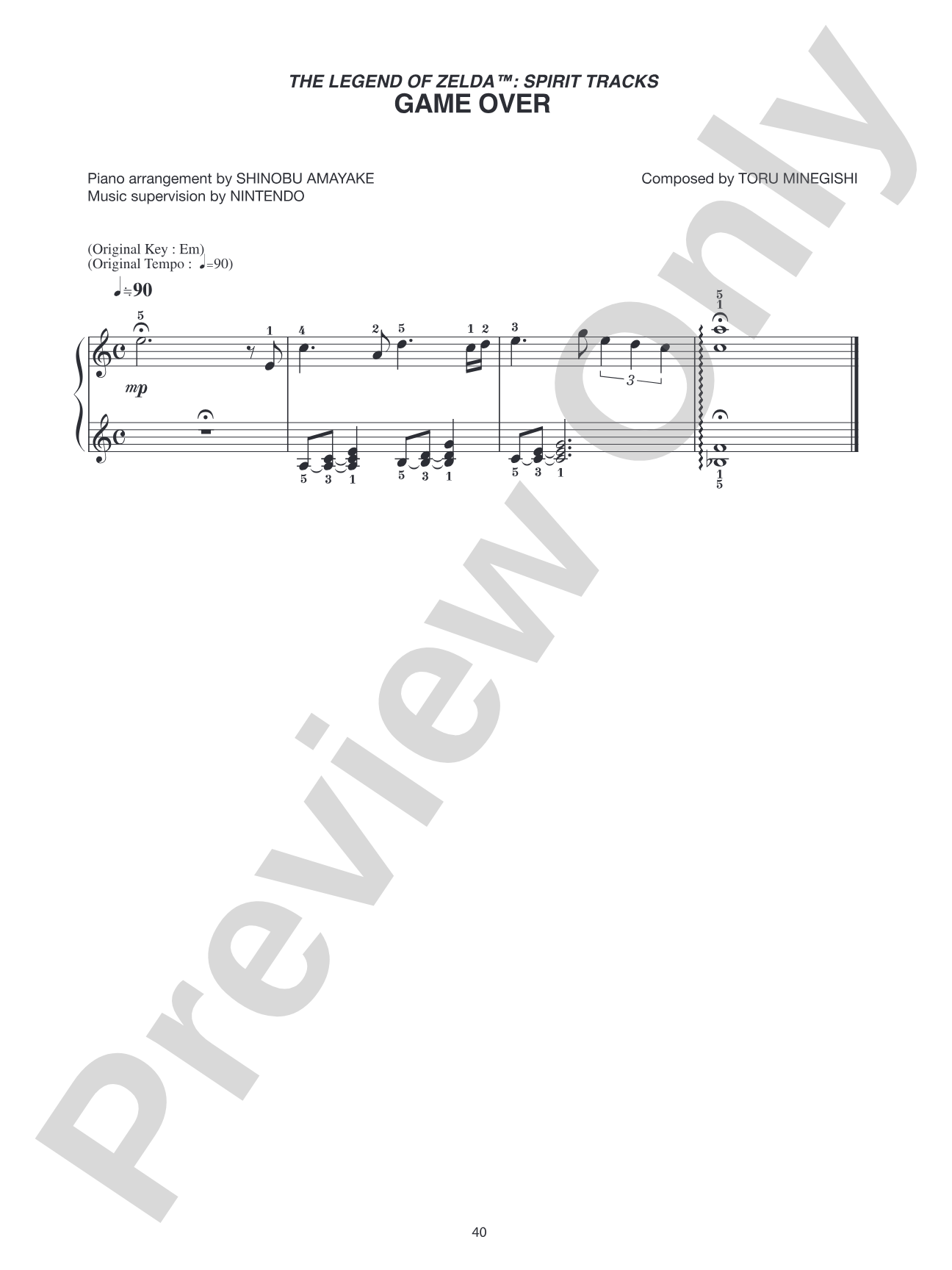

The Legend of Zelda™: Spirit Tracks Game Over: Easy Piano
Composed by Koji Kondo, Tominaga Mao, Toru Minegishi, and Asuka Ota
Level: Easy Piano
Item: 00-PS-0015440
$4.99
One moment…
Related Items
The Legend of Zelda™: Spirit Tracks Title Theme: Easy Piano |
$4.99
|
View | |
The Legend of Zelda™: Spirit Tracks Aboda Village: Easy Piano |
$4.99
|
View | |
The Legend of Zelda™: Spirit Tracks Chancellor Coles Theme: Easy Piano |
$4.99
|
View | |
The Legend of Zelda™: Spirit Tracks Hyrule Castle: Easy Piano |
$4.99
|
View | |
The Legend of Zelda™: Spirit Tracks Princess Zeldas Theme: Easy Piano |
$4.99
|
View | |
The Legend of Zelda™: Spirit Tracks The Battle: Easy Piano |
$4.99
|
View | |
The Legend of Zelda™: Spirit Tracks Anjeans Theme: Easy Piano |
$4.99
|
View | |
The Legend of Zelda™: Spirit Tracks Adventuring: Easy Piano |
$4.99
|
View | |
The Legend of Zelda™: Spirit Tracks The Tower of Spirits: Easy Piano |
$4.99
|
View | |
The Legend of Zelda™: Spirit Tracks Riding the Rails 2: Easy Piano |
$4.99
|
View | |
The Legend of Zelda™: Spirit Tracks Linebecks Theme: Easy Piano |
$4.99
|
View | |
The Legend of Zelda™: Spirit Tracks Byrnes Theme: Easy Piano |
$4.99
|
View | |
The Legend of Zelda™: Spirit Tracks Seabed: Easy Piano |
$4.99
|
View | |
The Legend of Zelda™: Spirit Tracks Hero of the Tracks: Easy Piano |
$4.99
|
View | |
The Legend of Zelda™: Spirit Tracks Fighting: Easy Piano |
$4.99
|
View | |
The Legend of Zelda™: Spirit Tracks Song of Awakening: Easy Piano |
$4.99
|
View | |
The Legend of Zelda™: Spirit Tracks Song of Healing: Easy Piano |
$4.99
|
View | |
The Legend of Zelda™: Spirit Tracks Song of Discovery: Easy Piano |
$4.99
|
View | |
The Legend of Zelda™: Spirit Tracks Song of Birds: Easy Piano |
$4.99
|
View | |
The Legend of Zelda™: Spirit Tracks Song of Light: Easy Piano |
$4.99
|
View | |
The Legend of Zelda™: Spirit Tracks Fanfare of the Spirit Tracks: Easy Piano |
$4.99
|
View | |
The Legend of Zelda™: Spirit Tracks for Easy Piano: Piano Book |
$15.99
|
View |
Description
The soundtrack to Nintendo's The Legend of Zelda™: Spirit Tracks is packed with melodic themes that sound great on the piano! With this officially licensed sheet music collection, pianists can dazzle friends and family by playing 22 familiar themes from the popular video game. The arrangements in this Easy Piano edition are moderately streamlined compared to those in the separately published Intermediate-Advanced edition, yet they retain a full and impressive sound. Titles: Title Theme * Aboda Village * Chancellor Cole's Theme * Hyrule Castle * Princess Zelda's Theme * The Battle * Anjean's Theme * Adventuring * The Tower of Spirits * Riding the Rails 2 (Main Theme) * Linebeck's Theme * Byrne's Theme * Seabed * Hero of the Tracks * Fighting * Song of Awakening * Song of Healing * Song of Discovery * Song of Birds * Song of Light * Fanfare of the Spirit Tracks * Game Over.


The Legend of Zelda™: Spirit Tracks Game Over: Easy Piano isn't in MakeMusic Cloud just yet...but it could be. Let us know you'd like to see it, and you'll help shape what comes next. In the meantime, start a free trial and dive into thousands of interactive titles your students can play along with today.
Request This Title
Tell us you want it.
Start Your Free Trial
Explore everything that's ready to play right now.
Sample Audio
No sample audio found.
Sample Video
No sample videos found.
Additional Details
Publisher:
Alfred Music
Page Count:
40
SKU:
00-PS-0015440
More about this title
About the Composer: Toru Minegishi
Toru Minegishi is a video game composer at Nintendo who has crafted music for some of the company's most celebrated franchises. His work on The Legend of Zelda series demonstrates a gift for melodic writing that translates beautifully across different instruments and arrangements.
Minegishi's compositions balance accessibility with sophistication, making them ideal candidates for educational adaptations. His themes are memorable without being simplistic, giving arrangers and pianists material worth learning and performing.
Why we love this
Video game music opens doors with students who might not otherwise reach for classical or contemporary concert music. These 22 themes are instantly recognizable, which means your pianists will be motivated to practice, and their audiences will actually listen. The arrangements respect the source material while fitting realistic hand shapes and reading levels for early intermediate pianists.
What to expect
These arrangements capture the warmth and adventure of the original soundtrack while staying grounded in pianistic idiom. You'll find lyrical passages that invite singing tone, driving rhythmic sections that propel the narrative forward, and moments of mystery and wonder. The collection balances nostalgia with genuine musicality.
Who it's for
This collection suits pianists in their first or second year of study who can navigate simple chord progressions and have developed basic sight-reading skills. Students who are familiar with the game will find extra motivation here, but even pianists who've never played Spirit Tracks can enjoy the straightforward melodic writing and satisfying harmonic progression.
How to get the most out of it
- Lean into the character themes with distinct touches: let Princess Zelda's Theme sing with legato pedaling, and give The Battle's urgency through crisp articulation and controlled tempo.
- Balance melody and accompaniment carefully. Many of these themes sit in the right hand, so support them with clear but unobtrusive left-hand patterns.
- Use tempo as your primary tool for capturing the game's pacing. Riding the Rails 2 needs forward momentum; Song of Healing requires restraint.
How to use it
Consider showcasing a solo or two during a student recital, or feature the collection as a themed evening celebrating music beyond the concert hall. Several pieces (Title Theme, Hero of the Tracks, Fanfare of the Spirit Tracks) work especially well as program openers or closers.
Skills your students will build
- Reading single-line melodies with simple left-hand accompaniment patterns
- Sustaining phrasing across 8 and 16-bar sections
- Balancing pedal use to enhance legato without blurring harmony
- Controlling tempo to match the emotional character of each theme
- Executing basic rhythmic accompaniment figures (Alberti patterns, block chords, broken triads)