
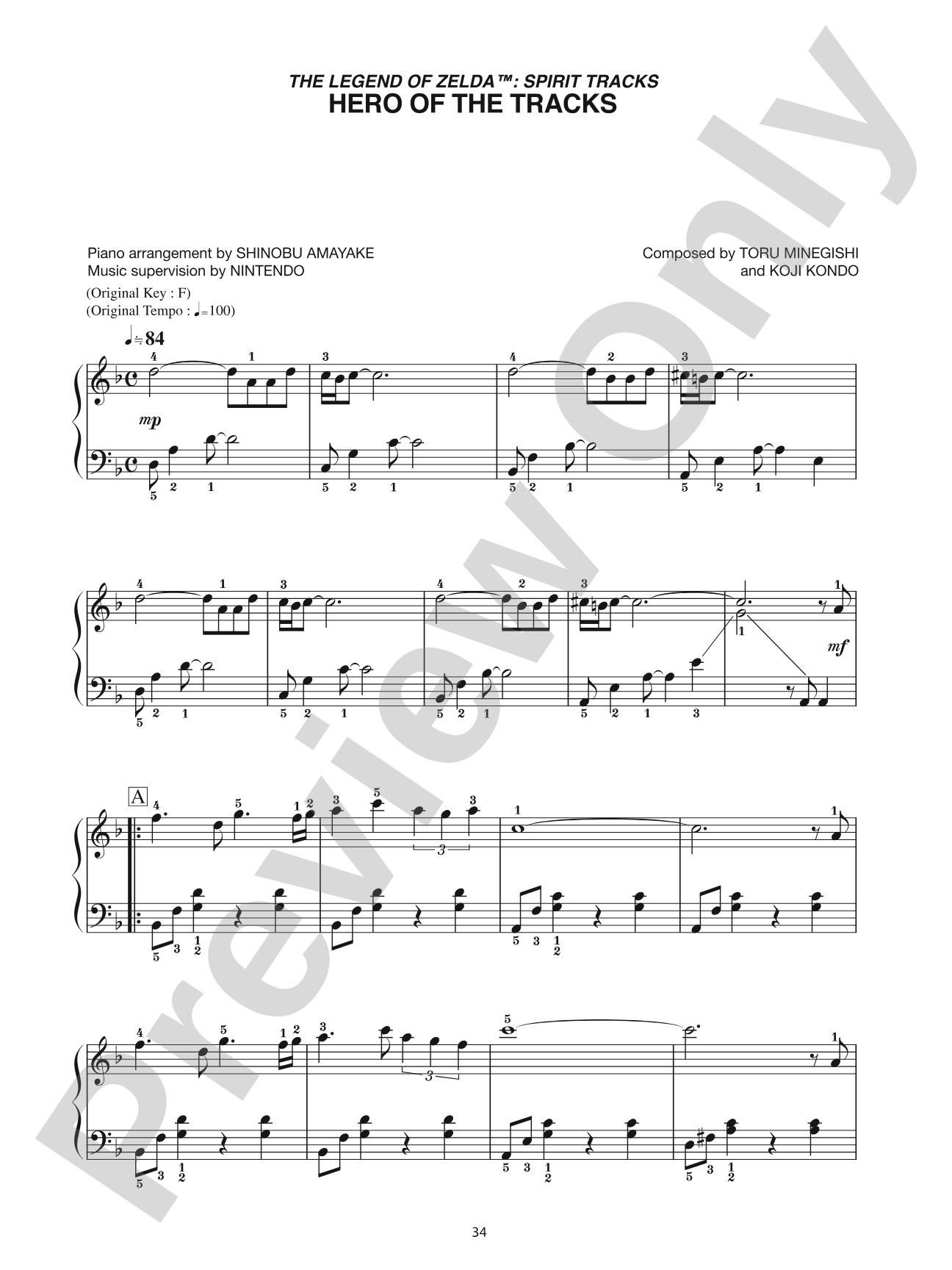

The Legend of Zelda™: Spirit Tracks Hero of the Tracks: Easy Piano
Composed by Koji Kondo, Tominaga Mao, Toru Minegishi, and Asuka Ota
Level: Easy Piano
Item: 00-PS-0015432
$4.99
One moment…
Related Items
The Legend of Zelda™: Spirit Tracks Title Theme: Easy Piano |
$4.99
|
View | |
The Legend of Zelda™: Spirit Tracks Aboda Village: Easy Piano |
$4.99
|
View | |
The Legend of Zelda™: Spirit Tracks Chancellor Coles Theme: Easy Piano |
$4.99
|
View | |
The Legend of Zelda™: Spirit Tracks Hyrule Castle: Easy Piano |
$4.99
|
View | |
The Legend of Zelda™: Spirit Tracks Princess Zeldas Theme: Easy Piano |
$4.99
|
View | |
The Legend of Zelda™: Spirit Tracks The Battle: Easy Piano |
$4.99
|
View | |
The Legend of Zelda™: Spirit Tracks Anjeans Theme: Easy Piano |
$4.99
|
View | |
The Legend of Zelda™: Spirit Tracks Adventuring: Easy Piano |
$4.99
|
View | |
The Legend of Zelda™: Spirit Tracks The Tower of Spirits: Easy Piano |
$4.99
|
View | |
The Legend of Zelda™: Spirit Tracks Riding the Rails 2: Easy Piano |
$4.99
|
View | |
The Legend of Zelda™: Spirit Tracks Linebecks Theme: Easy Piano |
$4.99
|
View | |
The Legend of Zelda™: Spirit Tracks Byrnes Theme: Easy Piano |
$4.99
|
View | |
The Legend of Zelda™: Spirit Tracks Seabed: Easy Piano |
$4.99
|
View | |
The Legend of Zelda™: Spirit Tracks Fighting: Easy Piano |
$4.99
|
View | |
The Legend of Zelda™: Spirit Tracks Song of Awakening: Easy Piano |
$4.99
|
View | |
The Legend of Zelda™: Spirit Tracks Song of Healing: Easy Piano |
$4.99
|
View | |
The Legend of Zelda™: Spirit Tracks Song of Discovery: Easy Piano |
$4.99
|
View | |
The Legend of Zelda™: Spirit Tracks Song of Birds: Easy Piano |
$4.99
|
View | |
The Legend of Zelda™: Spirit Tracks Song of Light: Easy Piano |
$4.99
|
View | |
The Legend of Zelda™: Spirit Tracks Fanfare of the Spirit Tracks: Easy Piano |
$4.99
|
View | |
The Legend of Zelda™: Spirit Tracks Game Over: Easy Piano |
$4.99
|
View | |
The Legend of Zelda™: Spirit Tracks for Easy Piano: Piano Book |
$15.99
|
View |
Description
The soundtrack to Nintendo's The Legend of Zelda™: Spirit Tracks is packed with melodic themes that sound great on the piano! With this officially licensed sheet music collection, pianists can dazzle friends and family by playing 22 familiar themes from the popular video game. The arrangements in this Easy Piano edition are moderately streamlined compared to those in the separately published Intermediate-Advanced edition, yet they retain a full and impressive sound. Titles: Title Theme * Aboda Village * Chancellor Cole's Theme * Hyrule Castle * Princess Zelda's Theme * The Battle * Anjean's Theme * Adventuring * The Tower of Spirits * Riding the Rails 2 (Main Theme) * Linebeck's Theme * Byrne's Theme * Seabed * Hero of the Tracks * Fighting * Song of Awakening * Song of Healing * Song of Discovery * Song of Birds * Song of Light * Fanfare of the Spirit Tracks * Game Over.


The Legend of Zelda™: Spirit Tracks Hero of the Tracks: Easy Piano isn't in MakeMusic Cloud just yet...but it could be. Let us know you'd like to see it, and you'll help shape what comes next. In the meantime, start a free trial and dive into thousands of interactive titles your students can play along with today.
Request This Title
Tell us you want it.
Start Your Free Trial
Explore everything that's ready to play right now.
Sample Audio
No sample audio found.
Sample Video
No sample videos found.
Additional Details
Publisher:
Alfred Music
Page Count:
40
SKU:
00-PS-0015432
More about this title
About the Composer: Toru Minegishi
Toru Minegishi is a video game composer at Nintendo who has crafted music for some of the most beloved franchises in gaming history. His work on The Legend of Zelda series demonstrates a gift for writing memorable melodies that blend orchestral sensibility with accessibility, making his compositions ideal for adaptation across different media and skill levels.
Minegishi's approach to game music composition emphasizes thematic clarity and emotional resonance. He understands how music serves narrative and gameplay, skills that translate seamlessly into piano arrangements where a single instrument must carry both melody and harmonic support.
Why we love this
These arrangements capture the charm and adventure of Spirit Tracks without oversimplifying the music. Your students get recognizable, beloved melodies with enough harmonic interest to stay engaging through repeated playing and practice, making them genuinely fun to perform rather than just familiar.
What to expect
Heroic and whimsical by turns, with a sense of exploration and discovery woven throughout. The music balances adventure and earnestness, moving from grand castle themes to intimate character moments, all delivered with the melodic directness that makes video game music so immediately appealing.
Who it's for
Piano students at the early-intermediate stage who love video games and need motivating repertoire to sustain practice habits. These arrangements work equally well for hobbyist adult pianists seeking recognizable, rewarding material that doesn't demand virtuosic technique.
How to get the most out of it
- Balance the melody against accompanying figures. Many of these pieces layer a singing line over repetitive patterns; resist the urge to let accompaniment dominate, especially in the left hand.
- Lean into the rhythmic character of 'Riding the Rails 2' and 'Fighting' to establish their energy. These tracks benefit from precise, steady rhythm section work rather than tentative playing.
- Approach the 'Songs' (Awakening, Healing, Discovery, Birds, Light) with dynamic subtlety. Though simple in texture, these pieces ask for sensitive shaping of phrase arcs.
- Use the fanfare and game over sections as payoff moments. Play them with appropriate drama; they deserve the same attention as your feature pieces.
How to use it
Feature individual pieces in student recitals where they'll draw audience recognition and engagement. You might also program several pieces back-to-back in a studio recital to create a mini video game soundtrack concert, giving context to the collection and celebrating a cultural touchstone your students genuinely love.
Skills your students will build
- Balancing melody and accompaniment texture
- Sustaining rhythmic precision in repetitive left-hand patterns
- Shaping phrase contour and dynamic shape in simple melodic lines
- Reading and performing across 40 pages of varied harmonic vocabulary
- Translating video game music idioms to acoustic piano