
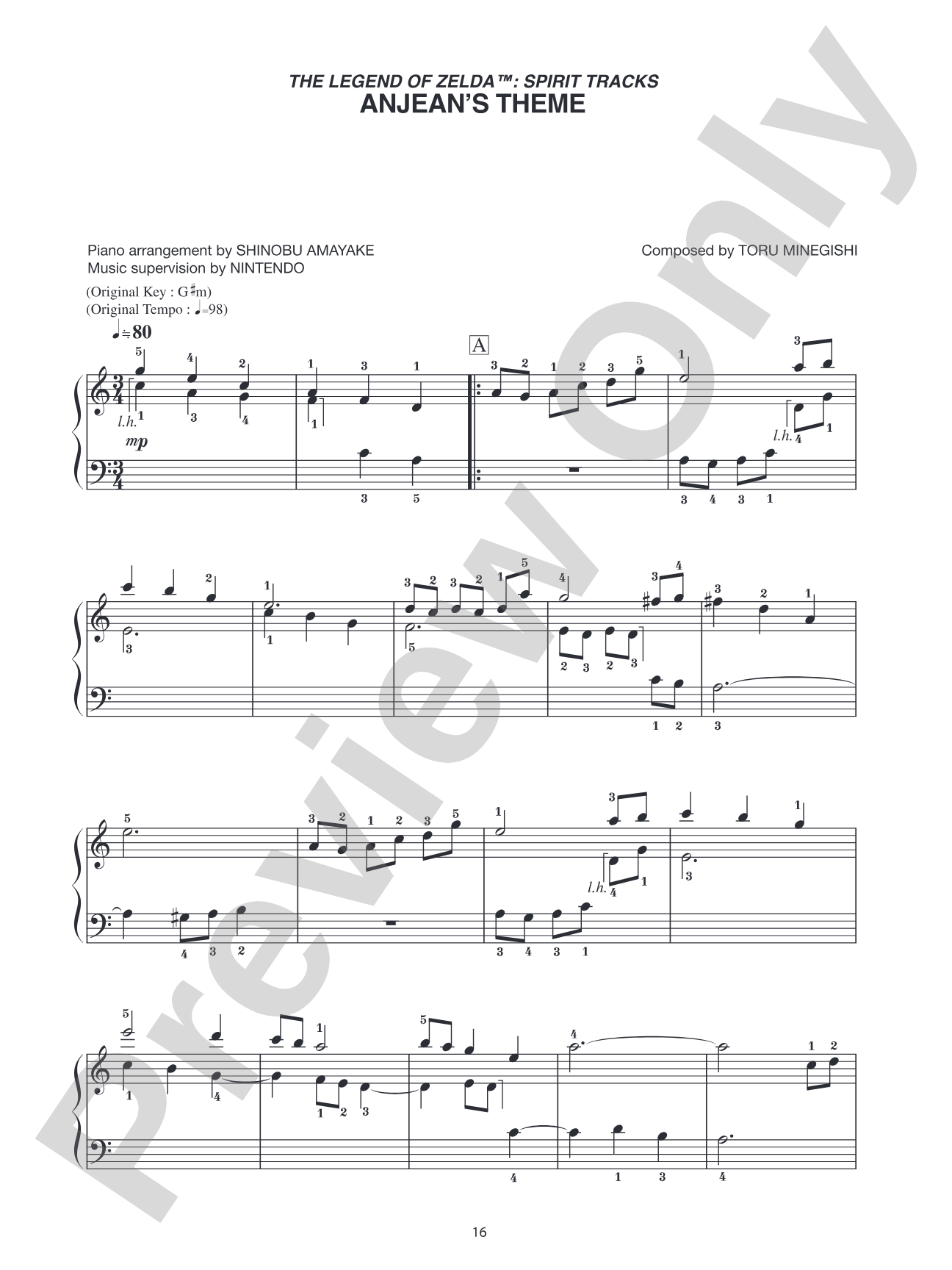

The Legend of Zelda™: Spirit Tracks Anjeans Theme: Easy Piano
Composed by Koji Kondo, Tominaga Mao, Toru Minegishi, and Asuka Ota
Level: Easy Piano
Item: 00-PS-0015425
$4.99
One moment…
Related Items
The Legend of Zelda™: Spirit Tracks Title Theme: Easy Piano |
$4.99
|
View | |
The Legend of Zelda™: Spirit Tracks Aboda Village: Easy Piano |
$4.99
|
View | |
The Legend of Zelda™: Spirit Tracks Chancellor Coles Theme: Easy Piano |
$4.99
|
View | |
The Legend of Zelda™: Spirit Tracks Hyrule Castle: Easy Piano |
$4.99
|
View | |
The Legend of Zelda™: Spirit Tracks Princess Zeldas Theme: Easy Piano |
$4.99
|
View | |
The Legend of Zelda™: Spirit Tracks The Battle: Easy Piano |
$4.99
|
View | |
The Legend of Zelda™: Spirit Tracks Adventuring: Easy Piano |
$4.99
|
View | |
The Legend of Zelda™: Spirit Tracks The Tower of Spirits: Easy Piano |
$4.99
|
View | |
The Legend of Zelda™: Spirit Tracks Riding the Rails 2: Easy Piano |
$4.99
|
View | |
The Legend of Zelda™: Spirit Tracks Linebecks Theme: Easy Piano |
$4.99
|
View | |
The Legend of Zelda™: Spirit Tracks Byrnes Theme: Easy Piano |
$4.99
|
View | |
The Legend of Zelda™: Spirit Tracks Seabed: Easy Piano |
$4.99
|
View | |
The Legend of Zelda™: Spirit Tracks Hero of the Tracks: Easy Piano |
$4.99
|
View | |
The Legend of Zelda™: Spirit Tracks Fighting: Easy Piano |
$4.99
|
View | |
The Legend of Zelda™: Spirit Tracks Song of Awakening: Easy Piano |
$4.99
|
View | |
The Legend of Zelda™: Spirit Tracks Song of Healing: Easy Piano |
$4.99
|
View | |
The Legend of Zelda™: Spirit Tracks Song of Discovery: Easy Piano |
$4.99
|
View | |
The Legend of Zelda™: Spirit Tracks Song of Birds: Easy Piano |
$4.99
|
View | |
The Legend of Zelda™: Spirit Tracks Song of Light: Easy Piano |
$4.99
|
View | |
The Legend of Zelda™: Spirit Tracks Fanfare of the Spirit Tracks: Easy Piano |
$4.99
|
View | |
The Legend of Zelda™: Spirit Tracks Game Over: Easy Piano |
$4.99
|
View | |
The Legend of Zelda™: Spirit Tracks for Easy Piano: Piano Book |
$15.99
|
View |
Description
The soundtrack to Nintendo's The Legend of Zelda™: Spirit Tracks is packed with melodic themes that sound great on the piano! With this officially licensed sheet music collection, pianists can dazzle friends and family by playing 22 familiar themes from the popular video game. The arrangements in this Easy Piano edition are moderately streamlined compared to those in the separately published Intermediate-Advanced edition, yet they retain a full and impressive sound. Titles: Title Theme * Aboda Village * Chancellor Cole's Theme * Hyrule Castle * Princess Zelda's Theme * The Battle * Anjean's Theme * Adventuring * The Tower of Spirits * Riding the Rails 2 (Main Theme) * Linebeck's Theme * Byrne's Theme * Seabed * Hero of the Tracks * Fighting * Song of Awakening * Song of Healing * Song of Discovery * Song of Birds * Song of Light * Fanfare of the Spirit Tracks * Game Over.


The Legend of Zelda™: Spirit Tracks Anjeans Theme: Easy Piano isn't in MakeMusic Cloud just yet...but it could be. Let us know you'd like to see it, and you'll help shape what comes next. In the meantime, start a free trial and dive into thousands of interactive titles your students can play along with today.
Request This Title
Tell us you want it.
Start Your Free Trial
Explore everything that's ready to play right now.
Sample Audio
No sample audio found.
Sample Video
No sample videos found.
Additional Details
Publisher:
Alfred Music
Page Count:
40
SKU:
00-PS-0015425
More about this title
About the Composer: Toru Minegishi
Toru Minegishi is a video game composer at Nintendo who has crafted music for some of the company's most beloved franchises. His work on The Legend of Zelda series demonstrates his ability to write memorable melodies that enhance gameplay while standing beautifully on their own as concert music.
Minegishi's compositional approach balances accessibility with musical sophistication, making his scores ideal for educational arrangements. His themes are constructed to be instantly recognizable yet harmonically interesting, a skill that translates directly to engaging piano literature across skill levels.
Why we love this
Video game music has become legitimate concert repertoire, and this collection proves why. The melodies are genuinely strong enough to stand without the visual component, and the Easy Piano arrangements preserve that melodic charm while keeping the technical demands realistic. Your students get to play music they already love, which means they arrive already motivated.
What to expect
Playing these pieces feels like stepping into the world of the game itself. The melodies conjure adventure, mystery, and triumph with economical means. Even simplified, they capture the emotional storytelling that made the original soundtrack work so well in gameplay.
Who it's for
Easy Piano pianists who want engaging, recognizable material that doesn't require years of study to sound polished. Students in intermediate-level piano programs (typically 2-3 years of study) will find these arrangements both accessible and rewarding to perform.
How to get the most out of it
- Lean into the heroic character of pieces like 'Hero of the Tracks' and 'The Battle' by maintaining a steady pulse and giving the melody room to breathe; resist the temptation to rush through faster passages.
- Pay close attention to the dynamic markings in the quieter themes such as 'Aboda Village' and 'Seabed,' as these moments define the emotional arc rather than the climactic sections.
- Use the varied textures across the 22 pieces to your advantage in performance. Switch between legato playing in lyrical sections and a more detached, rhythmic touch in adventuring themes to keep listener interest sustained.
How to use it
Slot individual pieces into student recitals, studio showcases, or group performances throughout the year. Because the collection spans so many moods and themes, you can program them alongside classical and contemporary pieces to show the full range of what modern composers create. Consider programming a suite of 3-4 related themes from the book as an intermission piece during a school or community concert.
Skills your students will build
- Sight-reading longer melodic lines with consistent phrasing
- Playing with stylistic awareness across contrasting musical moods
- Maintaining steady tempo and pulse in pieces with rhythmic variation
- Balancing melody and accompaniment textures
- Reading and executing dynamic markings to shape musical meaning