
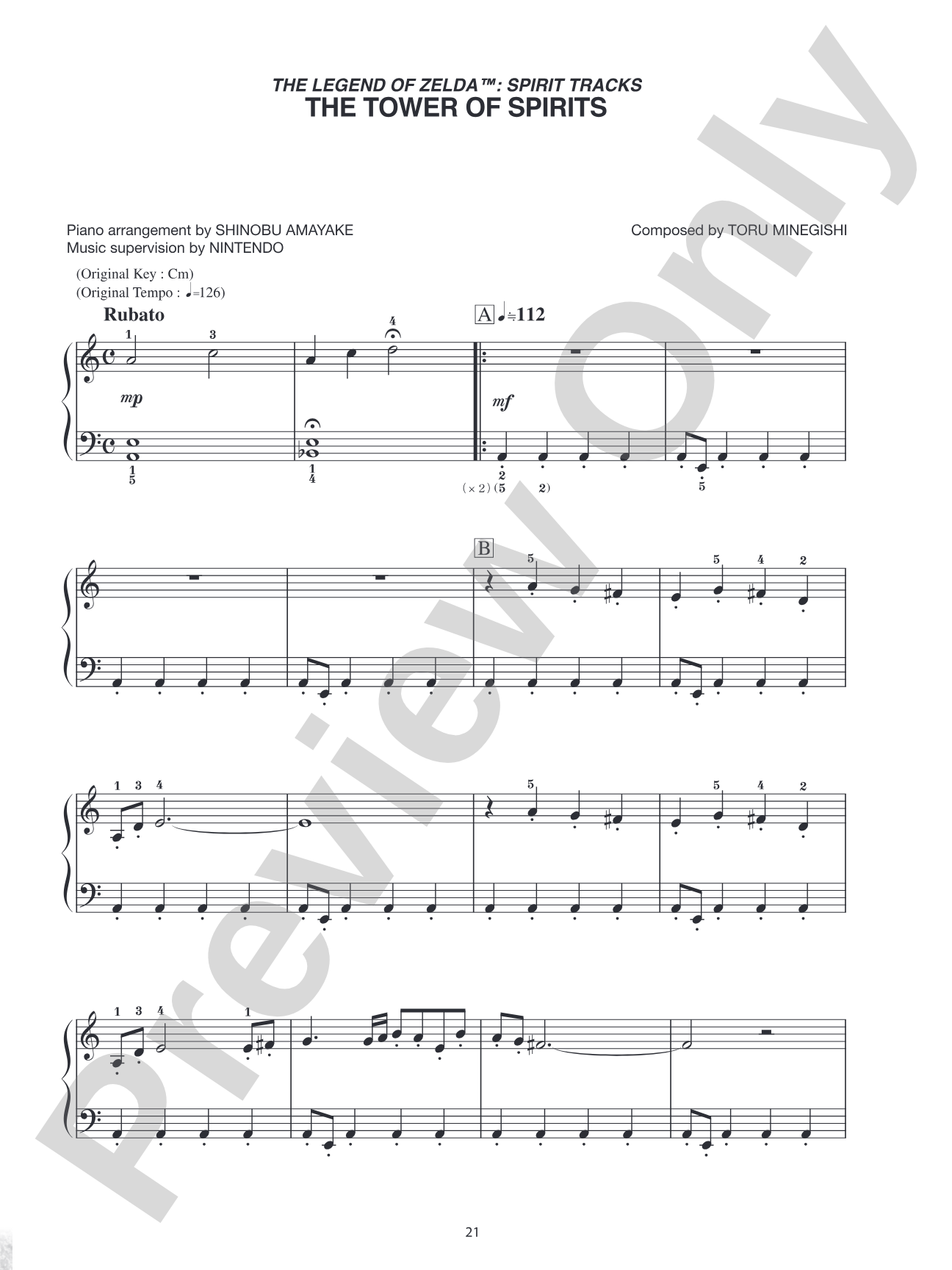

The Legend of Zelda™: Spirit Tracks The Tower of Spirits: Easy Piano
Composed by Koji Kondo, Tominaga Mao, Toru Minegishi, and Asuka Ota
Level: Easy Piano
Item: 00-PS-0015427
$4.99
One moment…
Related Items
The Legend of Zelda™: Spirit Tracks Title Theme: Easy Piano |
$4.99
|
View | |
The Legend of Zelda™: Spirit Tracks Aboda Village: Easy Piano |
$4.99
|
View | |
The Legend of Zelda™: Spirit Tracks Chancellor Coles Theme: Easy Piano |
$4.99
|
View | |
The Legend of Zelda™: Spirit Tracks Hyrule Castle: Easy Piano |
$4.99
|
View | |
The Legend of Zelda™: Spirit Tracks Princess Zeldas Theme: Easy Piano |
$4.99
|
View | |
The Legend of Zelda™: Spirit Tracks The Battle: Easy Piano |
$4.99
|
View | |
The Legend of Zelda™: Spirit Tracks Anjeans Theme: Easy Piano |
$4.99
|
View | |
The Legend of Zelda™: Spirit Tracks Adventuring: Easy Piano |
$4.99
|
View | |
The Legend of Zelda™: Spirit Tracks Riding the Rails 2: Easy Piano |
$4.99
|
View | |
The Legend of Zelda™: Spirit Tracks Linebecks Theme: Easy Piano |
$4.99
|
View | |
The Legend of Zelda™: Spirit Tracks Byrnes Theme: Easy Piano |
$4.99
|
View | |
The Legend of Zelda™: Spirit Tracks Seabed: Easy Piano |
$4.99
|
View | |
The Legend of Zelda™: Spirit Tracks Hero of the Tracks: Easy Piano |
$4.99
|
View | |
The Legend of Zelda™: Spirit Tracks Fighting: Easy Piano |
$4.99
|
View | |
The Legend of Zelda™: Spirit Tracks Song of Awakening: Easy Piano |
$4.99
|
View | |
The Legend of Zelda™: Spirit Tracks Song of Healing: Easy Piano |
$4.99
|
View | |
The Legend of Zelda™: Spirit Tracks Song of Discovery: Easy Piano |
$4.99
|
View | |
The Legend of Zelda™: Spirit Tracks Song of Birds: Easy Piano |
$4.99
|
View | |
The Legend of Zelda™: Spirit Tracks Song of Light: Easy Piano |
$4.99
|
View | |
The Legend of Zelda™: Spirit Tracks Fanfare of the Spirit Tracks: Easy Piano |
$4.99
|
View | |
The Legend of Zelda™: Spirit Tracks Game Over: Easy Piano |
$4.99
|
View | |
The Legend of Zelda™: Spirit Tracks for Easy Piano: Piano Book |
$15.99
|
View |
Description
The soundtrack to Nintendo's The Legend of Zelda™: Spirit Tracks is packed with melodic themes that sound great on the piano! With this officially licensed sheet music collection, pianists can dazzle friends and family by playing 22 familiar themes from the popular video game. The arrangements in this Easy Piano edition are moderately streamlined compared to those in the separately published Intermediate-Advanced edition, yet they retain a full and impressive sound. Titles: Title Theme * Aboda Village * Chancellor Cole's Theme * Hyrule Castle * Princess Zelda's Theme * The Battle * Anjean's Theme * Adventuring * The Tower of Spirits * Riding the Rails 2 (Main Theme) * Linebeck's Theme * Byrne's Theme * Seabed * Hero of the Tracks * Fighting * Song of Awakening * Song of Healing * Song of Discovery * Song of Birds * Song of Light * Fanfare of the Spirit Tracks * Game Over.


The Legend of Zelda™: Spirit Tracks The Tower of Spirits: Easy Piano isn't in MakeMusic Cloud just yet...but it could be. Let us know you'd like to see it, and you'll help shape what comes next. In the meantime, start a free trial and dive into thousands of interactive titles your students can play along with today.
Request This Title
Tell us you want it.
Start Your Free Trial
Explore everything that's ready to play right now.
Sample Audio
No sample audio found.
Sample Video
No sample videos found.
Additional Details
Publisher:
Alfred Music
Page Count:
40
SKU:
00-PS-0015427
More about this title
About the Composer: Toru Minegishi
Toru Minegishi is a video game composer at Nintendo who has shaped the sound of the Zelda franchise across multiple console generations. His work on Spirit Tracks demonstrates his gift for writing memorable melodies that function equally well as orchestral themes and solo instrumental arrangements, making his compositions particularly valuable for music education settings where accessibility and student engagement matter.
Why we love this
Students recognize these melodies instantly, which eliminates the motivation barrier that often comes with unfamiliar repertoire. The arrangements preserve the character and harmonic richness of the original soundtrack while staying genuinely playable at the early intermediate level, so students experience the satisfaction of sounding polished without unnecessary technical barriers.
What to expect
These themes capture the emotional spectrum of Spirit Tracks: moments of quiet reflection (Anjean's Theme), joyful adventure (Riding the Rails), and triumphant heroism (Hero of the Tracks). Playing through the collection feels like revisiting a beloved story with familiar musical companions, each theme evoking specific memories of exploration, friendship, and discovery.
Who it's for
Early intermediate pianists who want engaging material beyond traditional method book repertoire, and piano students motivated by popular culture and video game music. Studio teachers will find these arrangements ideal for students aged 10-16 who need contemporary repertoire that holds genuine musical substance alongside its accessibility.
How to get the most out of it
- Shape the melodic lines with slight tempo flexibility; these themes benefit from subtle rubato that mirrors the video game's cinematic moments without losing forward momentum.
- Balance the left hand carefully in pieces where accompaniment patterns support prominent right-hand melodies; the arrangement's full sound depends on hearing both layers clearly.
- Attend to articulation markings closely, as they often signal thematic identity and help distinguish one theme from another across the collection.
- Record yourself playing through shorter pieces back-to-back to hear how individual themes relate to the larger narrative arc of the game.
How to use it
Create a thematic recital or studio showcase where students perform one or two themes that resonate with them personally, building a varied program that celebrates the game's range of moods. Alternatively, assign individual pieces throughout the year as supplementary solo repertoire that reinforces technical skills while maintaining student enthusiasm for regular practice.
Skills your students will build
- Reading and playing consistent rhythmic patterns in the left hand while maintaining melodic independence in the right hand
- Executing smooth voice leading across hand positions without awkward jumps
- Interpreting articulation markings (staccato, legato, accent) as markers of melodic character
- Maintaining steady tempo through longer phrases while responding to dynamic contrast