
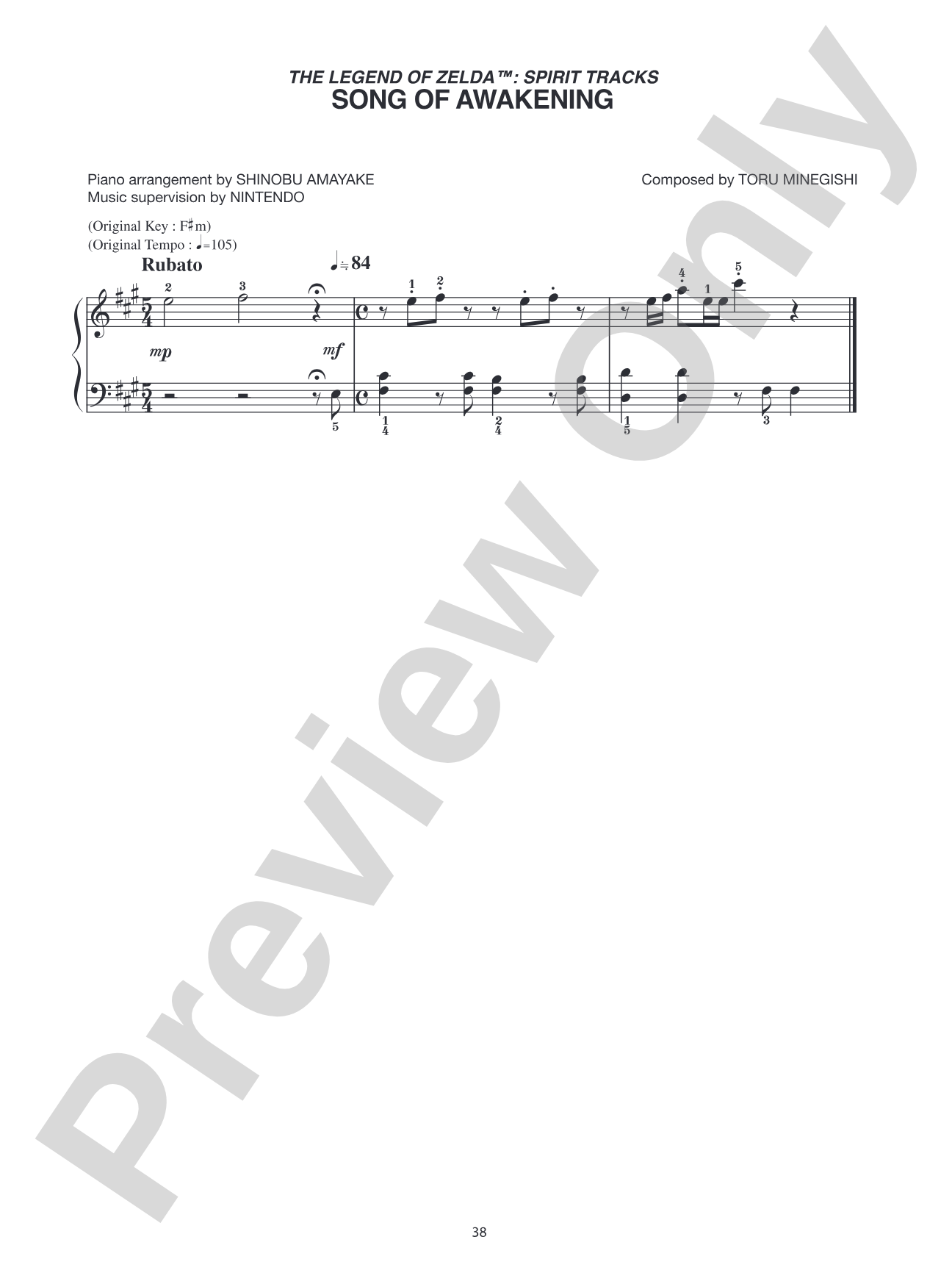

The Legend of Zelda™: Spirit Tracks Song of Awakening: Easy Piano
Composed by Koji Kondo, Tominaga Mao, Toru Minegishi, and Asuka Ota
Level: Easy Piano
Item: 00-PS-0015434
$4.99
One moment…
Related Items
The Legend of Zelda™: Spirit Tracks Title Theme: Easy Piano |
$4.99
|
View | |
The Legend of Zelda™: Spirit Tracks Aboda Village: Easy Piano |
$4.99
|
View | |
The Legend of Zelda™: Spirit Tracks Chancellor Coles Theme: Easy Piano |
$4.99
|
View | |
The Legend of Zelda™: Spirit Tracks Hyrule Castle: Easy Piano |
$4.99
|
View | |
The Legend of Zelda™: Spirit Tracks Princess Zeldas Theme: Easy Piano |
$4.99
|
View | |
The Legend of Zelda™: Spirit Tracks The Battle: Easy Piano |
$4.99
|
View | |
The Legend of Zelda™: Spirit Tracks Anjeans Theme: Easy Piano |
$4.99
|
View | |
The Legend of Zelda™: Spirit Tracks Adventuring: Easy Piano |
$4.99
|
View | |
The Legend of Zelda™: Spirit Tracks The Tower of Spirits: Easy Piano |
$4.99
|
View | |
The Legend of Zelda™: Spirit Tracks Riding the Rails 2: Easy Piano |
$4.99
|
View | |
The Legend of Zelda™: Spirit Tracks Linebecks Theme: Easy Piano |
$4.99
|
View | |
The Legend of Zelda™: Spirit Tracks Byrnes Theme: Easy Piano |
$4.99
|
View | |
The Legend of Zelda™: Spirit Tracks Seabed: Easy Piano |
$4.99
|
View | |
The Legend of Zelda™: Spirit Tracks Hero of the Tracks: Easy Piano |
$4.99
|
View | |
The Legend of Zelda™: Spirit Tracks Fighting: Easy Piano |
$4.99
|
View | |
The Legend of Zelda™: Spirit Tracks Song of Healing: Easy Piano |
$4.99
|
View | |
The Legend of Zelda™: Spirit Tracks Song of Discovery: Easy Piano |
$4.99
|
View | |
The Legend of Zelda™: Spirit Tracks Song of Birds: Easy Piano |
$4.99
|
View | |
The Legend of Zelda™: Spirit Tracks Song of Light: Easy Piano |
$4.99
|
View | |
The Legend of Zelda™: Spirit Tracks Fanfare of the Spirit Tracks: Easy Piano |
$4.99
|
View | |
The Legend of Zelda™: Spirit Tracks Game Over: Easy Piano |
$4.99
|
View | |
The Legend of Zelda™: Spirit Tracks for Easy Piano: Piano Book |
$15.99
|
View |
Description
The soundtrack to Nintendo's The Legend of Zelda™: Spirit Tracks is packed with melodic themes that sound great on the piano! With this officially licensed sheet music collection, pianists can dazzle friends and family by playing 22 familiar themes from the popular video game. The arrangements in this Easy Piano edition are moderately streamlined compared to those in the separately published Intermediate-Advanced edition, yet they retain a full and impressive sound. Titles: Title Theme * Aboda Village * Chancellor Cole's Theme * Hyrule Castle * Princess Zelda's Theme * The Battle * Anjean's Theme * Adventuring * The Tower of Spirits * Riding the Rails 2 (Main Theme) * Linebeck's Theme * Byrne's Theme * Seabed * Hero of the Tracks * Fighting * Song of Awakening * Song of Healing * Song of Discovery * Song of Birds * Song of Light * Fanfare of the Spirit Tracks * Game Over.


The Legend of Zelda™: Spirit Tracks Song of Awakening: Easy Piano isn't in MakeMusic Cloud just yet...but it could be. Let us know you'd like to see it, and you'll help shape what comes next. In the meantime, start a free trial and dive into thousands of interactive titles your students can play along with today.
Request This Title
Tell us you want it.
Start Your Free Trial
Explore everything that's ready to play right now.
Sample Audio
No sample audio found.
Sample Video
No sample videos found.
Additional Details
Publisher:
Alfred Music
Page Count:
40
SKU:
00-PS-0015434
More about this title
About the Composer: Toru Minegishi
Toru Minegishi is a video game composer whose work for Nintendo has shaped the soundtracks of some of gaming's most beloved franchises. His compositional voice balances accessibility with musicality, crafting themes that are memorable enough to hum yet sophisticated enough to reward careful listening.
Minegishi's arrangements for piano demonstrate his understanding of what pianists need: clear melodic lines, manageable left-hand patterns, and the ability to convey the full emotional arc of a theme without overwhelming the player. His work has made video game music a legitimate part of music education and recital programming.
Why we love this
Twenty-two instantly recognizable themes give students a huge motivation boost when they recognize what they're playing. The arrangements preserve Minegishi's gift for melody while keeping the technical demands realistic for early intermediate pianists, so the music sounds impressive without requiring advanced technique.
What to expect
These arrangements capture the spirit of adventure and wonder that defines the Zelda series. You'll find soaring melodic moments that feel heroic, tender passages that reflect quiet exploration, and rhythmic themes that drive the action forward.
Who it's for
Easy piano students who are ready to play something recognizable and rewarding beyond traditional teaching repertoire. Video game fans of all ages benefit from the engagement factor of playing beloved themes, while piano teachers gain a powerful tool for motivating students and keeping practice sessions exciting.
How to get the most out of it
- Let the melody sing by shaping each phrase with subtle dynamic pushes on downbeats, especially in themes like "Princess Zelda's Theme" and "Song of Healing." Even at the easy level, attention to line shape separates a performance from a reading.
- Balance the accompaniment layers carefully. Many pieces use broken-chord patterns or steady left-hand rhythms that can easily overpower the melody if not voiced with restraint.
- Explore the emotional context of each theme. "Song of Awakening," "Fighting," and "Game Over" each demand a different energy; matching the character's mood in the game will inform your interpretive choices.
How to use it
Recital pieces for early intermediate pianists who benefit from the motivation of playing game music they recognize. Smaller themed performances (an "Evening of Video Game Music" or "Music from Hyrule") work especially well when you pair multiple pieces from this collection. Individual pieces also transition well into intermediate repertoire as students develop.
Skills your students will build
- Phrasing and dynamic shaping within a two-staff texture
- Reading and executing steady accompaniment patterns in the left hand while maintaining independence from the melody
- Sustaining melodic shape across longer phrases without overdependence on score
- Understanding how composers set mood and character through harmonic and rhythmic choices