
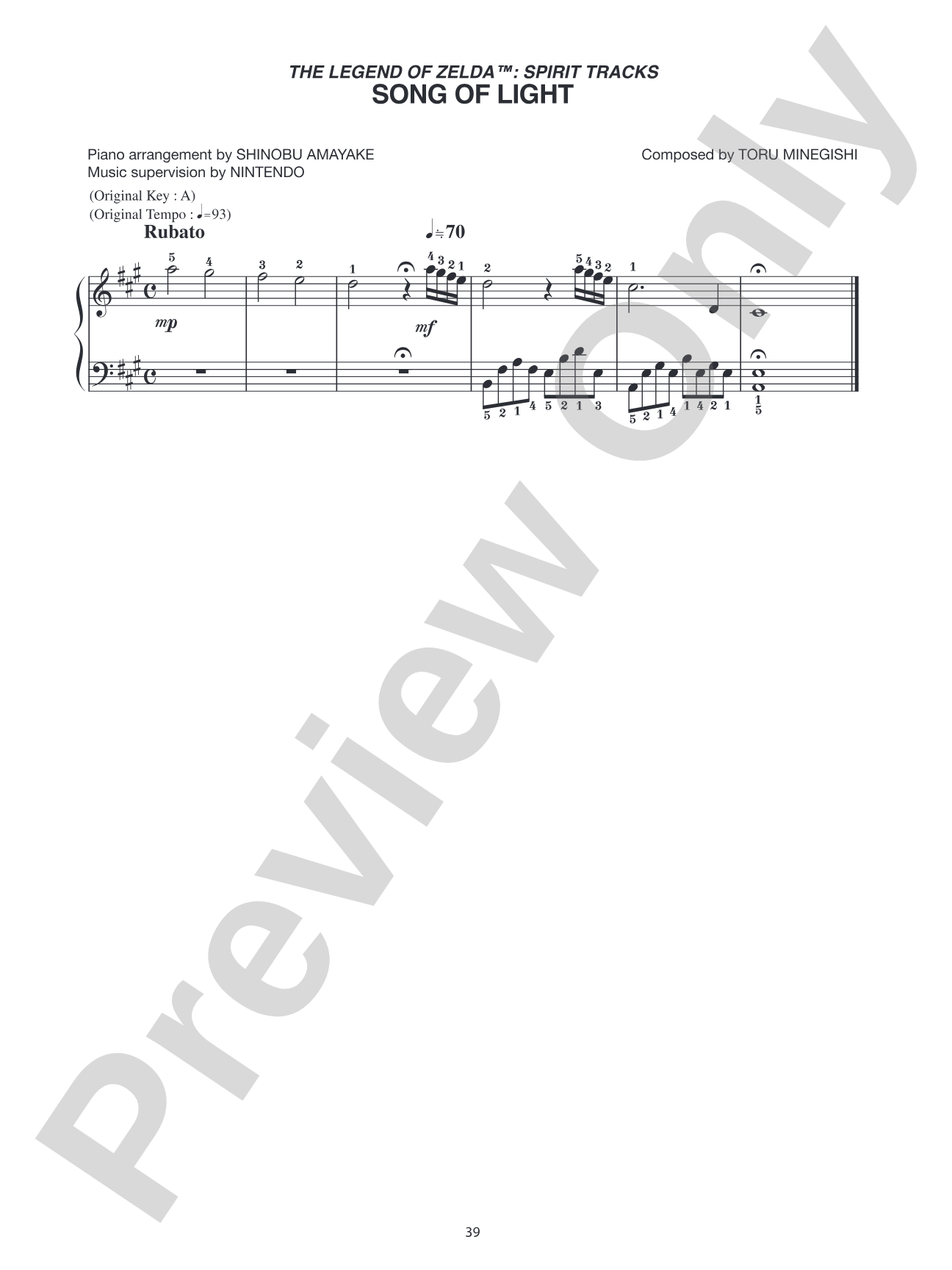

The Legend of Zelda™: Spirit Tracks Song of Light: Easy Piano
Composed by Koji Kondo, Tominaga Mao, Toru Minegishi, and Asuka Ota
Level: Easy Piano
Item: 00-PS-0015438
$4.99
One moment…
Related Items
The Legend of Zelda™: Spirit Tracks Title Theme: Easy Piano |
$4.99
|
View | |
The Legend of Zelda™: Spirit Tracks Aboda Village: Easy Piano |
$4.99
|
View | |
The Legend of Zelda™: Spirit Tracks Chancellor Coles Theme: Easy Piano |
$4.99
|
View | |
The Legend of Zelda™: Spirit Tracks Hyrule Castle: Easy Piano |
$4.99
|
View | |
The Legend of Zelda™: Spirit Tracks Princess Zeldas Theme: Easy Piano |
$4.99
|
View | |
The Legend of Zelda™: Spirit Tracks The Battle: Easy Piano |
$4.99
|
View | |
The Legend of Zelda™: Spirit Tracks Anjeans Theme: Easy Piano |
$4.99
|
View | |
The Legend of Zelda™: Spirit Tracks Adventuring: Easy Piano |
$4.99
|
View | |
The Legend of Zelda™: Spirit Tracks The Tower of Spirits: Easy Piano |
$4.99
|
View | |
The Legend of Zelda™: Spirit Tracks Riding the Rails 2: Easy Piano |
$4.99
|
View | |
The Legend of Zelda™: Spirit Tracks Linebecks Theme: Easy Piano |
$4.99
|
View | |
The Legend of Zelda™: Spirit Tracks Byrnes Theme: Easy Piano |
$4.99
|
View | |
The Legend of Zelda™: Spirit Tracks Seabed: Easy Piano |
$4.99
|
View | |
The Legend of Zelda™: Spirit Tracks Hero of the Tracks: Easy Piano |
$4.99
|
View | |
The Legend of Zelda™: Spirit Tracks Fighting: Easy Piano |
$4.99
|
View | |
The Legend of Zelda™: Spirit Tracks Song of Awakening: Easy Piano |
$4.99
|
View | |
The Legend of Zelda™: Spirit Tracks Song of Healing: Easy Piano |
$4.99
|
View | |
The Legend of Zelda™: Spirit Tracks Song of Discovery: Easy Piano |
$4.99
|
View | |
The Legend of Zelda™: Spirit Tracks Song of Birds: Easy Piano |
$4.99
|
View | |
The Legend of Zelda™: Spirit Tracks Fanfare of the Spirit Tracks: Easy Piano |
$4.99
|
View | |
The Legend of Zelda™: Spirit Tracks Game Over: Easy Piano |
$4.99
|
View | |
The Legend of Zelda™: Spirit Tracks for Easy Piano: Piano Book |
$15.99
|
View |
Description
The soundtrack to Nintendo's The Legend of Zelda™: Spirit Tracks is packed with melodic themes that sound great on the piano! With this officially licensed sheet music collection, pianists can dazzle friends and family by playing 22 familiar themes from the popular video game. The arrangements in this Easy Piano edition are moderately streamlined compared to those in the separately published Intermediate-Advanced edition, yet they retain a full and impressive sound. Titles: Title Theme * Aboda Village * Chancellor Cole's Theme * Hyrule Castle * Princess Zelda's Theme * The Battle * Anjean's Theme * Adventuring * The Tower of Spirits * Riding the Rails 2 (Main Theme) * Linebeck's Theme * Byrne's Theme * Seabed * Hero of the Tracks * Fighting * Song of Awakening * Song of Healing * Song of Discovery * Song of Birds * Song of Light * Fanfare of the Spirit Tracks * Game Over.


The Legend of Zelda™: Spirit Tracks Song of Light: Easy Piano isn't in MakeMusic Cloud just yet...but it could be. Let us know you'd like to see it, and you'll help shape what comes next. In the meantime, start a free trial and dive into thousands of interactive titles your students can play along with today.
Request This Title
Tell us you want it.
Start Your Free Trial
Explore everything that's ready to play right now.
Sample Audio
No sample audio found.
Sample Video
No sample videos found.
Additional Details
Publisher:
Alfred Music
Page Count:
40
SKU:
00-PS-0015438
More about this title
About the Composer: Toru Minegishi
Toru Minegishi is a video game composer at Nintendo who has crafted music for major titles across multiple gaming generations. His work on The Legend of Zelda series demonstrates a gift for creating melodic themes that are both instantly recognizable and emotionally resonant, making his compositions ideal for adaptation across different musical contexts and skill levels.
Minegishi's approach to game music prioritizes melody and harmonic clarity, qualities that translate especially well to solo piano. His scores balance thematic development with accessibility, allowing pianists of varying abilities to engage meaningfully with substantial musical material.
Why we love this
These arrangements capture the charm and adventure of Spirit Tracks without overwhelming early intermediate pianists. The melodies are strong enough to carry the pieces even in simplified form, so students can sound genuinely impressive while building confidence on recognizable material that audiences actually know and love.
What to expect
Adventurous and warm. Spirit Tracks is about journeys and discovery, and these arrangements capture that sense of forward motion and purpose. The melodies often have a folk-song quality that feels both accessible and genuinely musical, never trivializing the source material.
Who it's for
Pianists at the easy level who want to play recognizable, substantial material without excessive technical demands. Students who love video games find immediate engagement with these themes, while teachers benefit from having legitimate concert repertoire that connects to students' actual interests and lives.
How to get the most out of it
- Shape the melodic lines with subtle dynamic shaping rather than dramatic contrasts. Video game themes often repeat motifs, so small changes in emphasis prevent sections from feeling static.
- Allow the familiar themes to breathe naturally. Many of these melodies have a song-like quality, so treat phrase endings with the same care you would in vocal literature.
- Maintain rhythmic precision in the accompaniment patterns without rushing. Clean, steady supporting voices let the melody shine without strain.
- Experiment with pedal sparingly and deliberately. These arrangements work well with selective pedal use that reinforces harmonic changes rather than washing over passages.
How to use it
These work perfectly for informal recitals, studio showcases, or non-traditional concert settings where students want to share music they're passionate about. Consider pairing them with classical piano repertoire to demonstrate range, or program a medley of several themes as a crowd-pleasing finale.
Skills your students will build
- Sustaining melodic lines with consistent tone across phrase boundaries
- Coordinating independent hand parts with different rhythmic patterns
- Managing broken chord accompaniments at various tempos
- Shaping familiar melodies to avoid monotony through subtle dynamic variation
- Reading and executing straightforward harmonic progressions