
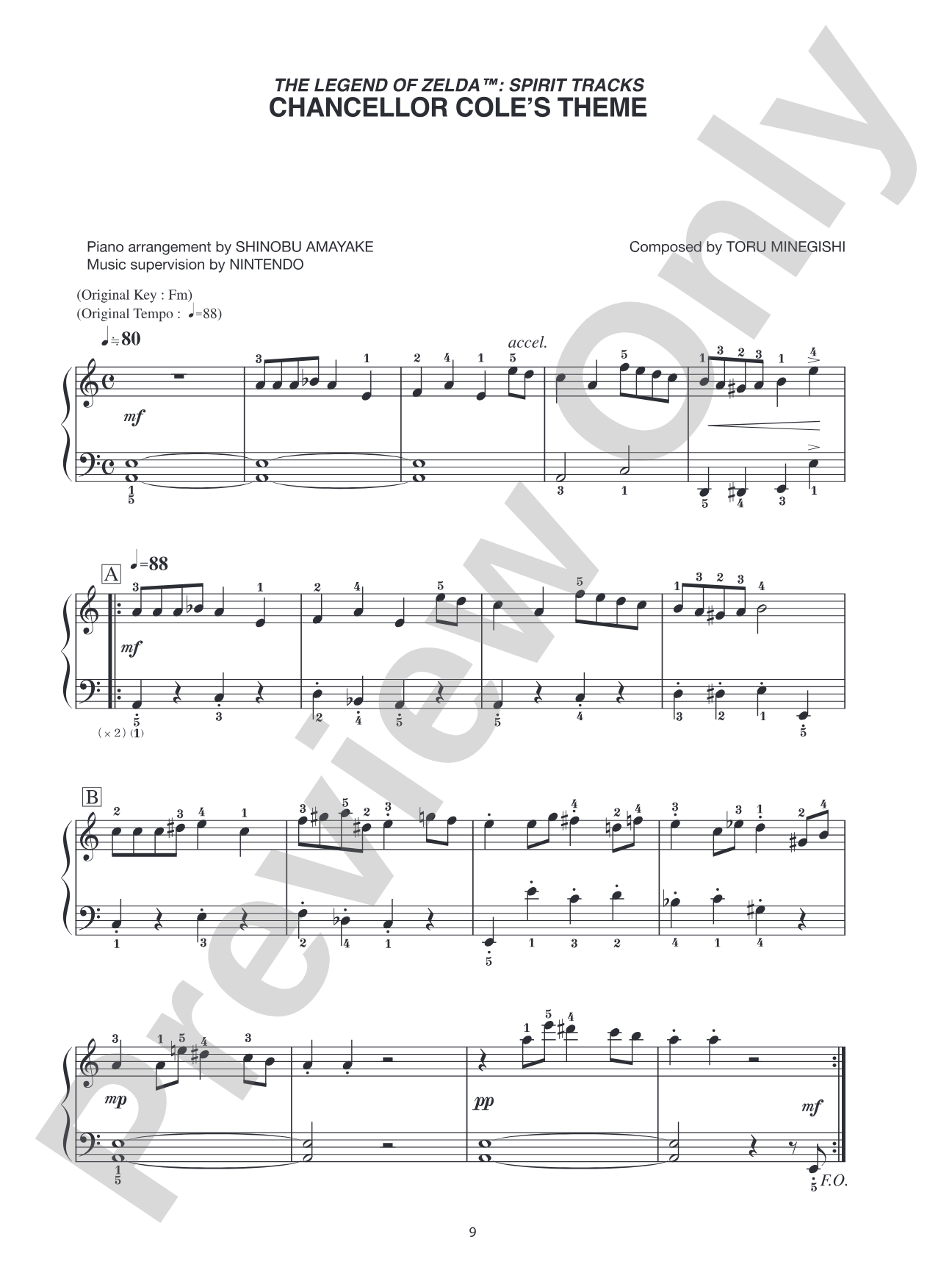

The Legend of Zelda™: Spirit Tracks Chancellor Coles Theme: Easy Piano
Composed by Koji Kondo, Tominaga Mao, Toru Minegishi, and Asuka Ota
Level: Easy Piano
Item: 00-PS-0015421
$4.99
One moment…
Related Items
The Legend of Zelda™: Spirit Tracks Title Theme: Easy Piano |
$4.99
|
View | |
The Legend of Zelda™: Spirit Tracks Aboda Village: Easy Piano |
$4.99
|
View | |
The Legend of Zelda™: Spirit Tracks Hyrule Castle: Easy Piano |
$4.99
|
View | |
The Legend of Zelda™: Spirit Tracks Princess Zeldas Theme: Easy Piano |
$4.99
|
View | |
The Legend of Zelda™: Spirit Tracks The Battle: Easy Piano |
$4.99
|
View | |
The Legend of Zelda™: Spirit Tracks Anjeans Theme: Easy Piano |
$4.99
|
View | |
The Legend of Zelda™: Spirit Tracks Adventuring: Easy Piano |
$4.99
|
View | |
The Legend of Zelda™: Spirit Tracks The Tower of Spirits: Easy Piano |
$4.99
|
View | |
The Legend of Zelda™: Spirit Tracks Riding the Rails 2: Easy Piano |
$4.99
|
View | |
The Legend of Zelda™: Spirit Tracks Linebecks Theme: Easy Piano |
$4.99
|
View | |
The Legend of Zelda™: Spirit Tracks Byrnes Theme: Easy Piano |
$4.99
|
View | |
The Legend of Zelda™: Spirit Tracks Seabed: Easy Piano |
$4.99
|
View | |
The Legend of Zelda™: Spirit Tracks Hero of the Tracks: Easy Piano |
$4.99
|
View | |
The Legend of Zelda™: Spirit Tracks Fighting: Easy Piano |
$4.99
|
View | |
The Legend of Zelda™: Spirit Tracks Song of Awakening: Easy Piano |
$4.99
|
View | |
The Legend of Zelda™: Spirit Tracks Song of Healing: Easy Piano |
$4.99
|
View | |
The Legend of Zelda™: Spirit Tracks Song of Discovery: Easy Piano |
$4.99
|
View | |
The Legend of Zelda™: Spirit Tracks Song of Birds: Easy Piano |
$4.99
|
View | |
The Legend of Zelda™: Spirit Tracks Song of Light: Easy Piano |
$4.99
|
View | |
The Legend of Zelda™: Spirit Tracks Fanfare of the Spirit Tracks: Easy Piano |
$4.99
|
View | |
The Legend of Zelda™: Spirit Tracks Game Over: Easy Piano |
$4.99
|
View | |
The Legend of Zelda™: Spirit Tracks for Easy Piano: Piano Book |
$15.99
|
View |
Description
The soundtrack to Nintendo's The Legend of Zelda™: Spirit Tracks is packed with melodic themes that sound great on the piano! With this officially licensed sheet music collection, pianists can dazzle friends and family by playing 22 familiar themes from the popular video game. The arrangements in this Easy Piano edition are moderately streamlined compared to those in the separately published Intermediate-Advanced edition, yet they retain a full and impressive sound. Titles: Title Theme * Aboda Village * Chancellor Cole's Theme * Hyrule Castle * Princess Zelda's Theme * The Battle * Anjean's Theme * Adventuring * The Tower of Spirits * Riding the Rails 2 (Main Theme) * Linebeck's Theme * Byrne's Theme * Seabed * Hero of the Tracks * Fighting * Song of Awakening * Song of Healing * Song of Discovery * Song of Birds * Song of Light * Fanfare of the Spirit Tracks * Game Over.


Discover MakeMusic Cloud: thousands of interactive titles your students can play along with today.
Sample Audio
No sample audio found.
Sample Video
No sample videos found.
Additional Details
Publisher:
Alfred Music
Page Count:
40
SKU:
00-PS-0015421
More about this title
About the Composer: Toru Minegishi
Toru Minegishi is a video game composer whose work defines the sonic landscape of Nintendo's most iconic franchises. His compositional voice across The Legend of Zelda series demonstrates sophisticated harmonic choices and melodic invention that translate beautifully to acoustic instruments, making his original themes enduring favorites among pianists of all levels.
Minegishi's approach to game music composition balances accessibility with musical depth. His themes are memorable enough to lodge in players' minds after a single listen, yet they contain the harmonic and structural complexity that rewards careful arrangement and skilled performance. This balance makes his work particularly valuable in music education contexts, where students benefit from learning music that is both engaging and musically substantial.
Why we love this
Students light up when they recognize these themes, which transforms practice from obligation into genuine motivation. The arrangements here are carefully calibrated: accessible enough for early-intermediate pianists to execute successfully, yet orchestrated with enough textural interest that they sound genuinely impressive in a recital setting. You get 22 different pieces, which means you can offer meaningful choice to your piano students rather than assigning from a limited pool of repertoire.
What to expect
These arrangements capture the adventurous, whimsical, and occasionally heroic spirit of the game while translating it for solo piano. The melodies are warm and instantly memorable; the harmonic progressions are colorful without being overly complicated. Playing through this collection feels like revisiting a cherished adventure, with each theme evoking its own emotional landscape.
Who it's for
This collection serves early-intermediate pianists (roughly grades 3-5 equivalent) who want to play music they already love and recognize. It's especially well suited to students who are motivated by video game music but might not yet be ready for intermediate classical repertoire. Teachers will find these pieces valuable for recitals, studio showcases, and building student confidence through familiar material.
How to get the most out of it
- Pay attention to the left-hand accompaniment patterns. Many of these themes use repetitive figures that establish groove and harmonic foundation; lock them in early so your right hand can focus on clear articulation of the melody.
- Treat the dynamic markings and tempo indications as intentional rather than optional. These arrangements preserve the character and pacing of the original game music, so respecting those elements brings the piece to life more convincingly.
- Consider the narrative context of each theme when you practice. Chancellor Cole's Theme carries different emotional weight than The Battle or Song of Healing. Let that shape your tone, tempo flexibility, and rubato choices.
How to use it
Program several of these pieces across a studio recital to show the breadth of your students' musical interests and capabilities. You might also use individual themes as reward or end-of-unit pieces when students finish method book sections, since the familiar material provides both motivation and a natural way to develop performance skills on music that students genuinely want to play.
Skills your students will build
- Playing consistent left-hand accompanimental patterns while maintaining melodic clarity in the right hand
- Reading and interpreting dynamic and tempo markings in context
- Identifying and executing melodic phrasing across a memorable tune
- Managing hand independence at the early-intermediate level
- Developing performance confidence through recognizable, engaging repertoire