
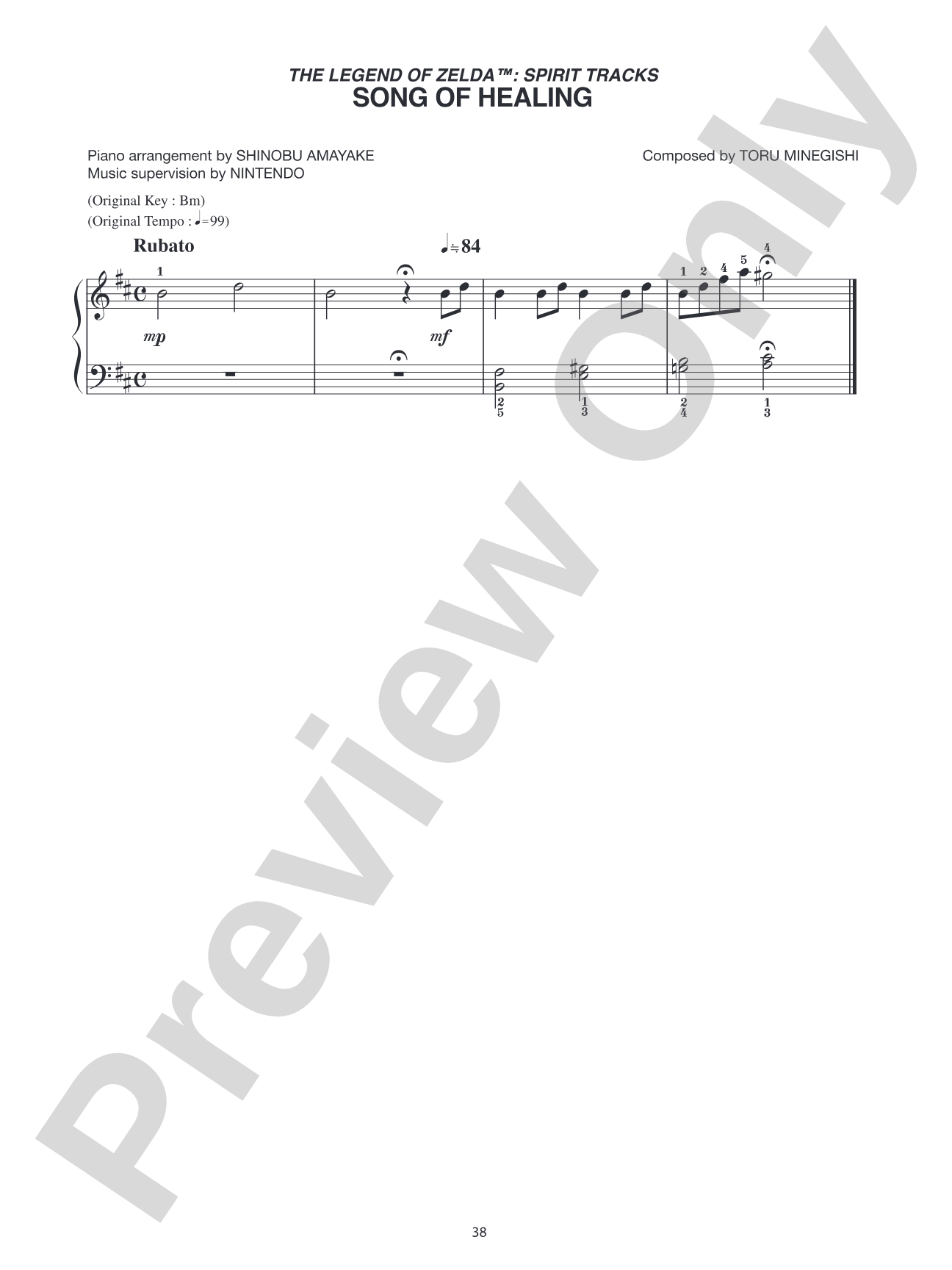

The Legend of Zelda™: Spirit Tracks Song of Healing: Easy Piano
Composed by Koji Kondo, Tominaga Mao, Toru Minegishi, and Asuka Ota
Level: Easy Piano
Item: 00-PS-0015435
$4.99
One moment…
Related Items
The Legend of Zelda™: Spirit Tracks Title Theme: Easy Piano |
$4.99
|
View | |
The Legend of Zelda™: Spirit Tracks Aboda Village: Easy Piano |
$4.99
|
View | |
The Legend of Zelda™: Spirit Tracks Chancellor Coles Theme: Easy Piano |
$4.99
|
View | |
The Legend of Zelda™: Spirit Tracks Hyrule Castle: Easy Piano |
$4.99
|
View | |
The Legend of Zelda™: Spirit Tracks Princess Zeldas Theme: Easy Piano |
$4.99
|
View | |
The Legend of Zelda™: Spirit Tracks The Battle: Easy Piano |
$4.99
|
View | |
The Legend of Zelda™: Spirit Tracks Anjeans Theme: Easy Piano |
$4.99
|
View | |
The Legend of Zelda™: Spirit Tracks Adventuring: Easy Piano |
$4.99
|
View | |
The Legend of Zelda™: Spirit Tracks The Tower of Spirits: Easy Piano |
$4.99
|
View | |
The Legend of Zelda™: Spirit Tracks Riding the Rails 2: Easy Piano |
$4.99
|
View | |
The Legend of Zelda™: Spirit Tracks Linebecks Theme: Easy Piano |
$4.99
|
View | |
The Legend of Zelda™: Spirit Tracks Byrnes Theme: Easy Piano |
$4.99
|
View | |
The Legend of Zelda™: Spirit Tracks Seabed: Easy Piano |
$4.99
|
View | |
The Legend of Zelda™: Spirit Tracks Hero of the Tracks: Easy Piano |
$4.99
|
View | |
The Legend of Zelda™: Spirit Tracks Fighting: Easy Piano |
$4.99
|
View | |
The Legend of Zelda™: Spirit Tracks Song of Awakening: Easy Piano |
$4.99
|
View | |
The Legend of Zelda™: Spirit Tracks Song of Discovery: Easy Piano |
$4.99
|
View | |
The Legend of Zelda™: Spirit Tracks Song of Birds: Easy Piano |
$4.99
|
View | |
The Legend of Zelda™: Spirit Tracks Song of Light: Easy Piano |
$4.99
|
View | |
The Legend of Zelda™: Spirit Tracks Fanfare of the Spirit Tracks: Easy Piano |
$4.99
|
View | |
The Legend of Zelda™: Spirit Tracks Game Over: Easy Piano |
$4.99
|
View | |
The Legend of Zelda™: Spirit Tracks for Easy Piano: Piano Book |
$15.99
|
View |
Description
The soundtrack to Nintendo's The Legend of Zelda™: Spirit Tracks is packed with melodic themes that sound great on the piano! With this officially licensed sheet music collection, pianists can dazzle friends and family by playing 22 familiar themes from the popular video game. The arrangements in this Easy Piano edition are moderately streamlined compared to those in the separately published Intermediate-Advanced edition, yet they retain a full and impressive sound. Titles: Title Theme * Aboda Village * Chancellor Cole's Theme * Hyrule Castle * Princess Zelda's Theme * The Battle * Anjean's Theme * Adventuring * The Tower of Spirits * Riding the Rails 2 (Main Theme) * Linebeck's Theme * Byrne's Theme * Seabed * Hero of the Tracks * Fighting * Song of Awakening * Song of Healing * Song of Discovery * Song of Birds * Song of Light * Fanfare of the Spirit Tracks * Game Over.


The Legend of Zelda™: Spirit Tracks Song of Healing: Easy Piano isn't in MakeMusic Cloud just yet...but it could be. Let us know you'd like to see it, and you'll help shape what comes next. In the meantime, start a free trial and dive into thousands of interactive titles your students can play along with today.
Request This Title
Tell us you want it.
Start Your Free Trial
Explore everything that's ready to play right now.
Sample Audio
No sample audio found.
Sample Video
No sample videos found.
Additional Details
Publisher:
Alfred Music
Page Count:
40
SKU:
00-PS-0015435
More about this title
About the Composer: Toru Minegishi
Toru Minegishi is a composer at Nintendo who has crafted music for some of the company's most beloved franchises, including The Legend of Zelda series. His work on Spirit Tracks demonstrates his gift for creating memorable, emotionally resonant themes that enhance gameplay while standing on their own as concert music.
Minegishi's compositions often balance accessibility with harmonic sophistication, making his video game scores especially rewarding for arrangers working across skill levels. His melodies are immediately recognizable and singable, a hallmark that translates beautifully to solo piano arrangements.
Why we love this
Students instantly recognize and connect with these themes, which eliminates the motivation barrier that can plague classical repertoire. The arrangements preserve the character and warmth of Minegishi's originals while remaining genuinely playable at the easy level, so students sound impressive without feeling stretched beyond their ability. This collection works particularly well for recitals, studio showcases, and ear-training exercises since every theme will resonate with your audience.
What to expect
These pieces capture the sense of adventure, mystery, and heroism woven through Spirit Tracks. The melodies often have a folk-like quality with gentle harmonic support, creating an inviting, approachable sound that feels both intimate in a practice room and impressive in front of an audience. The emotional range spans from peaceful village themes to triumphant battle music, giving pianists genuine interpretive choices.
Who it's for
This collection suits pianists at the early intermediate stage who want to play recognizable, engaging material without confronting complex technique. It's ideal for students building confidence, preparing recital programs, or simply enjoying video game music in a formal setting. Teachers will find these pieces especially useful for students who are motivated by contemporary media rather than traditional classical repertoire.
How to get the most out of it
- Pay attention to the articulation and pedal markings in the score; they're essential to creating the lush, cinematic quality that makes these pieces memorable. Without them, even easy arrangements can sound thin.
- Practice the melody and accompaniment separately until you're secure in the left hand. Many of these themes contain gentle rhythmic figures that need clarity to support the tune above.
- Record yourself playing different pieces in sequence to find natural programming order. Some pieces benefit from being grouped by emotional tone rather than their order in the game.
- Explore the dynamic range within each arrangement. The easy versions don't require huge technical demands, so expressive control through tempo and volume shaping becomes your primary tool for interpretation.
How to use it
Feature individual pieces in student recitals, or program several thematically related pieces together to tell a narrative arc. The Song of Healing series works particularly well as a meditative set, while the battle and adventure themes provide excellent energy for opening or closing a concert segment. These arrangements also serve well as rewards for students who've completed method book milestones.
Skills your students will build
- Pedal control in sustained harmonic textures
- Balancing melody and accompaniment without heavy reliance on dynamic marking
- Reading rhythmic figures with gentle syncopation and rubato
- Maintaining consistent tempo while managing expressive musical intent
- Recognizing and executing articulation as a primary tool for shaping phrasing