
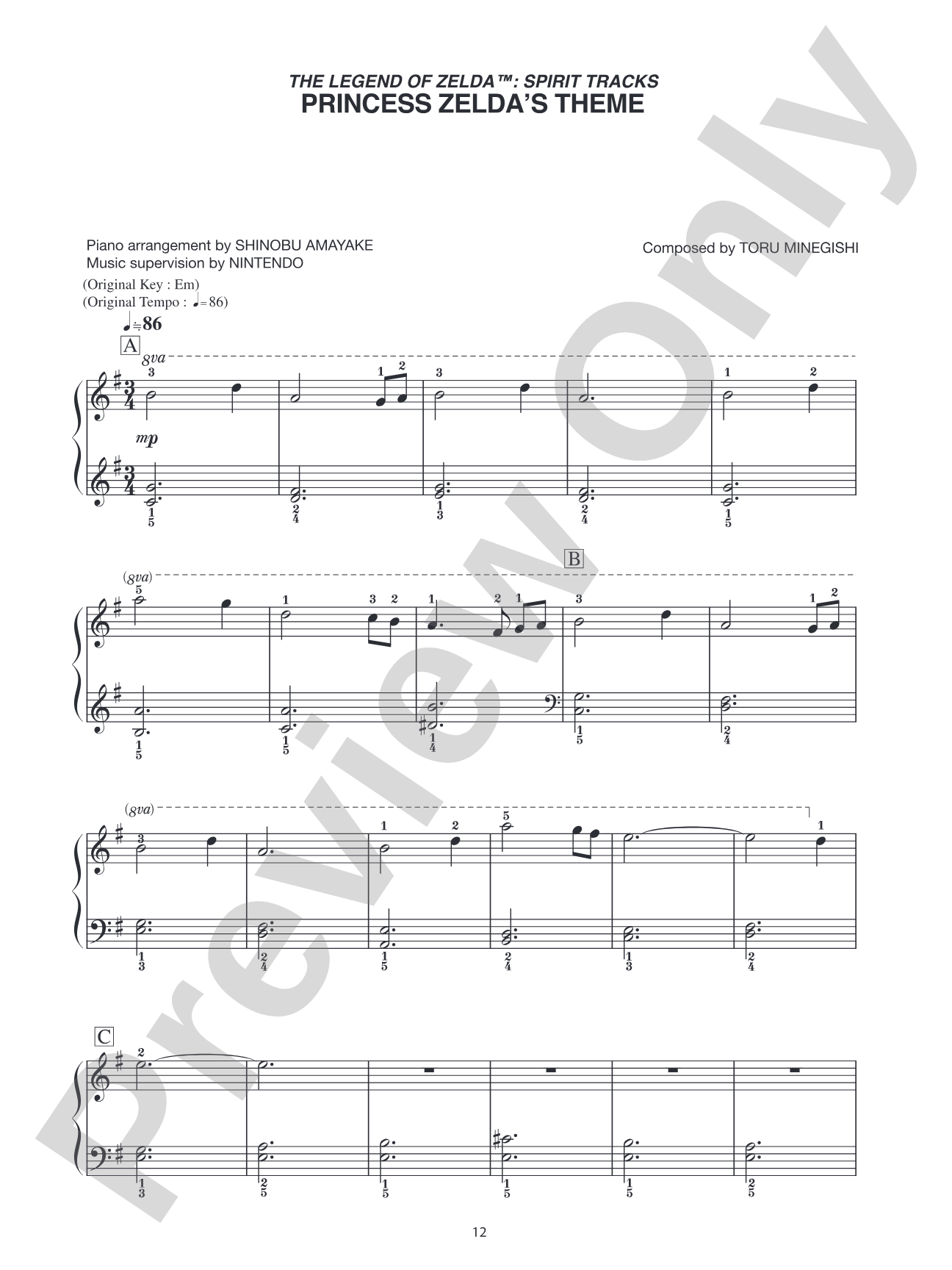

The Legend of Zelda™: Spirit Tracks Princess Zeldas Theme: Easy Piano
Composed by Koji Kondo, Tominaga Mao, Toru Minegishi, and Asuka Ota
Level: Easy Piano
Item: 00-PS-0015423
$4.99
One moment…
Related Items
The Legend of Zelda™: Spirit Tracks Title Theme: Easy Piano |
$4.99
|
View | |
The Legend of Zelda™: Spirit Tracks Aboda Village: Easy Piano |
$4.99
|
View | |
The Legend of Zelda™: Spirit Tracks Chancellor Coles Theme: Easy Piano |
$4.99
|
View | |
The Legend of Zelda™: Spirit Tracks Hyrule Castle: Easy Piano |
$4.99
|
View | |
The Legend of Zelda™: Spirit Tracks The Battle: Easy Piano |
$4.99
|
View | |
The Legend of Zelda™: Spirit Tracks Anjeans Theme: Easy Piano |
$4.99
|
View | |
The Legend of Zelda™: Spirit Tracks Adventuring: Easy Piano |
$4.99
|
View | |
The Legend of Zelda™: Spirit Tracks The Tower of Spirits: Easy Piano |
$4.99
|
View | |
The Legend of Zelda™: Spirit Tracks Riding the Rails 2: Easy Piano |
$4.99
|
View | |
The Legend of Zelda™: Spirit Tracks Linebecks Theme: Easy Piano |
$4.99
|
View | |
The Legend of Zelda™: Spirit Tracks Byrnes Theme: Easy Piano |
$4.99
|
View | |
The Legend of Zelda™: Spirit Tracks Seabed: Easy Piano |
$4.99
|
View | |
The Legend of Zelda™: Spirit Tracks Hero of the Tracks: Easy Piano |
$4.99
|
View | |
The Legend of Zelda™: Spirit Tracks Fighting: Easy Piano |
$4.99
|
View | |
The Legend of Zelda™: Spirit Tracks Song of Awakening: Easy Piano |
$4.99
|
View | |
The Legend of Zelda™: Spirit Tracks Song of Healing: Easy Piano |
$4.99
|
View | |
The Legend of Zelda™: Spirit Tracks Song of Discovery: Easy Piano |
$4.99
|
View | |
The Legend of Zelda™: Spirit Tracks Song of Birds: Easy Piano |
$4.99
|
View | |
The Legend of Zelda™: Spirit Tracks Song of Light: Easy Piano |
$4.99
|
View | |
The Legend of Zelda™: Spirit Tracks Fanfare of the Spirit Tracks: Easy Piano |
$4.99
|
View | |
The Legend of Zelda™: Spirit Tracks Game Over: Easy Piano |
$4.99
|
View | |
The Legend of Zelda™: Spirit Tracks for Easy Piano: Piano Book |
$15.99
|
View |
Description
The soundtrack to Nintendo's The Legend of Zelda™: Spirit Tracks is packed with melodic themes that sound great on the piano! With this officially licensed sheet music collection, pianists can dazzle friends and family by playing 22 familiar themes from the popular video game. The arrangements in this Easy Piano edition are moderately streamlined compared to those in the separately published Intermediate-Advanced edition, yet they retain a full and impressive sound. Titles: Title Theme * Aboda Village * Chancellor Cole's Theme * Hyrule Castle * Princess Zelda's Theme * The Battle * Anjean's Theme * Adventuring * The Tower of Spirits * Riding the Rails 2 (Main Theme) * Linebeck's Theme * Byrne's Theme * Seabed * Hero of the Tracks * Fighting * Song of Awakening * Song of Healing * Song of Discovery * Song of Birds * Song of Light * Fanfare of the Spirit Tracks * Game Over.


The Legend of Zelda™: Spirit Tracks Princess Zeldas Theme: Easy Piano isn't in MakeMusic Cloud just yet...but it could be. Let us know you'd like to see it, and you'll help shape what comes next. In the meantime, start a free trial and dive into thousands of interactive titles your students can play along with today.
Request This Title
Tell us you want it.
Start Your Free Trial
Explore everything that's ready to play right now.
Sample Audio
No sample audio found.
Sample Video
No sample videos found.
Additional Details
Publisher:
Alfred Music
Page Count:
40
SKU:
00-PS-0015423
More about this title
About the Composer: Toru Minegishi
Toru Minegishi is a video game composer at Nintendo who has shaped the sonic identity of multiple franchises through distinctive melodies and emotionally resonant orchestration. His work on The Legend of Zelda: Spirit Tracks exemplifies his ability to create themes that function equally well in interactive gaming contexts and as standalone musical pieces, making his compositions natural candidates for arrangement and performance.
Why we love this
This collection captures some of gaming's most recognizable melodies in arrangements that sound complete and satisfying without requiring intermediate technical facility. Your students will recognize nearly every piece instantly, which builds immediate engagement and motivation to practice, while the streamlined voicings let them focus on bringing character and shape to familiar material rather than wrestling with thick textures.
What to expect
These pieces inhabit the musical vocabulary of adventure, mystery, and discovery. You'll encounter pastoral calm in village themes, heroic energy in battle sequences, and haunting beauty in spiritual passages. The melodies sit naturally under the fingers while the harmonies add color and emotional depth, creating a sense of narrative even in a standalone recital context.
Who it's for
Piano students at the easy level who respond to contemporary and recognizable music, including those learning outside traditional classical repertoire. Teachers looking to expand their students' exposure to well-crafted melody and harmony through material that feels immediately rewarding to perform.
How to get the most out of it
- Observe the pacing and rhythmic character of each theme carefully. Many of these melodies were designed to loop smoothly in-game, so finding the right tempo and lilt will determine whether the piece feels energetic or feels stiff.
- Balance the melody line generously against the accompaniment so the iconic theme sings clearly, even when the left hand has active supporting material.
- Pay attention to dynamic markings and articulation, which often signal the emotional tone of scenes the themes underscore. A soft, gentle phrase deserves a different touch than an adventuring theme.
- Use pedal deliberately to enhance harmonic color without muddying rapid left-hand figures, especially in pieces with active accompaniment patterns.
How to use it
Position these pieces in a spring or end-of-year recital to celebrate students' growth and provide a engaging, thematic finale to the season. You might also program individual selections during informal student concerts or open studio events where contemporary, recognizable music energizes audiences and demonstrates the musicality your students bring to non-classical sources.
Skills your students will build
- Playing melody with expressive phrasing and dynamic control
- Coordinating independent left-hand accompaniment patterns with a steady melody line
- Interpreting tempo and character markings to shape musical narrative
- Reading and executing articulation and dynamic markings that convey emotional context
- Maintaining consistent rhythmic pulse through varied accompaniment textures