
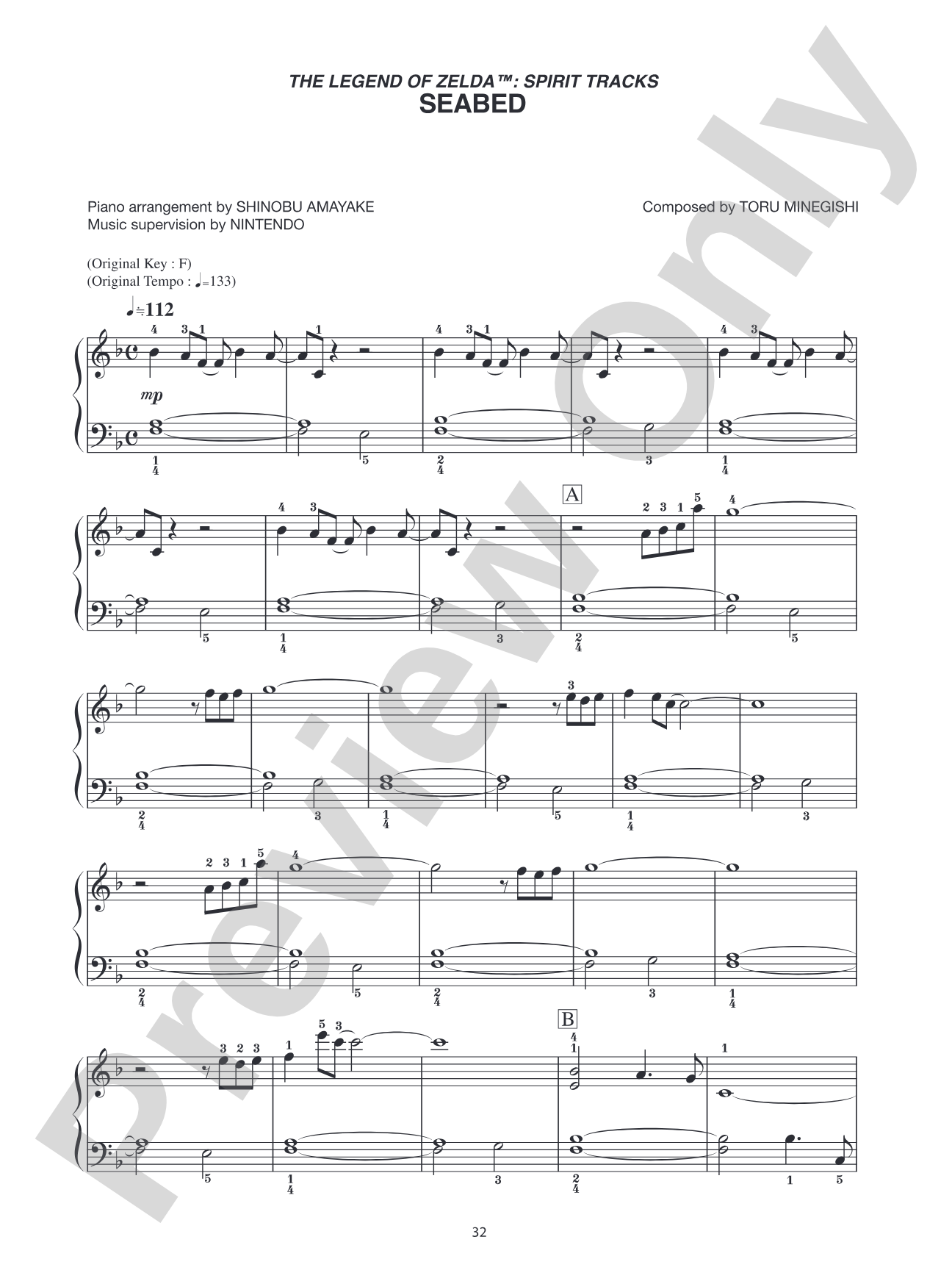

The Legend of Zelda™: Spirit Tracks Seabed: Easy Piano
Composed by Koji Kondo, Tominaga Mao, Toru Minegishi, and Asuka Ota
Level: Easy Piano
Item: 00-PS-0015431
$4.99
One moment…
Related Items
The Legend of Zelda™: Spirit Tracks Title Theme: Easy Piano |
$4.99
|
View | |
The Legend of Zelda™: Spirit Tracks Aboda Village: Easy Piano |
$4.99
|
View | |
The Legend of Zelda™: Spirit Tracks Chancellor Coles Theme: Easy Piano |
$4.99
|
View | |
The Legend of Zelda™: Spirit Tracks Hyrule Castle: Easy Piano |
$4.99
|
View | |
The Legend of Zelda™: Spirit Tracks Princess Zeldas Theme: Easy Piano |
$4.99
|
View | |
The Legend of Zelda™: Spirit Tracks The Battle: Easy Piano |
$4.99
|
View | |
The Legend of Zelda™: Spirit Tracks Anjeans Theme: Easy Piano |
$4.99
|
View | |
The Legend of Zelda™: Spirit Tracks Adventuring: Easy Piano |
$4.99
|
View | |
The Legend of Zelda™: Spirit Tracks The Tower of Spirits: Easy Piano |
$4.99
|
View | |
The Legend of Zelda™: Spirit Tracks Riding the Rails 2: Easy Piano |
$4.99
|
View | |
The Legend of Zelda™: Spirit Tracks Linebecks Theme: Easy Piano |
$4.99
|
View | |
The Legend of Zelda™: Spirit Tracks Byrnes Theme: Easy Piano |
$4.99
|
View | |
The Legend of Zelda™: Spirit Tracks Hero of the Tracks: Easy Piano |
$4.99
|
View | |
The Legend of Zelda™: Spirit Tracks Fighting: Easy Piano |
$4.99
|
View | |
The Legend of Zelda™: Spirit Tracks Song of Awakening: Easy Piano |
$4.99
|
View | |
The Legend of Zelda™: Spirit Tracks Song of Healing: Easy Piano |
$4.99
|
View | |
The Legend of Zelda™: Spirit Tracks Song of Discovery: Easy Piano |
$4.99
|
View | |
The Legend of Zelda™: Spirit Tracks Song of Birds: Easy Piano |
$4.99
|
View | |
The Legend of Zelda™: Spirit Tracks Song of Light: Easy Piano |
$4.99
|
View | |
The Legend of Zelda™: Spirit Tracks Fanfare of the Spirit Tracks: Easy Piano |
$4.99
|
View | |
The Legend of Zelda™: Spirit Tracks Game Over: Easy Piano |
$4.99
|
View | |
The Legend of Zelda™: Spirit Tracks for Easy Piano: Piano Book |
$15.99
|
View |
Description
The soundtrack to Nintendo's The Legend of Zelda™: Spirit Tracks is packed with melodic themes that sound great on the piano! With this officially licensed sheet music collection, pianists can dazzle friends and family by playing 22 familiar themes from the popular video game. The arrangements in this Easy Piano edition are moderately streamlined compared to those in the separately published Intermediate-Advanced edition, yet they retain a full and impressive sound. Titles: Title Theme * Aboda Village * Chancellor Cole's Theme * Hyrule Castle * Princess Zelda's Theme * The Battle * Anjean's Theme * Adventuring * The Tower of Spirits * Riding the Rails 2 (Main Theme) * Linebeck's Theme * Byrne's Theme * Seabed * Hero of the Tracks * Fighting * Song of Awakening * Song of Healing * Song of Discovery * Song of Birds * Song of Light * Fanfare of the Spirit Tracks * Game Over.


The Legend of Zelda™: Spirit Tracks Seabed: Easy Piano isn't in MakeMusic Cloud just yet...but it could be. Let us know you'd like to see it, and you'll help shape what comes next. In the meantime, start a free trial and dive into thousands of interactive titles your students can play along with today.
Request This Title
Tell us you want it.
Start Your Free Trial
Explore everything that's ready to play right now.
Sample Audio
No sample audio found.
Sample Video
No sample videos found.
Additional Details
Publisher:
Alfred Music
Page Count:
40
SKU:
00-PS-0015431
More about this title
About the Composer: Toru Minegishi
Toru Minegishi is a composer at Nintendo who has shaped the sound of multiple Legend of Zelda titles, including Spirit Tracks, Phantom Hourglass, and Four Swords Adventures. His work blends orchestral sensibilities with the accessibility requirements of interactive media, creating melodies that are both memorable and musically substantive enough to work in concert or recital settings.
Minegishi's approach to video game composition prioritizes melodic clarity and emotional resonance. His themes for Spirit Tracks balance adventure, mystery, and whimsy, making them especially rewarding material for pianists learning to shape character and narrative through instrumental performance.
Why we love this
These arrangements capture genuine melodic material without oversimplifying it. Each theme has enough harmonic interest and textural variety to feel like real music, not filler, which keeps young pianists engaged and builds genuine musicianship. The collection works equally well as recital material, ensemble fodder, or casual performance pieces at family gatherings.
What to expect
These melodies carry the emotional DNA of their source: the earnest heroism of adventure themes, the gentle mystery of exploration, the excitement of a narrow escape. On the piano, they become intimate conversations between player and listener. Even simplified, arrangements like Princess Zelda's Theme and Song of Healing retain their emotional weight and singability.
Who it's for
Young pianists in their first two years of study who want repertoire with real melodic appeal and cultural currency. Intermediate players building confidence in public performance will also find accessible material that impresses listeners without requiring advanced technique. Teachers seeking engaging supplementary pieces for students who are video game enthusiasts will find legitimate musical content that respects both the source material and piano pedagogy.
How to get the most out of it
- Shape the themes as you would in any musical narrative. Many of these melodies function as character themes in the game; leaning into that storytelling intent transforms a video game tune into expressive music making.
- Balance the accompaniment so it supports rather than overwhelms the melody. The arrangements spare enough texture that clarity matters, especially in the gentler pieces like Aboda Village and Anjean's Theme.
- Notice the tempo relationships across pieces. Contrast between the energetic Riding the Rails and the contemplative Seabed will strengthen both in performance, so vary your approach intentionally rather than applying one tempo character throughout.
- Use the full range of dynamics indicated. Easy arrangements often skip dynamic detail, but this collection includes enough markings to create genuine musical shape.
How to use it
Feature individual pieces on student recitals throughout the year, especially pairing a faster theme with a slower one to demonstrate stylistic range. You might also program several pieces together as a thematic block for a spring concert titled around adventure or video game artistry, allowing students to hear how a cohesive musical world is built through related melodic ideas. These arrangements also work well in informal settings like coffee house concerts or community open mics where recognizable material engages non-traditional audiences.
Skills your students will build
- Reading and playing straight sixteenth-note rhythms accurately
- Sustaining melodic line while accompanying with broken chord patterns
- Interpreting dynamic shadings to enhance emotional content
- Balancing treble and bass textures for clarity
- Sight-reading contemporary harmonic language beyond basic triads