
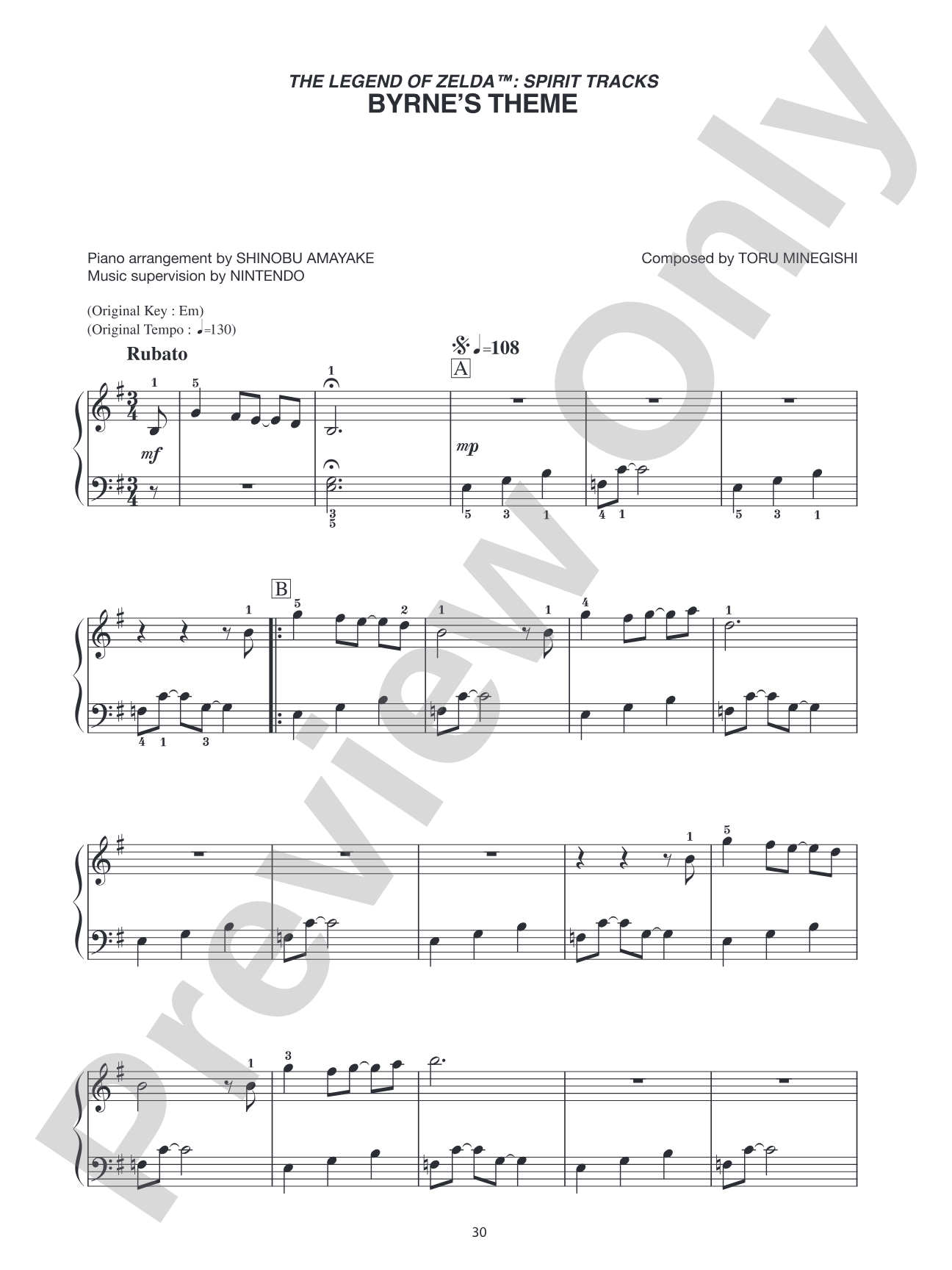

The Legend of Zelda™: Spirit Tracks Byrnes Theme: Easy Piano
Composed by Koji Kondo, Tominaga Mao, Toru Minegishi, and Asuka Ota
Level: Easy Piano
Item: 00-PS-0015430
$4.99
One moment…
Related Items
The Legend of Zelda™: Spirit Tracks Title Theme: Easy Piano |
$4.99
|
View | |
The Legend of Zelda™: Spirit Tracks Aboda Village: Easy Piano |
$4.99
|
View | |
The Legend of Zelda™: Spirit Tracks Chancellor Coles Theme: Easy Piano |
$4.99
|
View | |
The Legend of Zelda™: Spirit Tracks Hyrule Castle: Easy Piano |
$4.99
|
View | |
The Legend of Zelda™: Spirit Tracks Princess Zeldas Theme: Easy Piano |
$4.99
|
View | |
The Legend of Zelda™: Spirit Tracks The Battle: Easy Piano |
$4.99
|
View | |
The Legend of Zelda™: Spirit Tracks Anjeans Theme: Easy Piano |
$4.99
|
View | |
The Legend of Zelda™: Spirit Tracks Adventuring: Easy Piano |
$4.99
|
View | |
The Legend of Zelda™: Spirit Tracks The Tower of Spirits: Easy Piano |
$4.99
|
View | |
The Legend of Zelda™: Spirit Tracks Riding the Rails 2: Easy Piano |
$4.99
|
View | |
The Legend of Zelda™: Spirit Tracks Linebecks Theme: Easy Piano |
$4.99
|
View | |
The Legend of Zelda™: Spirit Tracks Seabed: Easy Piano |
$4.99
|
View | |
The Legend of Zelda™: Spirit Tracks Hero of the Tracks: Easy Piano |
$4.99
|
View | |
The Legend of Zelda™: Spirit Tracks Fighting: Easy Piano |
$4.99
|
View | |
The Legend of Zelda™: Spirit Tracks Song of Awakening: Easy Piano |
$4.99
|
View | |
The Legend of Zelda™: Spirit Tracks Song of Healing: Easy Piano |
$4.99
|
View | |
The Legend of Zelda™: Spirit Tracks Song of Discovery: Easy Piano |
$4.99
|
View | |
The Legend of Zelda™: Spirit Tracks Song of Birds: Easy Piano |
$4.99
|
View | |
The Legend of Zelda™: Spirit Tracks Song of Light: Easy Piano |
$4.99
|
View | |
The Legend of Zelda™: Spirit Tracks Fanfare of the Spirit Tracks: Easy Piano |
$4.99
|
View | |
The Legend of Zelda™: Spirit Tracks Game Over: Easy Piano |
$4.99
|
View | |
The Legend of Zelda™: Spirit Tracks for Easy Piano: Piano Book |
$15.99
|
View |
Description
The soundtrack to Nintendo's The Legend of Zelda™: Spirit Tracks is packed with melodic themes that sound great on the piano! With this officially licensed sheet music collection, pianists can dazzle friends and family by playing 22 familiar themes from the popular video game. The arrangements in this Easy Piano edition are moderately streamlined compared to those in the separately published Intermediate-Advanced edition, yet they retain a full and impressive sound. Titles: Title Theme * Aboda Village * Chancellor Cole's Theme * Hyrule Castle * Princess Zelda's Theme * The Battle * Anjean's Theme * Adventuring * The Tower of Spirits * Riding the Rails 2 (Main Theme) * Linebeck's Theme * Byrne's Theme * Seabed * Hero of the Tracks * Fighting * Song of Awakening * Song of Healing * Song of Discovery * Song of Birds * Song of Light * Fanfare of the Spirit Tracks * Game Over.


The Legend of Zelda™: Spirit Tracks Byrnes Theme: Easy Piano isn't in MakeMusic Cloud just yet...but it could be. Let us know you'd like to see it, and you'll help shape what comes next. In the meantime, start a free trial and dive into thousands of interactive titles your students can play along with today.
Request This Title
Tell us you want it.
Start Your Free Trial
Explore everything that's ready to play right now.
Sample Audio
No sample audio found.
Sample Video
No sample videos found.
Additional Details
Publisher:
Alfred Music
Page Count:
40
SKU:
00-PS-0015430
More about this title
About the Composer: Toru Minegishi
Toru Minegishi is a composer at Nintendo who has shaped the soundscapes of major franchises including The Legend of Zelda series, Metroid Prime, and Fire Emblem. His approach to game music emphasizes melody and emotional resonance, crafting themes that remain memorable long after players finish playing.
Minegishi's work demonstrates how thematic writing can carry narrative weight in interactive media. His compositions for Spirit Tracks balance accessibility with sophisticated harmonic and structural choices, making them ideal models for pianists learning to balance simplicity with musicality.
Why we love this
These arrangements capture the narrative journey of Spirit Tracks without overwhelming early-intermediate pianists. Each piece stands independently, so you can program individual themes into recitals, competitions, or casual performances throughout the year. The melodies are instantly recognizable to students who've played the game, which builds genuine ownership over the material.
What to expect
The collection captures the sense of adventure and mystery that defines Spirit Tracks. Melodies shift from whimsical village scenes to tense boss battles and meditative character themes, inviting the pianist to inhabit different emotional landscapes across 22 distinct pieces. The arrangements maintain harmonic color and personality while keeping technical demands manageable.
Who it's for
Early-intermediate pianists who enjoy video game music and want accessible arrangements that still sound polished in performance. Students preparing for recitals, competitions, or informal gatherings will find immediate success with themes they already know and love.
How to get the most out of it
- Lean into the contrasts between pieces. Zelda's theme calls for legato phrasing and careful dynamic shaping, while The Battle demands crisp articulation and forward momentum. Varying your touch between consecutive pieces keeps the listener engaged.
- Pay attention to the harmonic foundation. Even though the Easy edition is streamlined, the left hand carries important harmonic information. Avoid treating it as mere accompaniment; let chord changes breathe and support the melody's emotional arc.
- Use tempo consistency as your anchor when performing multiple themes. Each piece has its own character, but maintaining clear pulse within each section prevents rushing during transitions and keeps the performance grounded.
- Explore dynamic range beyond the printed markings. Song of Healing and Song of Healing benefit from subtle crescendos that mirror the emotional weight of their narratives in the game.
How to use it
Build a thematic recital around the game's story arc, opening with the Title Theme and concluding with a fanfare or triumphant piece. Alternatively, weave individual themes throughout a year's worth of student recitals, programming one or two pieces per student based on their level and the emotional impact you want. These pieces also work beautifully as curtain-raisers or palette-cleansers between more classical repertoire.
Skills your students will build
- Playing blocked and rolled chords with consistent tone
- Managing melodic independence between hands
- Sustaining musical line through harmonic changes
- Interpreting dynamic markings and shaping phrases over multiple measures
- Reading and executing tempo/style changes within a single piece