
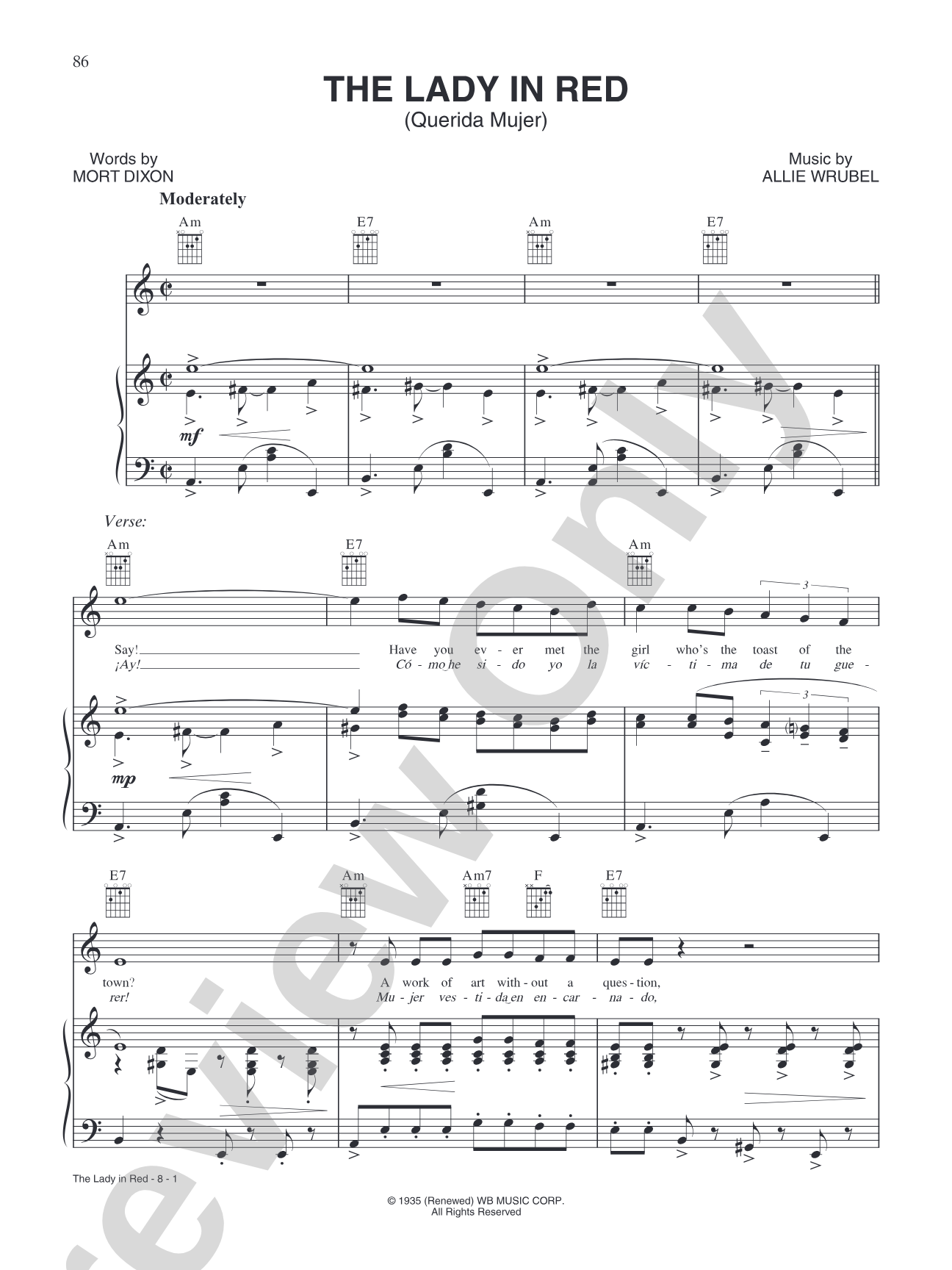
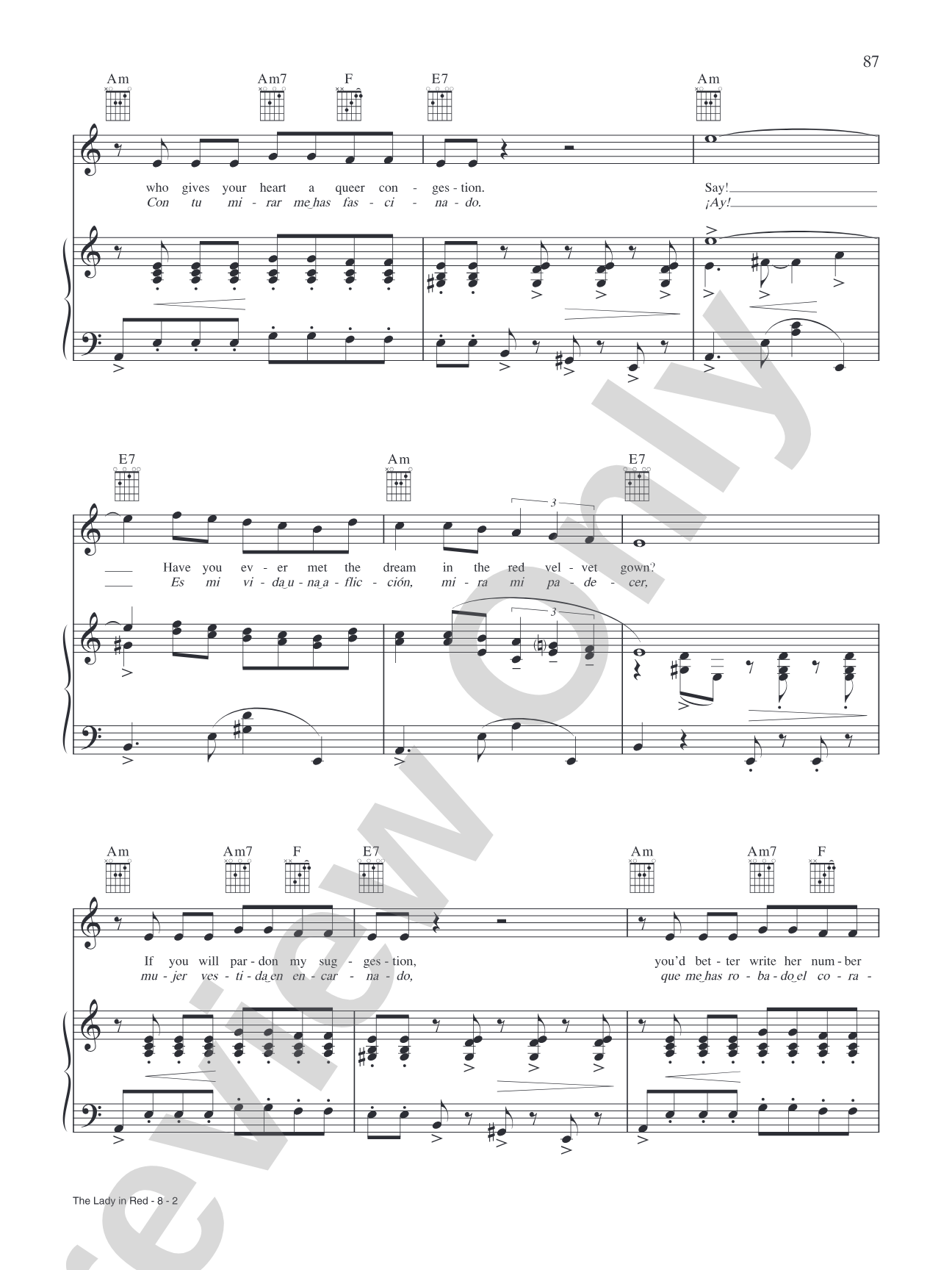

The Lady In Red (from "Merrie Melodies & Looney Tunes"): Piano/Vocal/Chords
Merrie Melodies and Themes from Warner Brothers Cartoons
Item: 00-XS-0000173
$5.99
One moment…
Related Items
I'm Forever Blowing Bubbles (from "Merrie Melodies & Looney Tunes"): Piano/Vocal/Chords |
$4.99
|
View | |
The Gold Digger's Song (from "Merrie Melodies & Looney Tunes"): Piano/Vocal/Chords |
$4.99
|
View | |
You Must Have Been a Beautiful Baby (from "Merrie Melodies & Looney Tunes"): Piano/Vocal/Chords |
$4.99
|
View | |
Hello! Ma Baby (from "Merrie Melodies & Looney Tunes"): Piano/Vocal/Chords |
$4.99
|
View | |
A Cup of Coffee, a Sandwich, and You (from "Merrie Melodies & Looney Tunes"): Piano/Vocal/Chords |
$4.99
|
View | |
Merrily We Roll Along (from "Merrie Melodies & Looney Tunes"): Piano/Vocal/Chords |
$4.99
|
View | |
Hooray for Hollywood (from "Merrie Melodies & Looney Tunes"): Piano/Vocal/Chords |
$4.99
|
View | |
I Love to Sing-A (from "Merrie Melodies & Looney Tunes"): Piano/Vocal/Chords |
$5.99
|
View | |
What's Up, Doc? (from "The Bugs Bunny Show"): Piano/Vocal/Chords |
$4.99
|
View | |
I’m Just Wild About Harry (from "Merrie Melodies & Looney Tunes"): Piano/Vocal/Chords |
$4.99
|
View | |
A Rainy Night in Rio (from "Merrie Melodies & Looney Tunes"): Piano/Vocal/Chords |
$4.99
|
View | |
Road Runner (from "Merrie Melodies & Looney Tunes"): Piano/Vocal/Chords |
$4.99
|
View | |
Ain't She Sweet (from "Merrie Melodies & Looney Tunes"): Piano/Vocal/Chords |
$4.99
|
View | |
Powerhouse (from "Merrie Melodies & Looney Tunes"): Piano |
$5.99
|
View | |
The Michigan Rag (from "Merrie Melodies & Looney Tunes"): Piano/Vocal/Chords |
$4.99
|
View | |
The Merry-Go-Round Broke Down (from "Merrie Melodies & Looney Tunes"): Piano/Vocal/Chords |
$4.99
|
View | |
The Looney Tunes Songbook: Piano/Vocal/Guitar Book |
$19.99
|
View |
Description
The Looney Tunes Songbook features music used by Carl Stalling in the scores for Warner Brothers' beloved cartoons from the 1930s through the early '60s. Included are the familiar theme songs, tunes associated with various characters, Warner Brothers pop songs used as background music, and the wacky melodies of Raymond Scott. Titles: Merrily We Roll Along * The Merry-Go-Round Broke Down * Road Runner * This Is It! * What's Up, Doc? * Dinner Music for a Pack of Hungry Cannibals * In an 18th Century Drawing Room * Powerhouse * Reckless Night on Board an Ocean Liner * The Toy Trumpet * Ain't She Sweet * A Cup of Coffee, a Sandwich, and You * The Gold Digger's Song (We're in the Money) * Hooray for Hollywood * I Love to Sing-a * I'm Forever Blowing Bubbles * The Lady in Red * A Rainy Night in Rio * You Must Have Been a Beautiful Baby * Hello, Ma Baby * I'm Just Wild About Harry * The Michigan Rag.


The Lady In Red (from "Merrie Melodies & Looney Tunes"): Piano/Vocal/Chords isn't in MakeMusic Cloud just yet...but it could be. Let us know you'd like to see it, and you'll help shape what comes next. In the meantime, start a free trial and dive into thousands of interactive titles your students can play along with today.
Request This Title
Tell us you want it.
Start Your Free Trial
Explore everything that's ready to play right now.
Sample Audio
No sample audio found.
Sample Video
No sample videos found.
Additional Details
Publisher:
Alfred Music
Page Count:
108
SKU:
00-XS-0000173
More about this title
About the Composer: Allie Wrubel
Allie Wrubel composed music for Warner Brothers cartoons throughout the 1930s and 1940s, creating instantly recognizable melodies that became synonymous with the studio's animated characters and slapstick humor. His gift for writing catchy, character-driven themes and comedic musical underscores made him a key figure in the golden age of theatrical animation, working alongside Carl Stalling and other composers who shaped the sound of Looney Tunes.
Wrubel's approach to cartoon composition balanced accessibility with sophistication. His melodies stick in the listener's mind immediately, yet they often contain harmonic surprises and clever orchestration that reward closer listening. For music educators, his work demonstrates how strong melodic writing and clear harmonic structure can serve storytelling and humor without sacrificing musicality.
Why we love this
This collection captures music from one of animation's greatest eras, giving pianists and singers direct access to tunes that define early Hollywood cartoon comedy. The melodies are immediately memorable and sit comfortably in the voice, while the chord changes provide satisfying harmonic content without excessive complexity. Whether performed as concert pieces, used in a music history unit, or explored as examples of applied composition, these songs reveal how effectively simple, well-crafted melodies drive narrative and emotion.
What to expect
These pieces sparkle with wit and warmth. The melodies dance along with infectious energy, whether they're waltzing or strutting or gently swaying, and the harmonies reflect the optimism of their era. Even without the cartoons, you can sense the mischief, the romance, and the playfulness that made these tunes beloved across generations.
Who it's for
Pianists preparing recital material with character and charm will find these songs engaging and audience-friendly. Singers exploring American popular song from the early twentieth century can use this collection to study melody-driven writing and period style. Music teachers introducing students to applied composition, film scoring, and the relationship between music and visual storytelling will find rich material here.
How to get the most out of it
- Lean into the comedic timing. These melodies were written to sync with visual gags, so rhythmic clarity and character in the phrasing matter more than legit interpretive depth.
- Pay attention to dynamic shading in the piano part. Much of the humor in the orchestral scores comes from sudden shifts in volume and texture; bring those qualities into your solo arrangement.
- If singing, match your tone to the personality of the melody. 'The Lady in Red' calls for something smooth and warm, while other pieces demand brightness and bounce.
- Use the chord symbols to explore reharmonization possibilities, especially in piano introductions and interludes. These songs invite creative accompaniment beyond the notated part.
How to use it
Program one or two of these pieces in a recital devoted to twentieth-century American song or film music history. They work well as encores or lighter program moments that delight audiences of all ages. A piano student or vocalist could also explore this collection thematically, selecting 3-4 pieces that share a mood or compositional technique and presenting them as a short suite.
Skills your students will build
- Phrasing for comedic and character-driven melody
- Reading and interpreting chord symbols for accompaniment
- Understanding melody-driven composition and song form
- Performing with stylistic awareness of early twentieth-century popular song
- Coordinating text and music in vocal performance