
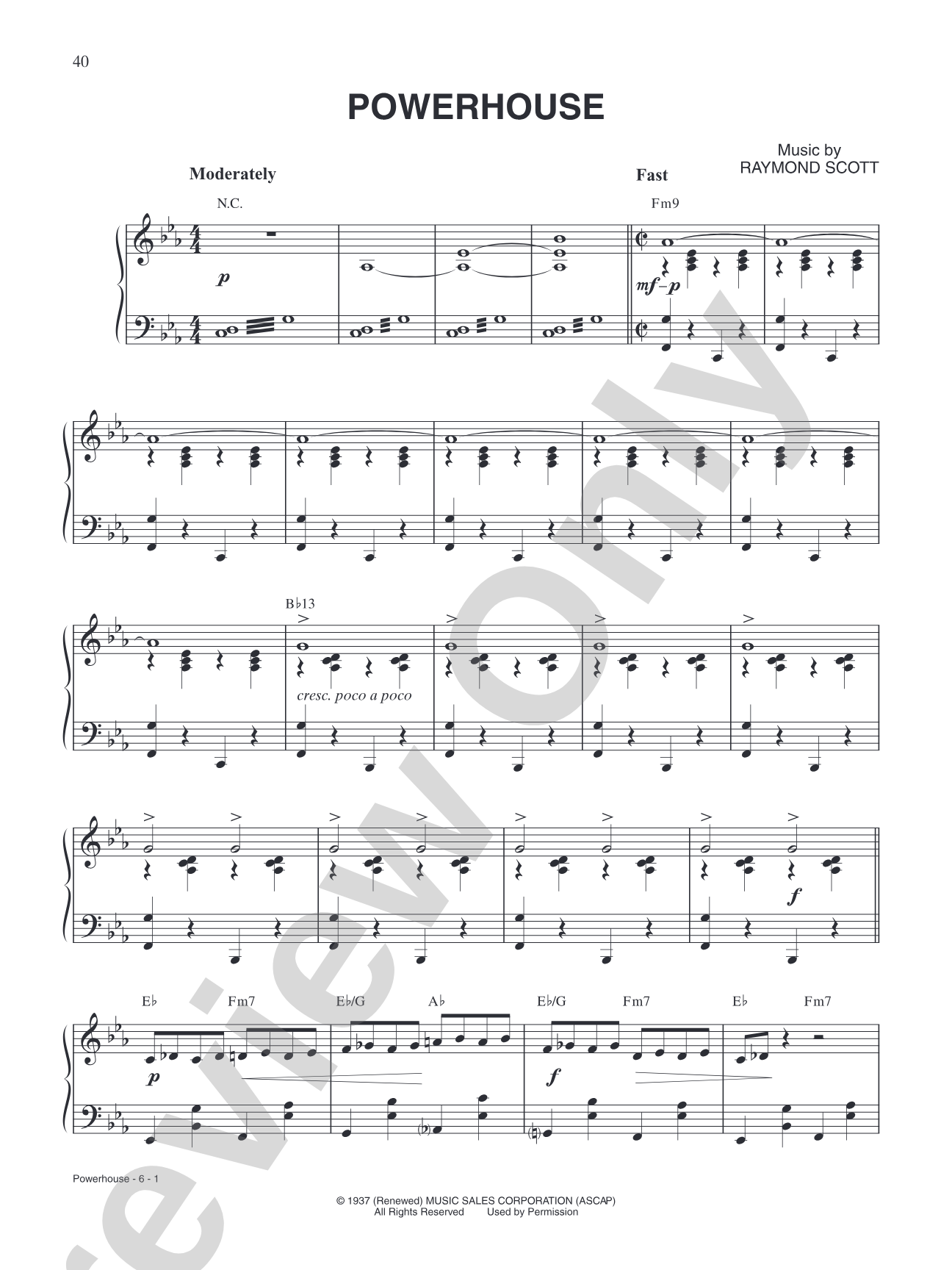
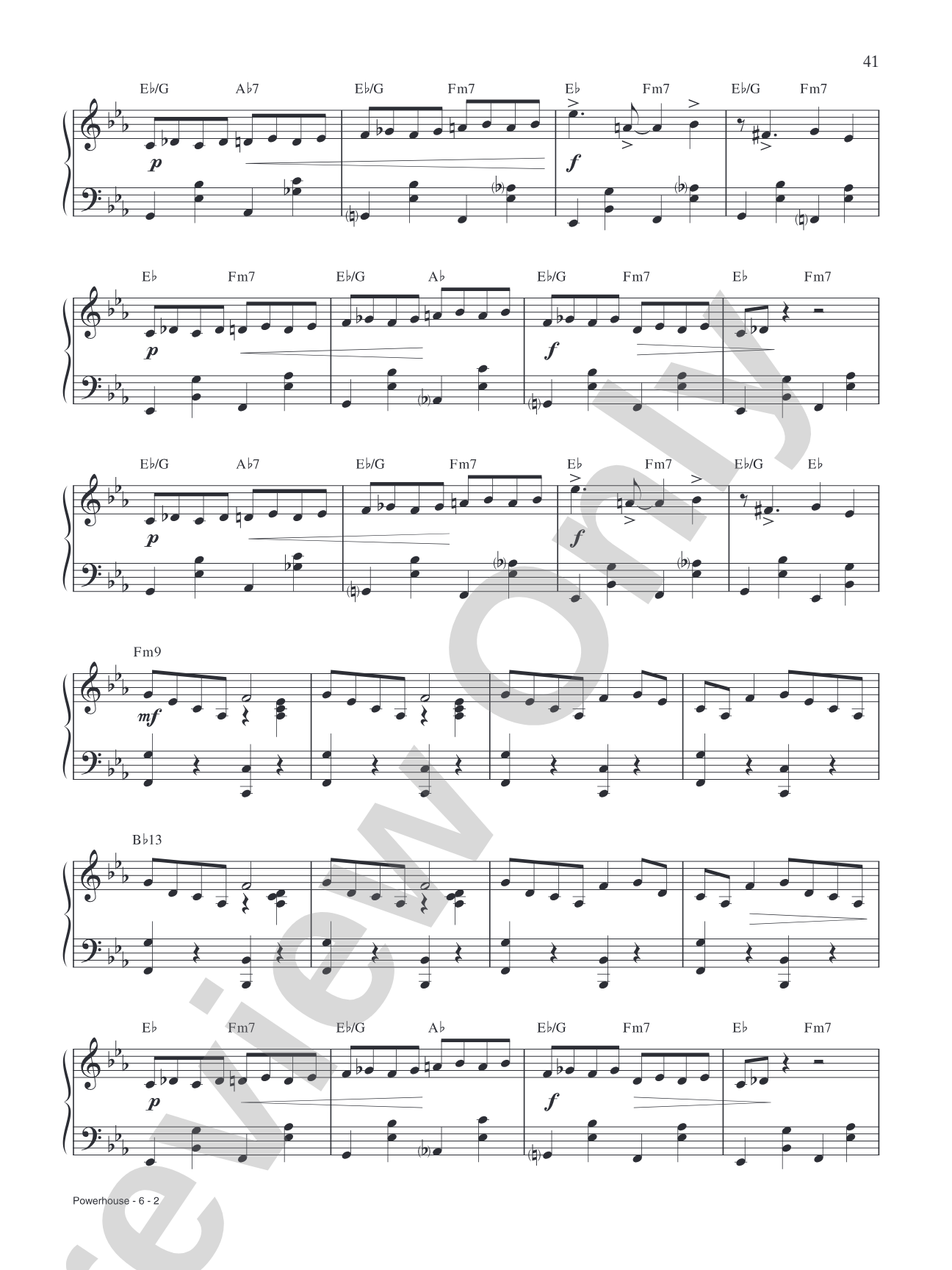

Powerhouse (from "Merrie Melodies & Looney Tunes"): Piano
Merrie Melodies and Themes from Warner Brothers Cartoons
Item: 00-XS-0000180
$5.99
One moment…
Related Items
I'm Forever Blowing Bubbles (from "Merrie Melodies & Looney Tunes"): Piano/Vocal/Chords |
$4.99
|
View | |
The Gold Digger's Song (from "Merrie Melodies & Looney Tunes"): Piano/Vocal/Chords |
$4.99
|
View | |
You Must Have Been a Beautiful Baby (from "Merrie Melodies & Looney Tunes"): Piano/Vocal/Chords |
$4.99
|
View | |
Hello! Ma Baby (from "Merrie Melodies & Looney Tunes"): Piano/Vocal/Chords |
$4.99
|
View | |
A Cup of Coffee, a Sandwich, and You (from "Merrie Melodies & Looney Tunes"): Piano/Vocal/Chords |
$4.99
|
View | |
Merrily We Roll Along (from "Merrie Melodies & Looney Tunes"): Piano/Vocal/Chords |
$4.99
|
View | |
Hooray for Hollywood (from "Merrie Melodies & Looney Tunes"): Piano/Vocal/Chords |
$4.99
|
View | |
The Lady In Red (from "Merrie Melodies & Looney Tunes"): Piano/Vocal/Chords |
$5.99
|
View | |
I Love to Sing-A (from "Merrie Melodies & Looney Tunes"): Piano/Vocal/Chords |
$5.99
|
View | |
What's Up, Doc? (from "The Bugs Bunny Show"): Piano/Vocal/Chords |
$4.99
|
View | |
I’m Just Wild About Harry (from "Merrie Melodies & Looney Tunes"): Piano/Vocal/Chords |
$4.99
|
View | |
A Rainy Night in Rio (from "Merrie Melodies & Looney Tunes"): Piano/Vocal/Chords |
$4.99
|
View | |
Road Runner (from "Merrie Melodies & Looney Tunes"): Piano/Vocal/Chords |
$4.99
|
View | |
Ain't She Sweet (from "Merrie Melodies & Looney Tunes"): Piano/Vocal/Chords |
$4.99
|
View | |
The Michigan Rag (from "Merrie Melodies & Looney Tunes"): Piano/Vocal/Chords |
$4.99
|
View | |
The Merry-Go-Round Broke Down (from "Merrie Melodies & Looney Tunes"): Piano/Vocal/Chords |
$4.99
|
View | |
The Looney Tunes Songbook: Piano/Vocal/Guitar Book |
$19.99
|
View |
Description
The Looney Tunes Songbook features music used by Carl Stalling in the scores for Warner Brothers' beloved cartoons from the 1930s through the early '60s. Included are the familiar theme songs, tunes associated with various characters, Warner Brothers pop songs used as background music, and the wacky melodies of Raymond Scott. Titles: Merrily We Roll Along * The Merry-Go-Round Broke Down * Road Runner * This Is It! * What's Up, Doc? * Dinner Music for a Pack of Hungry Cannibals * In an 18th Century Drawing Room * Powerhouse * Reckless Night on Board an Ocean Liner * The Toy Trumpet * Ain't She Sweet * A Cup of Coffee, a Sandwich, and You * The Gold Digger's Song (We're in the Money) * Hooray for Hollywood * I Love to Sing-a * I'm Forever Blowing Bubbles * The Lady in Red * A Rainy Night in Rio * You Must Have Been a Beautiful Baby * Hello, Ma Baby * I'm Just Wild About Harry * The Michigan Rag.


Powerhouse (from "Merrie Melodies & Looney Tunes"): Piano isn't in MakeMusic Cloud just yet...but it could be. Let us know you'd like to see it, and you'll help shape what comes next. In the meantime, start a free trial and dive into thousands of interactive titles your students can play along with today.
Request This Title
Tell us you want it.
Start Your Free Trial
Explore everything that's ready to play right now.
Sample Audio
No sample audio found.
Sample Video
No sample videos found.
Additional Details
Publisher:
Alfred Music
Page Count:
108
SKU:
00-XS-0000180
More about this title
About the Composer: Raymond Scott
Raymond Scott (1908-1994) was an American composer and bandleader whose innovative, rapid-fire compositions became synonymous with Warner Brothers cartoon music. Working closely with director Carl Stalling, Scott created some of the most recognizable underscore in animation history, crafting pieces that moved at breakneck speed and matched every visual gag with percussive wit and harmonic surprise.
Scott's compositions for cartoons broke conventional rules. His melodies ricocheted across registers, his rhythms switched on a dime, and his orchestrations made mundane situations (a character walking, a door opening) into comedic events. Though Scott composed extensively for other contexts (including early electronic music), his cartoon work remains his most enduring legacy in music education, where his pieces continue to teach musicians how to handle rapid changes, character portrayal, and rhythmic precision.
Why we love this
This collection captures the full energy of cartoon-scored virtuosity in accessible piano arrangements. Scott's pieces demand attention to detail and rhythmic clarity while remaining genuinely fun to play. For pianists tackling technique, character, and ensemble awareness all at once, these arrangements are gold.
What to expect
Zany, propulsive, and deceptively clever. Powerhouse and its companion pieces crackle with restless energy, shifting moods and textures at a moment's notice. The music feels like watching something slightly out of control, but in exactly the right way.
Who it's for
Pianists with solid technique who thrive on fast, rhythmically intricate music and enjoy performing character-driven pieces. These arrangements work equally well for intermediate-to-advanced students preparing recital material and for music educators building their comic repertoire in ensemble or solo contexts.
How to get the most out of it
- Treat each piece as a character study. Powerhouse isn't just fast notes; it's a personality in motion. Shape your phrasing to match the comedic timing of the original cartoon.
- Lock in the rhythmic displacements early. Scott's syncopations and unexpected accent patterns require deliberate practice at slow tempo so the quirks become second nature, not obstacles.
- Use the key changes and tempo shifts as cues for dramatic resets. When the music pivots, let it feel intentional and clear, not jarring.
How to use it
Include Powerhouse or another Scott piece on a recital to showcase technical flash and rhythmic maturity. These arrangements also work beautifully in pop music or film music units, where they demonstrate how composers use music to amplify comedy and character action.
Skills your students will build
- Reading complex syncopation and unusual rhythmic groupings
- Executing rapid tempo changes and meter shifts cleanly
- Developing precision in fast passagework and articulation
- Creating character and narrative through phrasing and dynamics
- Coordinating melodic and harmonic independence across both hands