
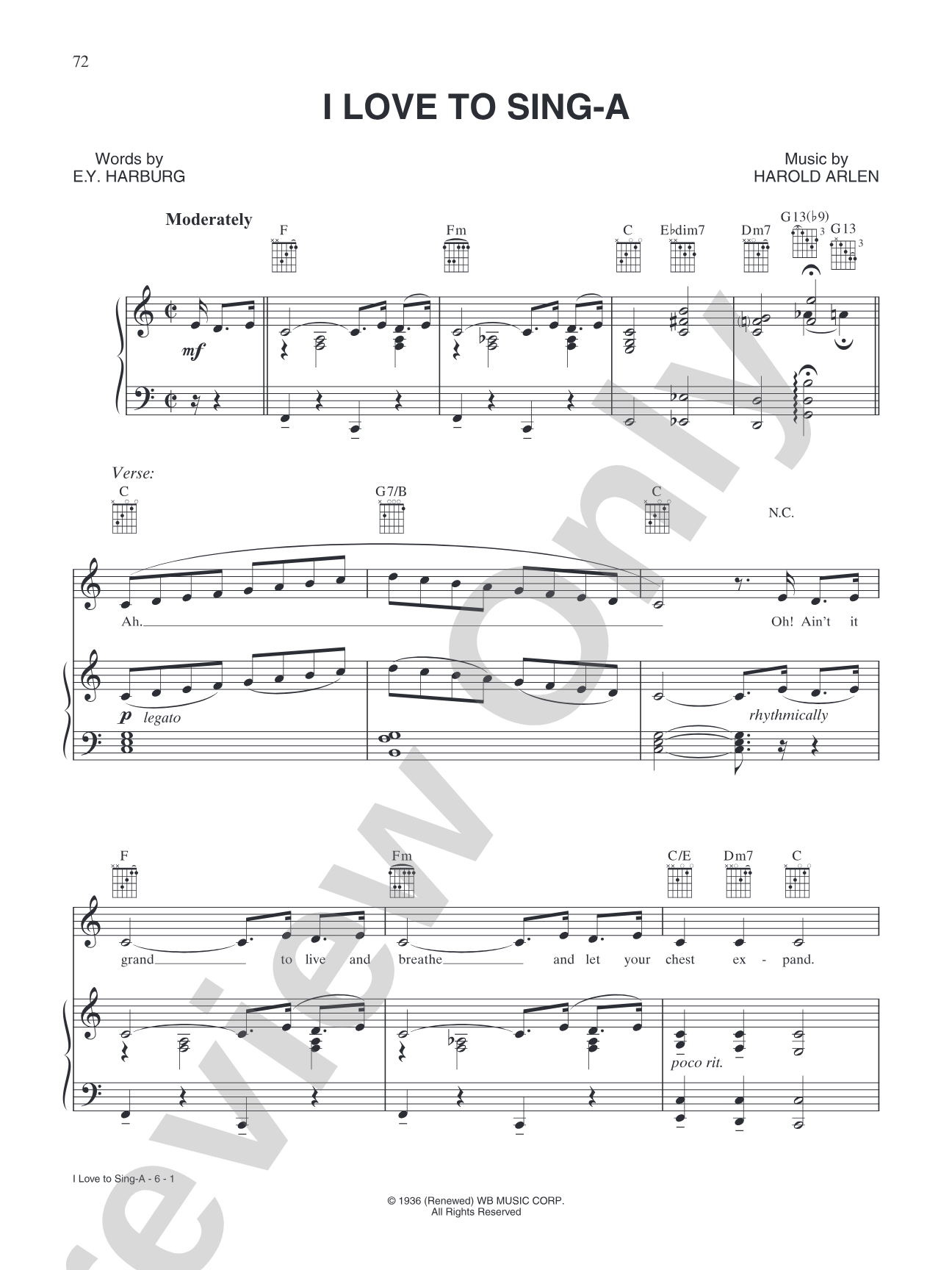
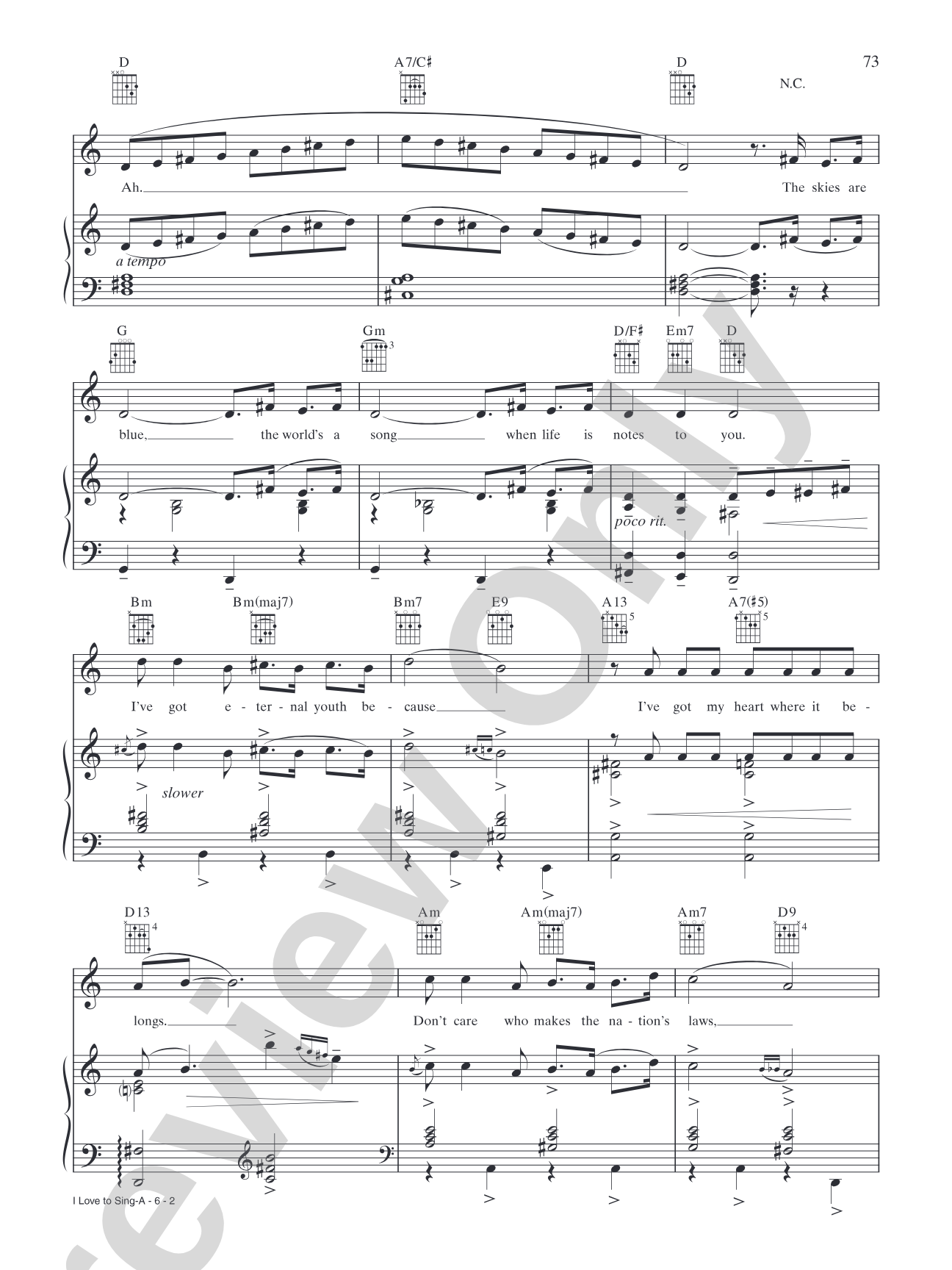

I Love to Sing-A (from "Merrie Melodies & Looney Tunes"): Piano/Vocal/Chords
Merrie Melodies and Themes from Warner Brothers Cartoons
Item: 00-XS-0000174
$5.99
One moment…
Related Items
I'm Forever Blowing Bubbles (from "Merrie Melodies & Looney Tunes"): Piano/Vocal/Chords |
$4.99
|
View | |
The Gold Digger's Song (from "Merrie Melodies & Looney Tunes"): Piano/Vocal/Chords |
$4.99
|
View | |
You Must Have Been a Beautiful Baby (from "Merrie Melodies & Looney Tunes"): Piano/Vocal/Chords |
$4.99
|
View | |
Hello! Ma Baby (from "Merrie Melodies & Looney Tunes"): Piano/Vocal/Chords |
$4.99
|
View | |
A Cup of Coffee, a Sandwich, and You (from "Merrie Melodies & Looney Tunes"): Piano/Vocal/Chords |
$4.99
|
View | |
Merrily We Roll Along (from "Merrie Melodies & Looney Tunes"): Piano/Vocal/Chords |
$4.99
|
View | |
Hooray for Hollywood (from "Merrie Melodies & Looney Tunes"): Piano/Vocal/Chords |
$4.99
|
View | |
The Lady In Red (from "Merrie Melodies & Looney Tunes"): Piano/Vocal/Chords |
$5.99
|
View | |
What's Up, Doc? (from "The Bugs Bunny Show"): Piano/Vocal/Chords |
$4.99
|
View | |
I’m Just Wild About Harry (from "Merrie Melodies & Looney Tunes"): Piano/Vocal/Chords |
$4.99
|
View | |
A Rainy Night in Rio (from "Merrie Melodies & Looney Tunes"): Piano/Vocal/Chords |
$4.99
|
View | |
Road Runner (from "Merrie Melodies & Looney Tunes"): Piano/Vocal/Chords |
$4.99
|
View | |
Ain't She Sweet (from "Merrie Melodies & Looney Tunes"): Piano/Vocal/Chords |
$4.99
|
View | |
Powerhouse (from "Merrie Melodies & Looney Tunes"): Piano |
$5.99
|
View | |
The Michigan Rag (from "Merrie Melodies & Looney Tunes"): Piano/Vocal/Chords |
$4.99
|
View | |
The Merry-Go-Round Broke Down (from "Merrie Melodies & Looney Tunes"): Piano/Vocal/Chords |
$4.99
|
View | |
The Looney Tunes Songbook: Piano/Vocal/Guitar Book |
$19.99
|
View |
Description
The Looney Tunes Songbook features music used by Carl Stalling in the scores for Warner Brothers' beloved cartoons from the 1930s through the early '60s. Included are the familiar theme songs, tunes associated with various characters, Warner Brothers pop songs used as background music, and the wacky melodies of Raymond Scott. Titles: Merrily We Roll Along * The Merry-Go-Round Broke Down * Road Runner * This Is It! * What's Up, Doc? * Dinner Music for a Pack of Hungry Cannibals * In an 18th Century Drawing Room * Powerhouse * Reckless Night on Board an Ocean Liner * The Toy Trumpet * Ain't She Sweet * A Cup of Coffee, a Sandwich, and You * The Gold Digger's Song (We're in the Money) * Hooray for Hollywood * I Love to Sing-a * I'm Forever Blowing Bubbles * The Lady in Red * A Rainy Night in Rio * You Must Have Been a Beautiful Baby * Hello, Ma Baby * I'm Just Wild About Harry * The Michigan Rag.


I Love to Sing-A (from "Merrie Melodies & Looney Tunes"): Piano/Vocal/Chords isn't in MakeMusic Cloud just yet...but it could be. Let us know you'd like to see it, and you'll help shape what comes next. In the meantime, start a free trial and dive into thousands of interactive titles your students can play along with today.
Request This Title
Tell us you want it.
Start Your Free Trial
Explore everything that's ready to play right now.
Sample Audio
No sample audio found.
Sample Video
No sample videos found.
Additional Details
Publisher:
Alfred Music
Page Count:
108
SKU:
00-XS-0000174
More about this title
About the Composer: Harold Arlen
Harold Arlen (1905-1986) composed some of the most recognizable melodies in American popular music, with a gift for writing singable, sophisticated lines that worked equally well in concert halls and on the silver screen. His collaboration with lyricist E.Y. Harburg on "Over the Rainbow" and his prolific output for Warner Brothers cartoons demonstrate his range: from sweeping standards to the tightly constructed, comedic underscore work that made Carl Stalling's cartoon scores legendary.
Arlen's approach to melody prioritized clarity and memorability without sacrificing harmonic interest. For music educators, his songbook catalogs a era when popular song craft was at its peak, offering students insight into how professional composers balanced accessibility with musical substance.
Why we love this
This collection captures the comedic and musical energy that defined Warner Brothers cartoons, offering singers and pianists a chance to explore character-driven songs that are genuinely fun to perform. The arrangements sit comfortably for mixed-voice ensembles, and the humor built into the melodies (think Road Runner's trademark melody or the absurdist charm of "Dinner Music for a Pack of Hungry Cannibals") makes these pieces appealing to younger performers who might otherwise find standard songbook fare dry.
What to expect
The music sparkles with mid-century charm and a wink at the listener. These are melodies engineered to stick in your head, paired with harmonies that feel fresh and unpredictable; the arrangements bounce between playfulness and earnest musicality, capturing the spirit of cartoons that entertained generations.
Who it's for
Singers exploring the Great American Songbook who want material that's both musically legitimate and genuinely entertaining; pianists seeking accessible yet sophisticated accompaniments; and choir directors, private voice teachers, and music theater instructors looking for character songs that engage younger or less experienced performers without talking down to them.
How to get the most out of it
- Lean into the character and comedic intent of each song. These melodies were written to accompany visual gags, so find the theatrical moment in the music rather than treating the arrangements as purely lyrical.
- Pay attention to rhythmic precision in pieces like "Powerhouse" and "Reckless Night on Board an Ocean Liner," where the energy comes from tight ensemble timing rather than expressive rubato.
- Use the piano part as a storytelling tool. Many of these arrangements include descriptive accompaniment patterns that establish mood and support the vocal line's personality.
- Balance the vocal line with clear diction so the lyrics land with the same comedic timing they had on screen.
How to use it
These songs work beautifully in a music theater or cabaret-style concert where the focus is storytelling and character work rather than operatic grandeur. They also fit naturally alongside other American standards in a pop or jazz-inflected concert, and the sheer variety means you could program anything from a whimsical opening number to a sentimental ballad depending on the piece you choose.
Skills your students will build
- Rhythmic precision in syncopated and jazz-influenced figures
- Character interpretation through melody and phrasing
- Sight-reading mixed meter and chromatic harmonic changes
- Piano-vocal coordination and ensemble balance
- Stylistic flexibility between comedic delivery and lyrical singing