
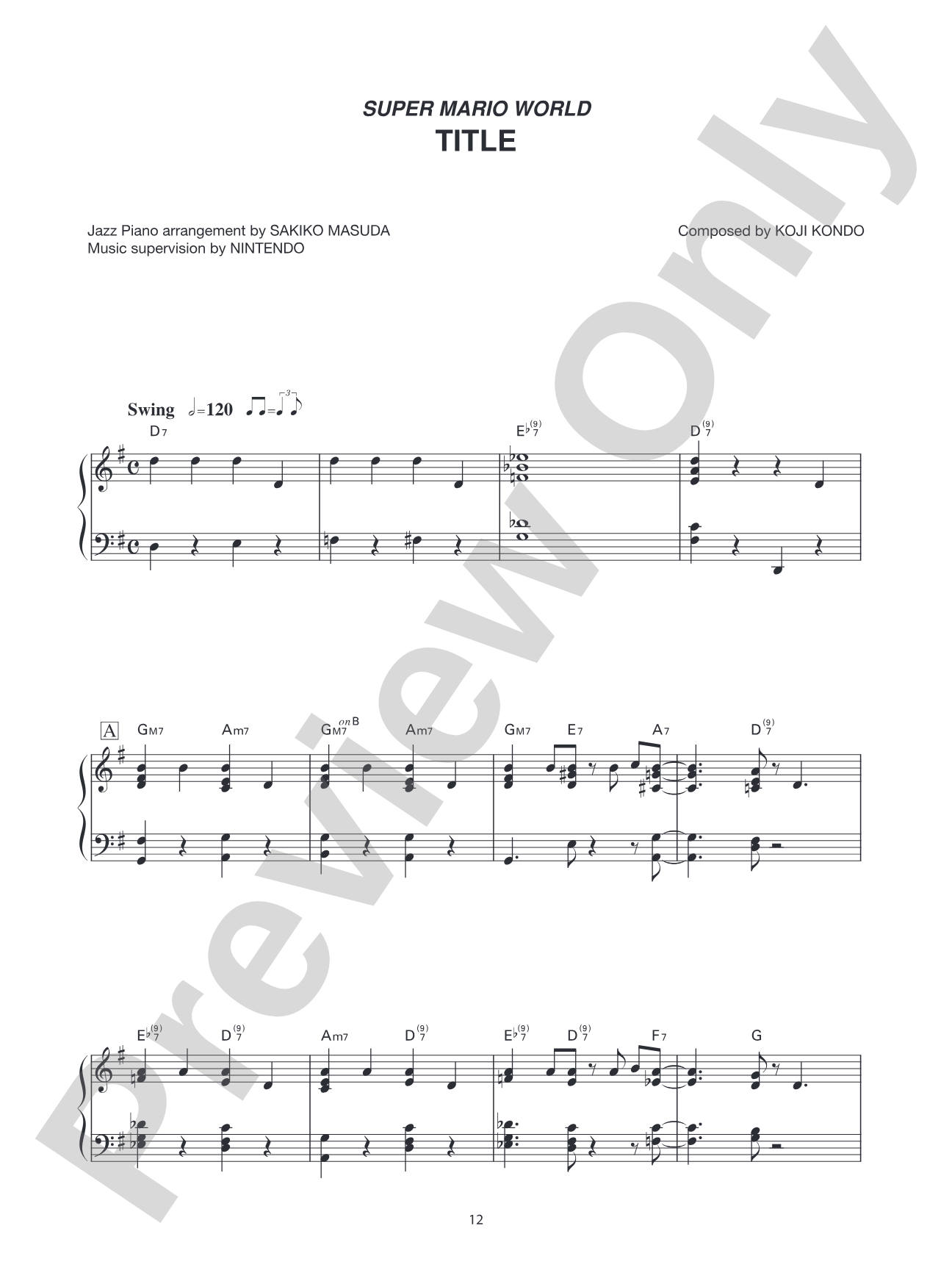

Super Mario World Title: Piano
15 Intermediate--Advanced Piano Solos
By Koji Kondo, Asuka Ohta, Soyo Oka, Ryo Nagamatsu, and Kenta Nagata
Level: Intermediate / Advanced
Item: 00-PS-0015325
$4.99
One moment…
Related Items
Super Mario Bros. Ground Theme: Piano |
$4.99
|
View | |
Super Mario Bros. Underground Theme: Piano |
$4.99
|
View | |
Super Mario Bros. Underwater Theme: Piano |
$4.99
|
View | |
Super Mario Bros. The Lost Levels Ending: Piano |
$4.99
|
View | |
Super Mario Bros. 3 Ground Theme: Piano |
$4.99
|
View | |
Super Mario Kart Mario Circuit: Piano |
$4.99
|
View | |
Super Mareio World 2: Yoshi's Island Ground Theme: Piano |
$4.99
|
View | |
Super Mario 64 Main Theme: Piano |
$4.99
|
View | |
New Super Mario Bros. Battle Theme 2: Piano |
$4.99
|
View | |
Mario Kart World Rainbow Road: Piano |
$4.99
|
View | |
New Super Mario Bros. Wii Title: Piano |
$4.99
|
View | |
New Super Mario Bros. Wii Ground Theme: Piano |
$4.99
|
View | |
Super Mario World Athletic Theme: Piano |
$4.99
|
View | |
Super Mario Galaxy 2 Yoster: Piano |
$4.99
|
View | |
Super Mario™ Jazz Piano Arrangements: Piano Book |
$14.99
|
View |
Description
The globally beloved musical themes of Nintendo's Super Mario™ video games sound great when they're played on the piano, and these new jazzy renditions make them more fun than ever! Each arrangement in this collection was crafted under direct supervision by Nintendo and renowned video game composer Koji Kondo, so each theme retains its musical integrity---but with a unique and lighthearted twist that's guaranteed to entertain. Pianists will enjoy the challenge of these 15 intermediate to early advanced arrangements, and audiences of all ages will be impressed and delighted to hear them. Titles: Super Mario Bros.™ Ground Theme * Super Mario Bros.™ Underground Theme * Super Mario Bros.™ Underwater Theme * Super Mario Bros.™: The Lost Levels Ending * Super Mario Bros.™ 3 Ground Theme * Super Mario World™ Title * Super Mario World™ Athletic Theme * Super Mario Kart™ Mario Circuit * Super Mario World™ 2 Yoshi's Island Ground Theme * Super Mario 64™ Main Theme * New Super Mario Bros.™ Battle Theme 2 * Mario Kart™ Wii™ Rainbow Road * New Super Mario Bros.™ Wii™ Title * New Super Mario Bros.™ Wii™ Ground Theme * Super Mario Galaxy™ 2 Yoster.


Discover MakeMusic Cloud: thousands of interactive titles your students can play along with today.
Sample Audio
No sample audio found.
Sample Video
No sample videos found.
Additional Details
Publisher:
Alfred Music
Page Count:
36
SKU:
00-PS-0015325
More about this title
About the Composer: Koji Kondo
Koji Kondo is the legendary video game composer whose work has defined the musical identity of Nintendo for over four decades. Beginning with the original Donkey Kong arcade game in 1981, Kondo pioneered the art of writing memorable, sophisticated melodies within the technical constraints of early gaming hardware, establishing a compositional legacy that influenced generations of both game and film composers.
His work on the Super Mario franchise created some of the most recognizable musical themes in popular culture. Kondo's gift for writing catchy yet harmonically interesting material, combined with his understanding of how music serves gameplay, makes his compositions ideal for arrangement and reinterpretation across multiple musical styles and contexts.
Why we love this
These jazzy arrangements maintain the harmonic sophistication and melodic clarity that made these themes unforgettable in the first place, while adding contemporary harmonic movement and syncopation that challenges intermediate pianists without losing the playfulness audiences expect. The official Nintendo oversight ensures authenticity and quality, and the 15-piece collection offers enough variety to program mixed themes or create a complete recital around a single composer's voice. Pianists get to explore jazz voicings and comping patterns on material they actually care about.
What to expect
Playful and sophisticated at once. These arrangements sparkle with unexpected harmonic detours and rhythmic twists while keeping the melodies bright and instantly gratifying. The result feels like stepping into a concert hall version of the games themselves, where familiar musical moments have been polished, harmonically enriched, and given room to breathe without losing the energy that made them beloved.
Who it's for
Intermediate to early advanced pianists ready to tackle jazz harmony and syncopation on recognizable material. This collection works equally well for students building jazz vocabulary in a lesson setting, pianists preparing recital repertoire that connects with listeners, or performers looking for engaging music that bridges classical training and contemporary idioms.
How to get the most out of it
- Treat the syncopated passages as conversation rather than obstacle. Lock in the rhythmic feel by counting steady quarter notes underneath syncopated figures, particularly in the athletic and racing themes where the energy drives forward.
- Balance the melody against the harmonic movement underneath. These arrangements give the left hand substantial rhythmic and harmonic responsibility; resist the urge to play it as mere accompaniment and instead dialogue with the right hand.
- Lean into the lightness and humor. The jazz vocabulary here invites a touch of swing and flexibility; use rubato thoughtfully to shape phrases and emphasize the wit of unexpected harmonic turns.
- Pay attention to dynamic shape within individual phrases. These themes benefit from the kind of vocal phrasing that comes naturally to a singer; bring that sensibility to how you voice chords and shape the arrival points.
How to use it
Program selections as a thematic set in a student or faculty recital to create a cohesive block that engages audiences across age ranges and musical backgrounds. Individual themes work well as recital openers or as palette-cleansing lighter pieces between more substantial classical works. A teacher might assign single themes over several weeks to build jazz harmony skills before launching into more demanding jazz standards.
Skills your students will build
- Jazz voicings and seventh chord harmony
- Syncopated rhythms and swing feel
- Balancing melody and harmonic movement across both hands
- Dynamic phrasing and rubato in a popular music context
- Reading and interpreting jazz notation and comping symbols