
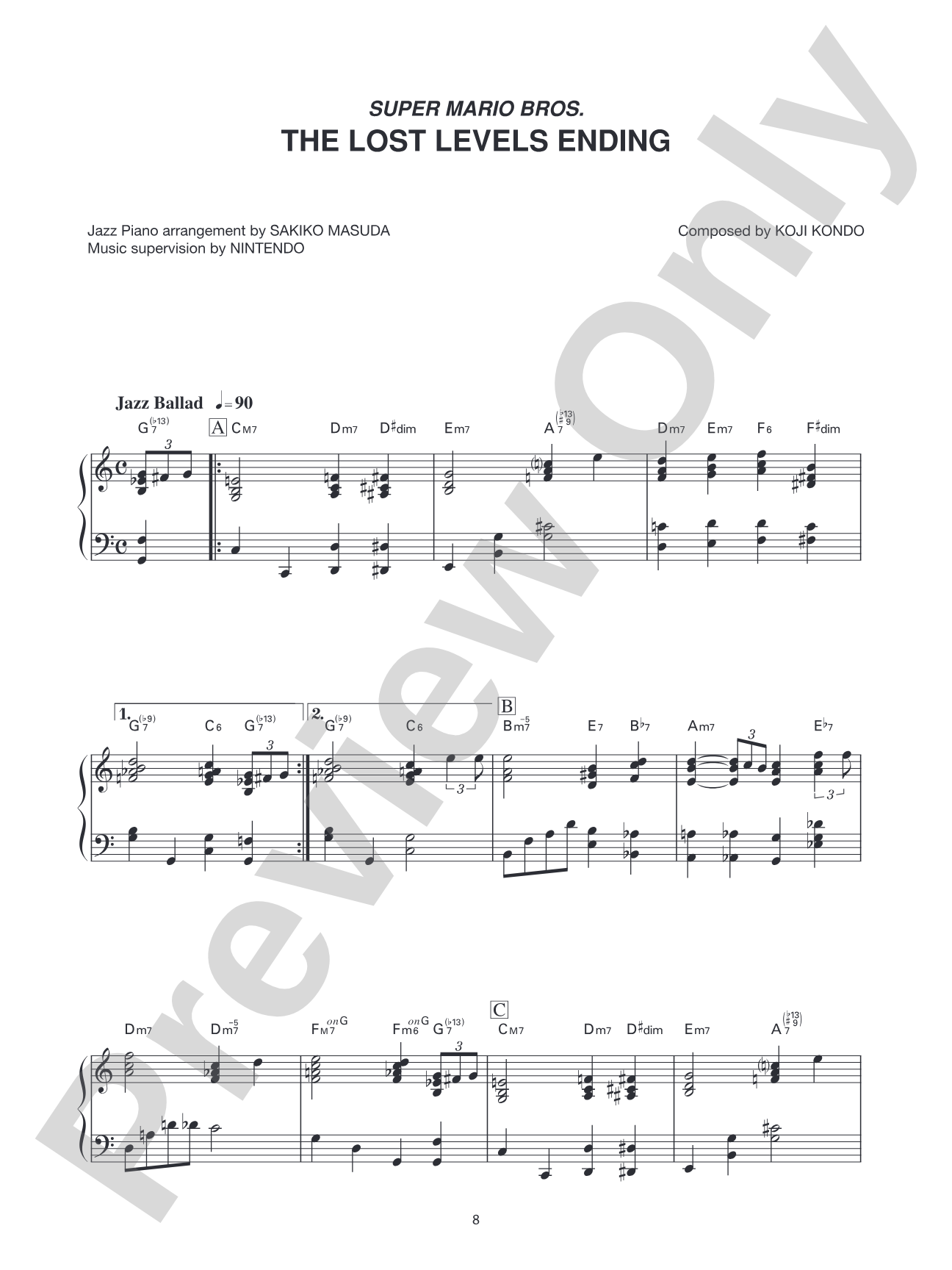

Super Mario Bros. The Lost Levels Ending: Piano
15 Intermediate--Advanced Piano Solos
By Koji Kondo, Asuka Ohta, Soyo Oka, Ryo Nagamatsu, and Kenta Nagata
Level: Intermediate / Advanced
Item: 00-PS-0015323
$4.99
One moment…
Related Items
Super Mario Bros. Ground Theme: Piano |
$4.99
|
View | |
Super Mario Bros. Underground Theme: Piano |
$4.99
|
View | |
Super Mario Bros. Underwater Theme: Piano |
$4.99
|
View | |
Super Mario Bros. 3 Ground Theme: Piano |
$4.99
|
View | |
Super Mario World Title: Piano |
$4.99
|
View | |
Super Mario Kart Mario Circuit: Piano |
$4.99
|
View | |
Super Mareio World 2: Yoshi's Island Ground Theme: Piano |
$4.99
|
View | |
Super Mario 64 Main Theme: Piano |
$4.99
|
View | |
New Super Mario Bros. Battle Theme 2: Piano |
$4.99
|
View | |
Mario Kart World Rainbow Road: Piano |
$4.99
|
View | |
New Super Mario Bros. Wii Title: Piano |
$4.99
|
View | |
New Super Mario Bros. Wii Ground Theme: Piano |
$4.99
|
View | |
Super Mario World Athletic Theme: Piano |
$4.99
|
View | |
Super Mario Galaxy 2 Yoster: Piano |
$4.99
|
View | |
Super Mario™ Jazz Piano Arrangements: Piano Book |
$14.99
|
View |
Description
The globally beloved musical themes of Nintendo's Super Mario™ video games sound great when they're played on the piano, and these new jazzy renditions make them more fun than ever! Each arrangement in this collection was crafted under direct supervision by Nintendo and renowned video game composer Koji Kondo, so each theme retains its musical integrity---but with a unique and lighthearted twist that's guaranteed to entertain. Pianists will enjoy the challenge of these 15 intermediate to early advanced arrangements, and audiences of all ages will be impressed and delighted to hear them. Titles: Super Mario Bros.™ Ground Theme * Super Mario Bros.™ Underground Theme * Super Mario Bros.™ Underwater Theme * Super Mario Bros.™: The Lost Levels Ending * Super Mario Bros.™ 3 Ground Theme * Super Mario World™ Title * Super Mario World™ Athletic Theme * Super Mario Kart™ Mario Circuit * Super Mario World™ 2 Yoshi's Island Ground Theme * Super Mario 64™ Main Theme * New Super Mario Bros.™ Battle Theme 2 * Mario Kart™ Wii™ Rainbow Road * New Super Mario Bros.™ Wii™ Title * New Super Mario Bros.™ Wii™ Ground Theme * Super Mario Galaxy™ 2 Yoster.


Discover MakeMusic Cloud: thousands of interactive titles your students can play along with today.
Sample Audio
No sample audio found.
Sample Video
No sample videos found.
Additional Details
Publisher:
Alfred Music
Page Count:
36
SKU:
00-PS-0015323
More about this title
About the Composer: Koji Kondo
Koji Kondo shaped the sound of video game music itself. As Nintendo's principal composer from the 1980s onward, he created instantly recognizable themes that have become part of global popular culture. His work demonstrates how effective melodic writing, harmonic sophistication, and rhythmic clarity can thrive within technical constraints, making him a figure of genuine compositional consequence in music education.
Why we love this
These jazzy renditions preserve Kondo's melodic genius while giving pianists genuine musical substance to work with. The arrangements balance accessibility with real rhythmic and harmonic complexity, making them rewarding for intermediate pianists who want to tackle something more sophisticated than standard classical repertoire without sacrificing musicality. Audiences respond immediately to these themes, which means every performance carries built-in engagement.
What to expect
Playful sophistication. The arrangements honor the iconic simplicity of Kondo's original melodies while layering in jazz harmonies, syncopation, and unexpected chromatic movement that keeps the ear engaged. It feels modern and a touch irreverent, yet always grounded in clear compositional craft.
Who it's for
Pianists at the intermediate to early advanced level who want to explore contemporary music and jazz voicings without abandoning melody-driven writing. This collection also speaks to students who connect with video game music culturally and want to take it seriously as material worth practicing.
How to get the most out of it
- Shape the melody with dynamic awareness. These arrangements lean into jazz voicings, so clarity of line matters more than uniform volume across the hand.
- Lock the rhythmic accompaniment patterns early in rehearsal. The jazz rhythms anchor the piece; solidify them before layering in melodic refinement.
- Lean into the stylistic contrast. Recognize where arrangements shift between the original video game sound and contemporary jazz idiom, and let those moments breathe naturally.
- Balance the recorded accompaniment thoughtfully if using one. These pieces work well with backing tracks, but your tempo and phrasing should lead; the accompaniment serves you.
How to use it
Feature individual pieces in student recitals where they'll land with audiences of mixed ages and backgrounds. The collection also works as part of a concert exploring the relationship between game music and jazz, or as supplementary repertoire for pianists looking to build comfort with jazz harmony and contemporary arranging styles.
Skills your students will build
- Reading jazz voicings and extended chord symbols
- Executing syncopated rhythmic patterns under a melody
- Interpreting articulation and stylistic markings in contemporary arrangements
- Balancing independence between hands across varying textures
- Sight-reading and adapting to non-traditional harmonic language