
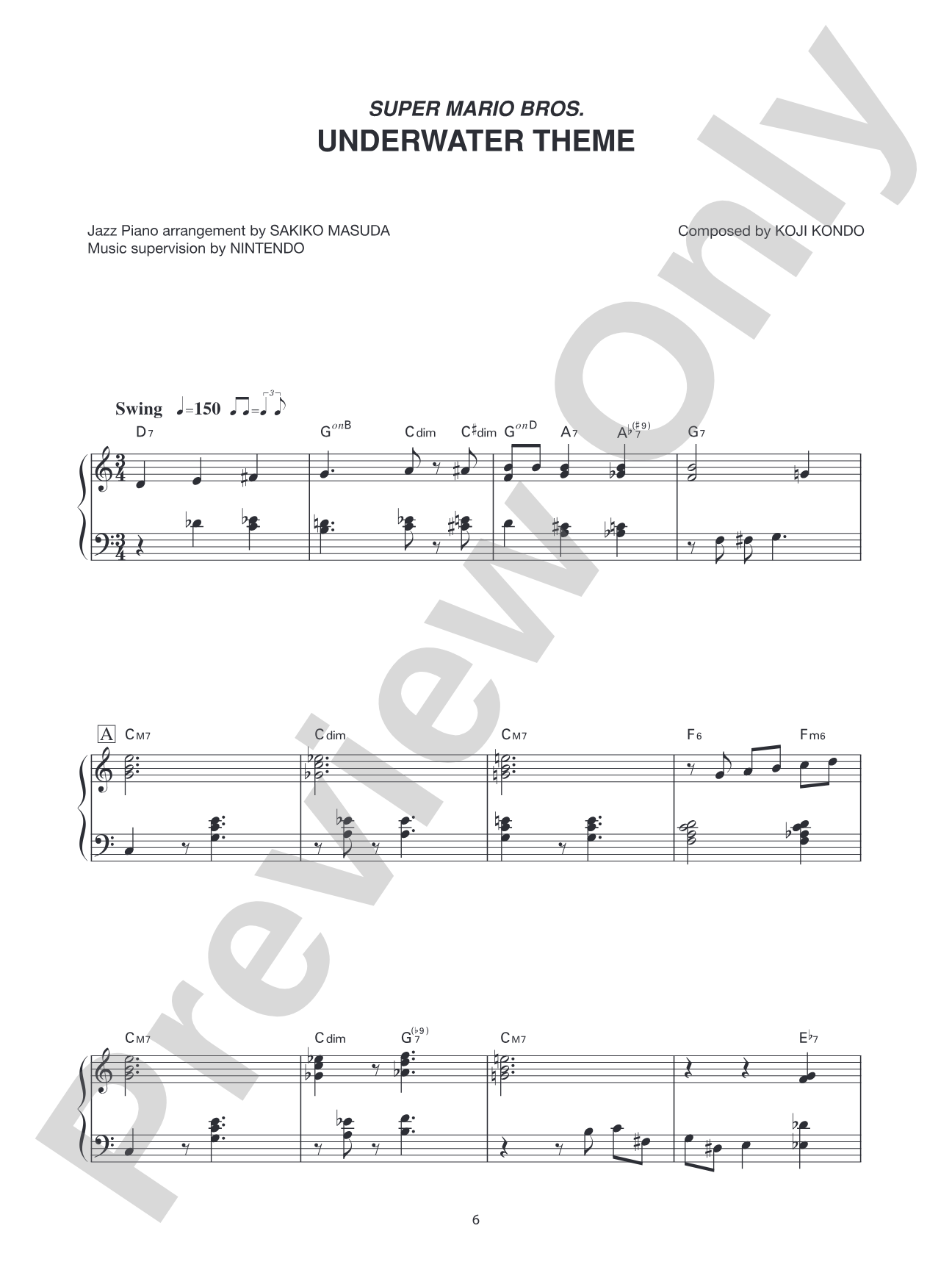

Super Mario Bros. Underwater Theme: Piano
15 Intermediate--Advanced Piano Solos
By Koji Kondo, Asuka Ohta, Soyo Oka, Ryo Nagamatsu, and Kenta Nagata
Level: Intermediate / Advanced
Item: 00-PS-0015322
$4.99
One moment…
Related Items
Super Mario Bros. Ground Theme: Piano |
$4.99
|
View | |
Super Mario Bros. Underground Theme: Piano |
$4.99
|
View | |
Super Mario Bros. The Lost Levels Ending: Piano |
$4.99
|
View | |
Super Mario Bros. 3 Ground Theme: Piano |
$4.99
|
View | |
Super Mario World Title: Piano |
$4.99
|
View | |
Super Mario Kart Mario Circuit: Piano |
$4.99
|
View | |
Super Mareio World 2: Yoshi's Island Ground Theme: Piano |
$4.99
|
View | |
Super Mario 64 Main Theme: Piano |
$4.99
|
View | |
New Super Mario Bros. Battle Theme 2: Piano |
$4.99
|
View | |
Mario Kart World Rainbow Road: Piano |
$4.99
|
View | |
New Super Mario Bros. Wii Title: Piano |
$4.99
|
View | |
New Super Mario Bros. Wii Ground Theme: Piano |
$4.99
|
View | |
Super Mario World Athletic Theme: Piano |
$4.99
|
View | |
Super Mario Galaxy 2 Yoster: Piano |
$4.99
|
View | |
Super Mario™ Jazz Piano Arrangements: Piano Book |
$14.99
|
View |
Description
The globally beloved musical themes of Nintendo's Super Mario™ video games sound great when they're played on the piano, and these new jazzy renditions make them more fun than ever! Each arrangement in this collection was crafted under direct supervision by Nintendo and renowned video game composer Koji Kondo, so each theme retains its musical integrity---but with a unique and lighthearted twist that's guaranteed to entertain. Pianists will enjoy the challenge of these 15 intermediate to early advanced arrangements, and audiences of all ages will be impressed and delighted to hear them. Titles: Super Mario Bros.™ Ground Theme * Super Mario Bros.™ Underground Theme * Super Mario Bros.™ Underwater Theme * Super Mario Bros.™: The Lost Levels Ending * Super Mario Bros.™ 3 Ground Theme * Super Mario World™ Title * Super Mario World™ Athletic Theme * Super Mario Kart™ Mario Circuit * Super Mario World™ 2 Yoshi's Island Ground Theme * Super Mario 64™ Main Theme * New Super Mario Bros.™ Battle Theme 2 * Mario Kart™ Wii™ Rainbow Road * New Super Mario Bros.™ Wii™ Title * New Super Mario Bros.™ Wii™ Ground Theme * Super Mario Galaxy™ 2 Yoster.


Discover MakeMusic Cloud: thousands of interactive titles your students can play along with today.
Sample Audio
No sample audio found.
Sample Video
No sample videos found.
Additional Details
Publisher:
Alfred Music
Page Count:
36
SKU:
00-PS-0015322
More about this title
About the Composer: Koji Kondo
Koji Kondo revolutionized video game music by treating it as serious compositional work deserving orchestral sophistication and harmonic depth. His themes for the Super Mario series became the soundtrack to childhoods worldwide, yet each one was crafted with genuine melodic architecture and motivic development that rewards repeated listening and musical analysis.
As the principal composer for Nintendo since the 1980s, Kondo established the template for how video game music could drive narrative, establish character, and create instant emotional connection without dialogue or cinematic support. His melodies are deceptively simple on the surface but architecturally sound underneath, making them ideal subjects for reharmonization and stylistic reinterpretation by other arrangers.
Why we love this
These arrangements preserve everything that made Kondo's original themes iconic while adding harmonic sophistication and rhythmic swing that appeals directly to intermediate pianists seeking material with real melodic substance. The supervision by Kondo himself and the consistent arranging voice of Sakiko Masuda mean every piece feels intentional rather than novelty, so students engage with genuine musical architecture instead of a gimmick.
What to expect
Familiar melodies arrive wrapped in walking bass lines, altered seventh chords, and swing rhythms that transform them into something both recognizable and fresh. The collection swings between playful melodic moments and moments of genuine harmonic sophistication, maintaining Kondo's gift for earworm simplicity while adding layers that reward closer listening.
Who it's for
Intermediate to early advanced pianists who love both video game culture and jazz harmony will find 36 pages of material that feels contemporary and fun without sacrificing musical substance. These arrangements also work well for students preparing repertoire for high school or early college recitals where programming outside classical tradition reads as confident rather than casual.
How to get the most out of it
- Balance the melody clearly against jazz harmonies and accompaniment figures; audiences know these themes intimately, so clarity matters more than blending.
- Commit fully to the swing rhythm and articulation in the jazzy sections rather than hedging between straight and swung eighths; the chart's personality depends on rhythmic confidence.
- Study the harmonic reharmonizations before you play through the piece to understand where Masuda has shifted function or added chromatic movement; this awareness shapes phrasing.
- Allow tempo flexibility in transitions and cadences to highlight the arranging choices, particularly when the theme modulates or returns in a new harmonic context.
How to use it
Feature one or two of these arrangements as crowd-pleasing anchors in a recital program where they can balance heavier classical repertoire or serve as accessible entry points for audiences less familiar with contemporary classical music. The collection's variety also makes it ideal for a "themed" recital exploring video game music as legitimate source material, or for a student seeking to develop jazz vocabulary without abandoning the melodic core that drew them to piano.
Skills your students will build
- Reading and executing jazz rhythm and swing articulation
- Understanding harmonic reharmonization and chord substitution
- Voicing left-hand jazz accompaniment patterns (walking bass, comping)
- Balancing melody prominence against complex harmonic backgrounds
- Interpreting dynamic and expressive markings in unfamiliar genre contexts
- Managing hand independence when melody and accompaniment use different rhythmic frameworks