
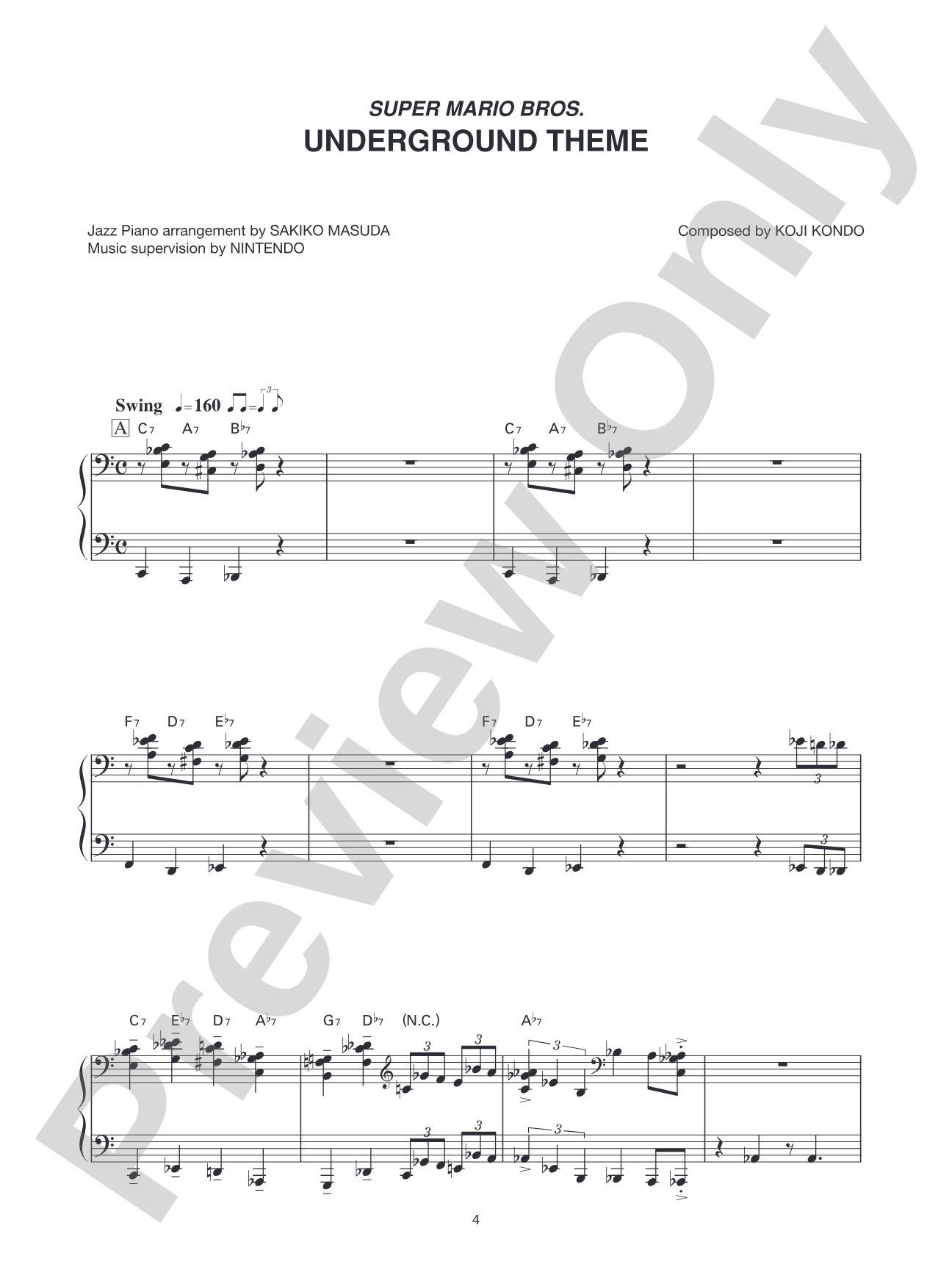

Super Mario Bros. Underground Theme: Piano
15 Intermediate--Advanced Piano Solos
By Koji Kondo, Asuka Ohta, Soyo Oka, Ryo Nagamatsu, and Kenta Nagata
Level: Intermediate / Advanced
Item: 00-PS-0015321
$4.99
One moment…
Related Items
Super Mario Bros. Ground Theme: Piano |
$4.99
|
View | |
Super Mario Bros. Underwater Theme: Piano |
$4.99
|
View | |
Super Mario Bros. The Lost Levels Ending: Piano |
$4.99
|
View | |
Super Mario Bros. 3 Ground Theme: Piano |
$4.99
|
View | |
Super Mario World Title: Piano |
$4.99
|
View | |
Super Mario Kart Mario Circuit: Piano |
$4.99
|
View | |
Super Mareio World 2: Yoshi's Island Ground Theme: Piano |
$4.99
|
View | |
Super Mario 64 Main Theme: Piano |
$4.99
|
View | |
New Super Mario Bros. Battle Theme 2: Piano |
$4.99
|
View | |
Mario Kart World Rainbow Road: Piano |
$4.99
|
View | |
New Super Mario Bros. Wii Title: Piano |
$4.99
|
View | |
New Super Mario Bros. Wii Ground Theme: Piano |
$4.99
|
View | |
Super Mario World Athletic Theme: Piano |
$4.99
|
View | |
Super Mario Galaxy 2 Yoster: Piano |
$4.99
|
View | |
Super Mario™ Jazz Piano Arrangements: Piano Book |
$14.99
|
View |
Description
The globally beloved musical themes of Nintendo's Super Mario™ video games sound great when they're played on the piano, and these new jazzy renditions make them more fun than ever! Each arrangement in this collection was crafted under direct supervision by Nintendo and renowned video game composer Koji Kondo, so each theme retains its musical integrity---but with a unique and lighthearted twist that's guaranteed to entertain. Pianists will enjoy the challenge of these 15 intermediate to early advanced arrangements, and audiences of all ages will be impressed and delighted to hear them. Titles: Super Mario Bros.™ Ground Theme * Super Mario Bros.™ Underground Theme * Super Mario Bros.™ Underwater Theme * Super Mario Bros.™: The Lost Levels Ending * Super Mario Bros.™ 3 Ground Theme * Super Mario World™ Title * Super Mario World™ Athletic Theme * Super Mario Kart™ Mario Circuit * Super Mario World™ 2 Yoshi's Island Ground Theme * Super Mario 64™ Main Theme * New Super Mario Bros.™ Battle Theme 2 * Mario Kart™ Wii™ Rainbow Road * New Super Mario Bros.™ Wii™ Title * New Super Mario Bros.™ Wii™ Ground Theme * Super Mario Galaxy™ 2 Yoster.


Discover MakeMusic Cloud: thousands of interactive titles your students can play along with today.
Sample Audio
No sample audio found.
Sample Video
No sample videos found.
Additional Details
Publisher:
Alfred Music
Page Count:
36
SKU:
00-PS-0015321
More about this title
About the Composer: Koji Kondo
Koji Kondo transformed video game music from functional background sound into a recognized musical art form. His work on the Super Mario series, The Legend of Zelda, and Donkey Kong Country defined an entire generation's musical memory, and his melodies have proven durable enough to sustain countless arrangements and reinterpretations across decades.
Kondo's compositional approach combines accessibility with harmonic sophistication. He understood that game music had to be memorable on first hearing while remaining engaging through repetition, a constraint that forced genuine compositional discipline. His influence on contemporary game composers and film composers alike remains profound.
Why we love this
These arrangements capture something rare: they honor the original melodies while transforming them completely. The jazz treatment adds harmonic color and rhythmic sophistication without losing the immediate recognizability that makes these themes iconic. Your students will play melodies they and their audiences already know and love, but they'll discover jazz voicings, syncopation, and interpretive freedom within them.
What to expect
Playful and sophisticated at once. These arrangements maintain the lightness and energy of the original themes while layering in jazz vocabulary that feels natural, not forced. You'll hear echoes of the 8-bit originals in the melodic shapes, but the harmonic progressions and rhythmic treatments open up space for interpretation and personality.
Who it's for
Pianists working at the intermediate to early advanced level who want to engage with repertoire that feels contemporary and personally meaningful. This collection appeals equally to students who grew up with these games and those discovering the melodies for the first time, making it ideal for recitals, casual performances, or simply for the joy of playing familiar music in a new idiom.
How to get the most out of it
- Maintain the character of each theme even as you navigate the jazz harmonies. The original melody should always sing through the arrangement, not disappear into accompaniment figures.
- Use rubato thoughtfully in the slower passages. These arrangements invite subtle tempo flexibility that can deepen the lyrical moments, but consistency matters in the uptempo sections.
- Pay attention to the comping patterns and rhythmic layers beneath the melody line. Jazz arrangements succeed when every voice contributes to the harmonic and rhythmic texture, not just the top note.
How to use it
Program individual pieces on student or faculty recitals where you want a bridge between classical and popular culture. The collection works beautifully as a complete set for a thematic recital focused on video game music or contemporary arrangements. Alternatively, select pieces that match your student's advancing technical level and use them as rewards for completing more traditional repertoire studies.
Skills your students will build
- Jazz voicings and harmonic substitution
- Syncopated rhythm patterns and jazz articulation
- Pedal management in arrangement textures
- Reading and interpreting lead sheets and jazz notation
- Balancing melody with comping accompaniment
- Stylistic flexibility and arrangement-specific interpretation