
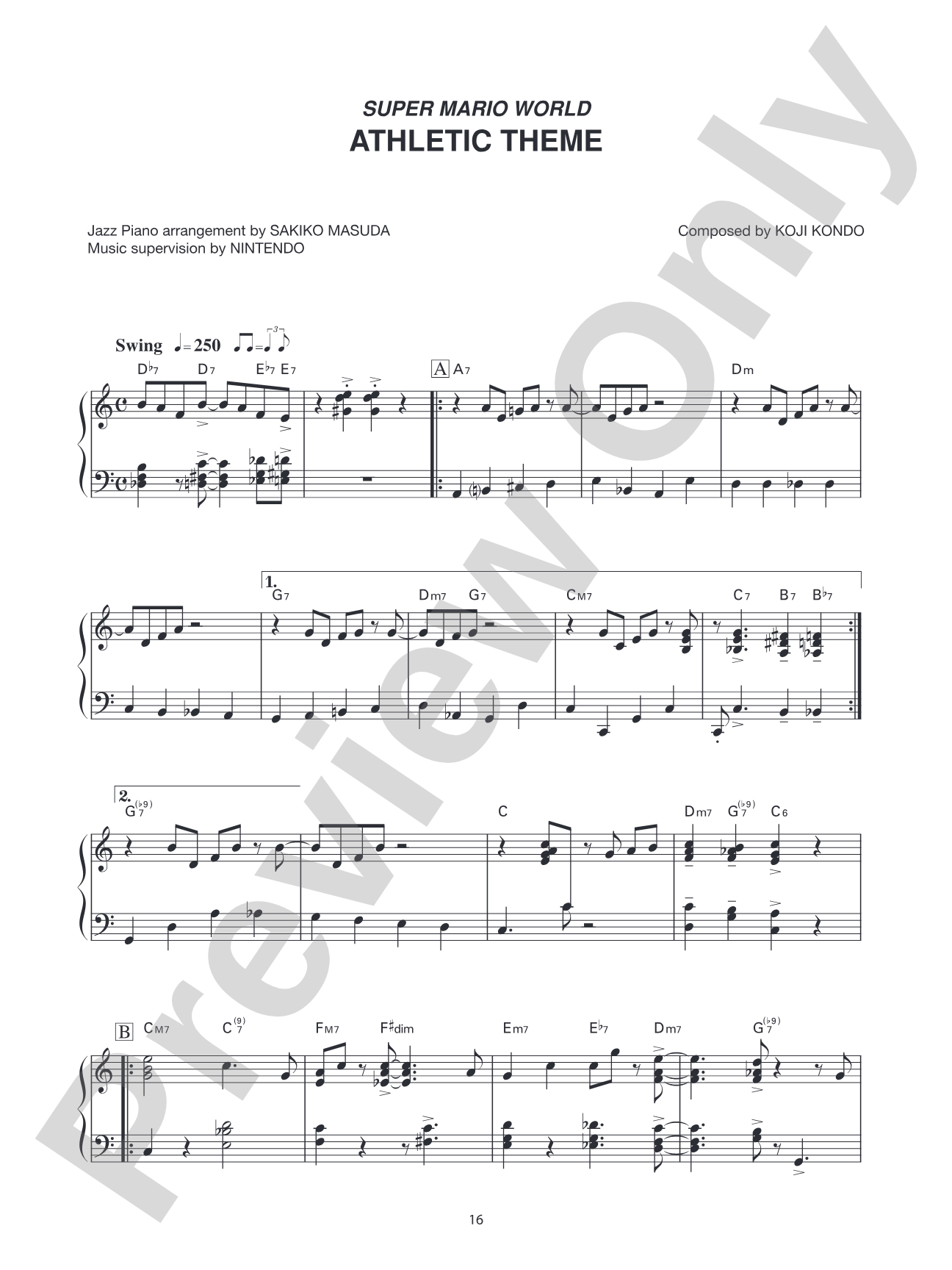

Super Mario World Athletic Theme: Piano
15 Intermediate--Advanced Piano Solos
By Koji Kondo, Asuka Ohta, Soyo Oka, Ryo Nagamatsu, and Kenta Nagata
Level: Intermediate / Advanced
Item: 00-PS-0015333
$4.99
One moment…
Related Items
Super Mario Bros. Ground Theme: Piano |
$4.99
|
View | |
Super Mario Bros. Underground Theme: Piano |
$4.99
|
View | |
Super Mario Bros. Underwater Theme: Piano |
$4.99
|
View | |
Super Mario Bros. The Lost Levels Ending: Piano |
$4.99
|
View | |
Super Mario Bros. 3 Ground Theme: Piano |
$4.99
|
View | |
Super Mario World Title: Piano |
$4.99
|
View | |
Super Mario Kart Mario Circuit: Piano |
$4.99
|
View | |
Super Mareio World 2: Yoshi's Island Ground Theme: Piano |
$4.99
|
View | |
Super Mario 64 Main Theme: Piano |
$4.99
|
View | |
New Super Mario Bros. Battle Theme 2: Piano |
$4.99
|
View | |
Mario Kart World Rainbow Road: Piano |
$4.99
|
View | |
New Super Mario Bros. Wii Title: Piano |
$4.99
|
View | |
New Super Mario Bros. Wii Ground Theme: Piano |
$4.99
|
View | |
Super Mario Galaxy 2 Yoster: Piano |
$4.99
|
View | |
Super Mario™ Jazz Piano Arrangements: Piano Book |
$14.99
|
View |
Description
The globally beloved musical themes of Nintendo's Super Mario™ video games sound great when they're played on the piano, and these new jazzy renditions make them more fun than ever! Each arrangement in this collection was crafted under direct supervision by Nintendo and renowned video game composer Koji Kondo, so each theme retains its musical integrity---but with a unique and lighthearted twist that's guaranteed to entertain. Pianists will enjoy the challenge of these 15 intermediate to early advanced arrangements, and audiences of all ages will be impressed and delighted to hear them. Titles: Super Mario Bros.™ Ground Theme * Super Mario Bros.™ Underground Theme * Super Mario Bros.™ Underwater Theme * Super Mario Bros.™: The Lost Levels Ending * Super Mario Bros.™ 3 Ground Theme * Super Mario World™ Title * Super Mario World™ Athletic Theme * Super Mario Kart™ Mario Circuit * Super Mario World™ 2 Yoshi's Island Ground Theme * Super Mario 64™ Main Theme * New Super Mario Bros.™ Battle Theme 2 * Mario Kart™ Wii™ Rainbow Road * New Super Mario Bros.™ Wii™ Title * New Super Mario Bros.™ Wii™ Ground Theme * Super Mario Galaxy™ 2 Yoster.


Discover MakeMusic Cloud: thousands of interactive titles your students can play along with today.
Sample Audio
No sample audio found.
Sample Video
No sample videos found.
Additional Details
Publisher:
Alfred Music
Page Count:
36
SKU:
00-PS-0015333
More about this title
About the Composer: Koji Kondo
Koji Kondo fundamentally shaped how the world hears video game music. As the principal composer for Nintendo, he created iconic themes that have become as recognizable as classical standards, from the original Super Mario Bros. theme to the Legend of Zelda overture. His compositional approach combines melodic clarity with harmonic sophistication, making his work accessible to casual listeners while offering genuine musical depth for trained musicians.
Why we love this
Kondo's themes are instantly recognizable yet surprisingly well-constructed, and these jazzy arrangements preserve what made them legendary while giving pianists fresh harmonic territory to explore. The collection spans decades of Nintendo history, letting audiences experience the evolution of video game music through familiar melodies. Intermediate to advanced pianists get genuine interpretive challenges without the barrier of unfamiliar idioms.
What to expect
These arrangements capture the lightness and charm of the original themes while introducing jazz colors—unexpected chord substitutions, syncopated rhythms, and playful reharmonizations that feel both sophisticated and joyful. The music dances; it never becomes precious or overwrought, maintaining the buoyant spirit of the source material even when the harmony ventures into richer territory.
Who it's for
Pianists at the intermediate to early advanced level who want to expand beyond classical and popular song arrangements into contemporary musical idioms. Teachers seeking repertoire that connects with students' lives through music they already know and love, plus those building recital programs that bridge classical technique with modern sensibilities.
How to get the most out of it
- Approach the jazzy voicings as opportunities to voice-lead smoothly between chords rather than playing them as mere decorations; the swing rhythms come from intentional phrasing, not tempo tricks.
- Study the original video game versions before rehearsing to anchor your interpretation in the source melody, then let the arrangement show you where Masuda invites reharmonization and flourish.
- Balance clarity of the main theme against accompaniment texture, especially in pieces with busier left-hand figures; audiences need to follow the tune even when the harmony gets sophisticated.
How to use it
Program one or two selections on a recital to create a memorable contrast with traditional repertoire, or build an entire contemporary-focused concert around the collection. These pieces work especially well in family-oriented concerts, educational demonstrations of arrangement technique, or special events where broad audience appeal matters alongside musical substance.
Skills your students will build
- Jazz voicing and reharmonization techniques
- Voice-leading through chromatic movement and secondary dominants
- Rhythmic precision in syncopated accompaniment figures
- Balancing melody projection with complex harmonic textures
- Interpretation of swing rhythms and jazz articulation on acoustic piano
- Reading and executing the specific notational conventions of modern jazz arrangements