
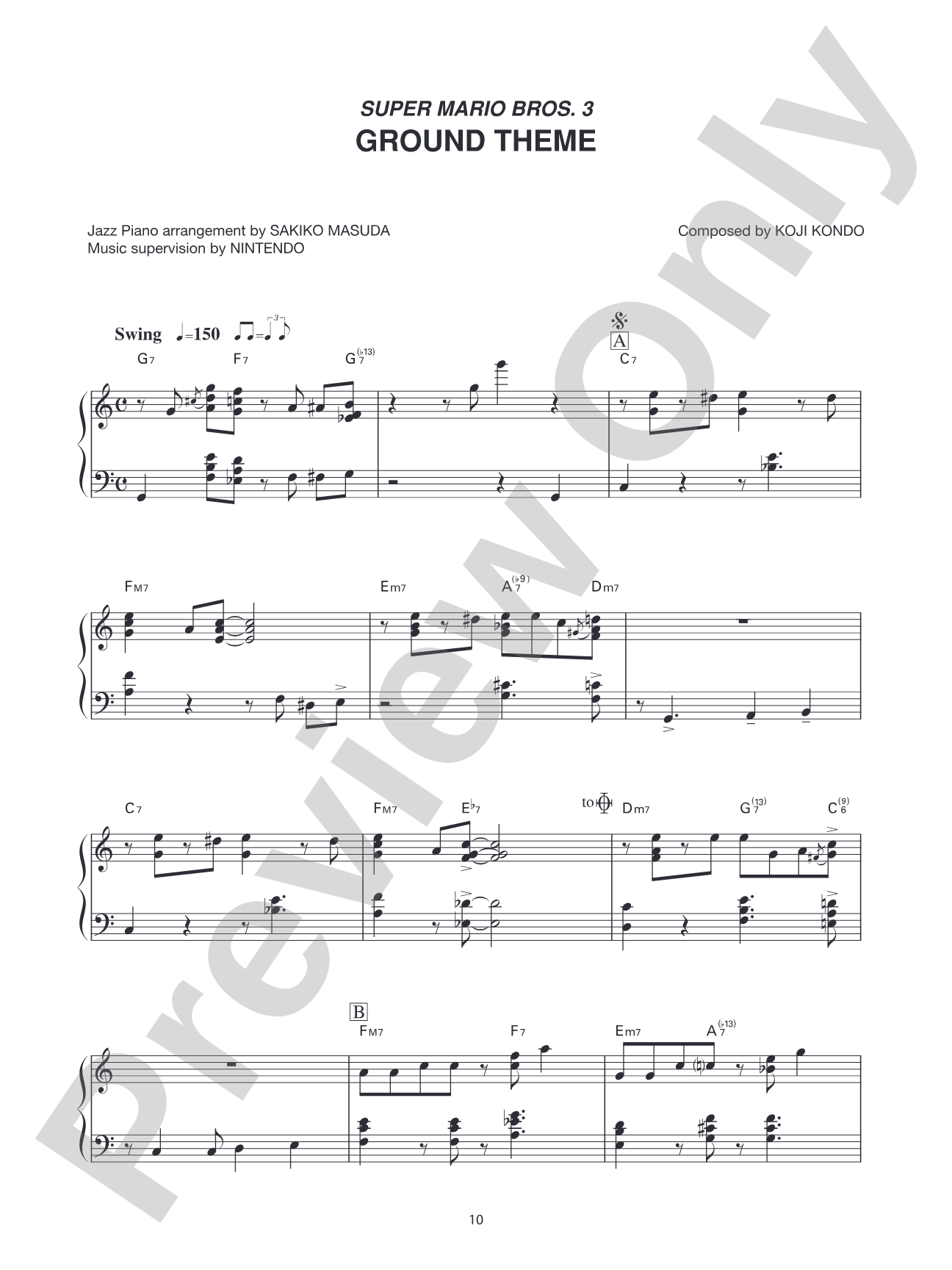

Super Mario Bros. 3 Ground Theme: Piano
15 Intermediate--Advanced Piano Solos
By Koji Kondo, Asuka Ohta, Soyo Oka, Ryo Nagamatsu, and Kenta Nagata
Level: Intermediate / Advanced
Item: 00-PS-0015324
$4.99
One moment…
Related Items
Super Mario Bros. Ground Theme: Piano |
$4.99
|
View | |
Super Mario Bros. Underground Theme: Piano |
$4.99
|
View | |
Super Mario Bros. Underwater Theme: Piano |
$4.99
|
View | |
Super Mario Bros. The Lost Levels Ending: Piano |
$4.99
|
View | |
Super Mario World Title: Piano |
$4.99
|
View | |
Super Mario Kart Mario Circuit: Piano |
$4.99
|
View | |
Super Mareio World 2: Yoshi's Island Ground Theme: Piano |
$4.99
|
View | |
Super Mario 64 Main Theme: Piano |
$4.99
|
View | |
New Super Mario Bros. Battle Theme 2: Piano |
$4.99
|
View | |
Mario Kart World Rainbow Road: Piano |
$4.99
|
View | |
New Super Mario Bros. Wii Title: Piano |
$4.99
|
View | |
New Super Mario Bros. Wii Ground Theme: Piano |
$4.99
|
View | |
Super Mario World Athletic Theme: Piano |
$4.99
|
View | |
Super Mario Galaxy 2 Yoster: Piano |
$4.99
|
View | |
Super Mario™ Jazz Piano Arrangements: Piano Book |
$14.99
|
View |
Description
The globally beloved musical themes of Nintendo's Super Mario™ video games sound great when they're played on the piano, and these new jazzy renditions make them more fun than ever! Each arrangement in this collection was crafted under direct supervision by Nintendo and renowned video game composer Koji Kondo, so each theme retains its musical integrity---but with a unique and lighthearted twist that's guaranteed to entertain. Pianists will enjoy the challenge of these 15 intermediate to early advanced arrangements, and audiences of all ages will be impressed and delighted to hear them. Titles: Super Mario Bros.™ Ground Theme * Super Mario Bros.™ Underground Theme * Super Mario Bros.™ Underwater Theme * Super Mario Bros.™: The Lost Levels Ending * Super Mario Bros.™ 3 Ground Theme * Super Mario World™ Title * Super Mario World™ Athletic Theme * Super Mario Kart™ Mario Circuit * Super Mario World™ 2 Yoshi's Island Ground Theme * Super Mario 64™ Main Theme * New Super Mario Bros.™ Battle Theme 2 * Mario Kart™ Wii™ Rainbow Road * New Super Mario Bros.™ Wii™ Title * New Super Mario Bros.™ Wii™ Ground Theme * Super Mario Galaxy™ 2 Yoster.


Discover MakeMusic Cloud: thousands of interactive titles your students can play along with today.
Sample Audio
No sample audio found.
Sample Video
No sample videos found.
Additional Details
Publisher:
Alfred Music
Page Count:
36
SKU:
00-PS-0015324
More about this title
About the Composer: Koji Kondo
Koji Kondo revolutionized video game music by composing themes that are as musically sophisticated as they are memorable. His work across Nintendo's most iconic franchises—from Super Mario to The Legend of Zelda—established the foundation for interactive music composition and proved that game soundtracks could achieve artistic merit equal to traditional film scores.
Kondo's melodies are built on strong harmonic structures and clear voice leading, making them ideal subjects for jazz reinterpretation and advanced arrangement. His influence on music education extends far beyond gaming; music teachers recognize his themes as effective teaching tools because they combine immediate appeal with genuine compositional craftsmanship.
Why we love this
These jazzy renditions honor Kondo's original melodies while offering pianists something genuinely fresh to explore. Arranged by Sakiko Masuda under Nintendo's direct supervision, the collection strikes an uncommon balance between sophisticated jazz voicings and accessibility, meaning your students engage with real jazz harmony without losing the infectious character that made these themes beloved in the first place.
What to expect
Playful sophistication. These arrangements maintain the lighthearted spirit and melodic clarity of the original themes while wrapping them in jazz harmony and swing rhythms that feel grown-up and inventive. Expect bright, colorful moments alongside more subdued sections where the reharmonization becomes the star.
Who it's for
Intermediate to early advanced pianists who want repertoire that challenges their voicing and jazz rhythm skills without abandoning the joy of playing recognizable music. This collection also serves students in jazz piano study or those preparing recital programs that balance technical growth with audience engagement.
How to get the most out of it
- Let the jazz harmonies breathe. These arrangements add seventh chords and chromatic passing tones that shift the emotional color of familiar themes; resist rushing through chord changes so listeners can hear the harmonic sophistication.
- Articulation matters more than speed. The intermediate to advanced difficulty comes from voice independence and syncopation, not tempo; clarity of phrasing will sell the jazzy feel far more effectively than rapid playing.
- Use the recorded accompaniment to check your harmonic balance, particularly in pieces with walking bass lines or swing rhythms where your right hand needs to sit comfortably against a moving background.
- Approach rubato intentionally. Video game music trained audiences to expect rhythmic precision, but jazz arrangements invite expressive timing; choose your moments for flexibility rather than applying it throughout.
How to use it
Program individual pieces as recital selections to showcase a pianist's range and personality, or cluster several titles in a concert set that highlights video game music's place in contemporary composition. This works particularly well as a bridge between classical and contemporary audiences, or as a finale set that leaves listeners smiling.
Skills your students will build
- Voice leading through jazz seventh chords and chromatic harmony
- Swing rhythm and syncopation
- Left-hand independence with walking bass lines and rhythmic accompaniment patterns
- Reharmonization and melody recognition across different harmonic contexts
- Expressive phrasing in a jazz idiom while preserving the original melody's character