
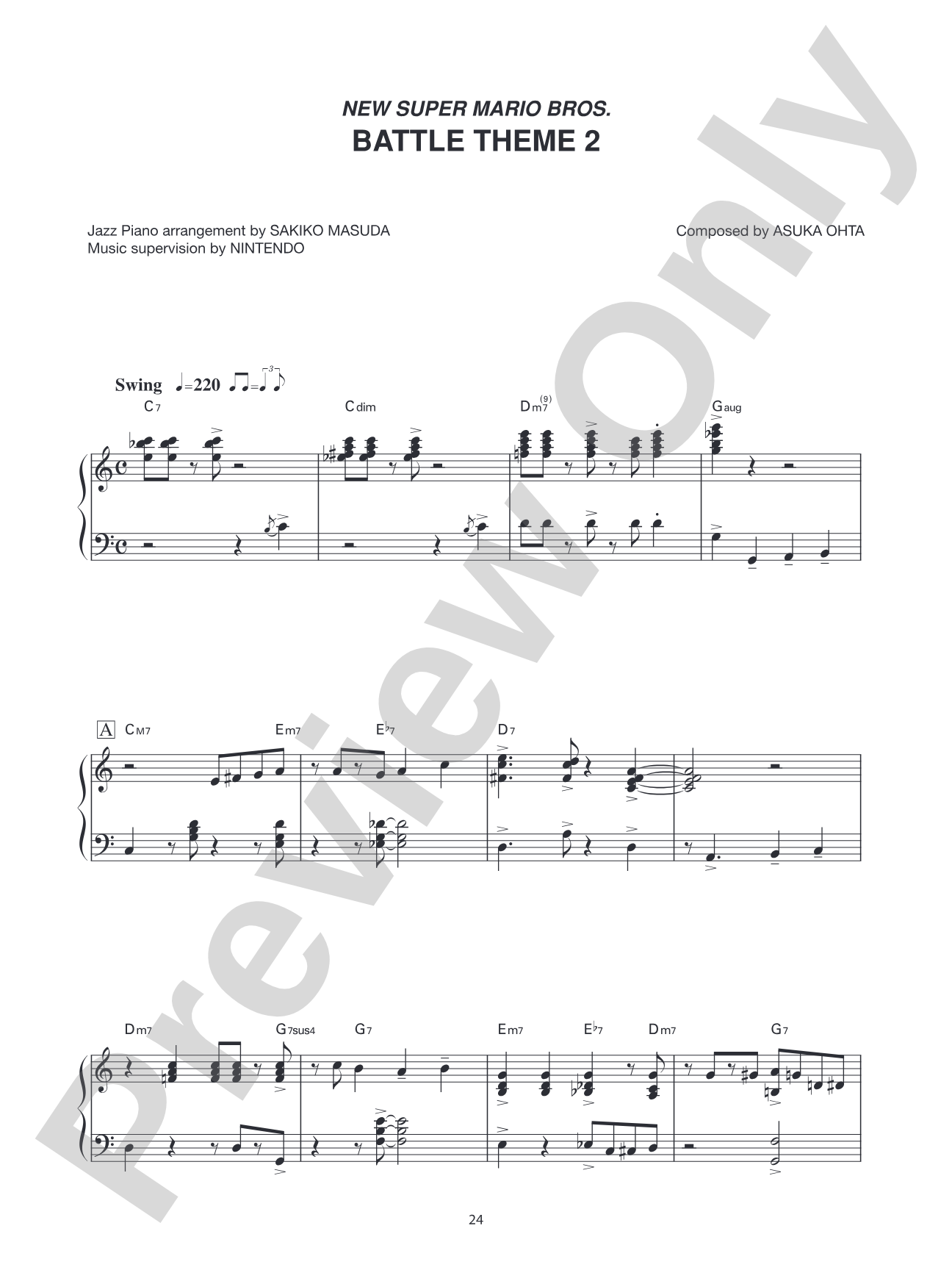

New Super Mario Bros. Battle Theme 2: Piano
15 Intermediate--Advanced Piano Solos
By Koji Kondo, Asuka Ohta, Soyo Oka, Ryo Nagamatsu, and Kenta Nagata
Level: Intermediate / Advanced
Item: 00-PS-0015329
$4.99
One moment…
Related Items
Super Mario Bros. Ground Theme: Piano |
$4.99
|
View | |
Super Mario Bros. Underground Theme: Piano |
$4.99
|
View | |
Super Mario Bros. Underwater Theme: Piano |
$4.99
|
View | |
Super Mario Bros. The Lost Levels Ending: Piano |
$4.99
|
View | |
Super Mario Bros. 3 Ground Theme: Piano |
$4.99
|
View | |
Super Mario World Title: Piano |
$4.99
|
View | |
Super Mario Kart Mario Circuit: Piano |
$4.99
|
View | |
Super Mareio World 2: Yoshi's Island Ground Theme: Piano |
$4.99
|
View | |
Super Mario 64 Main Theme: Piano |
$4.99
|
View | |
Mario Kart World Rainbow Road: Piano |
$4.99
|
View | |
New Super Mario Bros. Wii Title: Piano |
$4.99
|
View | |
New Super Mario Bros. Wii Ground Theme: Piano |
$4.99
|
View | |
Super Mario World Athletic Theme: Piano |
$4.99
|
View | |
Super Mario Galaxy 2 Yoster: Piano |
$4.99
|
View | |
Super Mario™ Jazz Piano Arrangements: Piano Book |
$14.99
|
View |
Description
The globally beloved musical themes of Nintendo's Super Mario™ video games sound great when they're played on the piano, and these new jazzy renditions make them more fun than ever! Each arrangement in this collection was crafted under direct supervision by Nintendo and renowned video game composer Koji Kondo, so each theme retains its musical integrity---but with a unique and lighthearted twist that's guaranteed to entertain. Pianists will enjoy the challenge of these 15 intermediate to early advanced arrangements, and audiences of all ages will be impressed and delighted to hear them. Titles: Super Mario Bros.™ Ground Theme * Super Mario Bros.™ Underground Theme * Super Mario Bros.™ Underwater Theme * Super Mario Bros.™: The Lost Levels Ending * Super Mario Bros.™ 3 Ground Theme * Super Mario World™ Title * Super Mario World™ Athletic Theme * Super Mario Kart™ Mario Circuit * Super Mario World™ 2 Yoshi's Island Ground Theme * Super Mario 64™ Main Theme * New Super Mario Bros.™ Battle Theme 2 * Mario Kart™ Wii™ Rainbow Road * New Super Mario Bros.™ Wii™ Title * New Super Mario Bros.™ Wii™ Ground Theme * Super Mario Galaxy™ 2 Yoster.


Discover MakeMusic Cloud: thousands of interactive titles your students can play along with today.
Sample Audio
No sample audio found.
Sample Video
No sample videos found.
Additional Details
Publisher:
Alfred Music
Page Count:
36
SKU:
00-PS-0015329
More about this title
About the Composer: Asuka Ohta
Asuka Ohta is a composer and arranger known for bringing contemporary energy to established musical themes, with particular expertise in adapting iconic video game music for live performance contexts. Her work balances fidelity to original compositions with creative reinterpretation, making classic material accessible to performers across skill levels.
Why we love this
These arrangements respect the unmistakable character of each theme while injecting genuine jazz vocabulary that challenges intermediate pianists without alienating them. Audiences respond immediately to the familiar melodies, but the rhythmic sophistication and harmonic reharmonization keep the performance fresh and engaging for musicians who know these games inside and out.
What to expect
Playful but sophisticated. The melodies sparkle with recognition and nostalgia, but the jazz harmonies and rhythmic twists transform them into something both lighter and more musically complex. There's an undeniable joy in hearing the Mushroom Kingdom reimagined through a jazz lens.
Who it's for
Intermediate to early-advanced pianists who want to explore contemporary arrangements of beloved melodies without tackling classical virtuosity. Solo recitalists, student composers learning arranging techniques, and pianists preparing crossover repertoire for audiences that span multiple age groups and musical backgrounds.
How to get the most out of it
- Pay attention to the swing feel and syncopation; these themes sit differently on the piano than in their original 8-bit forms, and locking into the groove matters as much as hitting the right notes.
- Tempo stability becomes critical when jazz comping or accompanying figures enter. Use a metronome during practice to establish the pocket before adding expression.
- Let the bass line lead your interpretation. Many of these arrangements build their jazz character from the left hand, so voices the accompaniment with the same care you'd give a melody.
- Balance clarity with atmosphere. The intermediate passages are approachable, but the early-advanced sections benefit from controlled dynamics that let harmonic movement breathe.
How to use it
Perfect as a bridge between classical and contemporary repertoire in a student recital, or as a standalone set for a pops concert. These arrangements also work well sprinkled throughout a longer program to shift mood and audience energy without breaking the flow of a performance.
Skills your students will build
- Jazz comping and voicing conventions
- Swing rhythm and syncopation
- Left-hand independence and bass line integrity
- Reharmonization listening and interpretation
- Balancing written precision with stylistic feel