
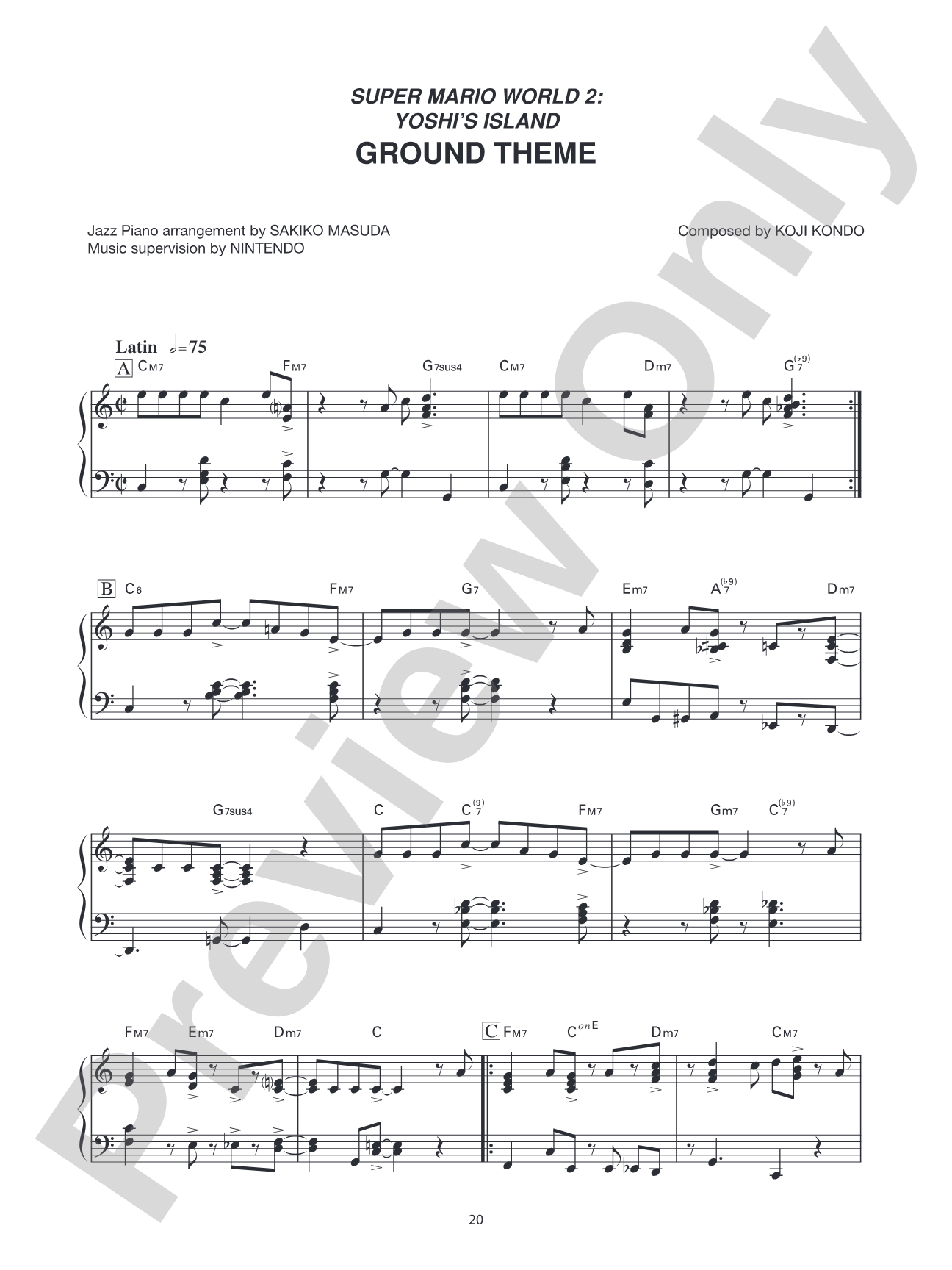

Super Mareio World 2: Yoshi's Island Ground Theme: Piano
15 Intermediate--Advanced Piano Solos
By Koji Kondo, Asuka Ohta, Soyo Oka, Ryo Nagamatsu, and Kenta Nagata
Level: Intermediate / Advanced
Item: 00-PS-0015327
$4.99
One moment…
Related Items
Super Mario Bros. Ground Theme: Piano |
$4.99
|
View | |
Super Mario Bros. Underground Theme: Piano |
$4.99
|
View | |
Super Mario Bros. Underwater Theme: Piano |
$4.99
|
View | |
Super Mario Bros. The Lost Levels Ending: Piano |
$4.99
|
View | |
Super Mario Bros. 3 Ground Theme: Piano |
$4.99
|
View | |
Super Mario World Title: Piano |
$4.99
|
View | |
Super Mario Kart Mario Circuit: Piano |
$4.99
|
View | |
Super Mario 64 Main Theme: Piano |
$4.99
|
View | |
New Super Mario Bros. Battle Theme 2: Piano |
$4.99
|
View | |
Mario Kart World Rainbow Road: Piano |
$4.99
|
View | |
New Super Mario Bros. Wii Title: Piano |
$4.99
|
View | |
New Super Mario Bros. Wii Ground Theme: Piano |
$4.99
|
View | |
Super Mario World Athletic Theme: Piano |
$4.99
|
View | |
Super Mario Galaxy 2 Yoster: Piano |
$4.99
|
View | |
Super Mario™ Jazz Piano Arrangements: Piano Book |
$14.99
|
View |
Description
The globally beloved musical themes of Nintendo's Super Mario™ video games sound great when they're played on the piano, and these new jazzy renditions make them more fun than ever! Each arrangement in this collection was crafted under direct supervision by Nintendo and renowned video game composer Koji Kondo, so each theme retains its musical integrity---but with a unique and lighthearted twist that's guaranteed to entertain. Pianists will enjoy the challenge of these 15 intermediate to early advanced arrangements, and audiences of all ages will be impressed and delighted to hear them. Titles: Super Mario Bros.™ Ground Theme * Super Mario Bros.™ Underground Theme * Super Mario Bros.™ Underwater Theme * Super Mario Bros.™: The Lost Levels Ending * Super Mario Bros.™ 3 Ground Theme * Super Mario World™ Title * Super Mario World™ Athletic Theme * Super Mario Kart™ Mario Circuit * Super Mario World™ 2 Yoshi's Island Ground Theme * Super Mario 64™ Main Theme * New Super Mario Bros.™ Battle Theme 2 * Mario Kart™ Wii™ Rainbow Road * New Super Mario Bros.™ Wii™ Title * New Super Mario Bros.™ Wii™ Ground Theme * Super Mario Galaxy™ 2 Yoster.


Discover MakeMusic Cloud: thousands of interactive titles your students can play along with today.
Sample Audio
No sample audio found.
Sample Video
No sample videos found.
Additional Details
Publisher:
Alfred Music
Page Count:
36
SKU:
00-PS-0015327
More about this title
About the Composer: Koji Kondo
Koji Kondo revolutionized video game music by composing themes that transcend their original medium. His melodies for the Super Mario series became globally recognizable, establishing a blueprint for how memorable, singable material could anchor interactive entertainment. His work demonstrates that constraints (limited sound hardware, short loops, rapid gameplay moments) can inspire compositional ingenuity rather than limit it.
Why we love this
These arrangements respect the original melodic charm while introducing harmonic sophistication and rhythmic playfulness that intermediate pianists find genuinely engaging. The jazzy treatments elevate what students already know and love, making the challenge of learning these pieces feel personally rewarding rather than arbitrary. Programming a collection like this signals that great melodies transcend genre and era—a valuable lesson wrapped in entertainment.
What to expect
Playful and sophisticated at once. The familiar melodies arrive with jazz harmonies, syncopation, and swing rhythms that feel fresh without losing the emotional warmth of the originals. There's a sense of discovery in recognizing beloved themes reharmonized through a jazz lens.
Who it's for
Intermediate to early advanced pianists who want repertoire that challenges their musicianship while connecting to music they already love. Students preparing recitals will find these pieces genuinely audience-friendly, combining technical substance with the immediate appeal of Nintendo's iconic themes.
How to get the most out of it
- Anchor the swing rhythms in your left hand before adding the melodic embellishments in your right; this keeps the jazzy articulation from overshadowing the familiar tune.
- Treat repeated sections as opportunities for dynamic shaping and tonal coloring rather than simply playing them identically, since these arrangements invite that kind of interpretive freedom.
- Listen to the original video game versions beforehand to internalize the melodic contour and character, then let the jazz voicings enhance rather than obscure what audiences recognize.
- Balance the tempo so that syncopated figures stay clear without rushing; jazz phrasing benefits from a confident, unhurried touch even at moderately quick tempos.
How to use it
These pieces work well in recitals where you want to showcase both technical skill and musical personality, especially if your student audience includes peers who recognize these themes from childhood. Consider pairing one or two of these with more traditional classical repertoire to demonstrate how pianists approach music from different traditions and eras.
Skills your students will build
- Swing rhythm and jazz articulation (syncopation, accent placement, legit versus swung eighths)
- Reharmonization and chromatic voice leading in jazz contexts
- Pedal control with jazz textures, maintaining clarity through thick voicings
- Balancing melody and accompaniment when both hands carry important material
- Sight-reading through non-standard harmonic progressions and rhythmic notation