
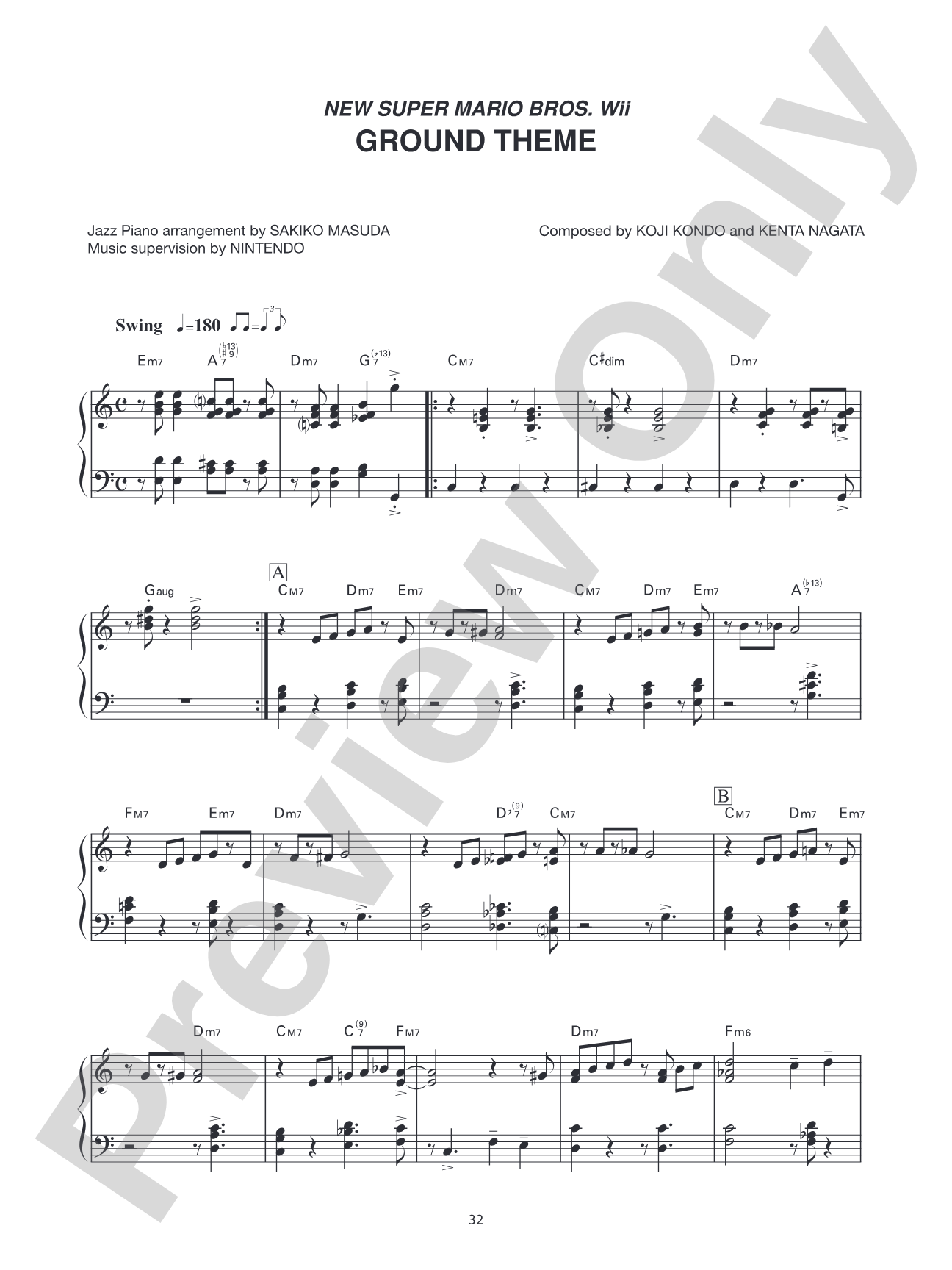

New Super Mario Bros. Wii Ground Theme: Piano
15 Intermediate--Advanced Piano Solos
By Koji Kondo, Asuka Ohta, Soyo Oka, Ryo Nagamatsu, and Kenta Nagata
Level: Intermediate / Advanced
Item: 00-PS-0015332
$4.99
One moment…
Related Items
Super Mario Bros. Ground Theme: Piano |
$4.99
|
View | |
Super Mario Bros. Underground Theme: Piano |
$4.99
|
View | |
Super Mario Bros. Underwater Theme: Piano |
$4.99
|
View | |
Super Mario Bros. The Lost Levels Ending: Piano |
$4.99
|
View | |
Super Mario Bros. 3 Ground Theme: Piano |
$4.99
|
View | |
Super Mario World Title: Piano |
$4.99
|
View | |
Super Mario Kart Mario Circuit: Piano |
$4.99
|
View | |
Super Mareio World 2: Yoshi's Island Ground Theme: Piano |
$4.99
|
View | |
Super Mario 64 Main Theme: Piano |
$4.99
|
View | |
New Super Mario Bros. Battle Theme 2: Piano |
$4.99
|
View | |
Mario Kart World Rainbow Road: Piano |
$4.99
|
View | |
New Super Mario Bros. Wii Title: Piano |
$4.99
|
View | |
Super Mario World Athletic Theme: Piano |
$4.99
|
View | |
Super Mario Galaxy 2 Yoster: Piano |
$4.99
|
View | |
Super Mario™ Jazz Piano Arrangements: Piano Book |
$14.99
|
View |
Description
The globally beloved musical themes of Nintendo's Super Mario™ video games sound great when they're played on the piano, and these new jazzy renditions make them more fun than ever! Each arrangement in this collection was crafted under direct supervision by Nintendo and renowned video game composer Koji Kondo, so each theme retains its musical integrity---but with a unique and lighthearted twist that's guaranteed to entertain. Pianists will enjoy the challenge of these 15 intermediate to early advanced arrangements, and audiences of all ages will be impressed and delighted to hear them. Titles: Super Mario Bros.™ Ground Theme * Super Mario Bros.™ Underground Theme * Super Mario Bros.™ Underwater Theme * Super Mario Bros.™: The Lost Levels Ending * Super Mario Bros.™ 3 Ground Theme * Super Mario World™ Title * Super Mario World™ Athletic Theme * Super Mario Kart™ Mario Circuit * Super Mario World™ 2 Yoshi's Island Ground Theme * Super Mario 64™ Main Theme * New Super Mario Bros.™ Battle Theme 2 * Mario Kart™ Wii™ Rainbow Road * New Super Mario Bros.™ Wii™ Title * New Super Mario Bros.™ Wii™ Ground Theme * Super Mario Galaxy™ 2 Yoster.


Discover MakeMusic Cloud: thousands of interactive titles your students can play along with today.
Sample Audio
No sample audio found.
Sample Video
No sample videos found.
Additional Details
Publisher:
Alfred Music
Page Count:
36
SKU:
00-PS-0015332
More about this title
About the Composer: Koji Kondo
Koji Kondo shaped video game music as both an art form and a discipline. His work at Nintendo from the 1980s onward established the harmonic language and melodic clarity that defined an era of interactive entertainment. Kondo's compositions demonstrate that constraint breeds invention: working within the technical limits of early game hardware, he created themes so memorable and structurally sound that they remain teaching tools today.
Why we love this
These arrangements honor their source material while giving pianists genuine musical problems to solve. The jazzy reharmonizations add harmonic sophistication without losing the iconic simplicity that makes these themes sing, and programming them feels fresh rather than nostalgic because the piano writing itself is inventive and idiomatic.
What to expect
Playful and sophisticated at once. The themes retain their essential character and forward momentum, but the piano writing adds harmonic color and rhythmic wit that rewards careful listening. There's real joy in hearing a melody you know transformed by jazz vocabulary without losing its heart.
Who it's for
Pianists at the intermediate-to-advanced boundary who want repertoire that challenges technique while guaranteeing audience engagement. This collection works for recitalists looking to program something contemporary and approachable, and for students who thrive when the music they learn connects to culture they already love.
How to get the most out of it
- Establish the groove early: even at intermediate tempo, these arrangements swing, so anchor the rhythm section feel before adding interpretive layers.
- Balance the melody against jazz voicings by prioritizing voice leading over block chord sonorities, which keeps the familiar themes audible through the harmonic reinterpretation.
- Let the rhythmic syncopation breathe rather than forcing it; these arrangements profit from a relaxed, conversational attack that lets the humor come through.
- Study the original game themes first if you haven't played them, so you understand what the arranger kept and what was transformed.
How to use it
Open a recital with one of these to set a contemporary, accessible tone before moving into traditional classical repertoire. A medley of two or three titles makes an excellent intermission piece, or program them alongside other video game or film music to build a thematic concert around music that shapes popular culture.
Skills your students will build
- Jazz reharmonization and chord substitution
- Syncopated rhythmic accuracy in single-staff and two-staff contexts
- Voice leading across jazz voicings while maintaining melodic clarity
- Stylistic interpretation of swing and jazz articulation
- Reading and executing rhythmic notation specific to jazz piano writing