
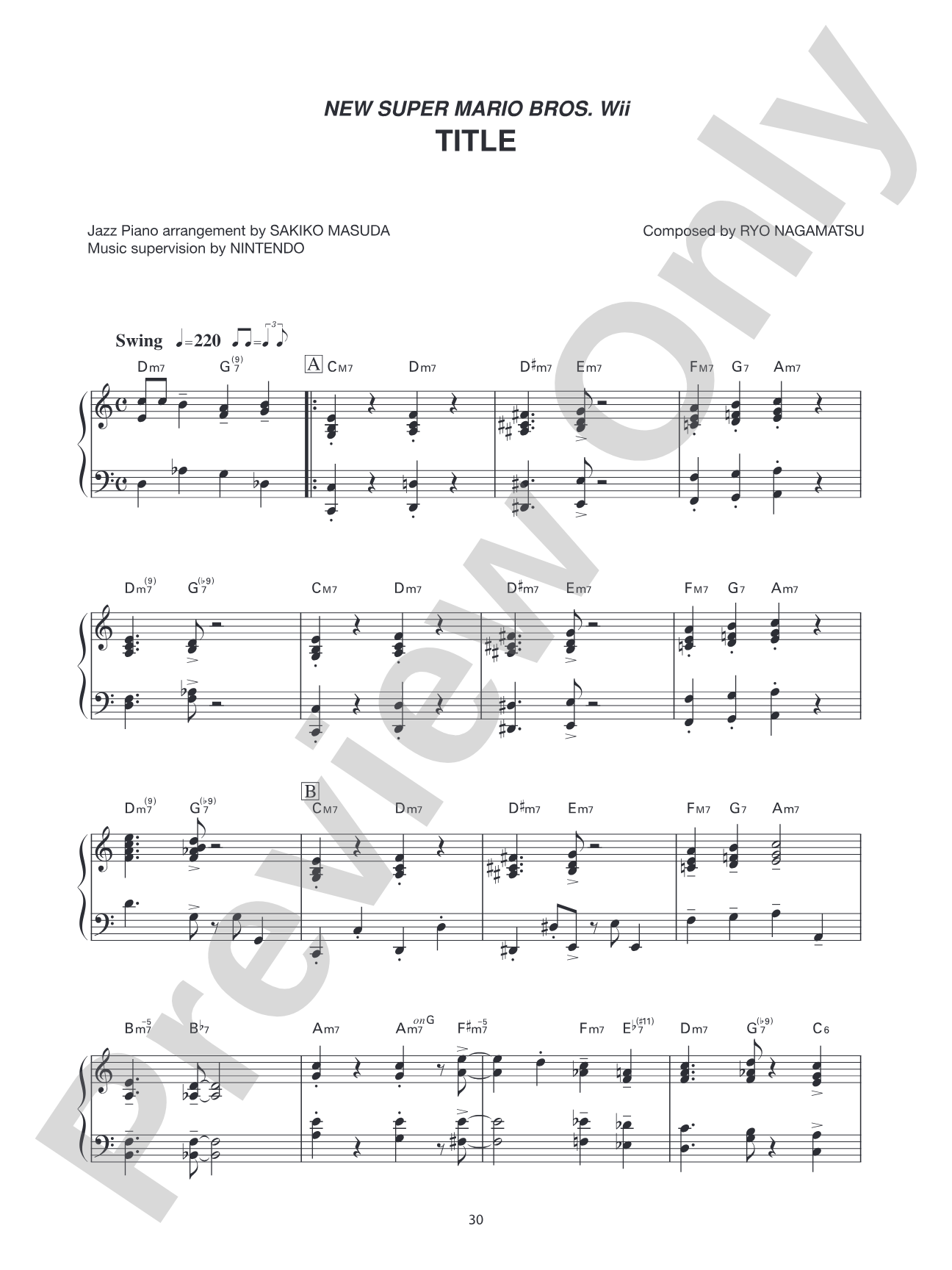

New Super Mario Bros. Wii Title: Piano
15 Intermediate--Advanced Piano Solos
By Koji Kondo, Asuka Ohta, Soyo Oka, Ryo Nagamatsu, and Kenta Nagata
Level: Intermediate / Advanced
Item: 00-PS-0015331
$4.99
One moment…
Related Items
Super Mario Bros. Ground Theme: Piano |
$4.99
|
View | |
Super Mario Bros. Underground Theme: Piano |
$4.99
|
View | |
Super Mario Bros. Underwater Theme: Piano |
$4.99
|
View | |
Super Mario Bros. The Lost Levels Ending: Piano |
$4.99
|
View | |
Super Mario Bros. 3 Ground Theme: Piano |
$4.99
|
View | |
Super Mario World Title: Piano |
$4.99
|
View | |
Super Mario Kart Mario Circuit: Piano |
$4.99
|
View | |
Super Mareio World 2: Yoshi's Island Ground Theme: Piano |
$4.99
|
View | |
Super Mario 64 Main Theme: Piano |
$4.99
|
View | |
New Super Mario Bros. Battle Theme 2: Piano |
$4.99
|
View | |
Mario Kart World Rainbow Road: Piano |
$4.99
|
View | |
New Super Mario Bros. Wii Ground Theme: Piano |
$4.99
|
View | |
Super Mario World Athletic Theme: Piano |
$4.99
|
View | |
Super Mario Galaxy 2 Yoster: Piano |
$4.99
|
View | |
Super Mario™ Jazz Piano Arrangements: Piano Book |
$14.99
|
View |
Description
The globally beloved musical themes of Nintendo's Super Mario™ video games sound great when they're played on the piano, and these new jazzy renditions make them more fun than ever! Each arrangement in this collection was crafted under direct supervision by Nintendo and renowned video game composer Koji Kondo, so each theme retains its musical integrity---but with a unique and lighthearted twist that's guaranteed to entertain. Pianists will enjoy the challenge of these 15 intermediate to early advanced arrangements, and audiences of all ages will be impressed and delighted to hear them. Titles: Super Mario Bros.™ Ground Theme * Super Mario Bros.™ Underground Theme * Super Mario Bros.™ Underwater Theme * Super Mario Bros.™: The Lost Levels Ending * Super Mario Bros.™ 3 Ground Theme * Super Mario World™ Title * Super Mario World™ Athletic Theme * Super Mario Kart™ Mario Circuit * Super Mario World™ 2 Yoshi's Island Ground Theme * Super Mario 64™ Main Theme * New Super Mario Bros.™ Battle Theme 2 * Mario Kart™ Wii™ Rainbow Road * New Super Mario Bros.™ Wii™ Title * New Super Mario Bros.™ Wii™ Ground Theme * Super Mario Galaxy™ 2 Yoster.


Discover MakeMusic Cloud: thousands of interactive titles your students can play along with today.
Sample Audio
No sample audio found.
Sample Video
No sample videos found.
Additional Details
Publisher:
Alfred Music
Page Count:
36
SKU:
00-PS-0015331
More about this title
About the Composer: Ryo Nagamatsu
Ryo Nagamatsu is a video game composer whose work spans Nintendo's most iconic franchises. His arrangements and compositions have shaped the sonic identity of beloved games across multiple generations, demonstrating a deep understanding of how melody, harmony, and orchestration serve interactive entertainment.
In the classroom and recital hall, Nagamatsu's music offers pianists a bridge between popular culture and serious musical study. His ability to craft memorable themes that hold up under harmonic reimagining makes his work valuable for students exploring arrangement techniques and contemporary composition.
Why we love this
These arrangements preserve the melodic charm that made these themes unforgettable while introducing jazz voicings, unexpected harmonic twists, and rhythmic sophistication that keeps intermediate pianists engaged and challenged. Your students will practice real musicianship skills without the eye-roll factor that comes with straight transcriptions. When audiences hear familiar melodies unfold through creative harmonic language, they're hearing what careful arrangement can accomplish.
What to expect
Playful without being trivial. The jazz arrangements give these familiar melodies a sophisticated, sometimes witty edge while keeping the joy and accessibility that made the original themes beloved. You'll find moments of genuine musicality alongside the fun factor.
Who it's for
Intermediate to early advanced pianists ready for music beyond classical repertoire and capable of managing jazz harmonies, syncopation, and two-handed independence. This collection appeals to students who thrive on recognizable material but need genuine technical and musical challenges. It's equally suited for recitals, casual performances, or concert programming where contemporary and accessible music lands with audiences.
How to get the most out of it
- Pay attention to the jazz voicings and comping patterns. These aren't classical reharmonizations; they require you to hear the intended groove and play with the rhythmic precision that jazz demands.
- Treat the familiar melodies as anchor points rather than crutches. The novelty wears off quickly if you're just playing the tune over new chords. Commit to the new arrangement's character.
- Use dynamic contrast to shape phrases, especially where the harmony shifts unexpectedly. Small dynamic dips and swells highlight the arranger's voice and keep the music moving.
- Coordinate both hands carefully when rhythms become syncopated or when accompaniment figures interact with the melody. Mark these sections in your score before performance.
How to use it
Feature individual pieces as lighter concert offerings alongside more traditional fare, or build an entire recital around the collection to showcase how well-known themes can be recontextualized. These work particularly well when you want to reach audiences beyond traditional classical concert attendees or when programming for student recitals where confidence and audience connection matter as much as technical difficulty.
Skills your students will build
- Reading and executing jazz voicings and extended harmonies
- Coordinating syncopated rhythms between hands
- Balancing accompaniment figures with melodic content
- Interpreting contemporary harmonic language
- Maintaining rhythmic precision in swing and groove-based contexts
- Pedal control with complex harmonic movement